
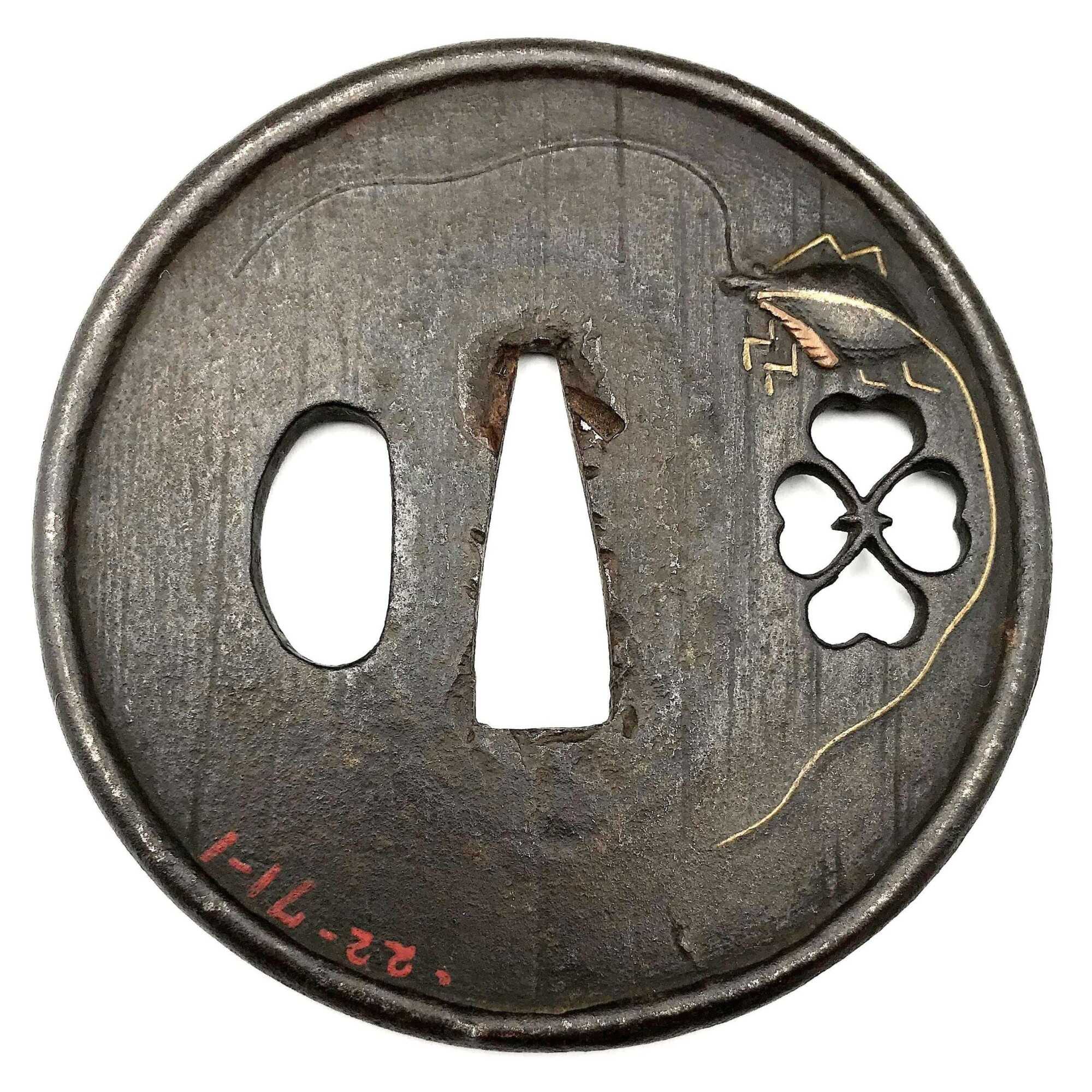
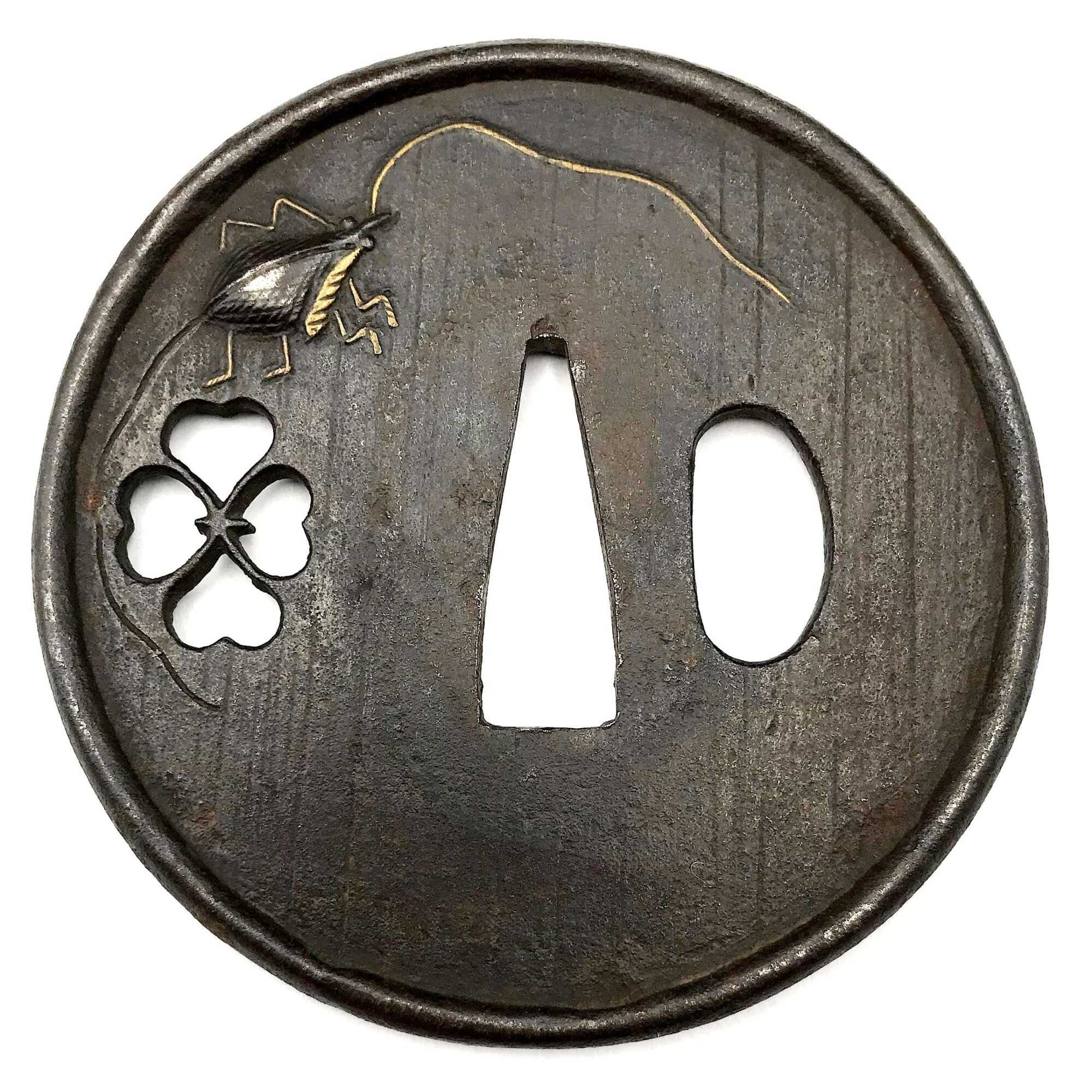
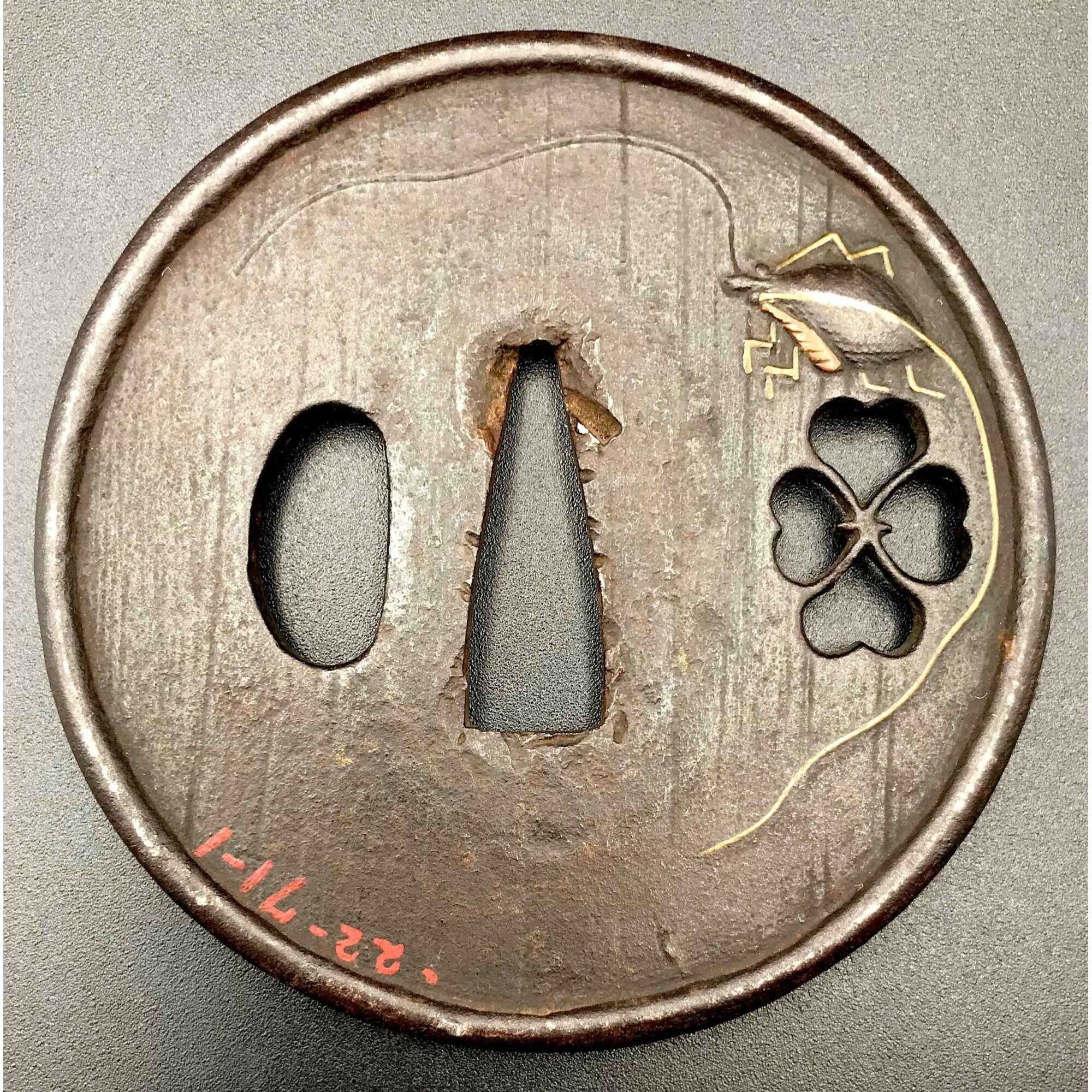
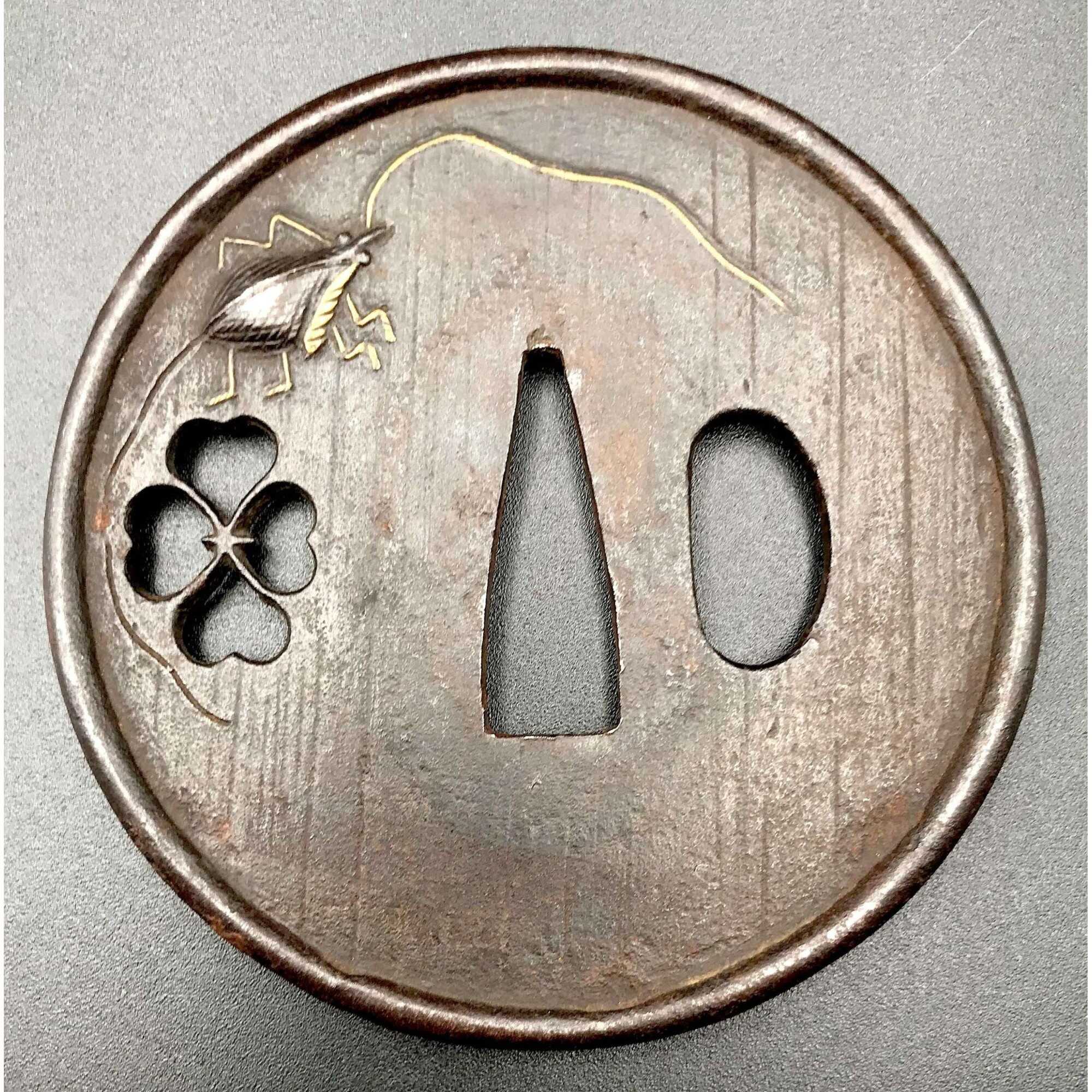
Iron tsuba of round form with a Marsilea (water clover, paddy plant, denjiso) in openwork (sukashi) and a cricket carved in low relief (katakiribori) with extremities and one antenna inlaid with brass; the other antenna is carved in kebori (which antenna is inlaid and which is carved alternates on the face and on the reverse). The plate decorated with vertical file stroke ornamentation (tate-yasurime). Raised dam-shaped rim (dote-mimi). Inscription from a previous collector in red oil paint: 22-71-1.
Edo period, possibly 17th century. Katchushi school.
Size: 75.0 x 74.4 x 3.6 (center), 5.0 (rim) mm.
The plant Marsilea (paddy plant, denjiso), common names include water clover and four-leaf clover because the long-stalked leaves have four clover-like lobes and are either held above water or submerged. In The elements of Japanese design by John W. Dower, this motif is listed under the numbers 634-35 Paddy Plant (denjiso). Obviously, as a four-leaf clover it is an auspicious symbol. The four leaves radiate out as the shape of the kanji 田 (romaji 'ta'), which means 'rice paddy'. This symbol may be used as a family crest (mon), and this would be the most probable explanation of the sukashi on this tsuba.
Additional Information
| Collection | Japanese swords & fittings |
|---|---|
| Type / Purpose | Tsuba |
| Country | Japan |
| Period | 17 AD , Edo period [江戸時代] (1603–1868) |
| School | Katchushi |
| Material | Brass , Iron |
| Media/Technique | Inlay , Katakiribori , Kebori , Ko-sukashi (small cut-outs) , Low relief carving , Shinchū-zōgan , Sukashi |
| Subject | Cricket , Marsilea (water clover, denjiso) |
| Acquisition year | 2014 |
Related Items


