
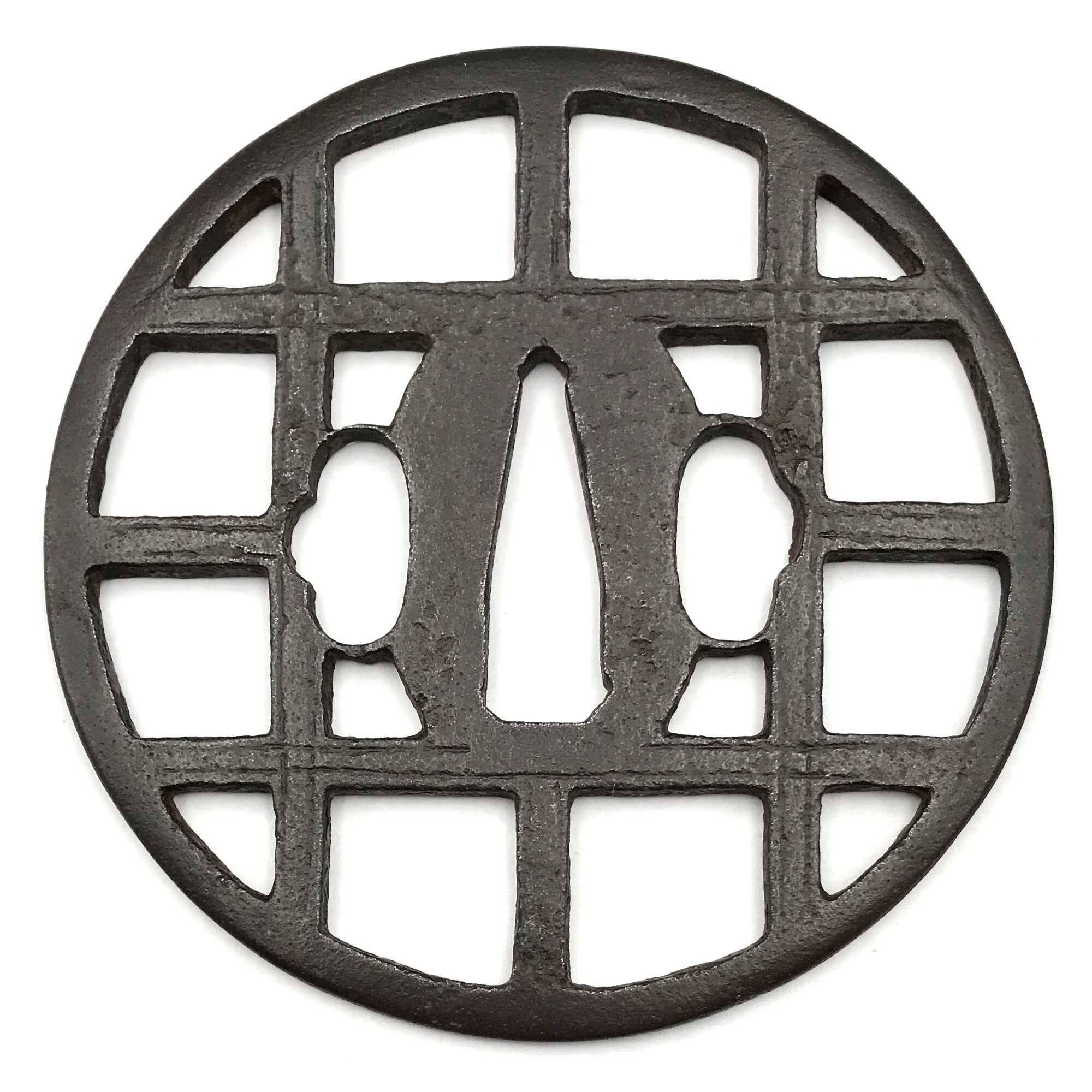
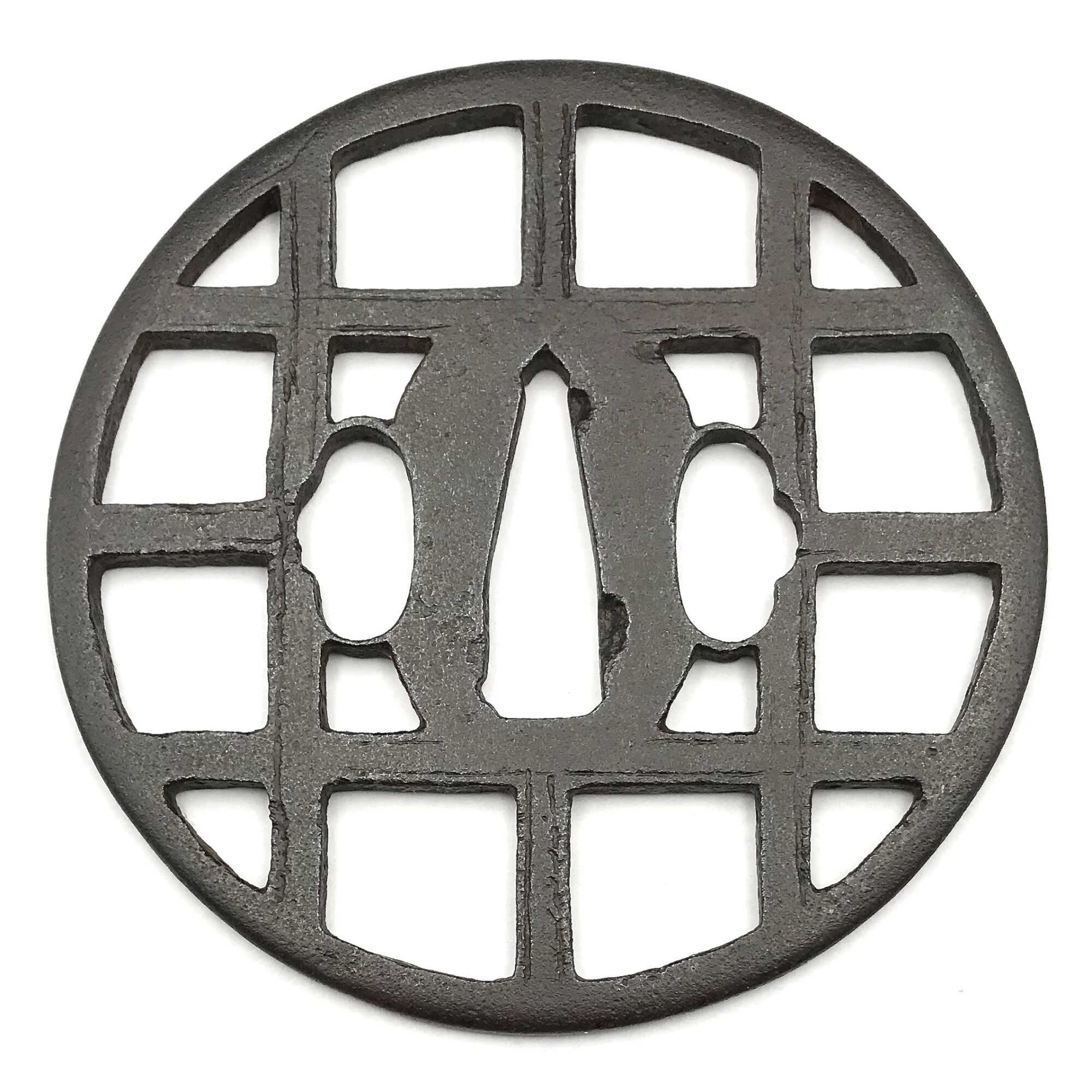
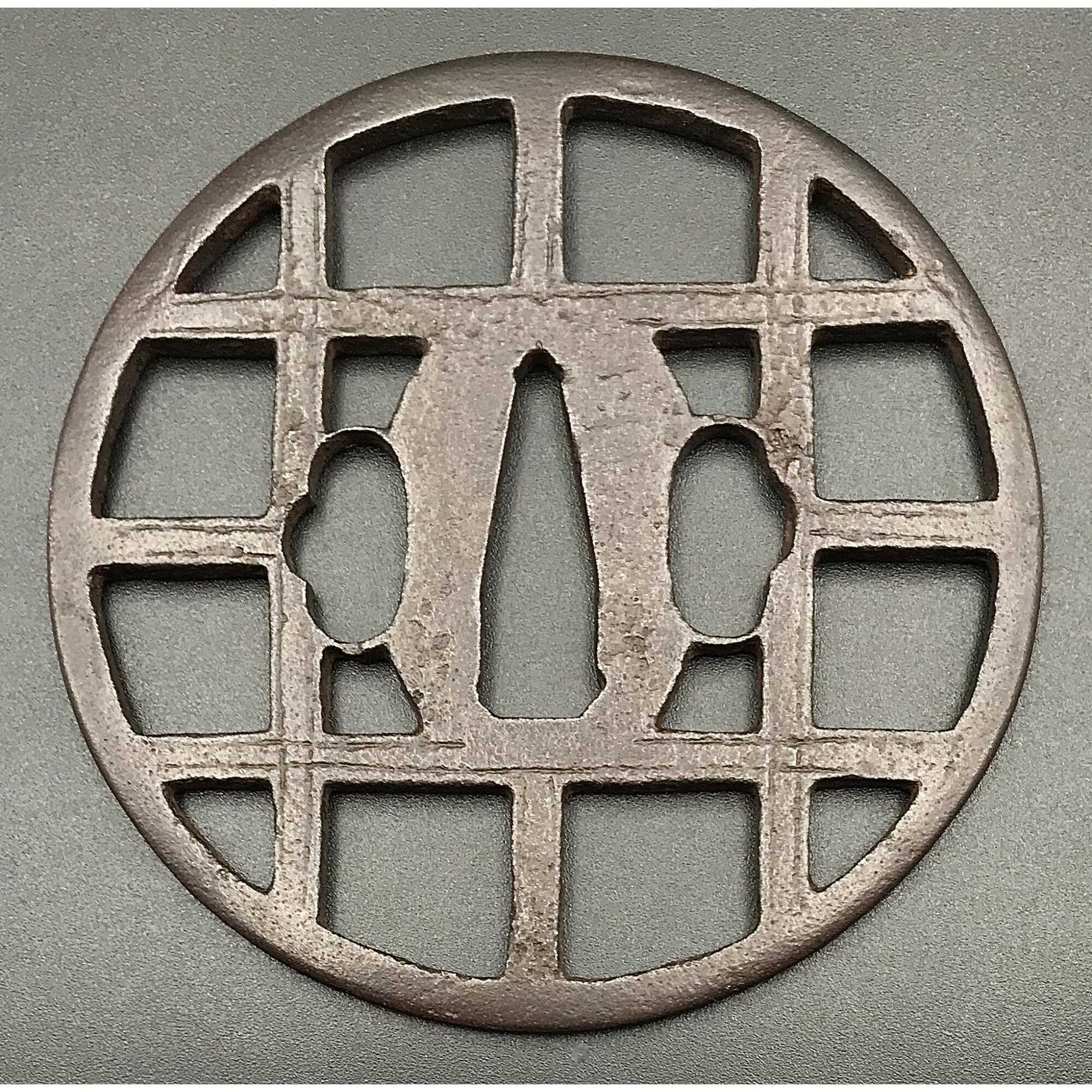
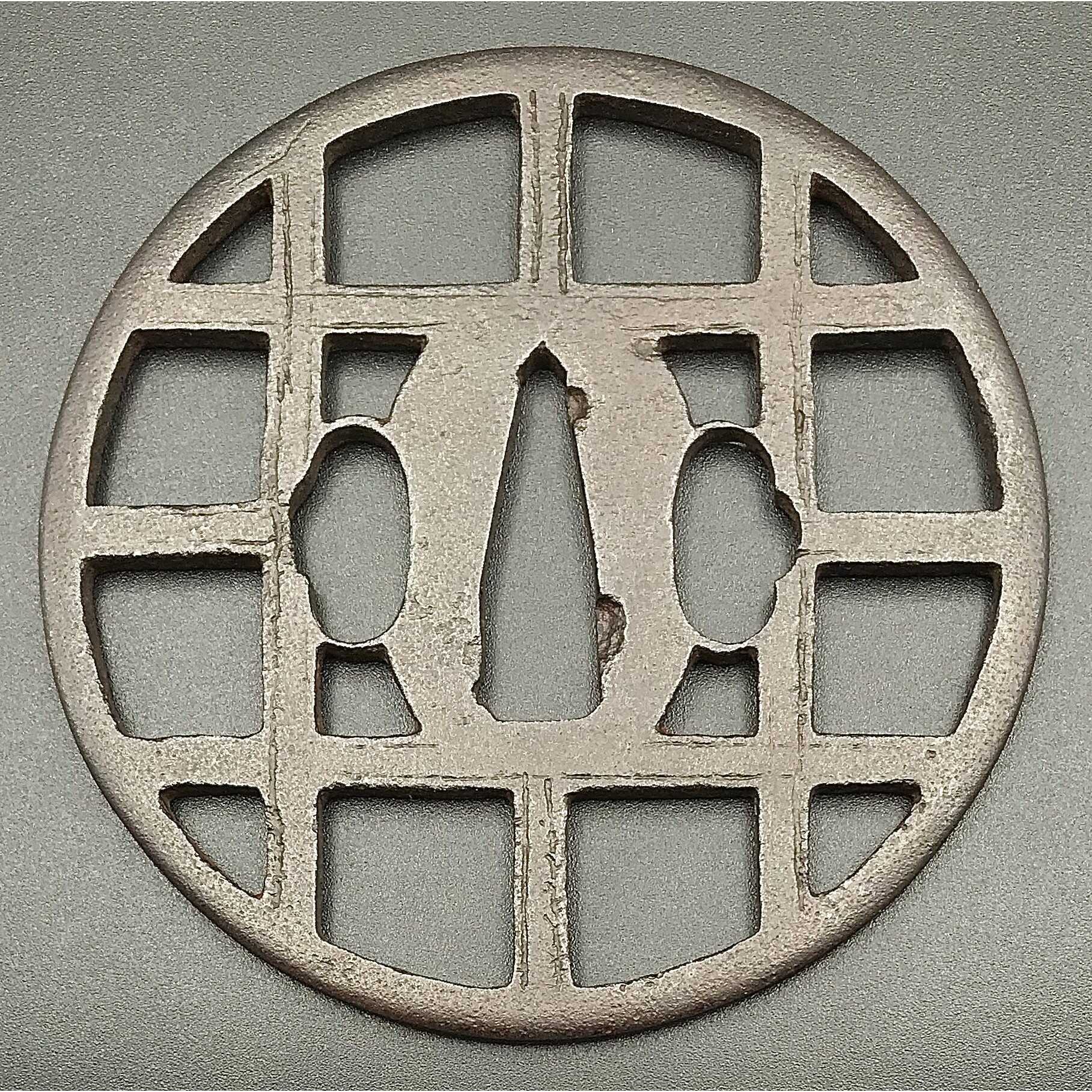
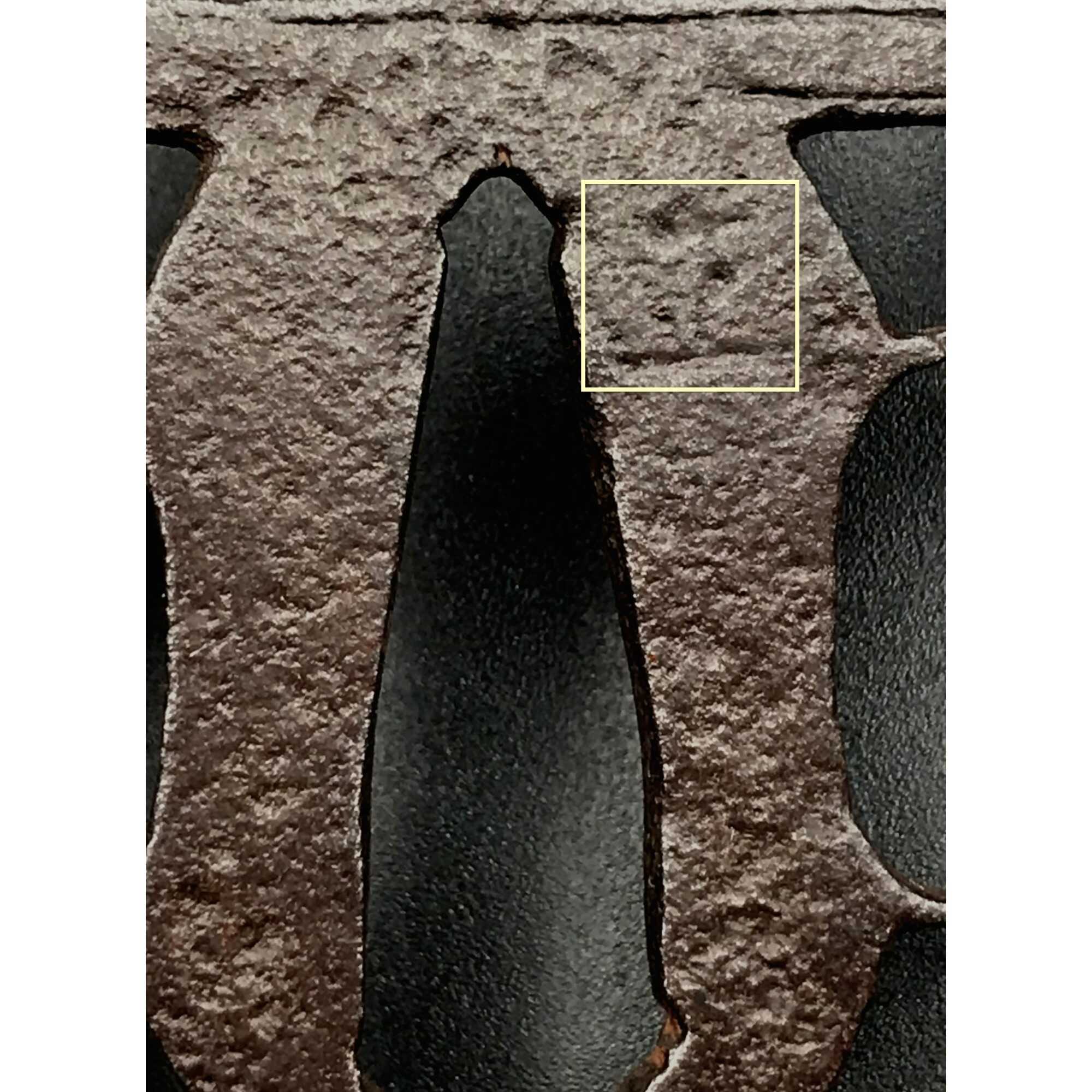
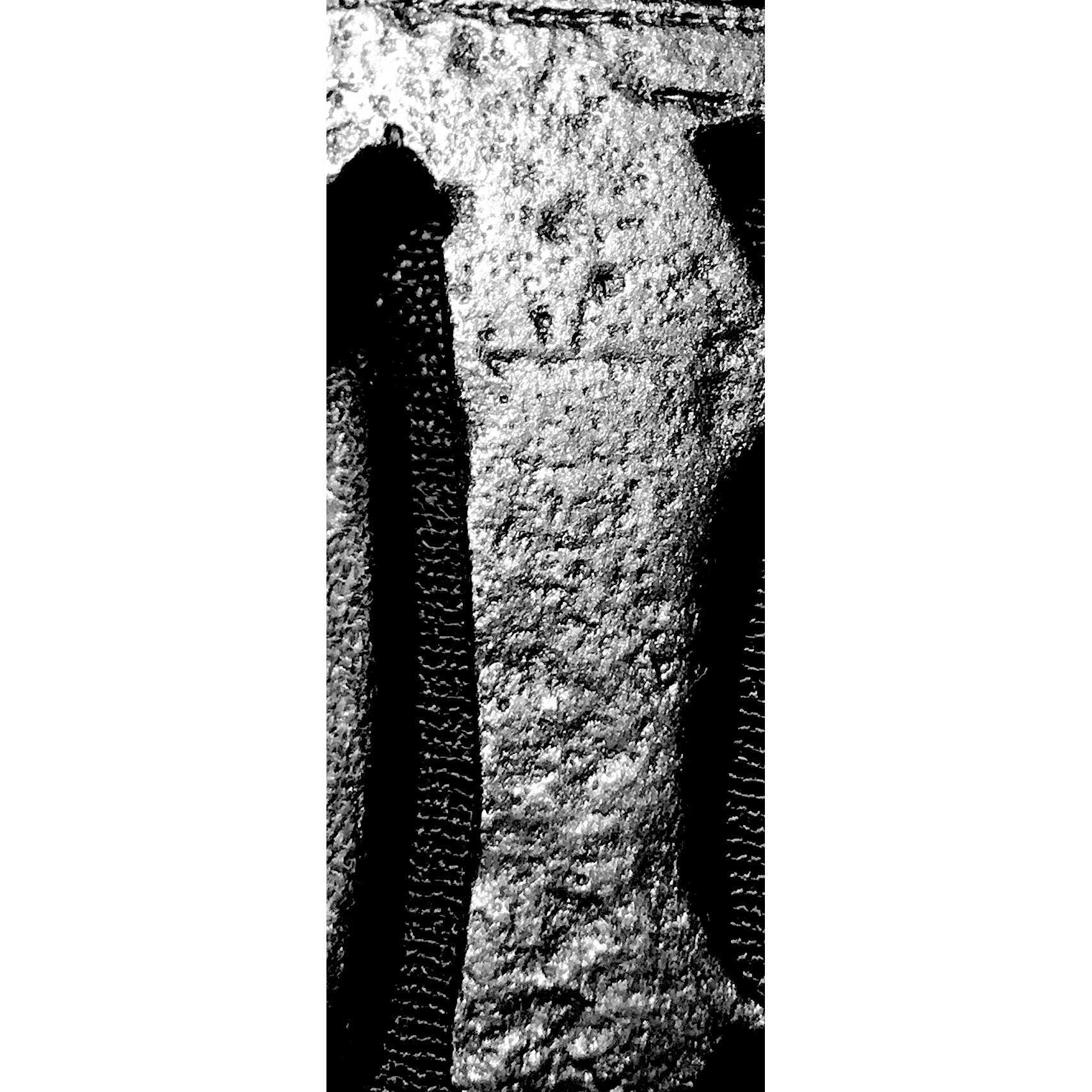
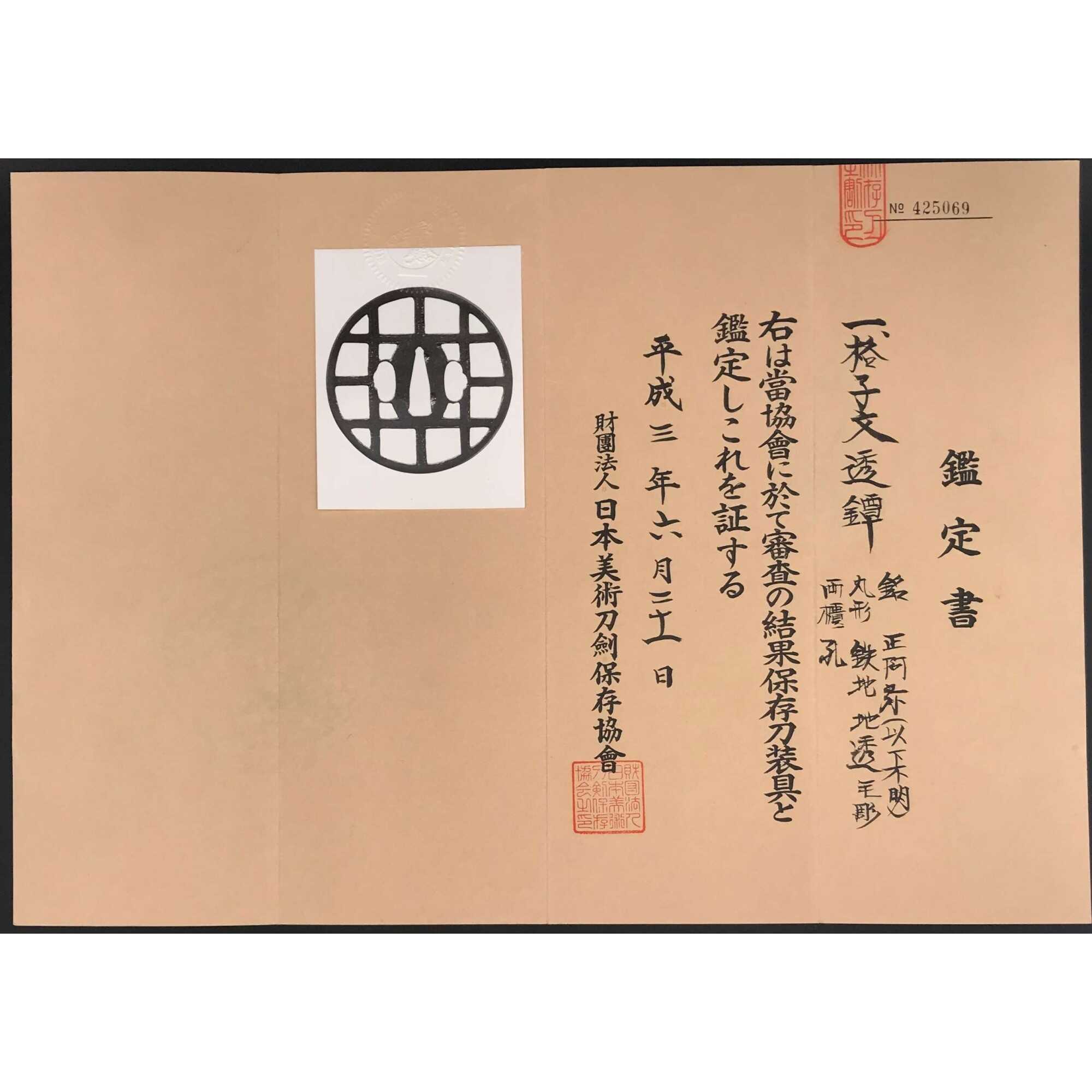
Iron tsuba of round form with design of lattice (kōshi-mon, 格子文) cut in openwork (sukashi), with low relief shallow linear carving along the bars. Well forged plate with brown-ish hue. To the right of nakago-ana there is a clear inscription of the character Shō (正), which is explained by Markus Sesko is follows: "The Shinsa obviously recognized more from the signature when having the tsuba in hand, i.e. they were confident to say it is signed "Shōami" but the rest is illegible (ika-fumei, 以下不明). That is, if they were just able to read the first character SHŌ (正) and saw that there were two more, most likely A (阿) and MI (弥), they would have put those character in boxes on the paper. Boxes around characters namely means that the character is not 100% legible but it can be assumed what it is."
Momoyama or early Edo period.
Dimensions: 85.9 mm diameter, 3.6 mm thickness at seppa-dai. Weight: 79 g.
NBTHK certificate № 425069 with attestation: Hozon - "Worthy of preservation".
A similar tsuba is presented at Japanese Sword Fittings from the R. B. Caldwell Collection. Sale LN4188 "HIGO". Sotheby's, 30th March 1994, №15. The description says: "A rare early Kamakura-bori tsuba. Nambokucho period (late 14th century). Of circular form, the dark plate carved and pierced with a gate design, the struts with double engraved lines. Unsigned. 8.5 cm." The lot was sold for 1,840 GBP.
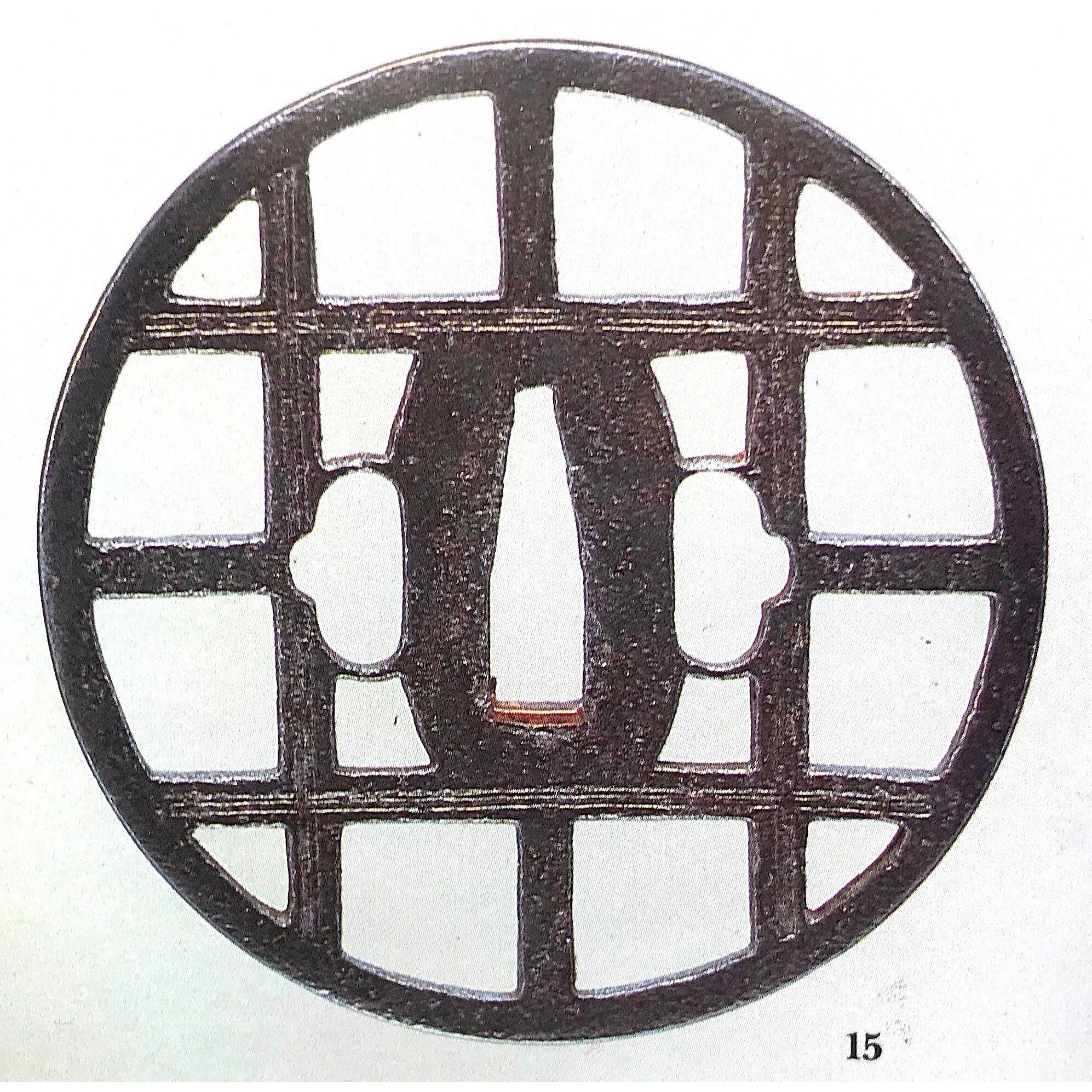
We have two possible explanations of the discrepancy between Sotheby's and Shinsa/Sesko attribution: 1) either Sotheby's or Shinsa/Sesko were wrong in their attribution or 2) these are two different pieces, one - Kamakura-bori from the 14th century and another - Shōami from 16th/17th century. Anyway, I would consider my piece as a Shōami tsuba of Momoyama - early Edo period, just for the sake of modesty.
Additional Information
| Collection | Japanese swords & fittings |
|---|---|
| Type / Purpose | Tsuba |
| Country | Japan |
| Period | 16 AD , 17 AD , Azuchi–Momoyama period [安土桃山時代] (1568–1603) , Edo period [江戸時代] (1603–1868) |
| School | Shoami |
| Subject | Lattice (kōshi-mon) |
| Material | Iron |
| Media/Technique | Low relief carving , Sukashi |
| Acquisition year | 2018 |
Related Items


