
| Title: | Enshoku shina sadame [艶色品定] — A Critical Study of the Charms of Women (also translated as Weighing the Goods of Love) |
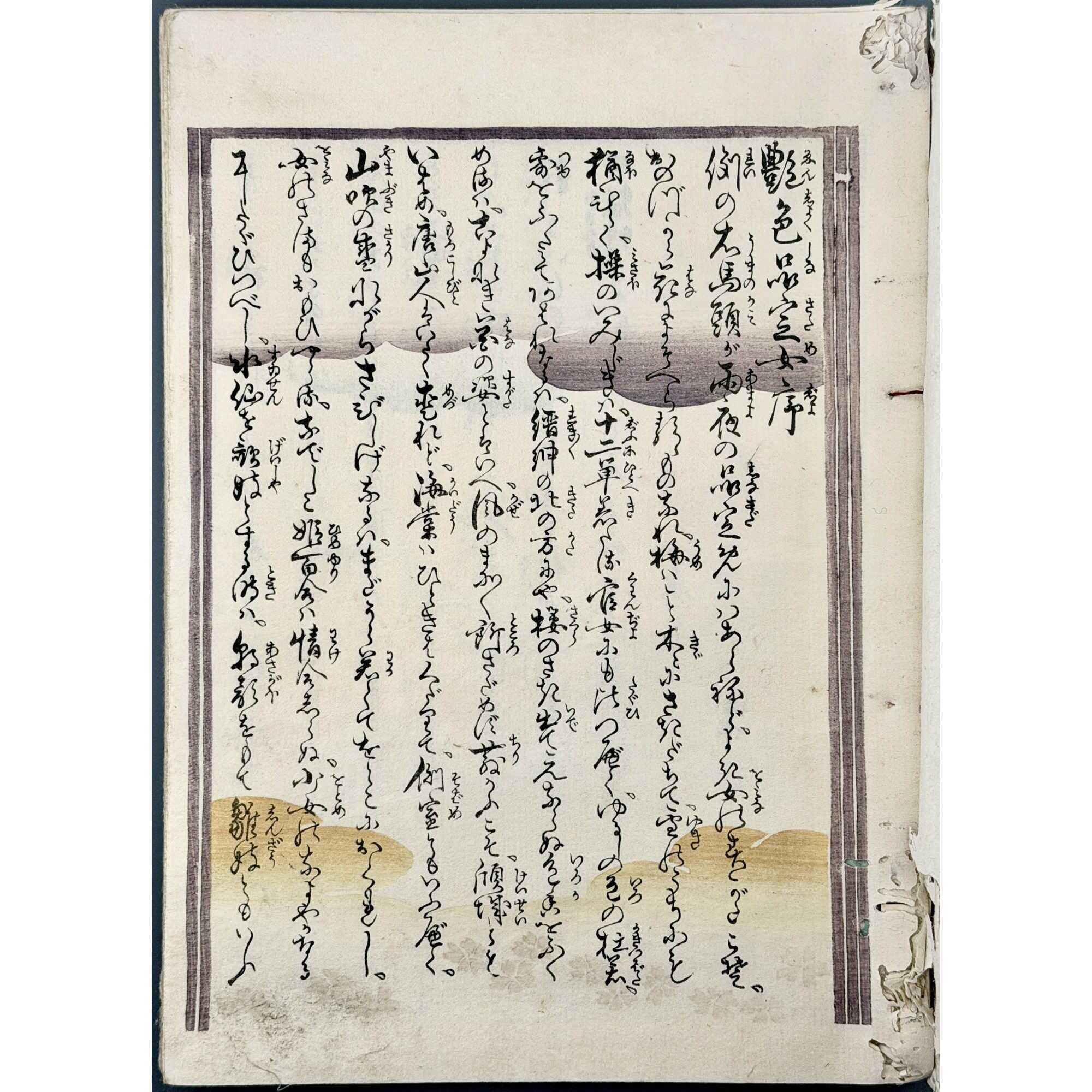
| Text by: | Miyagi Gengyō [宮城玄魚], signed Inraku Sanjin [淫楽山人] |
| Size: | 255 × 180 mm |
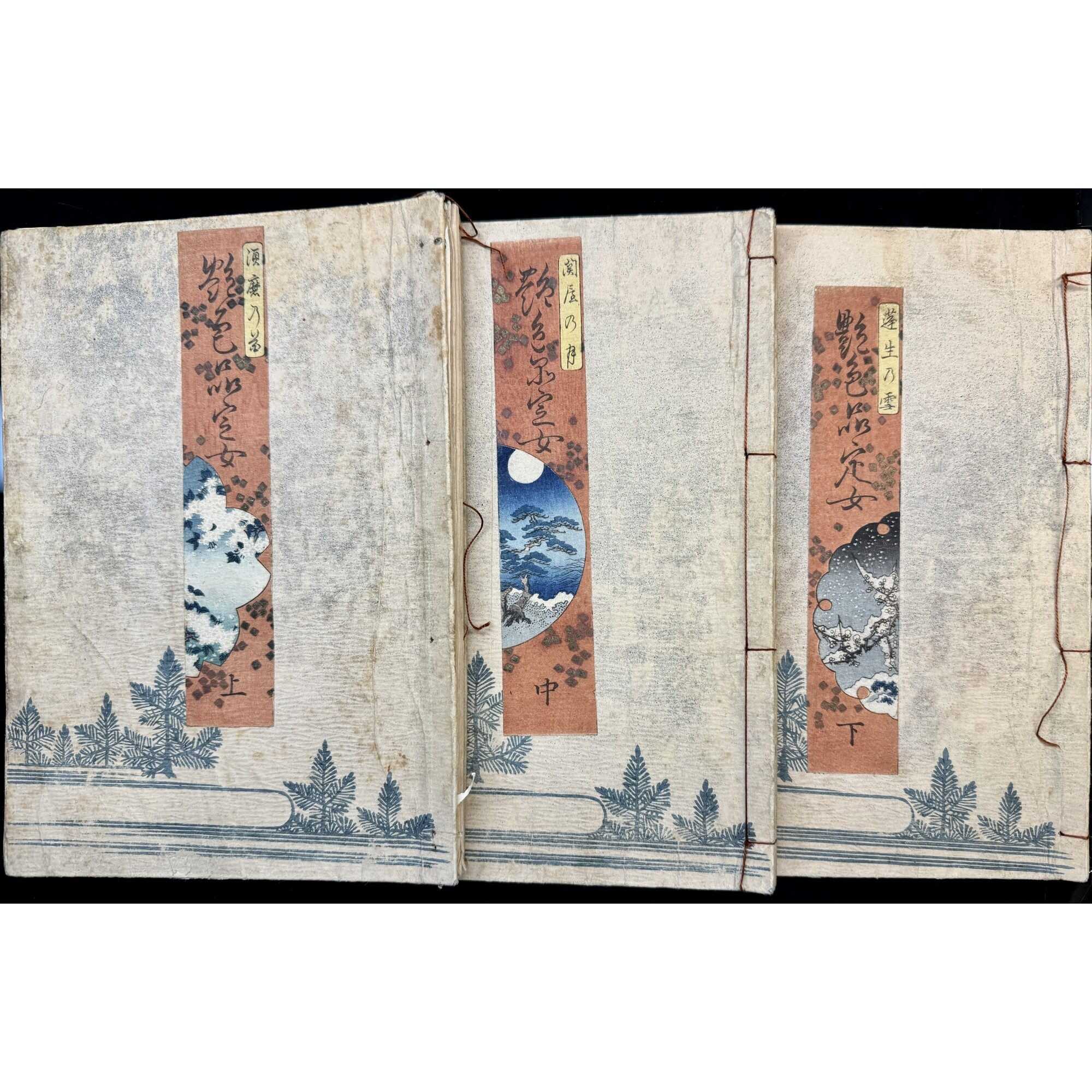
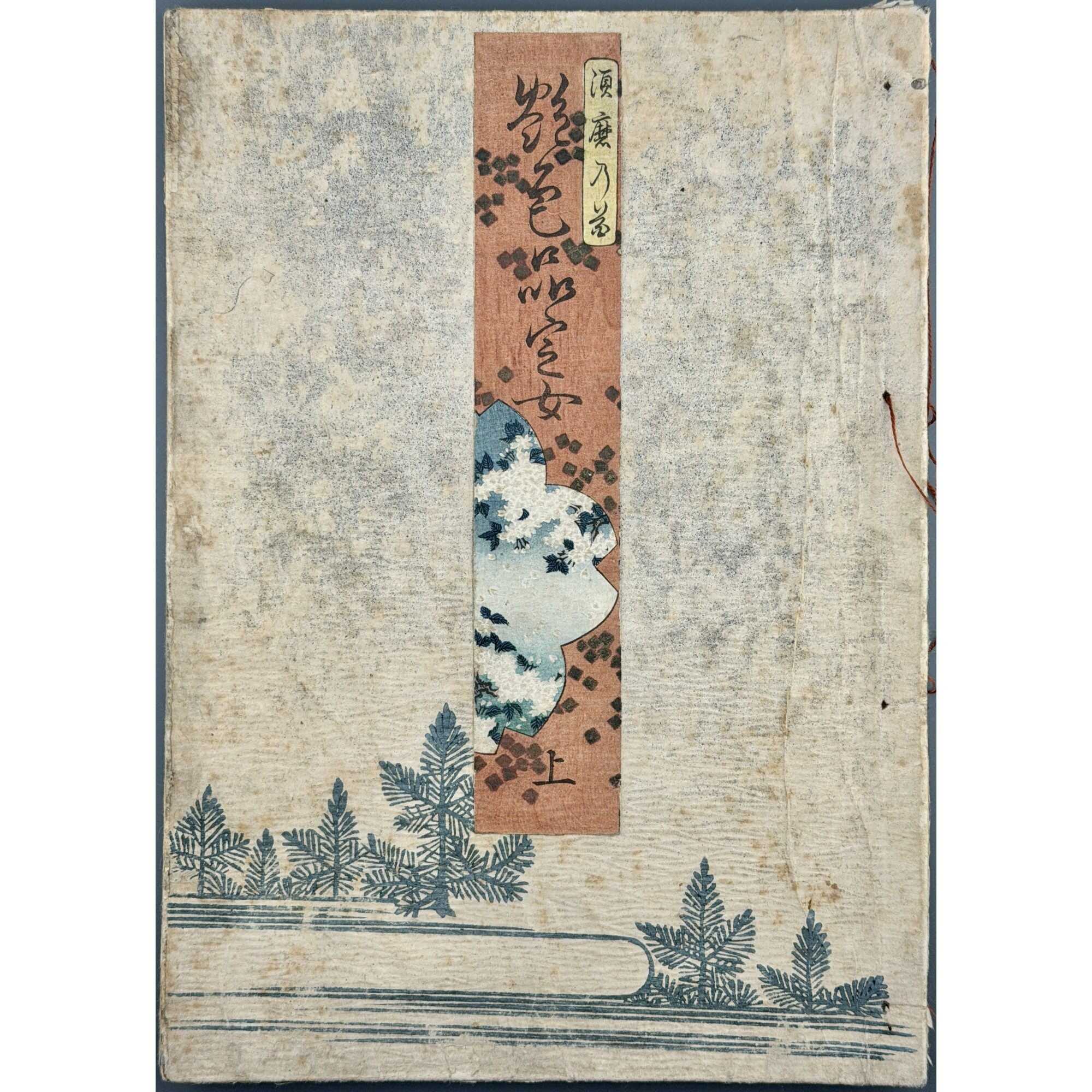
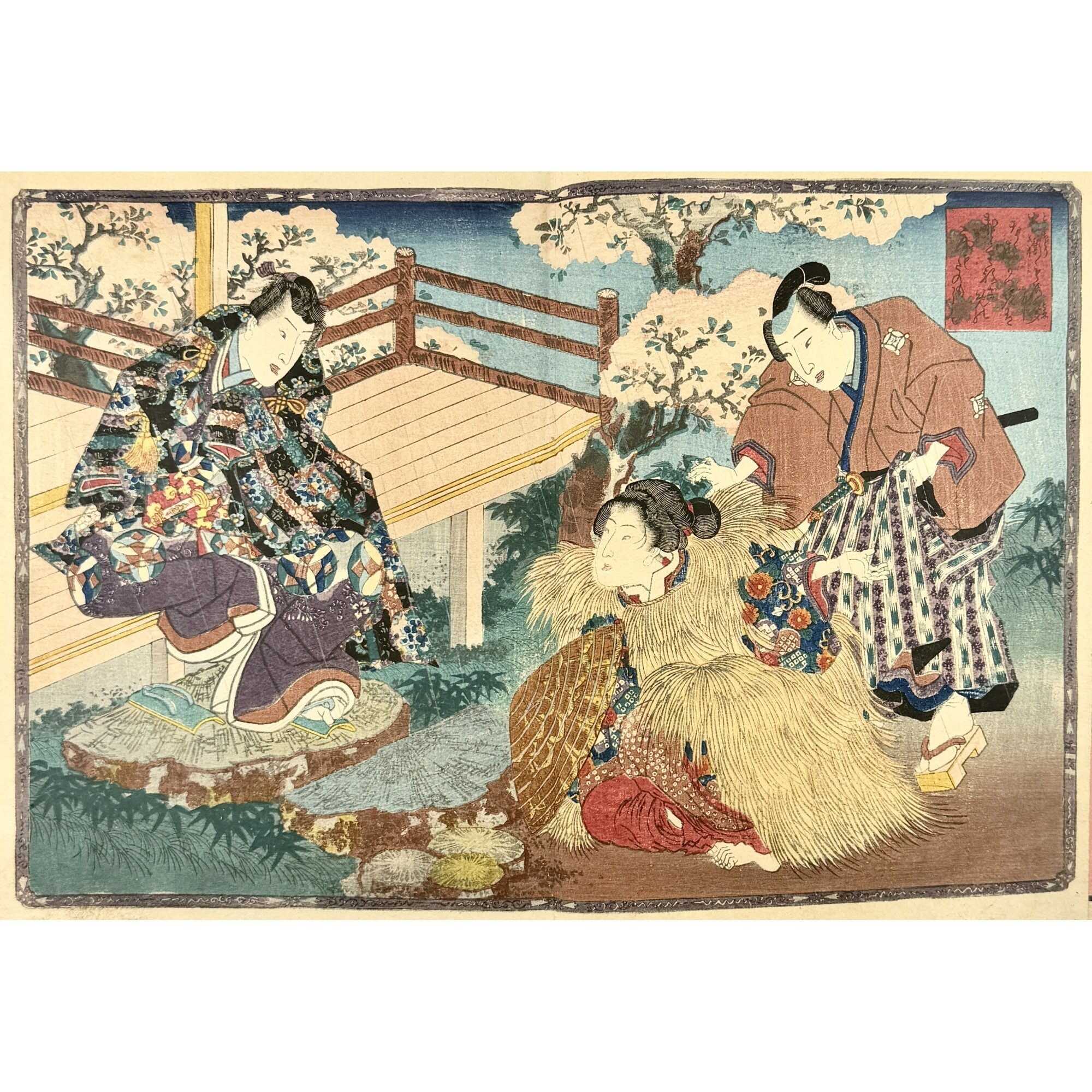
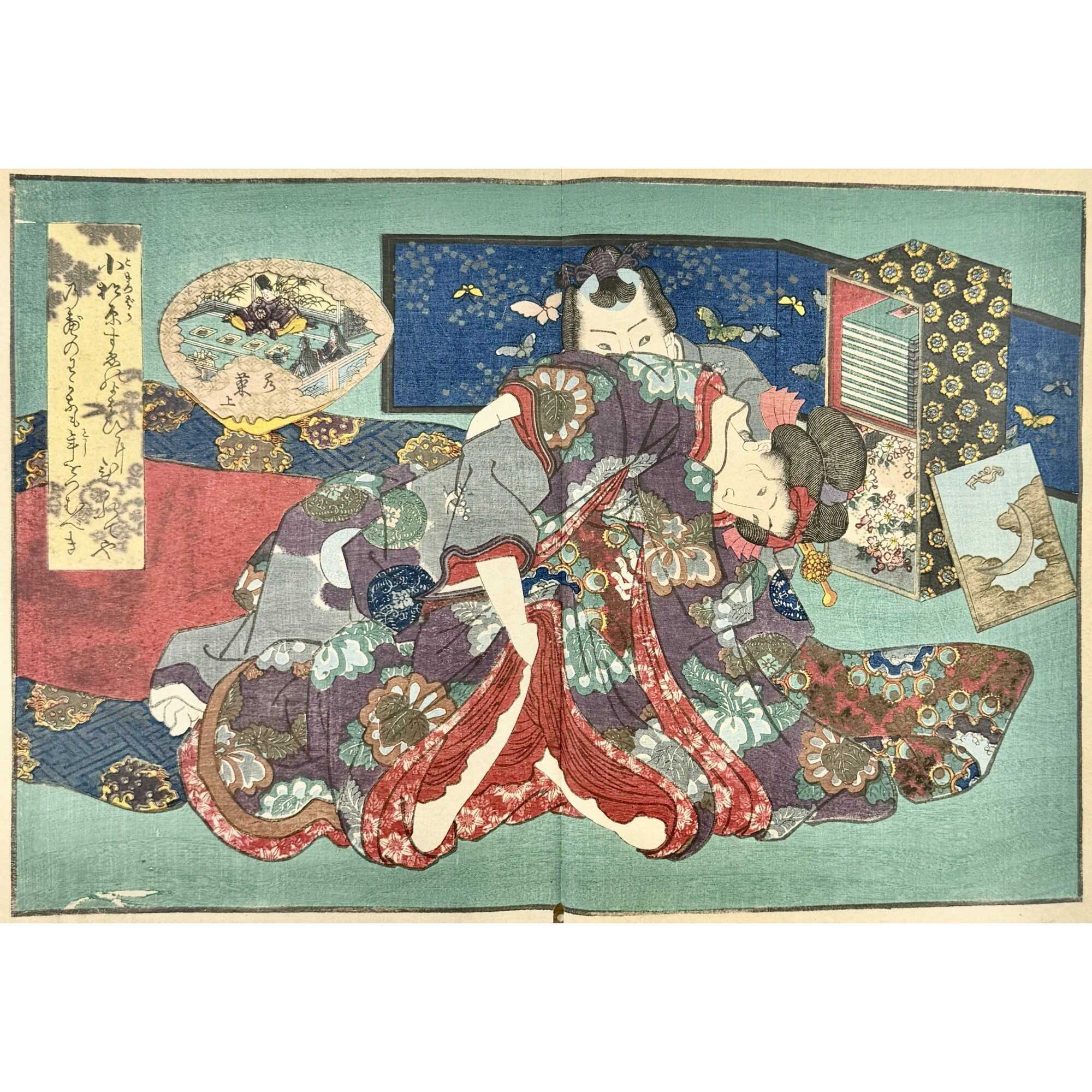
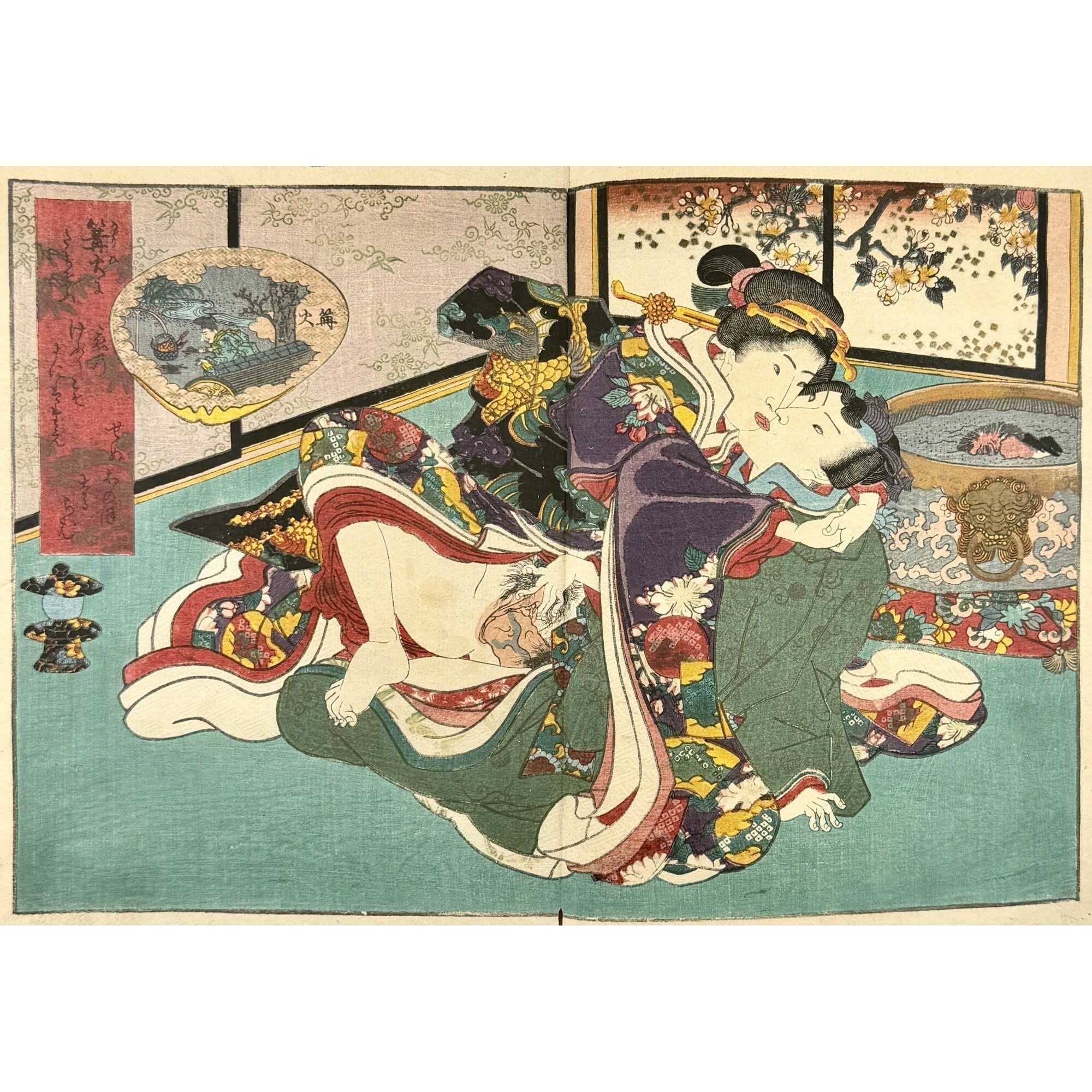
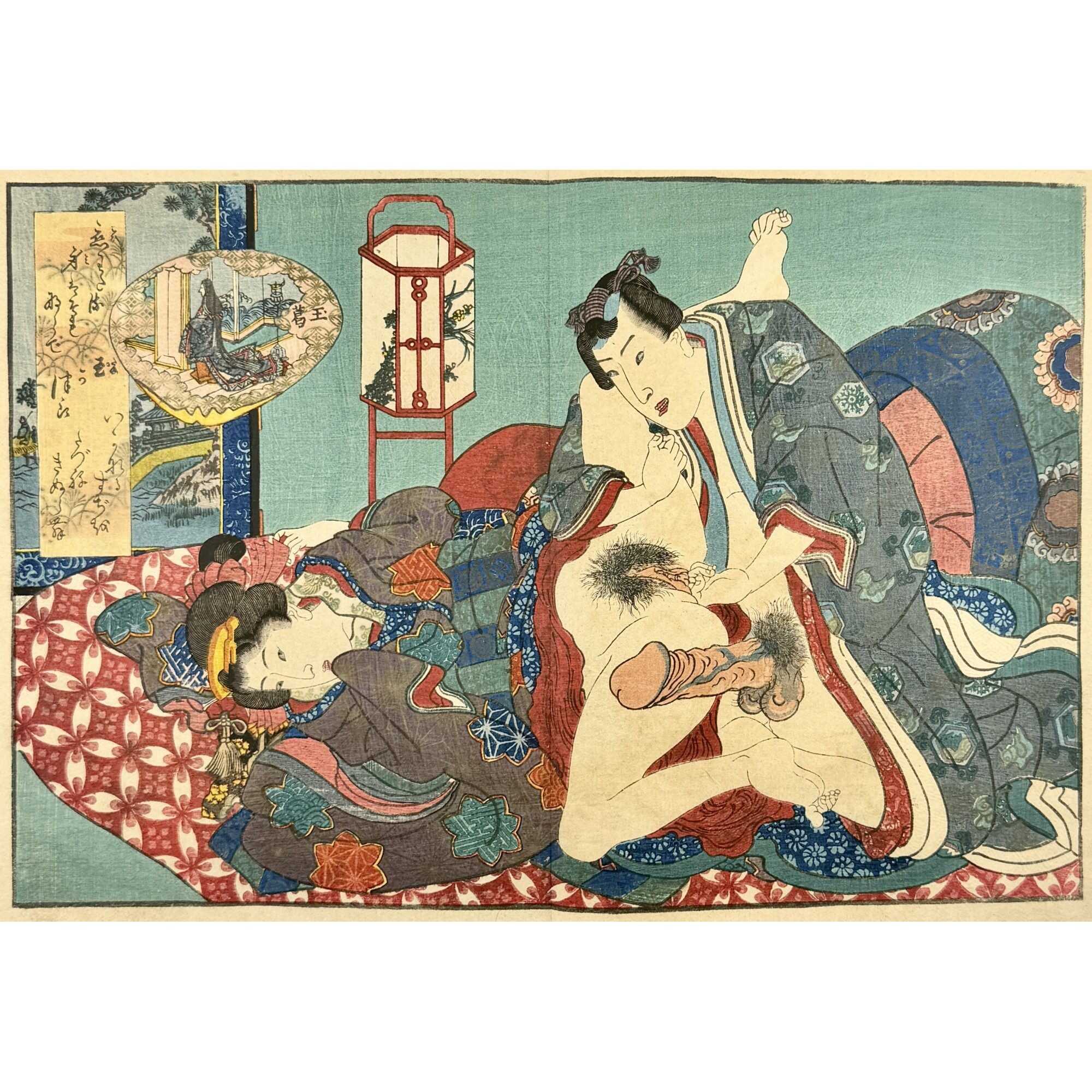
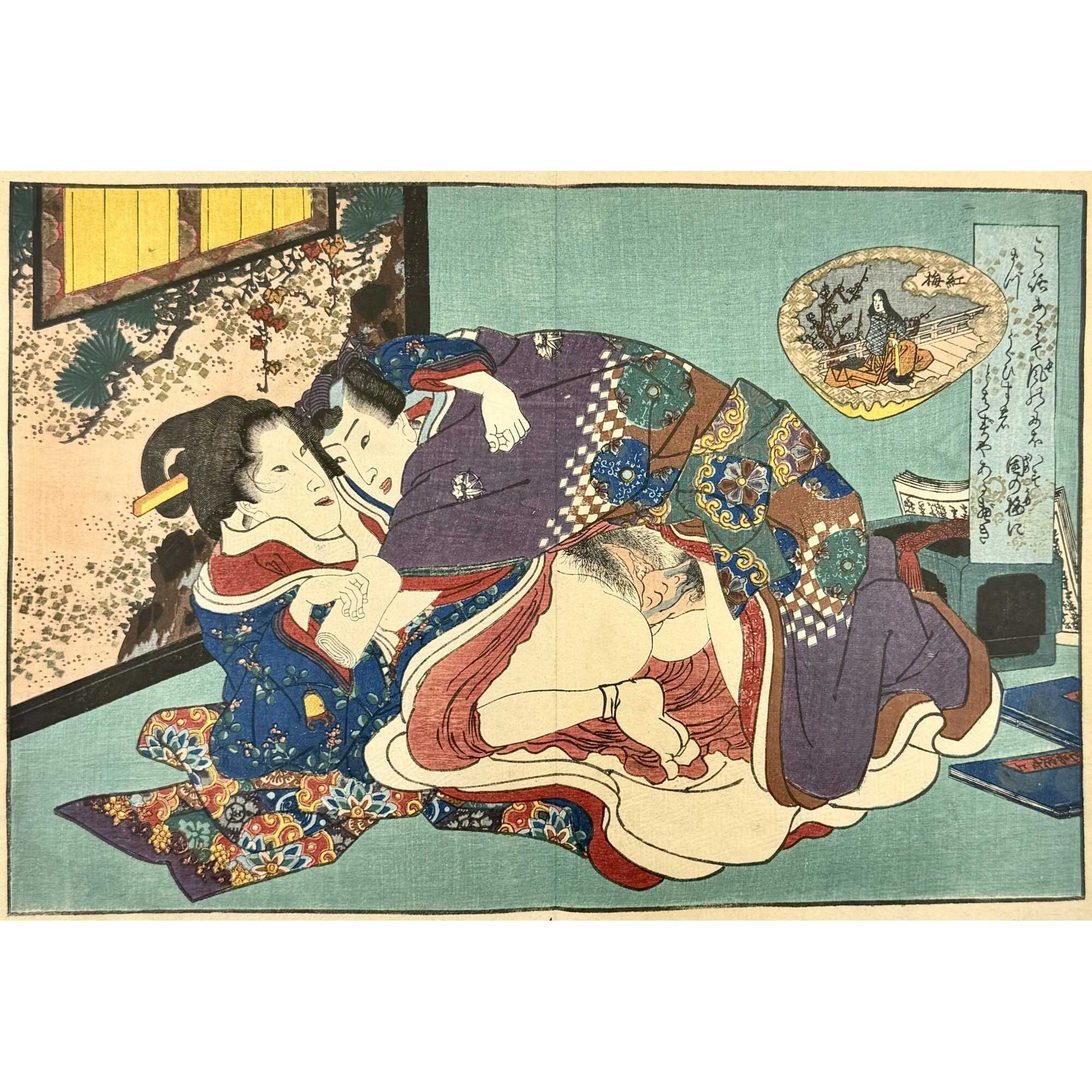
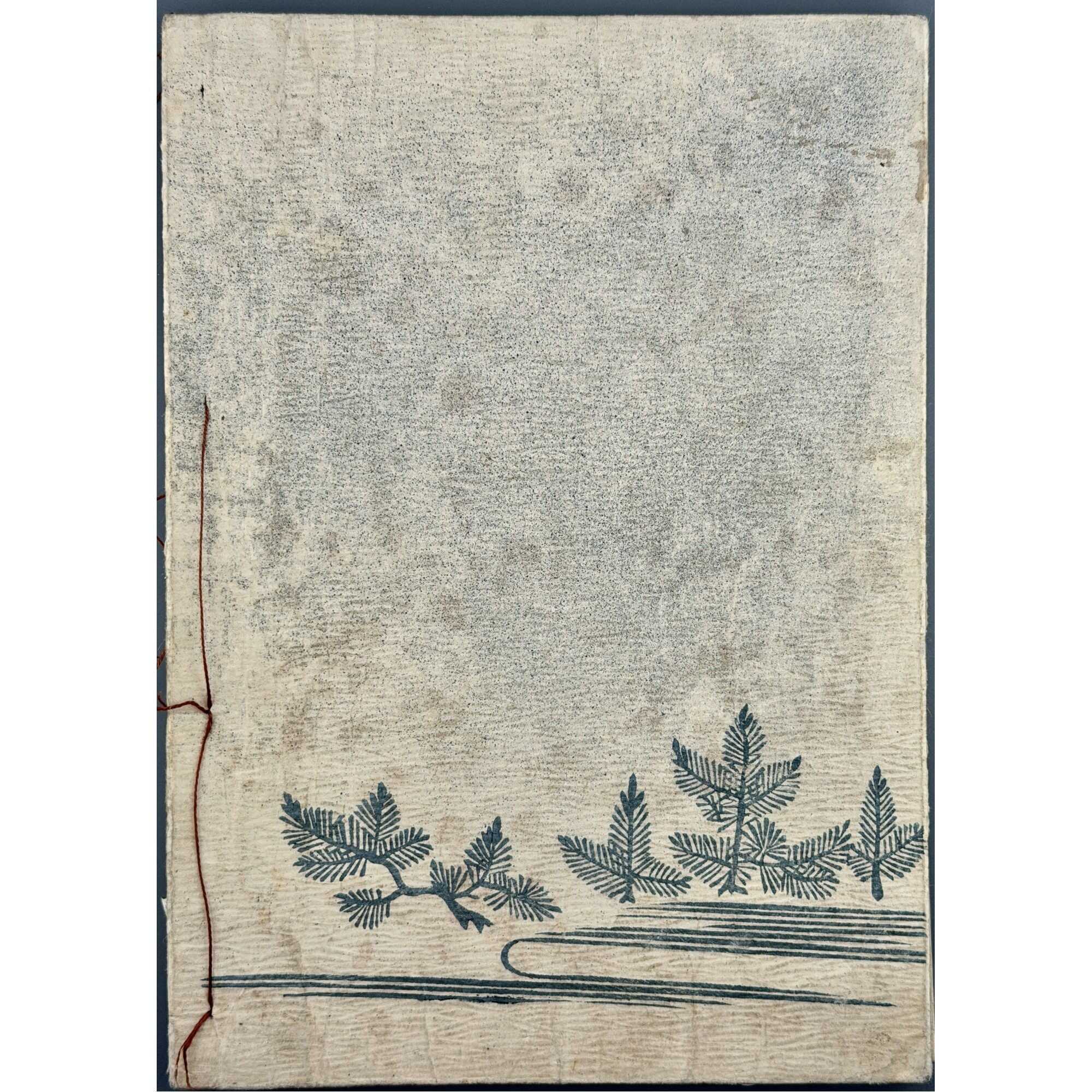
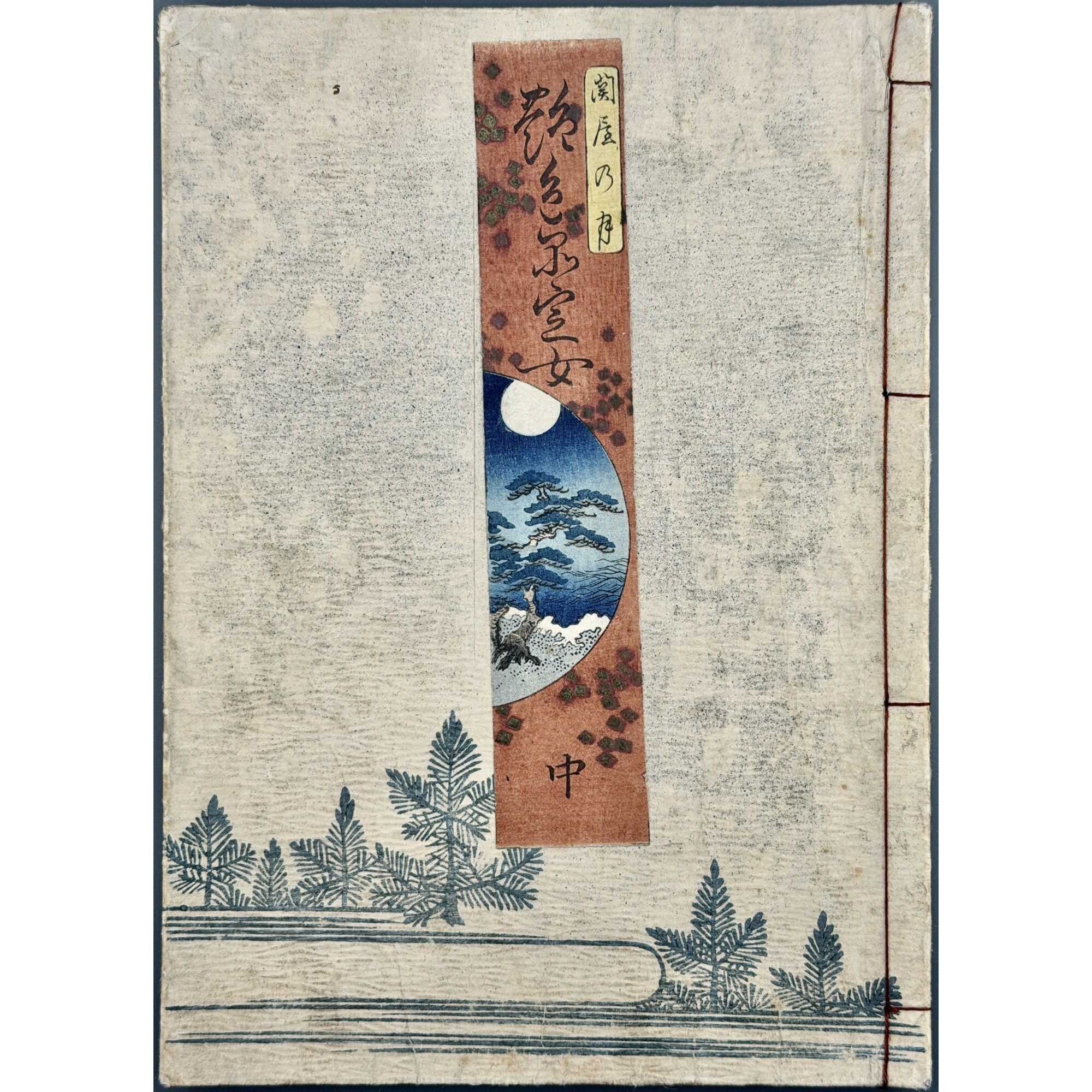
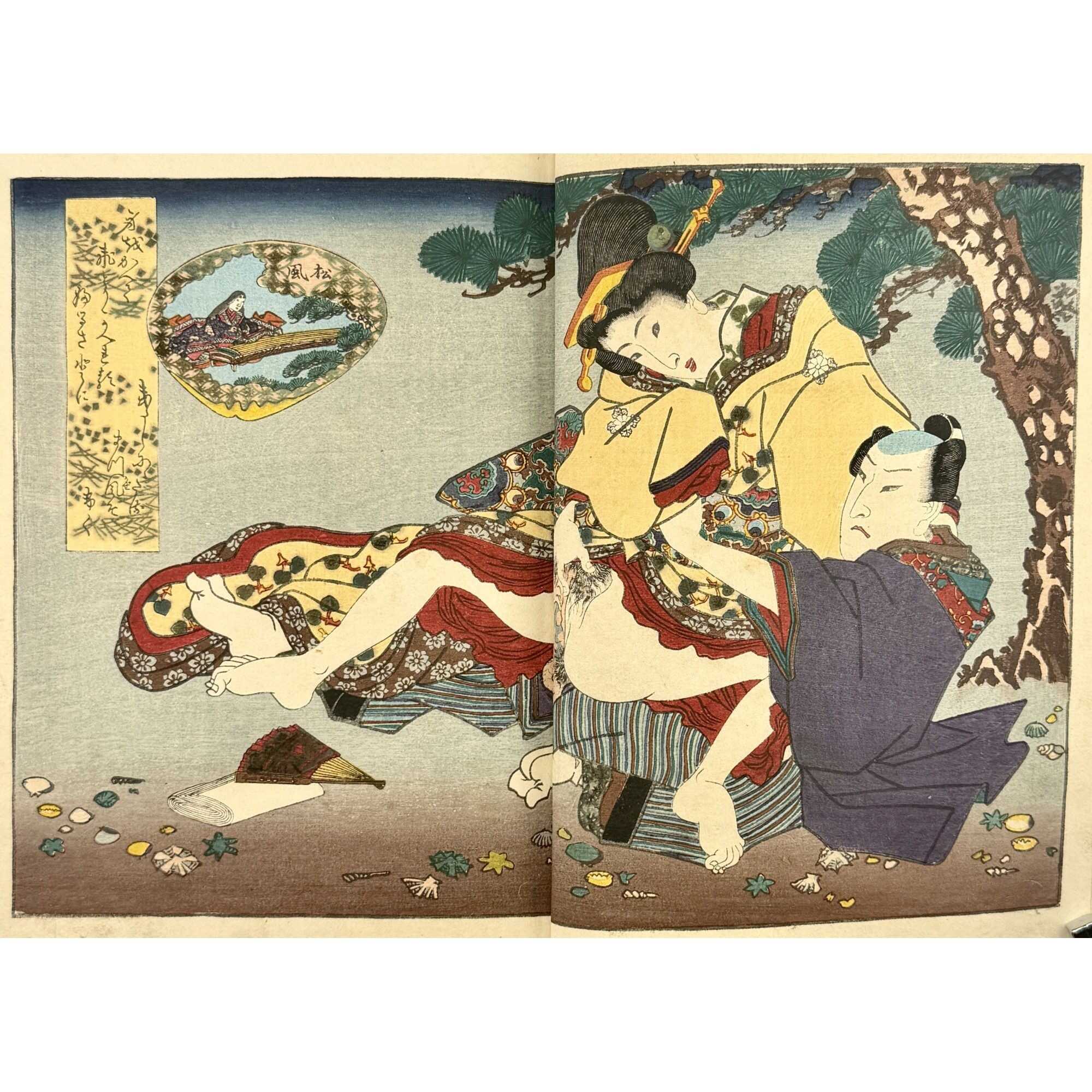
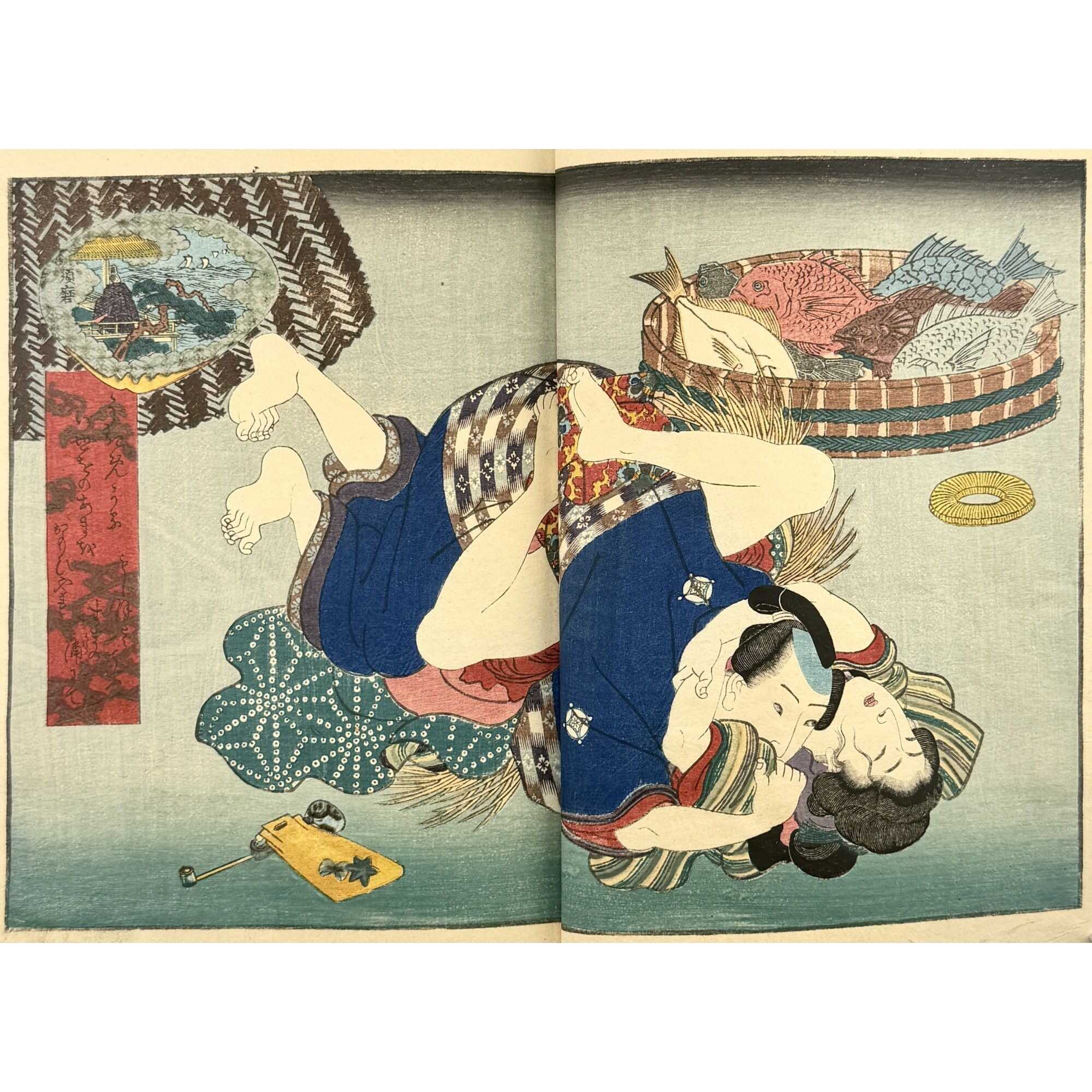
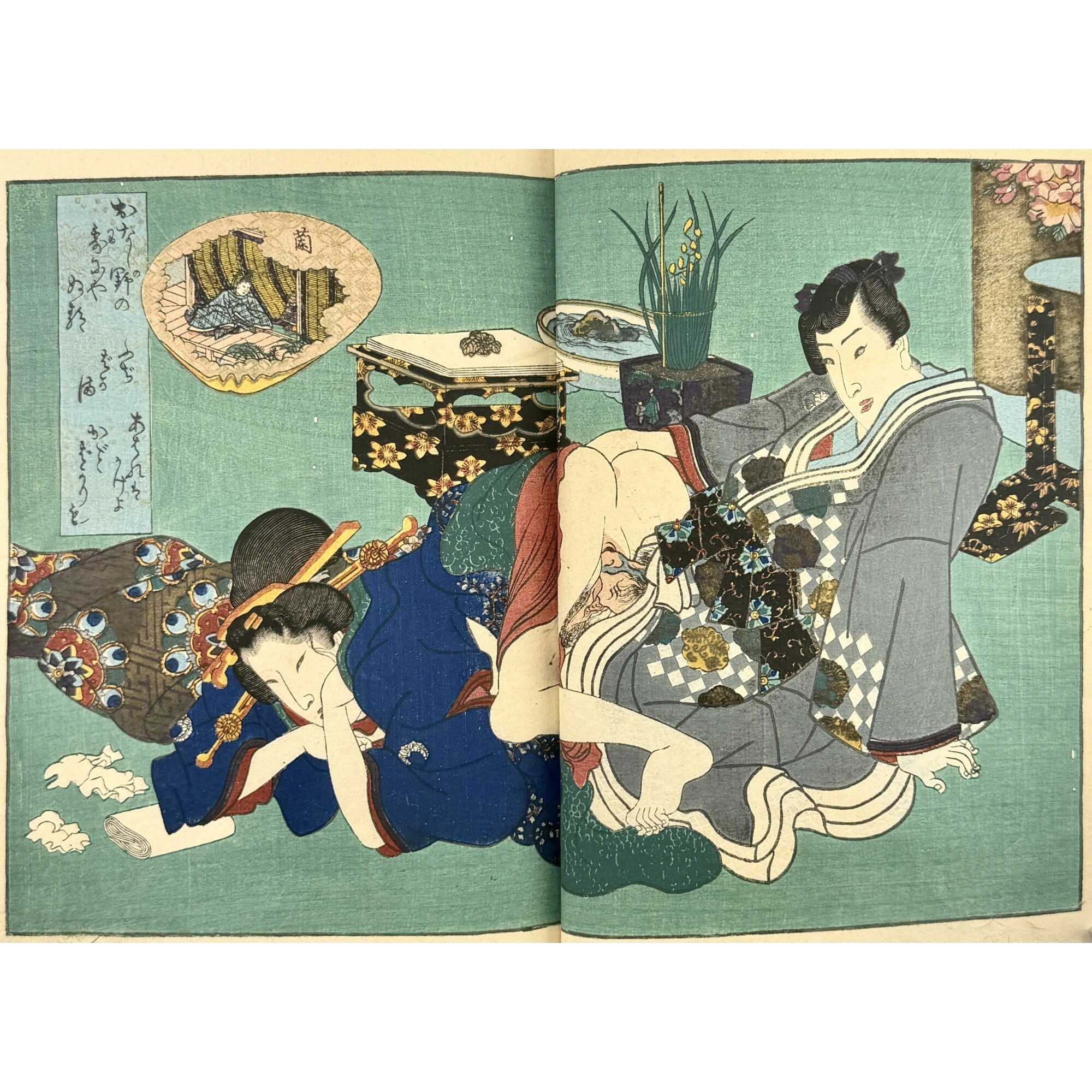
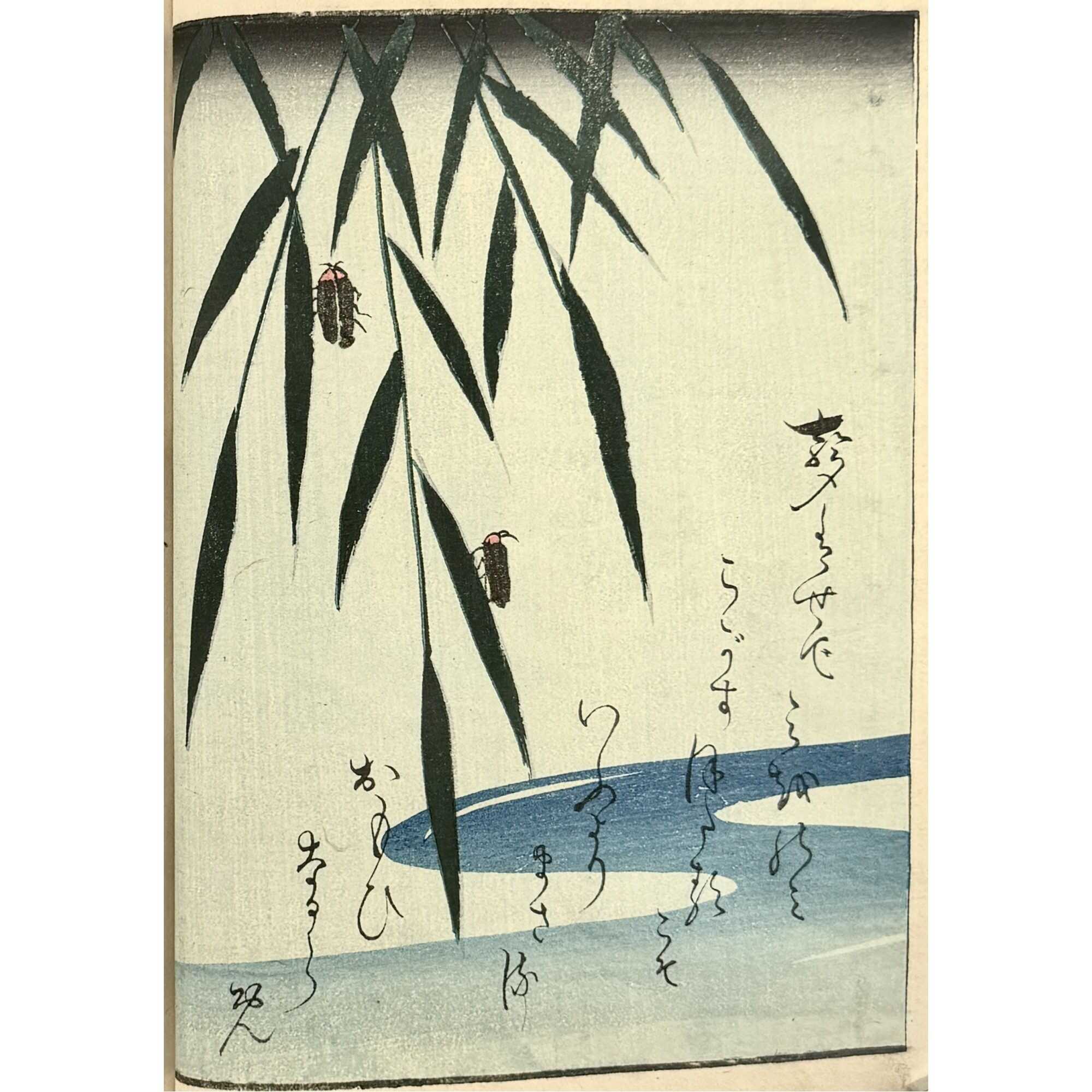
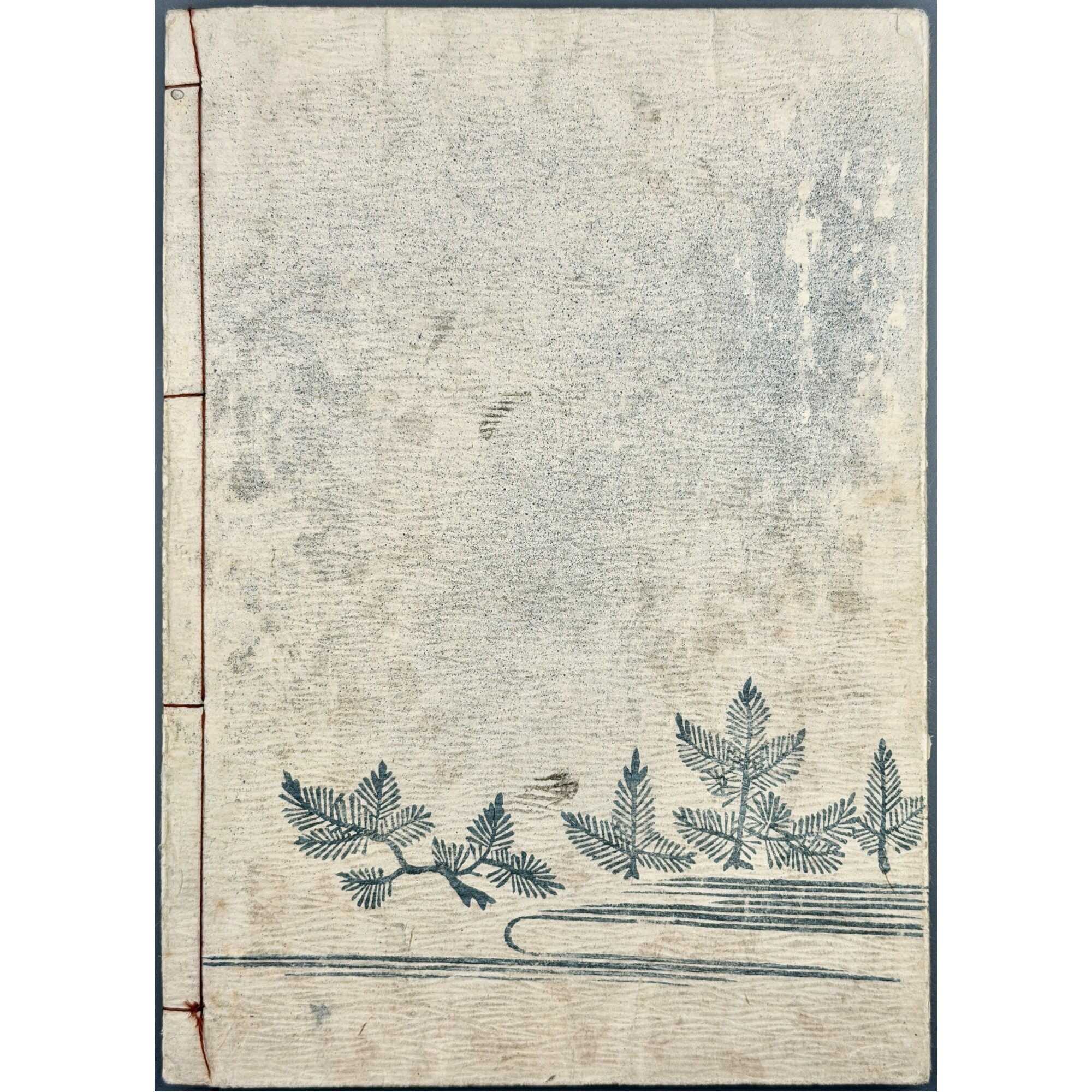
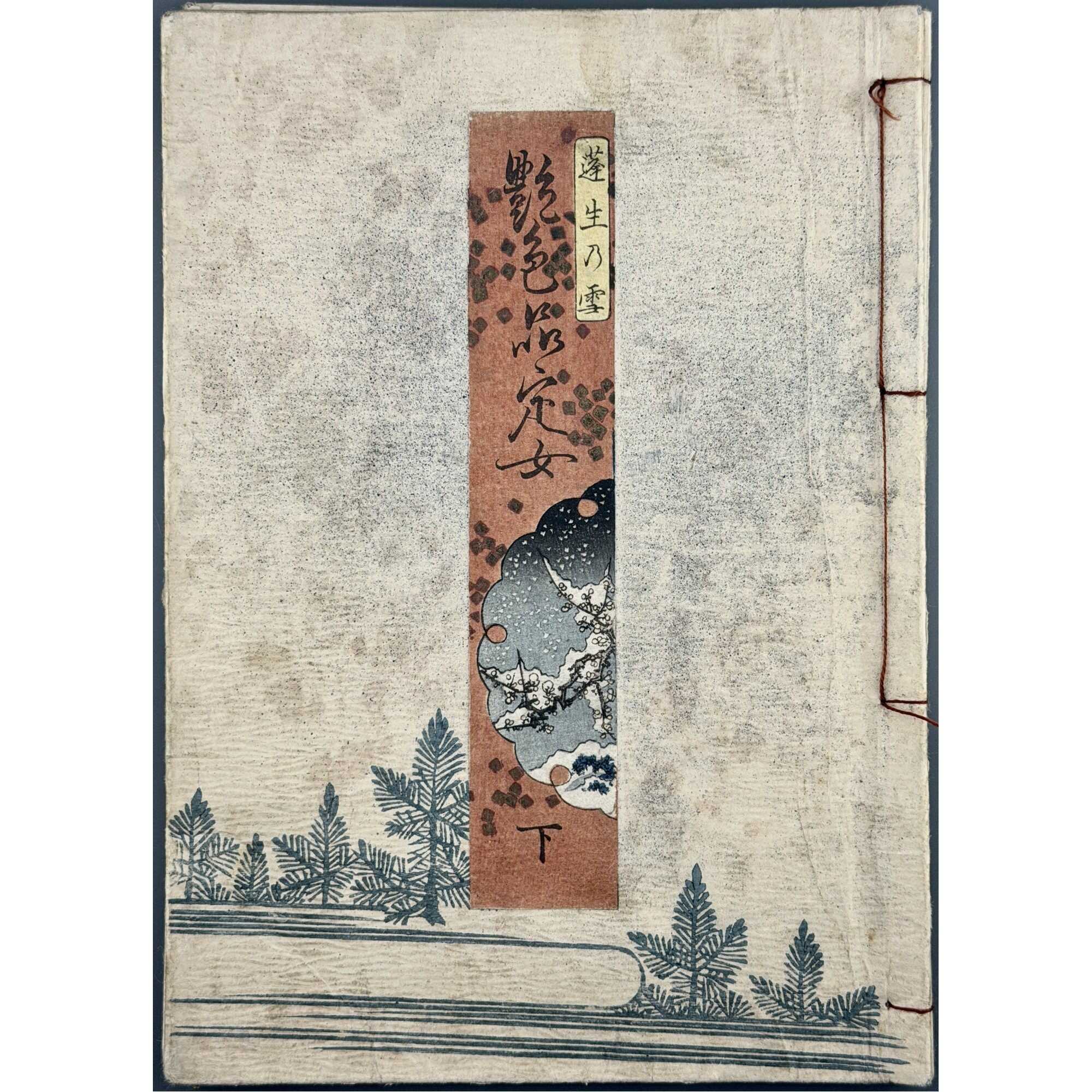
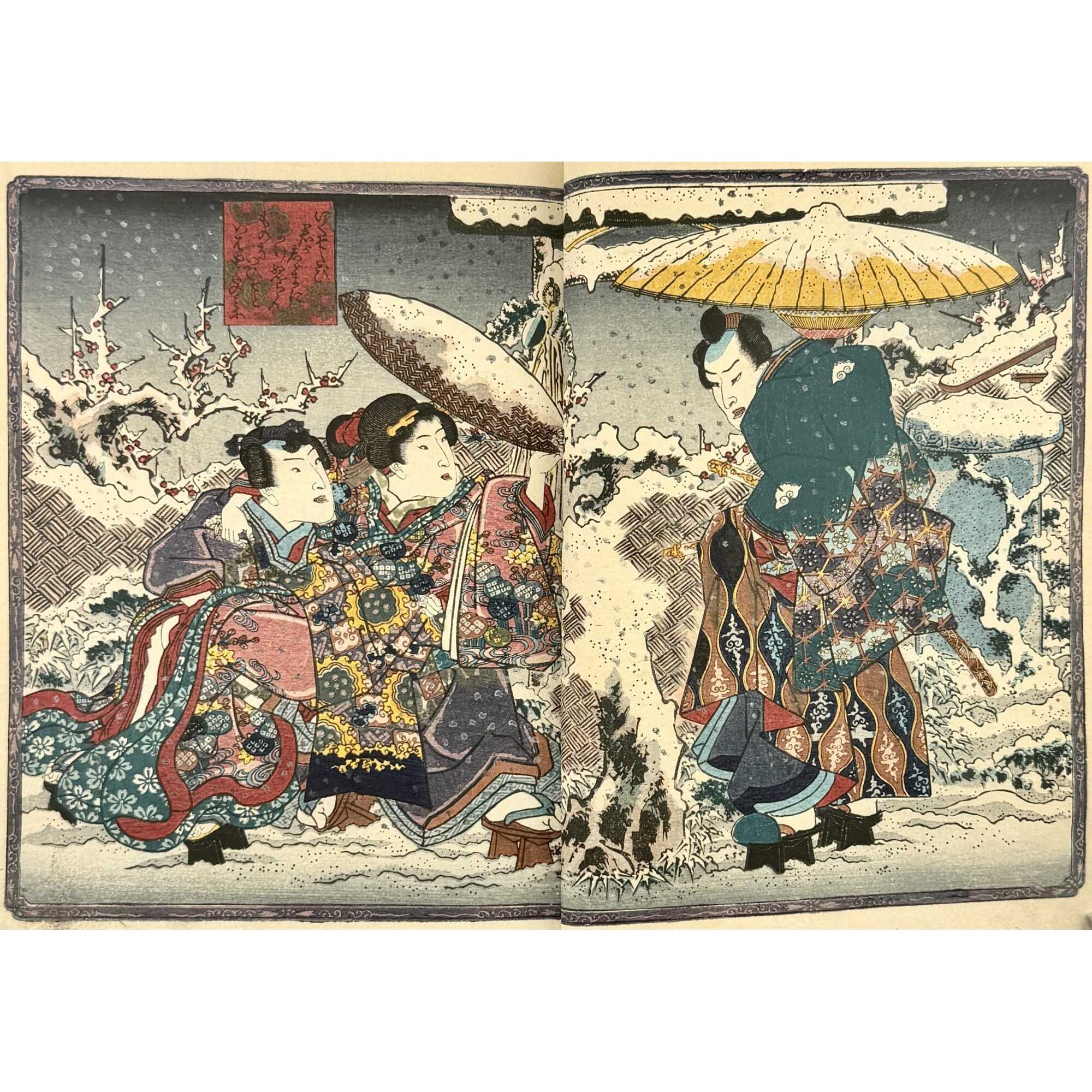
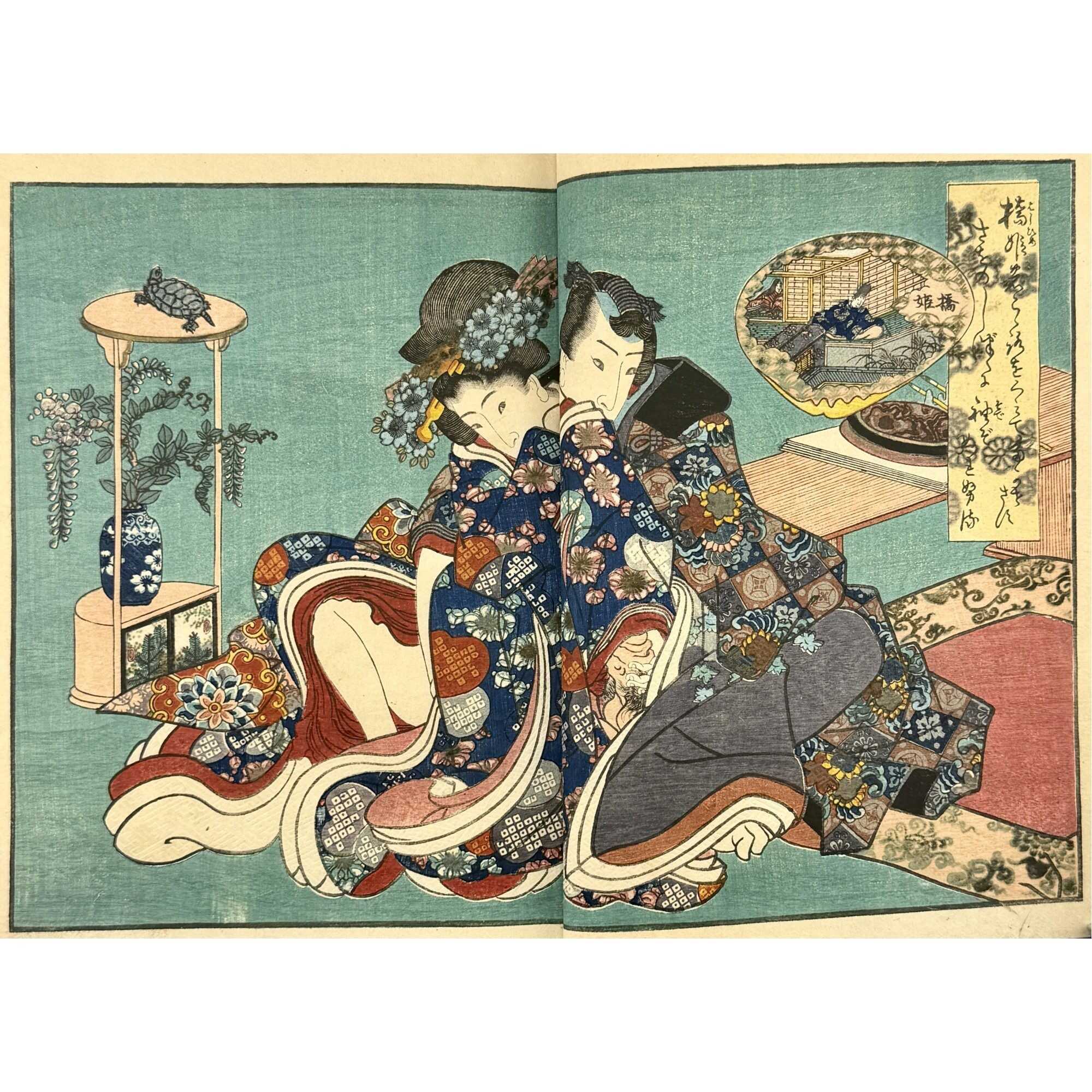
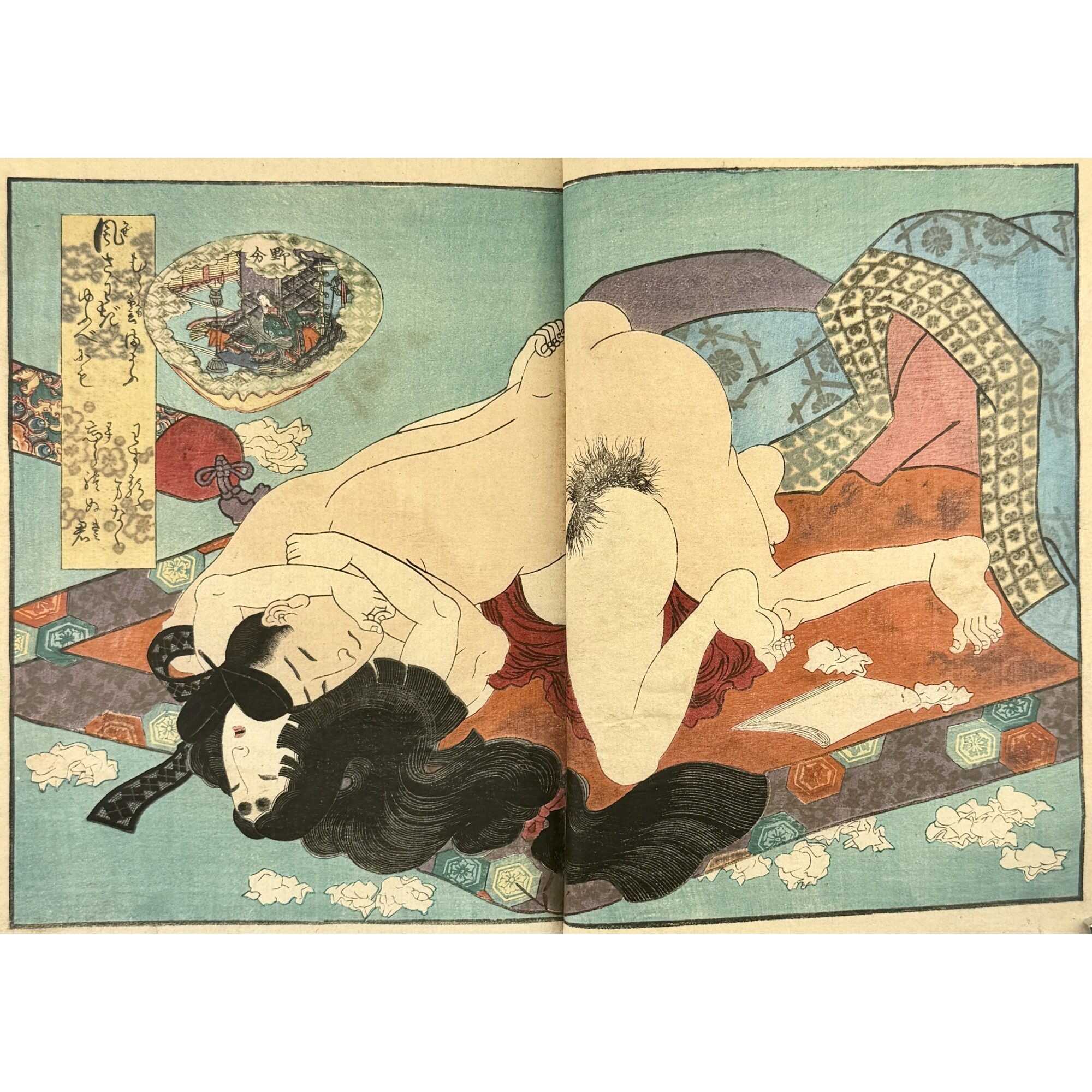
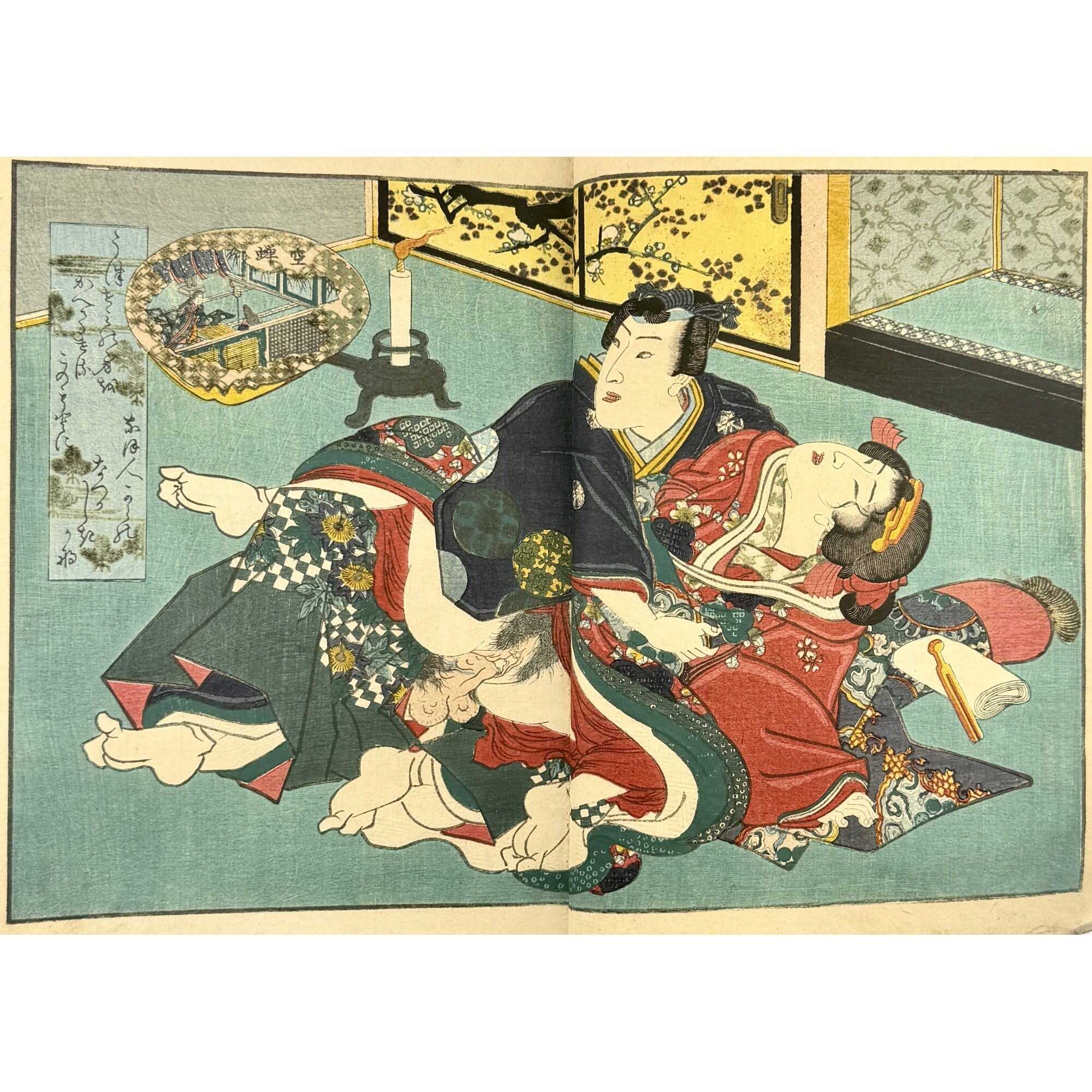
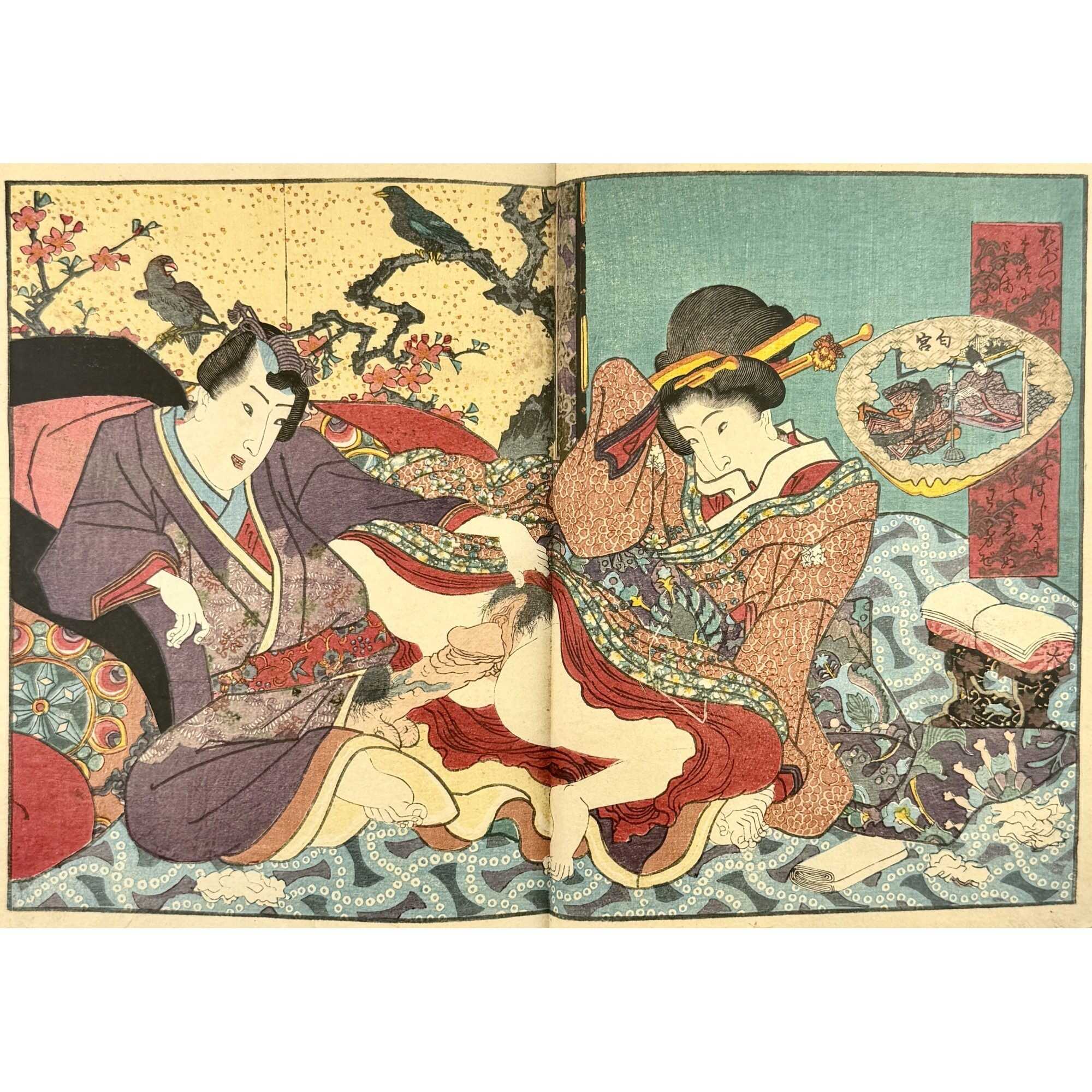
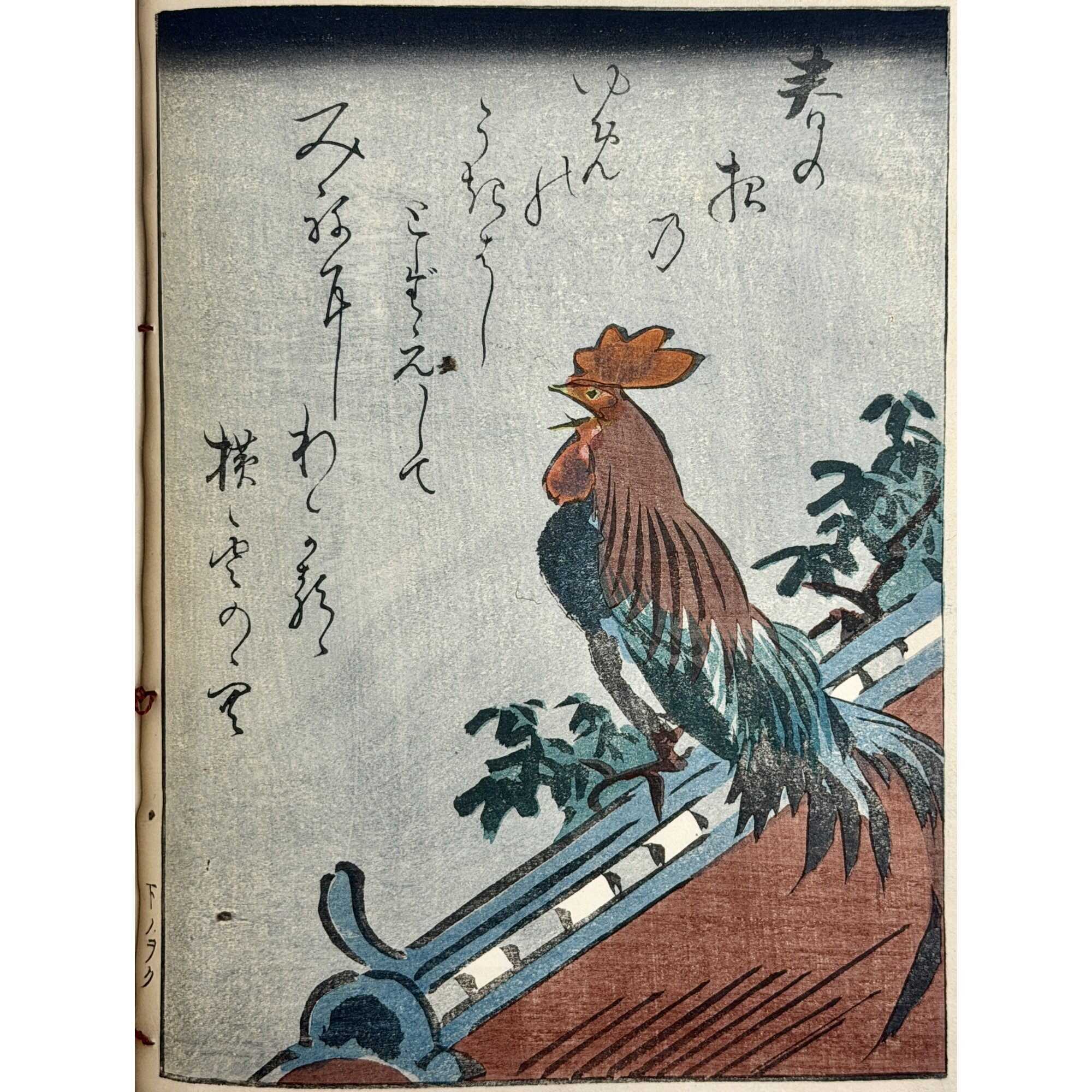
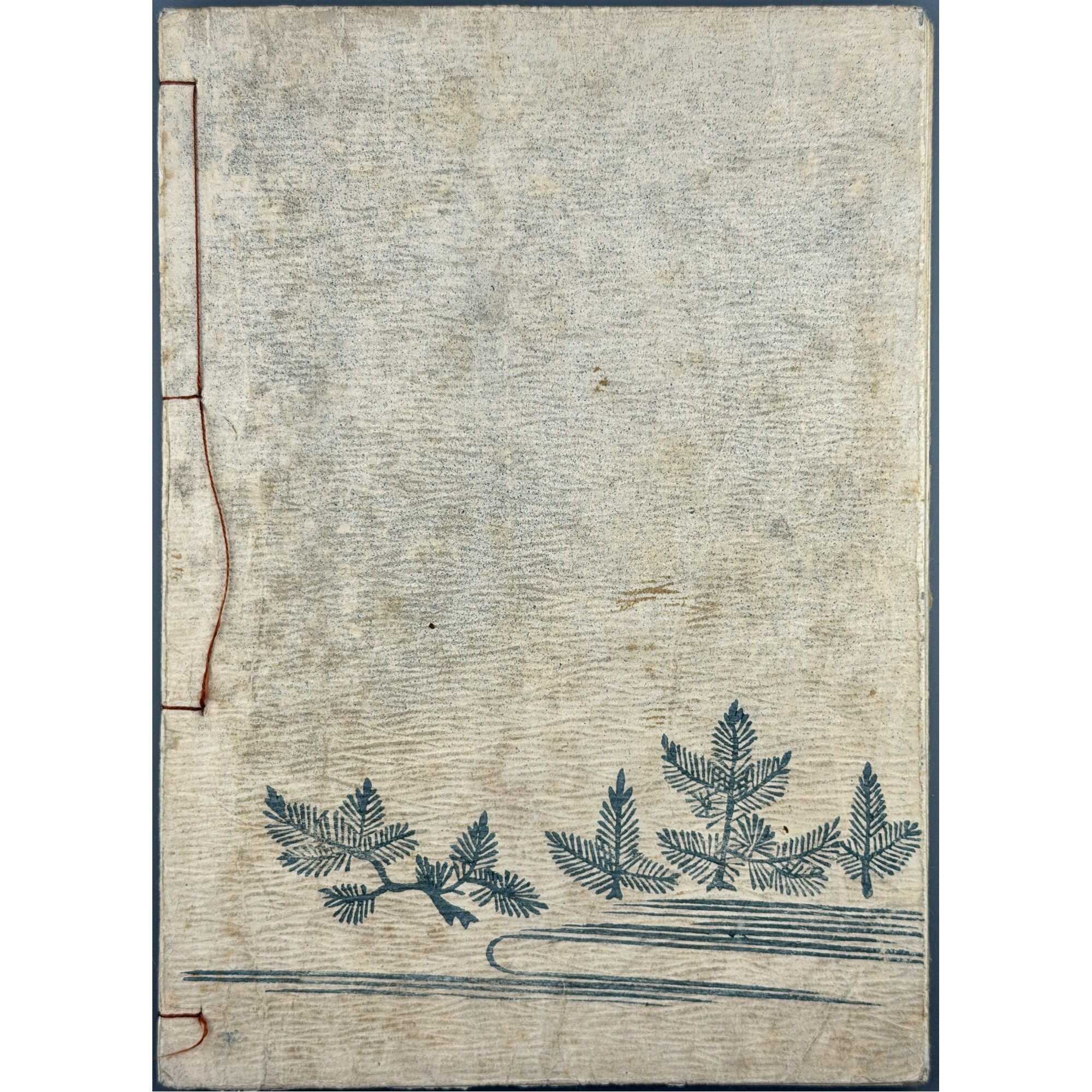
Description: Complete set of three hanshibon 半紙本 volumes (upper 上, middle 中, lower 下), string-bound in original fukurotoji 袋綴じ format. Title-slips printed in red with stylised calligraphy. Covers decorated with woodblock-printed landscape motifs (pines and shoreline) in blue. Preserved in a blue cloth-covered chitsu 帙 (folding case). Illustrations attributed to Kunimori II, closely related in theme and composition to the Genji parodic tradition derived from Nise Murasaki inaka Genji 偽紫田舎源氏. The work comprises erotic scenes structured around chapters and episodes from the Genji narrative, combining contemporary settings with allusive classical references.
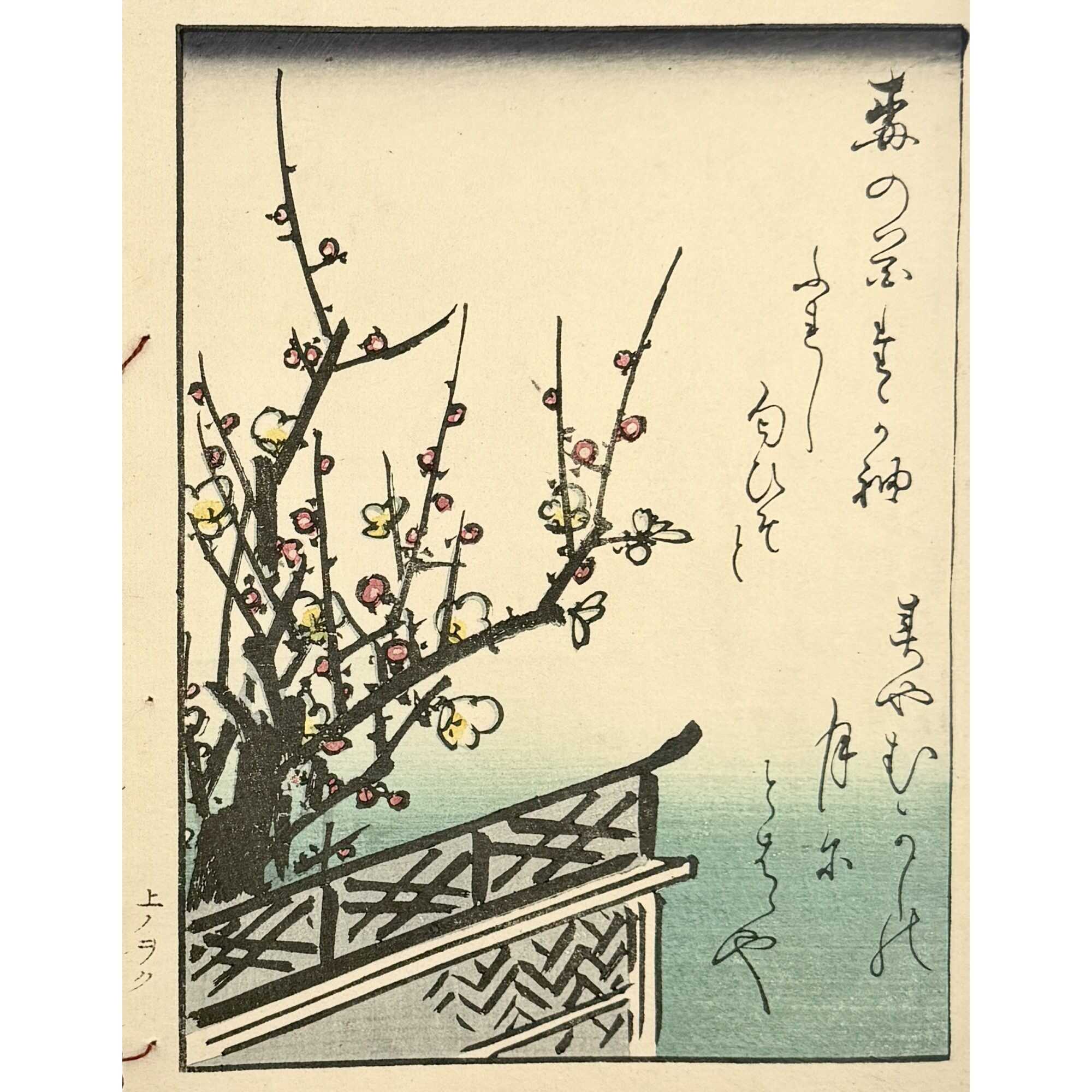
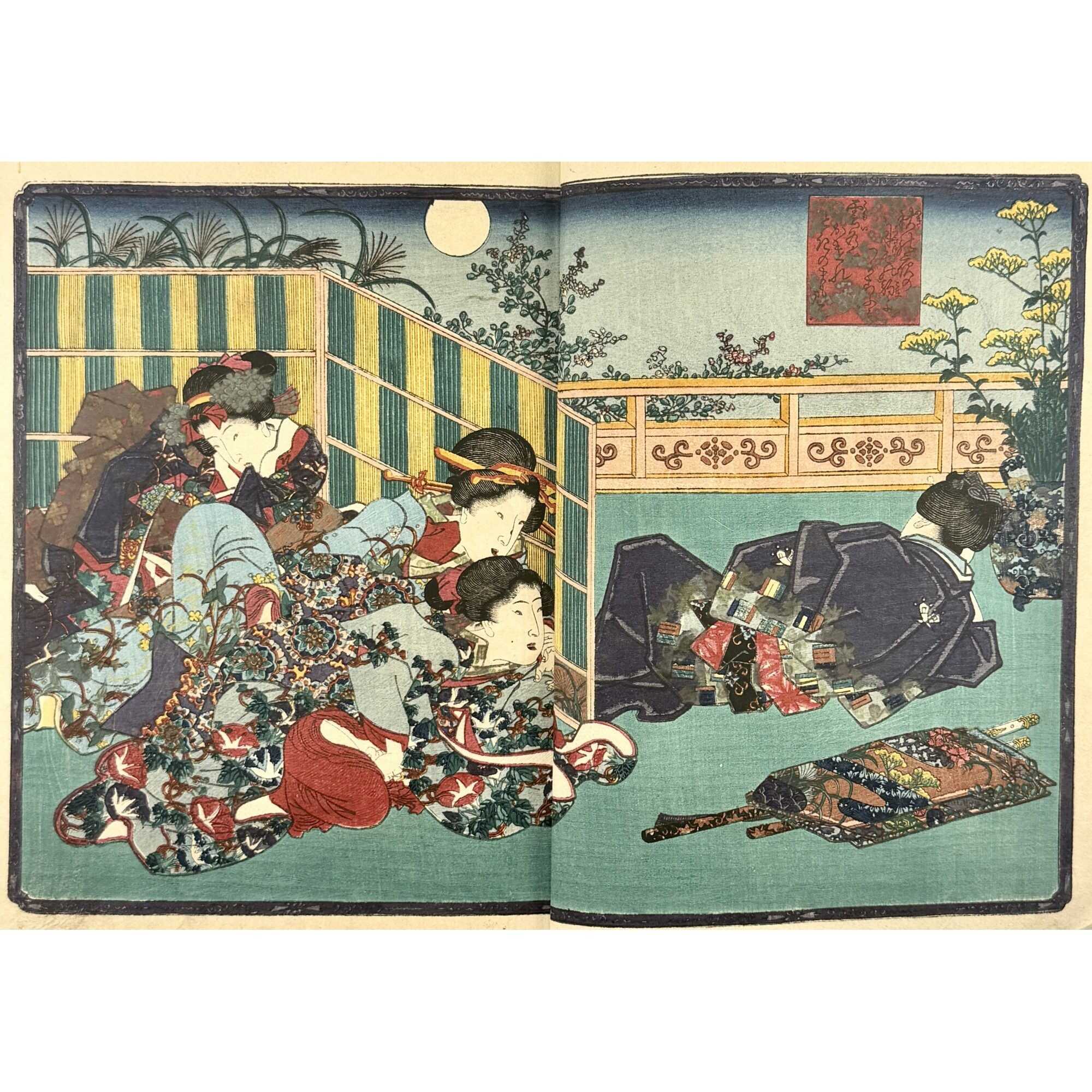
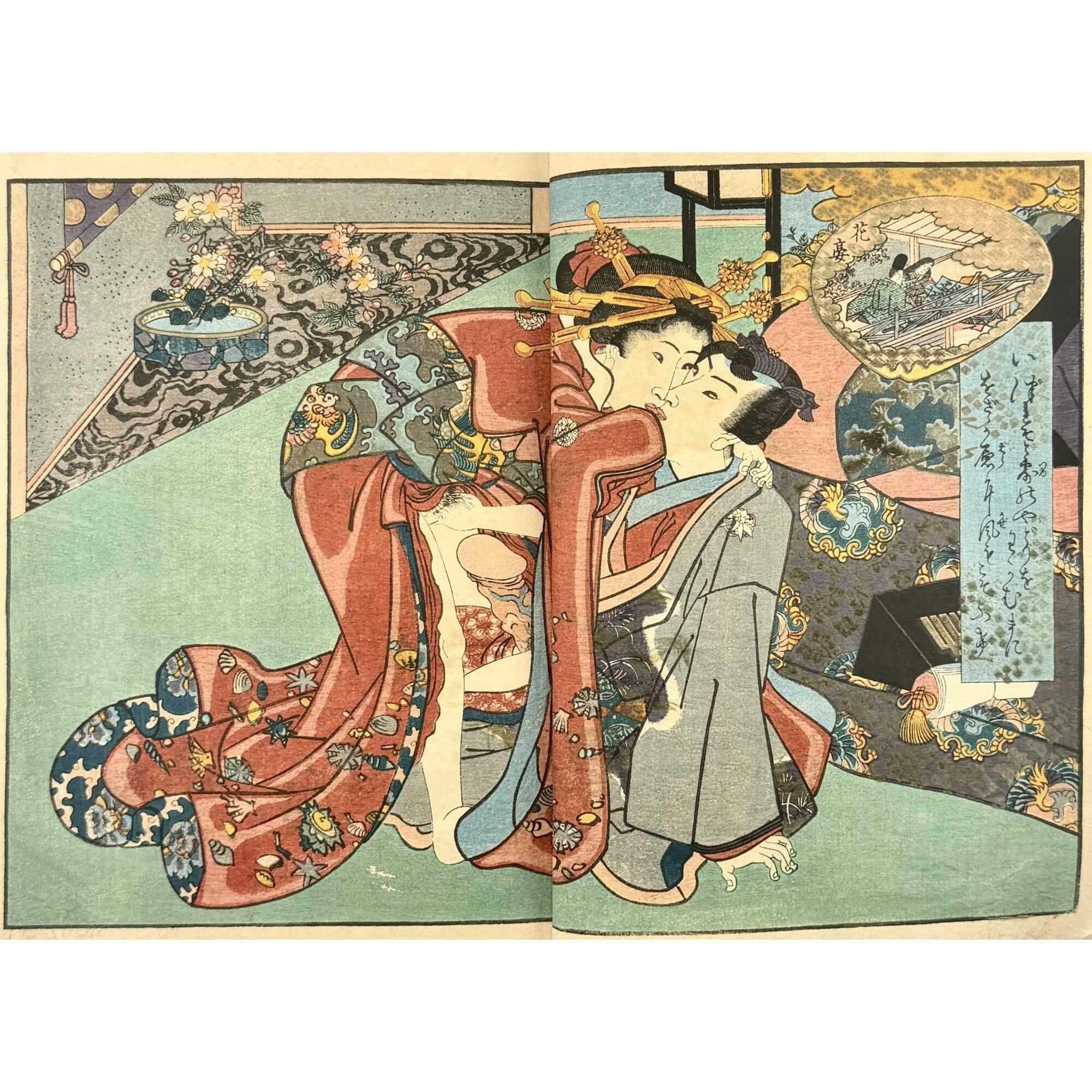
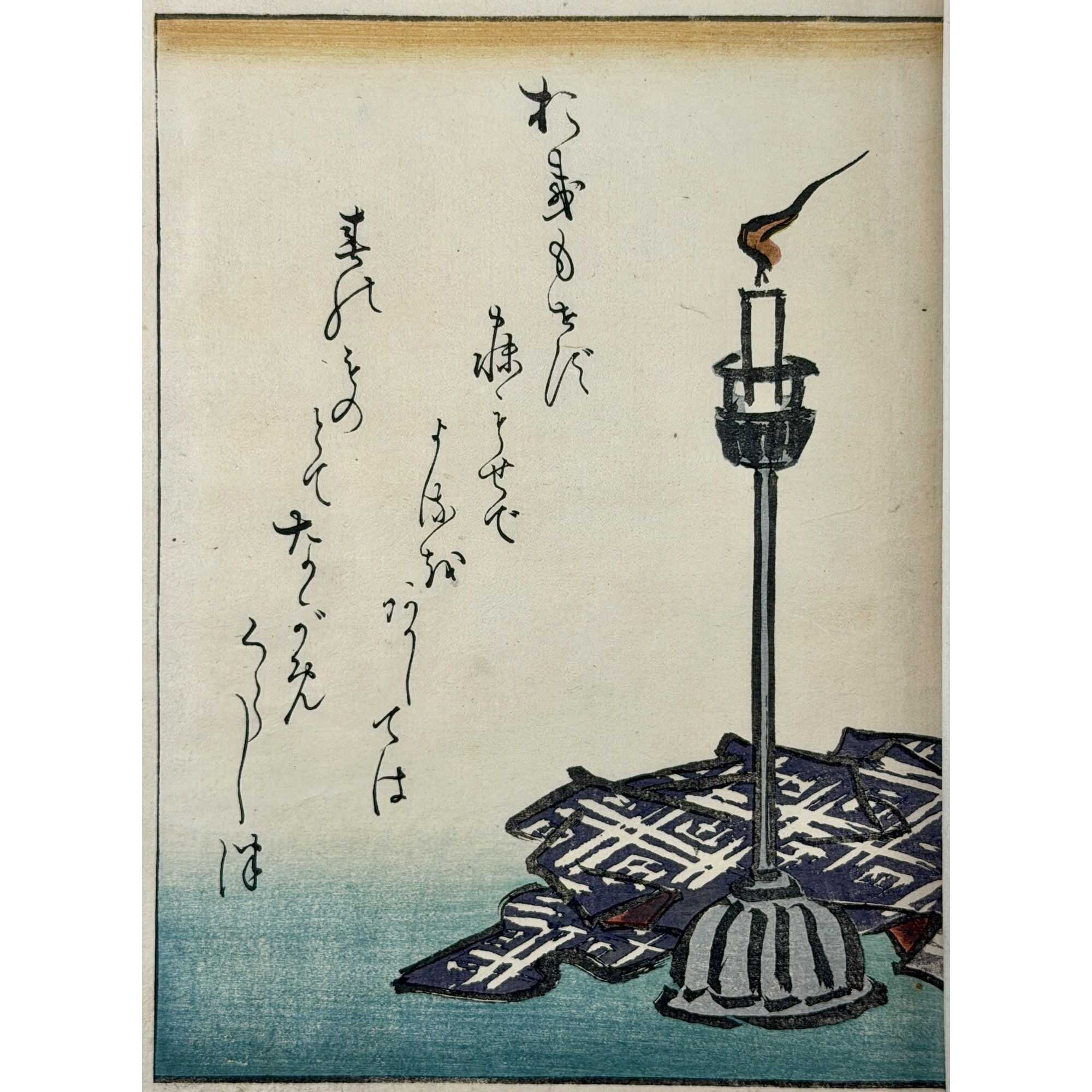
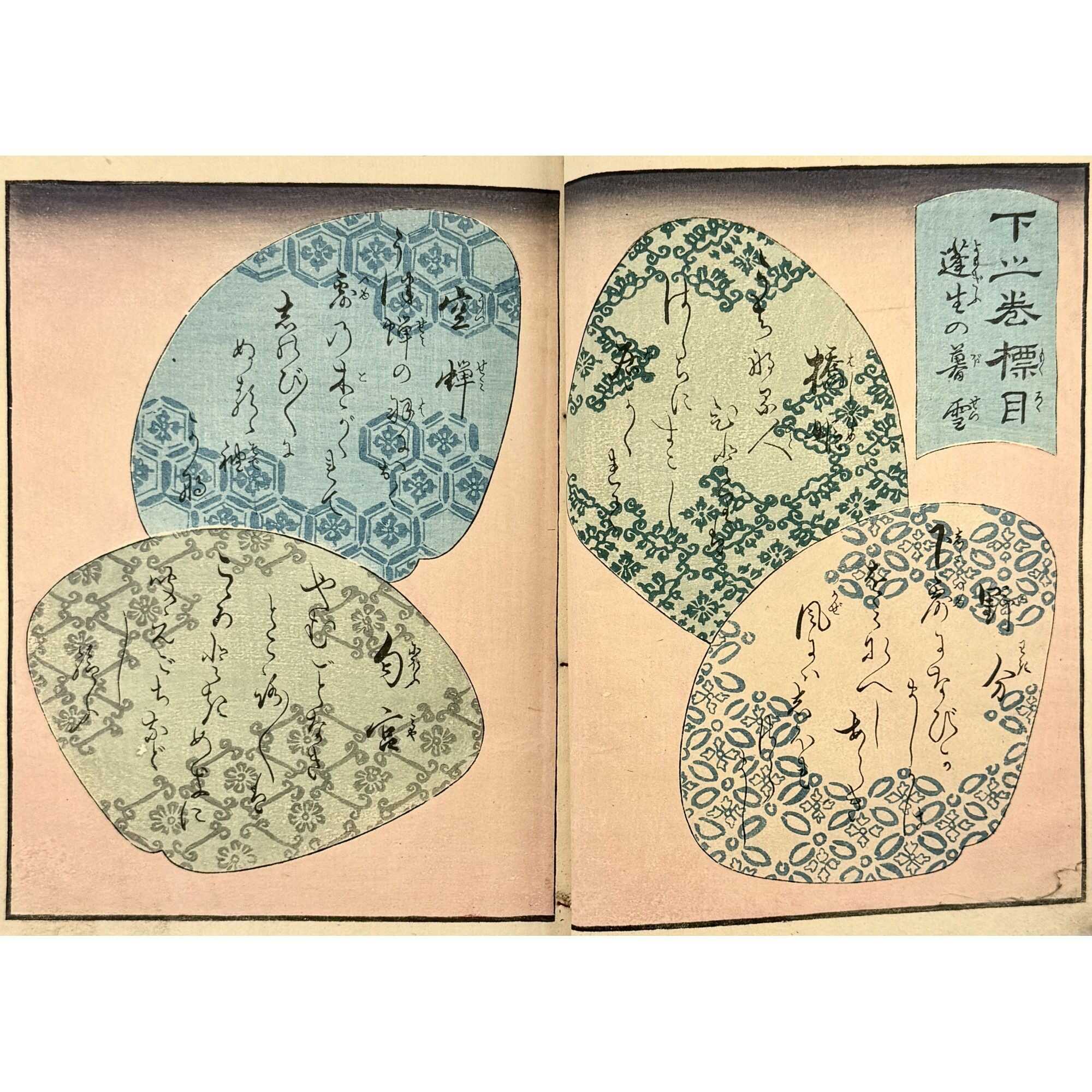
Illustrations: vol. I: 6 double-page + 1 single-page; vol. II: 6 double-page + 2 single-page; vol. III: 6 double-page + 2 single-page.
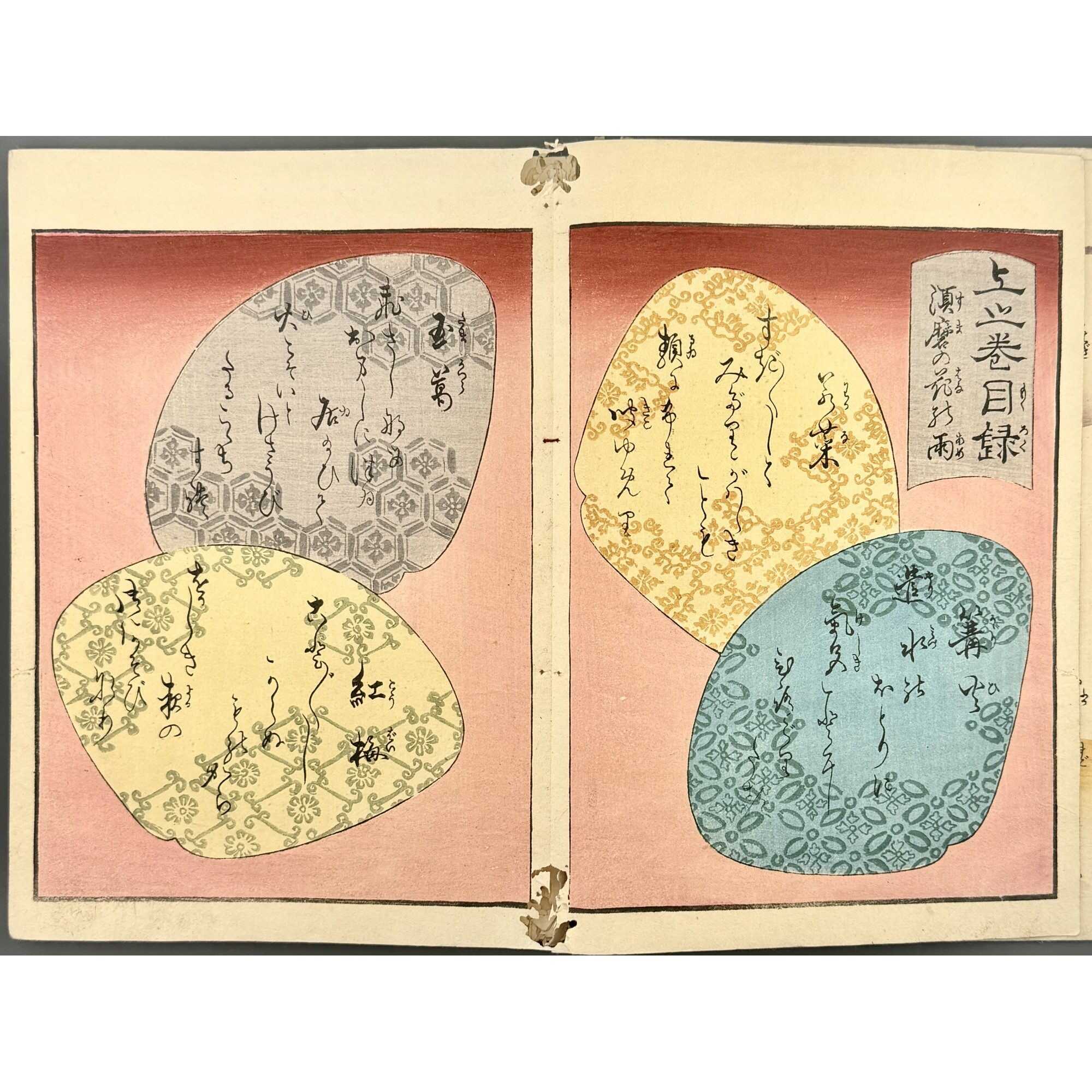
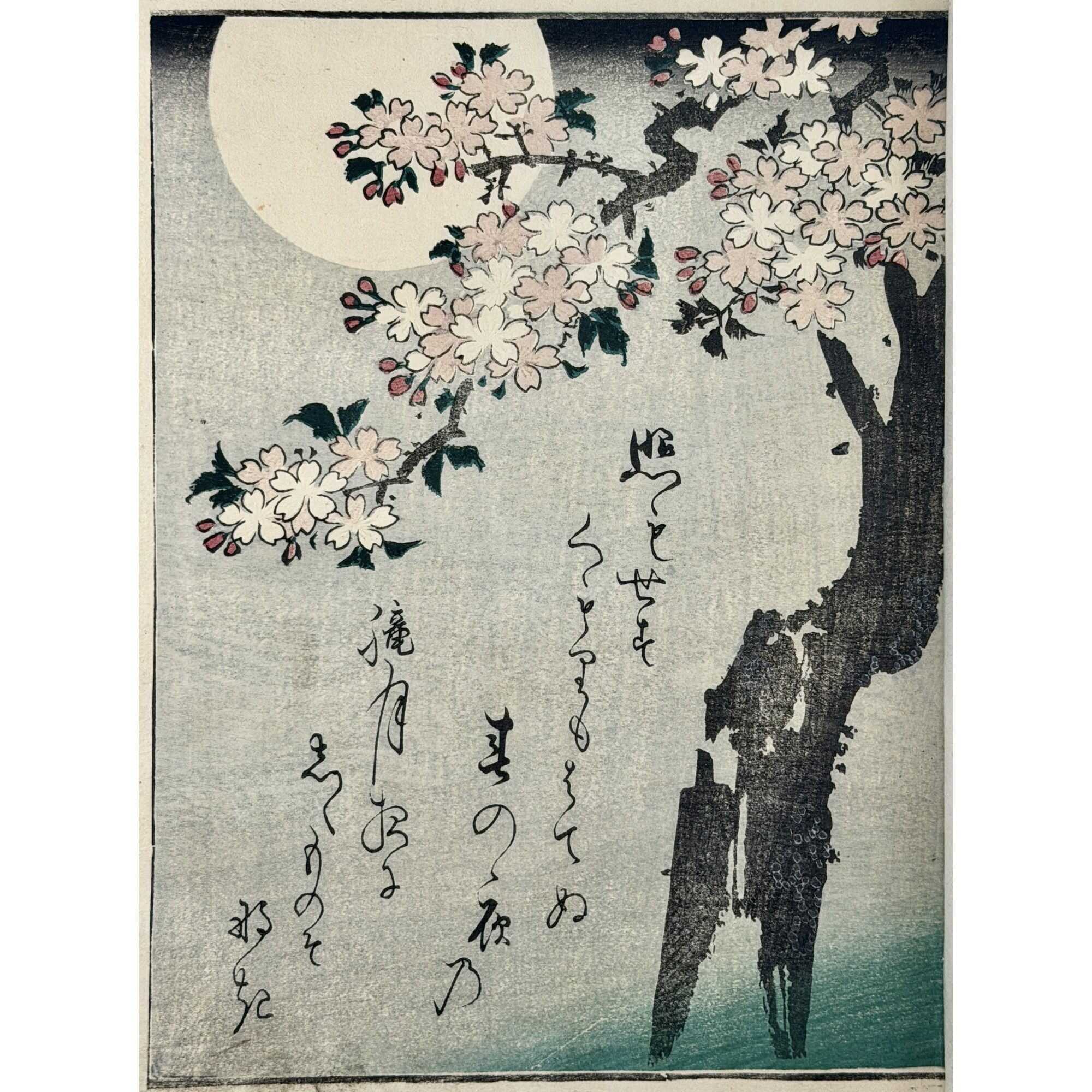
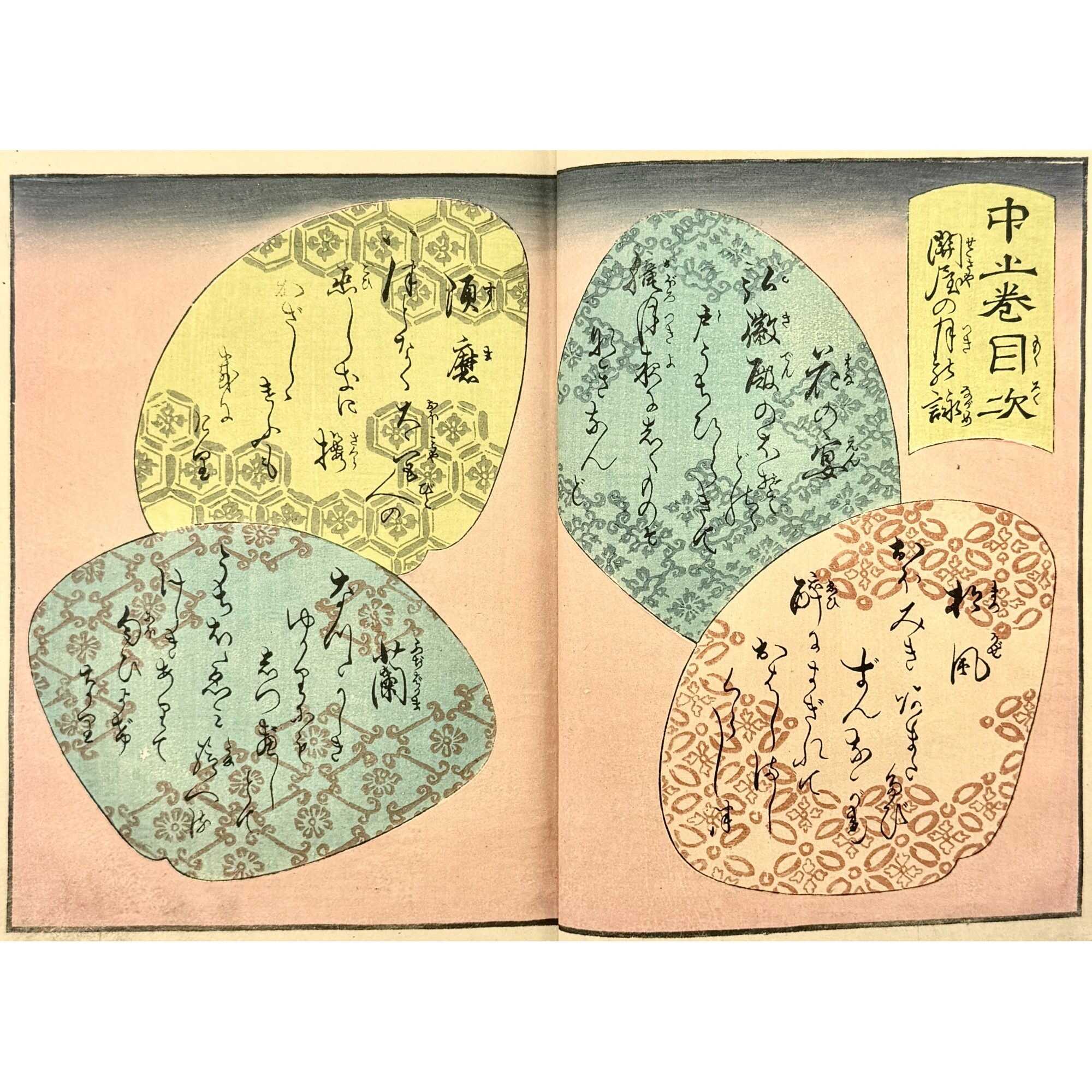
As discussed by Marks, the book belongs to a group of Genji-themed erotic works produced in the late 1840s–1850s, often associated with pupils of Kunisada. The text by Miyagi Gengyō accompanies a structured sequence of images in each volume: opening scenes adapted from Genji-related compositions are followed by a series of erotic encounters. These are organized through cartouches identifying chapter references and incorporating poetic inscriptions in tanzaku 短冊 format. A recurring compositional device uses shell-matching (kai-awase 貝合せ) to link visual motifs to specific chapters of the Genji narrative.
Marks further observes that the imagery operates through a layered interplay between classical and contemporary registers. Scenes often juxtapose present-day figures with inset or vignette-like references to Heian court imagery, while chapter groupings correspond broadly to established Genji divisions, including episodes conventionally identified as “Suma” (須磨), “Akashi” (明石), and “Under the Cherry Blossoms” (花の下). Individual compositions echo earlier illustrated Genji books and designs within Kunisada’s circle. Despite the literary framework, the protagonists are predominantly rendered as contemporary couples, with only occasional recourse to Heian costume. The integration of poetic texts and chapter citations reinforces the Genji structure, while the explicit content situates the work within mid-19th-century developments in Genji parody and shunga production.
References: Marks, Genji World, S039, p. 65, figs. 9–11.
Additional Information
| Collection | Erotica , Japanese prints and drawings , Library |
|---|---|
| Type / Purpose | Book , Ehon [絵本] Picture book |
| Period | 19 AD , Edo period [江戸時代] (1603–1868) , Kaei era [嘉永] (1848–1854) , Mid-19th century |
| Country | Japan |
| Language | Japanese |
| Media/Technique | Paper , Washi paper , Woodblock print (nishiki-e) |
| Binding | Japanese-style binding (fukuro-toji) |
| Size | Hanshibon [半紙本] |
| Genre | Erotic Prints (Shunga, 春画) , Genji-e [源氏絵] |
| Subject | 19th century , A Rustic Genji by a Fraudulent Murasaki [偐紫田舎源氏] Nise Murasaki inaka Genji , Edo period , Ehon [絵本] Picture book , Erotic books , Erotic illustration , Erotica , Genji-e [源氏絵] , Humour , Japan , Parody , Picture story , Prince Genji [光源氏] Hikaru Genji , Sex , Shunga , The Tale of Genji [源氏物語] Genji monogatari |
| Creation / Publishing year | 1852 , Kaei 5 |
| Edition | 1st edition |
| Location | Bookshelf 12. |
| Acquisition year | 2026 |


