
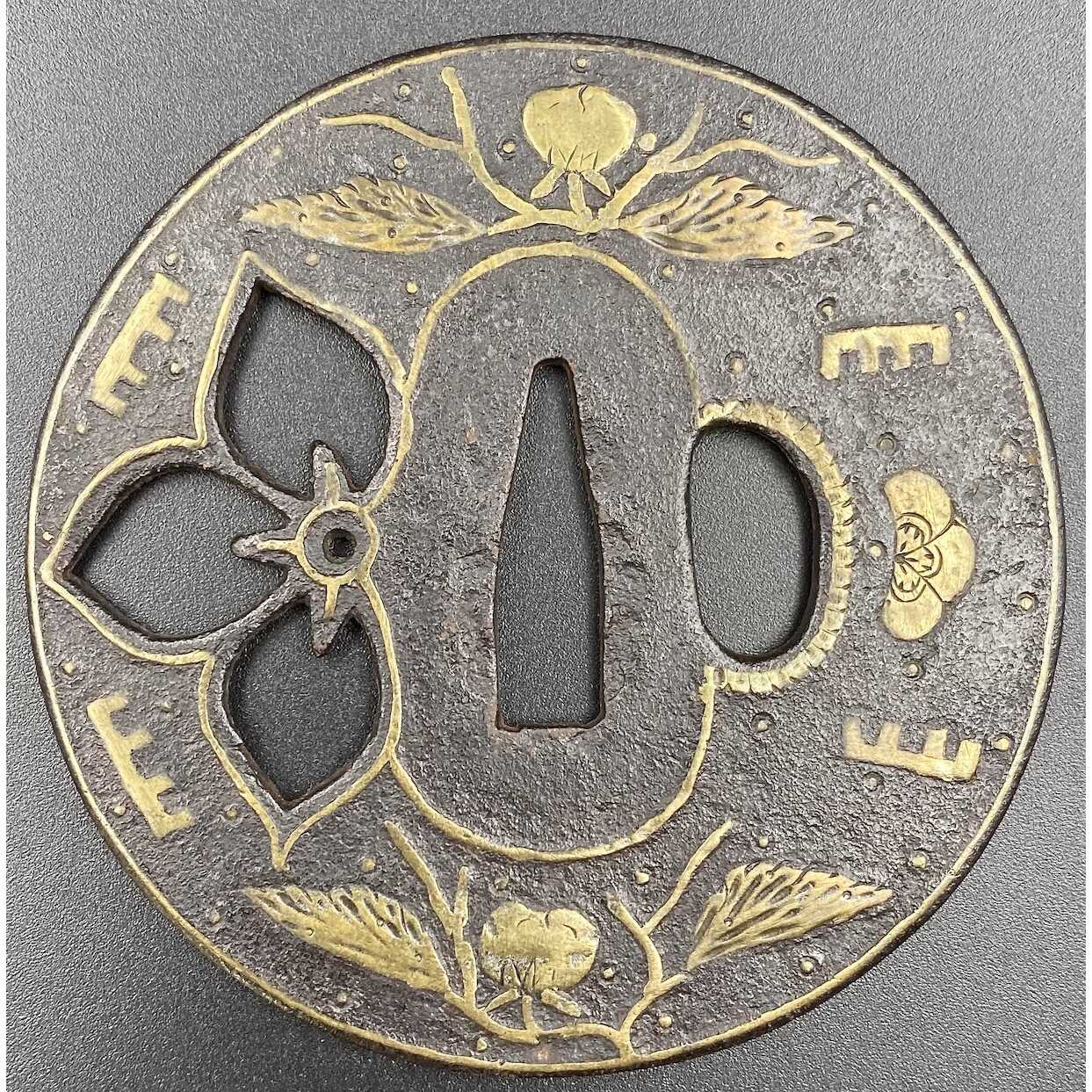
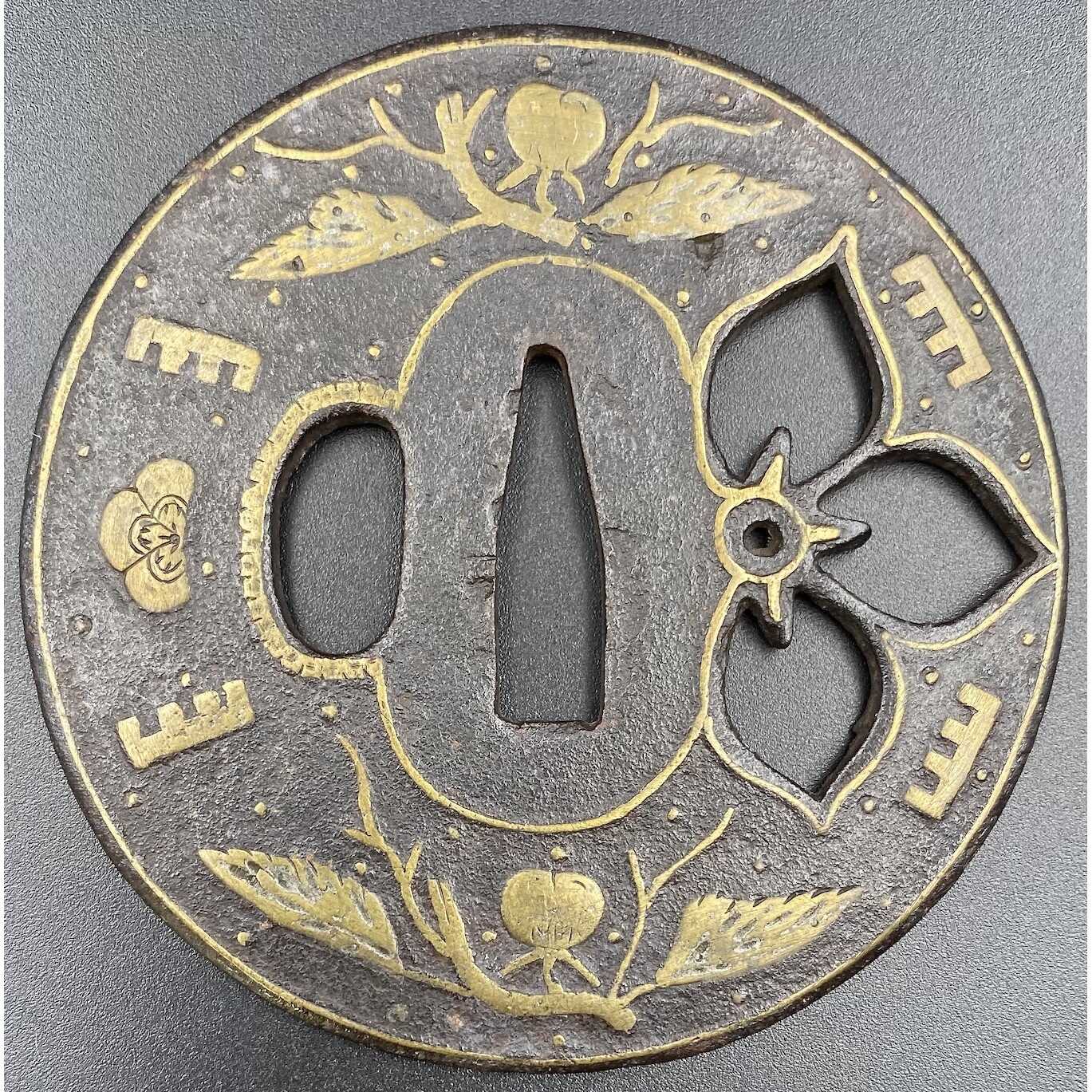
Iron tsuba of round form, slightly convex, decorated with persimmon (kaki), simplified Genji-kō (incense game symbol) and halves of plum blossoms (ume) in brass inlay on both sides, and with part of bellflower (kikyo) in openwork. Outer rim, seppa-dai, bellflower openwork, and kozuka-ana outlined with brass inlay; traces of lacquer to surface.
The symbolic meaning alludes to Chapter 20: Asagao (朝顔, the bellflower or "morning face") of Tale of Genji by Murasaki Shikibu (11th century AD). The events take place in the 9th lunar month (Nagatsuki) and involve the following poetry by Prince Genji: saku hana ni / utsuru chō na wa / tsutsumedomo / orade sugiuki / kesa no asagao [I would not have it said / that my heart has turned toward / a flower in bloom — / yet how hard it is to pass / without plucking a “morning face”!].
Measurements: H: 76.6 mm; W: 76.3 mm; Th.: 3.6 mm (seppa-dai), 3.0 mm (rim)
Time: Late Muromachi (1514 – 1573).
Additional Information
| Collection | Japanese swords & fittings |
|---|---|
| Type / Purpose | Sword hand guard , Tsuba |
| Country | Japan |
| Period | 16 AD , Muromachi period [室町時代] (1336–1573) |
| School | Ōnin School |
| Subject | Autumn , Bellflower (kikyo) , Flowers , Genji mon [源氏紋] , Persimmon , Plum blossom (ume) |
| Material | Brass , Iron |
| Media/Technique | Openwork , Suemon-zōgan , Zōgan |
| Acquisition year | 2022 |
Related Items


