
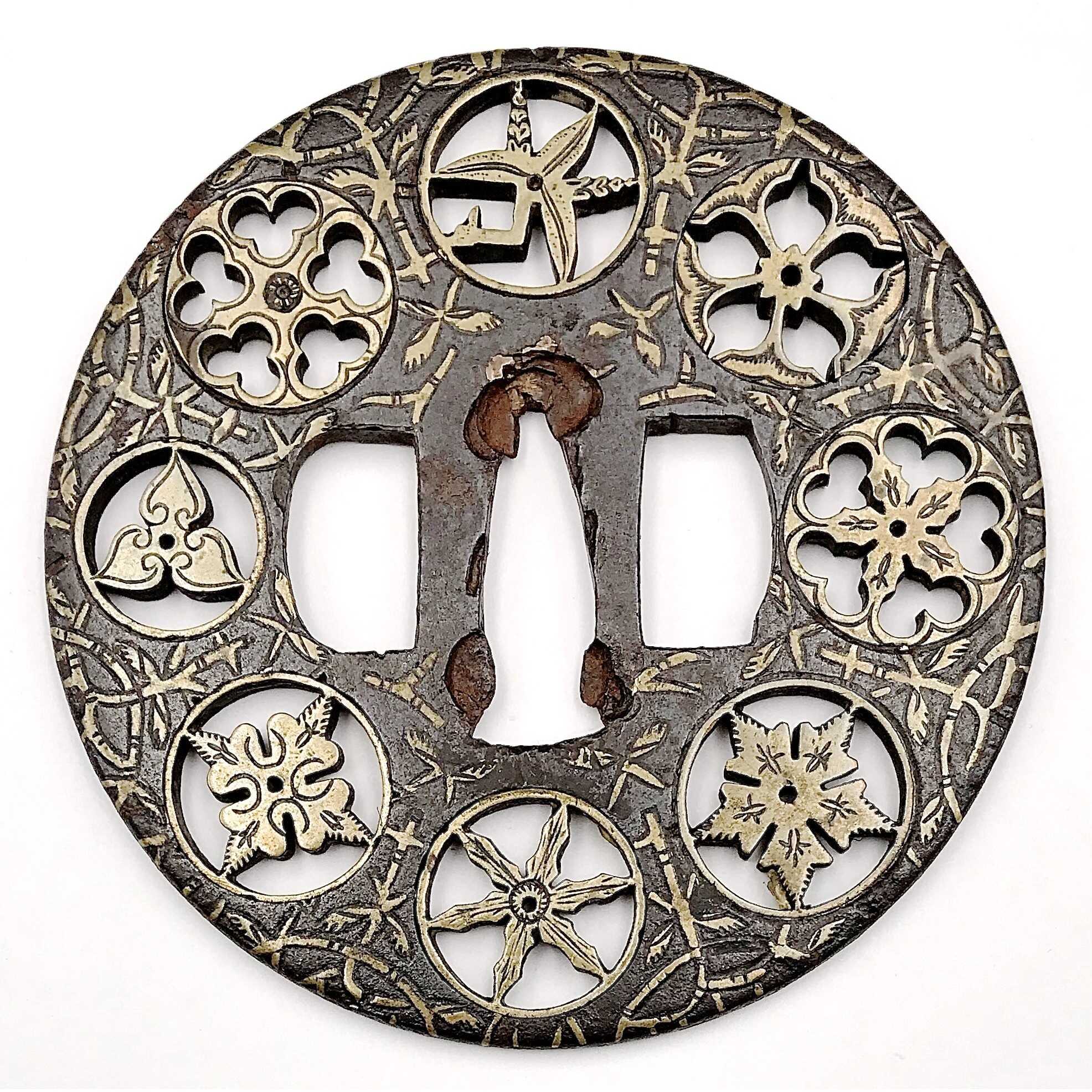
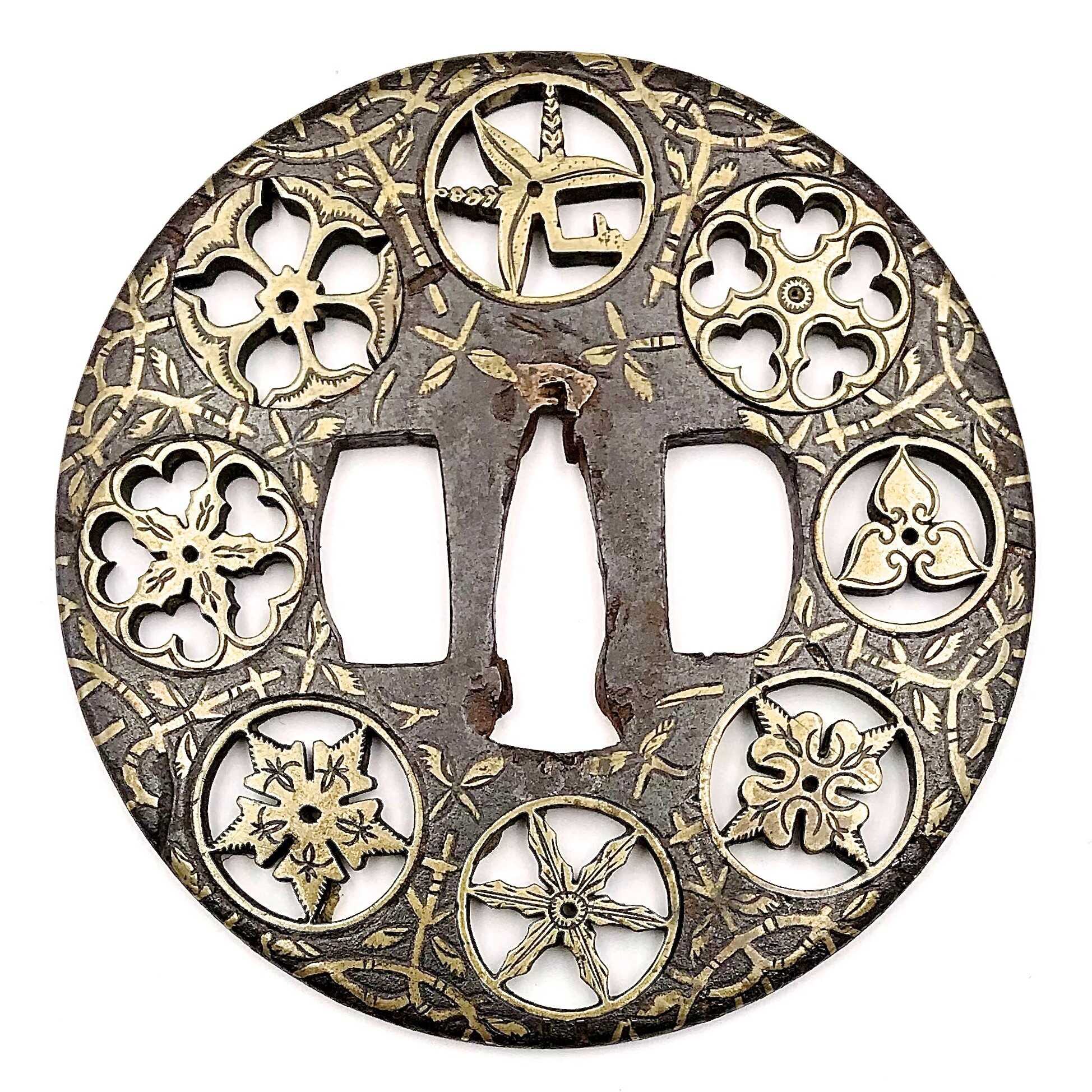
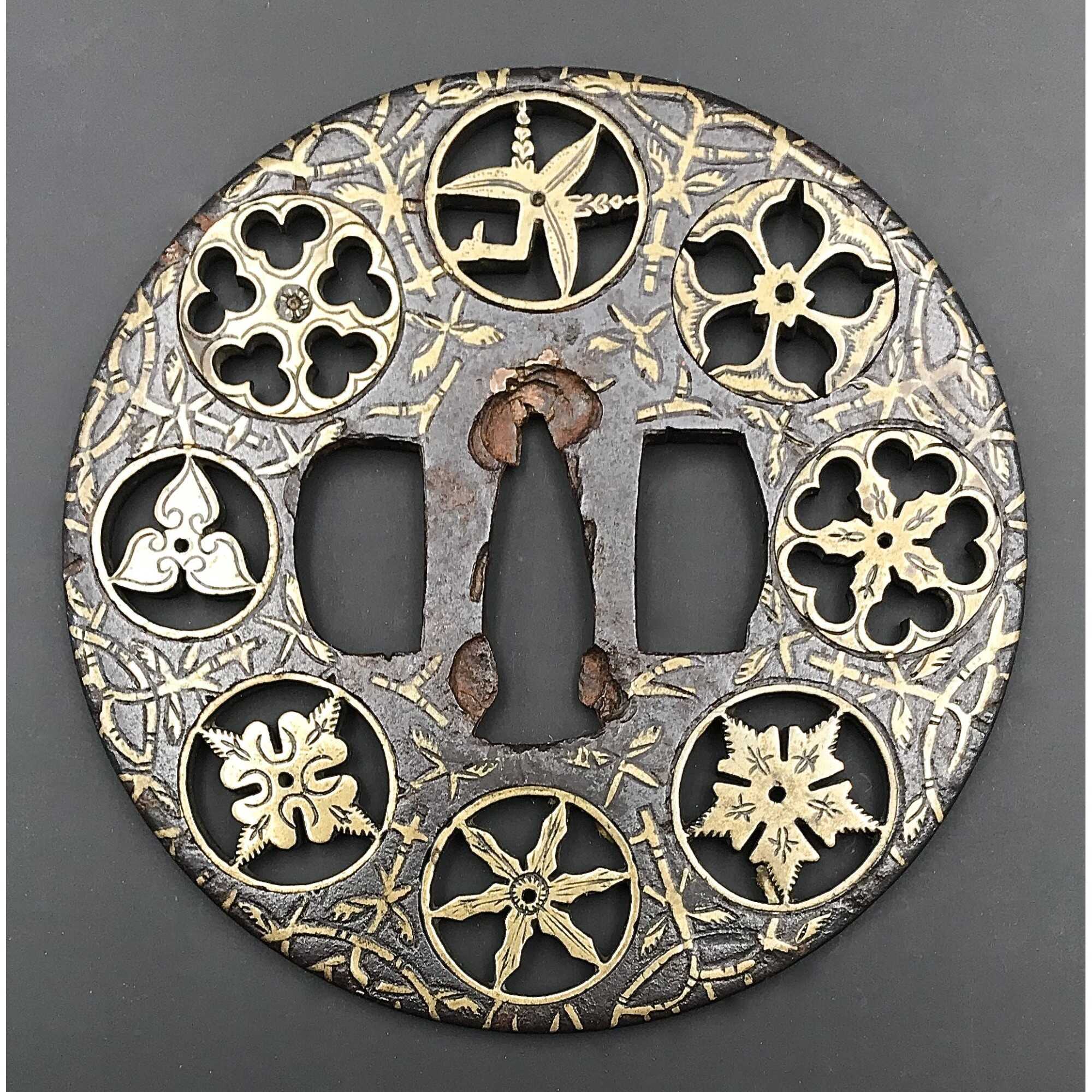
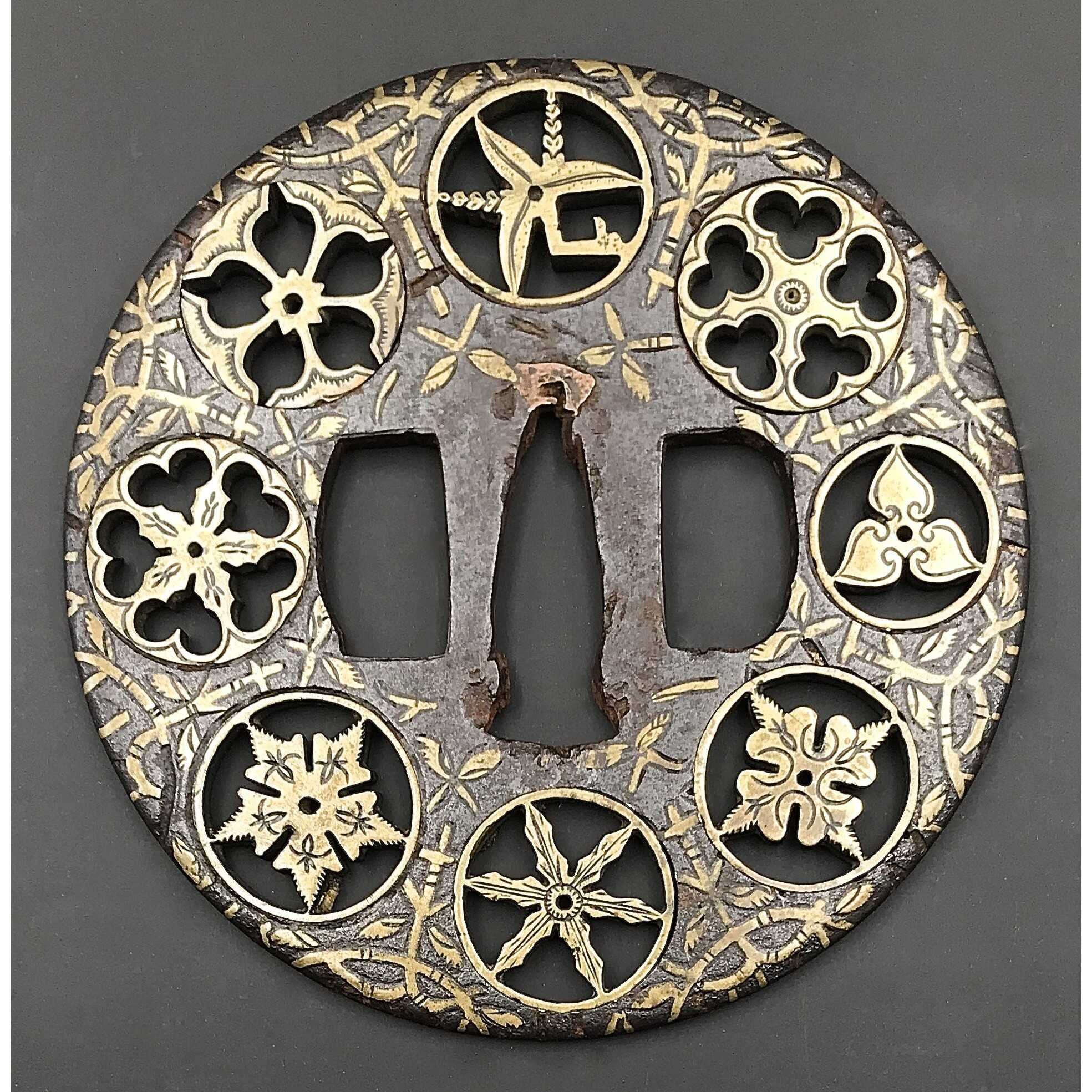
Iron tsuba of round form decorated with eight roundels – circular emblems of flowers and/or family crests (mon) made of cast brass, pierced and chiseled in kebori, and with flat brass inlay (hira-zōgan) of vines or leaves all over the plate. Both hitsu-ana could have been trimmed with brass now lacking. Nakago-ana of triangular form, possibly enlarged, with copper sekigane. All typical emblems with bellflower, two variations on suhama theme, and 3, 4, 5, and 6-poinitng mon variations. A distinctive character of this tsuba is a mon at 12 hours depicting water plantain (omodaka).
“Omodaka was also called shōgunsō (victorious army grass); because of this martial connotation, it was a design favored for the crests of samurai families” [Family crests of Japan, Stone Bridge Press, Berkeley, California].
Yoshirō school (Kaga-Yoshirō).
The Momoyama or early Edo period, beginning of 17th century.
Size: Height: 81.4 mm; width: 81.2; thickness 3.8 mm at seppa-dai.
Additional Information
| Collection | Japanese swords & fittings |
|---|---|
| Type / Purpose | Tsuba |
| Country | Japan |
| Period | 17 AD , Azuchi–Momoyama period [安土桃山時代] (1568–1603) , Edo period [江戸時代] (1603–1868) |
| School | Yoshirō School |
| Media/Technique | Hira-Zōgan , Ranma-sukashi , Sukashi |
| Material | Brass , Iron |
| Subject | Family crest (mon) , Leaves , Plants , Sea weed , Vines , Water plantain (omodaka) |
| Acquisition year | 2018 |
Related Items


