
Artist: Giovanni Andrea Podestà (Italian, c. 1608–c.1674)
Publisher: Giovanni Domenico de’ Rossi (Italian, 1619–1653)
Dedicatee: Paolo Giordano II Orsini, Duke of Bracciano (Italian, 1591–1656)
Place: Rome
Date: Plate dated 1640; this impression published 1649
Medium: Etching on laid paper with watermark “Monte surmounted by a cross in a circle” (Heawood no. 21, Rome 1646)
Dimensions: Sheet 277 × 391 mm; border 264 × 390 mm
Description:
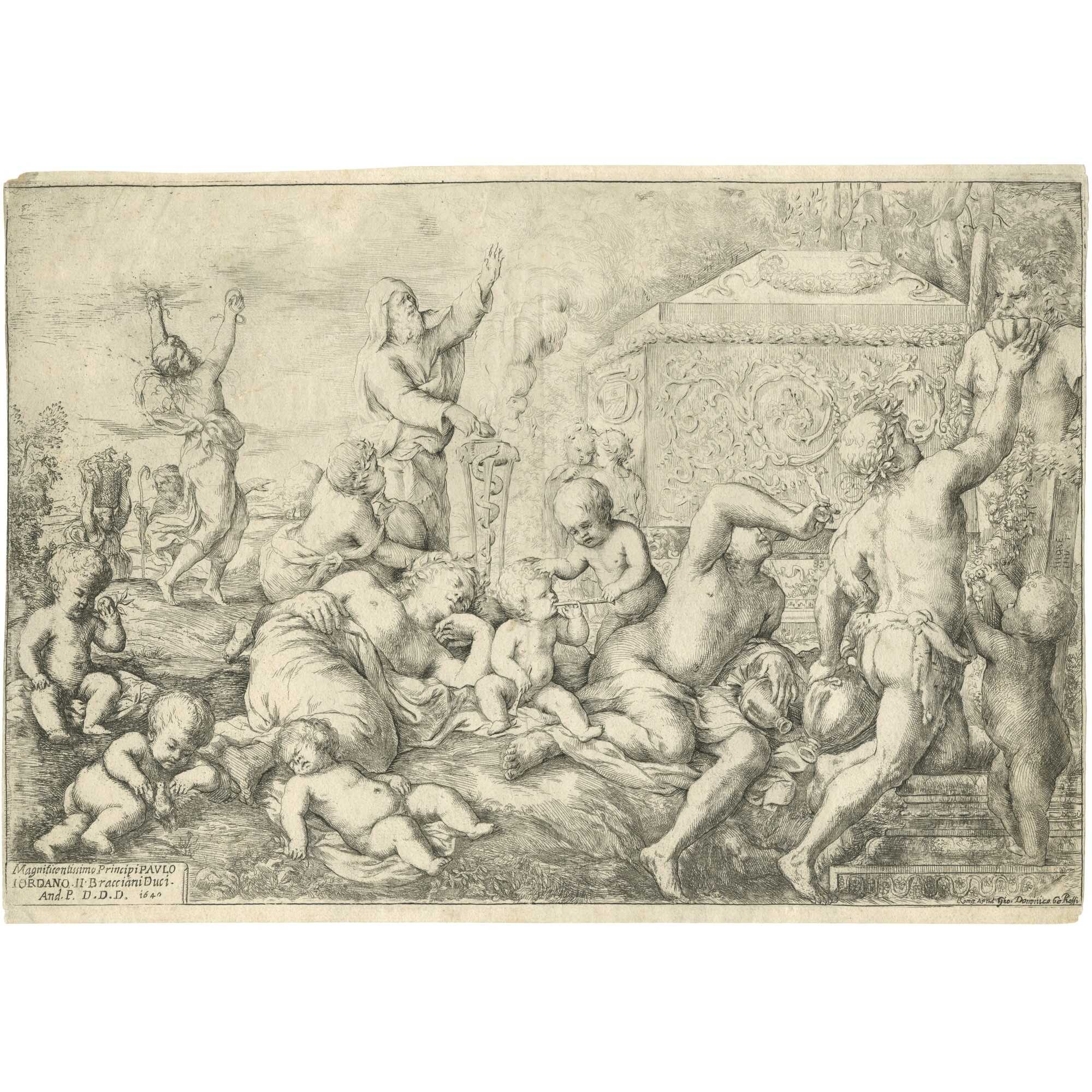
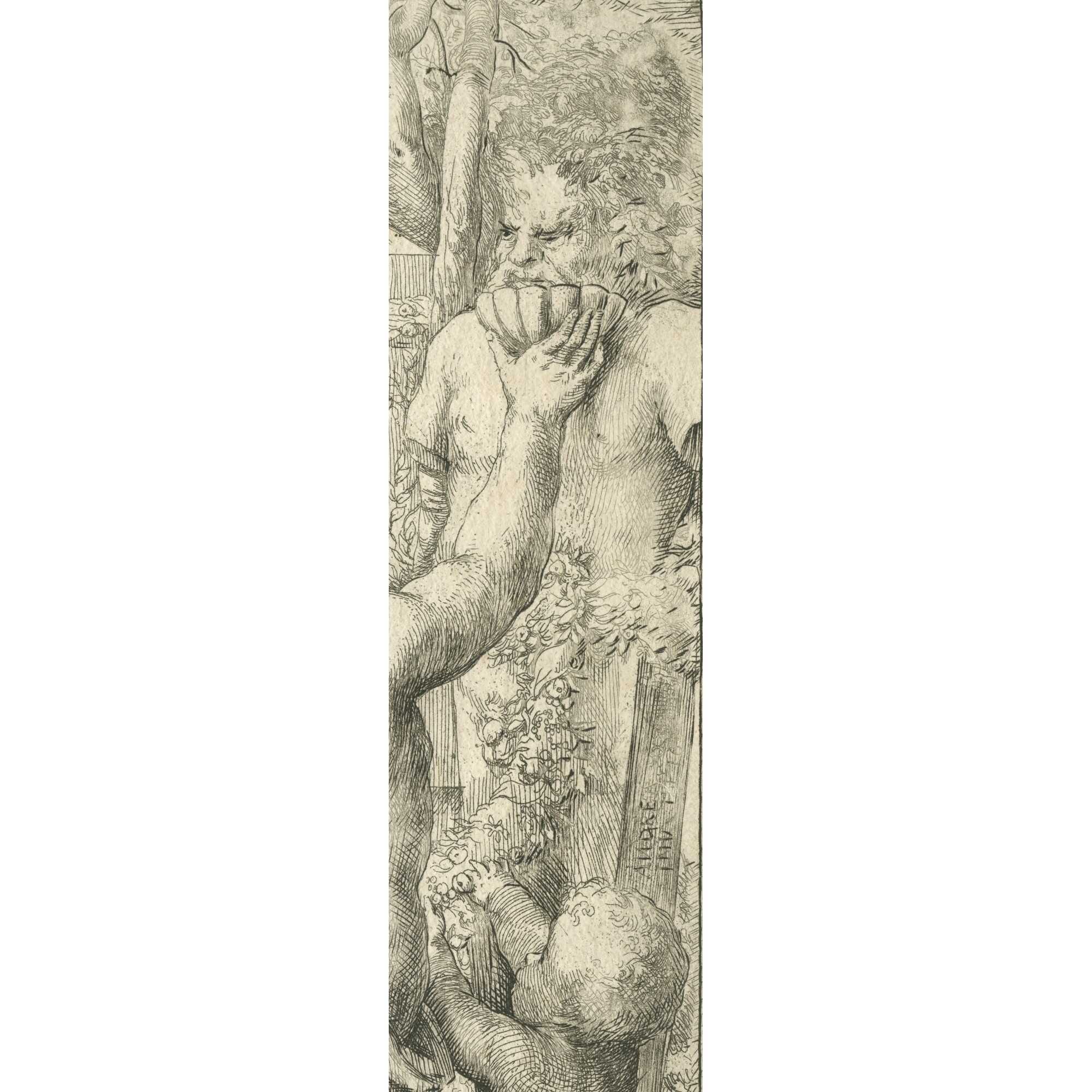
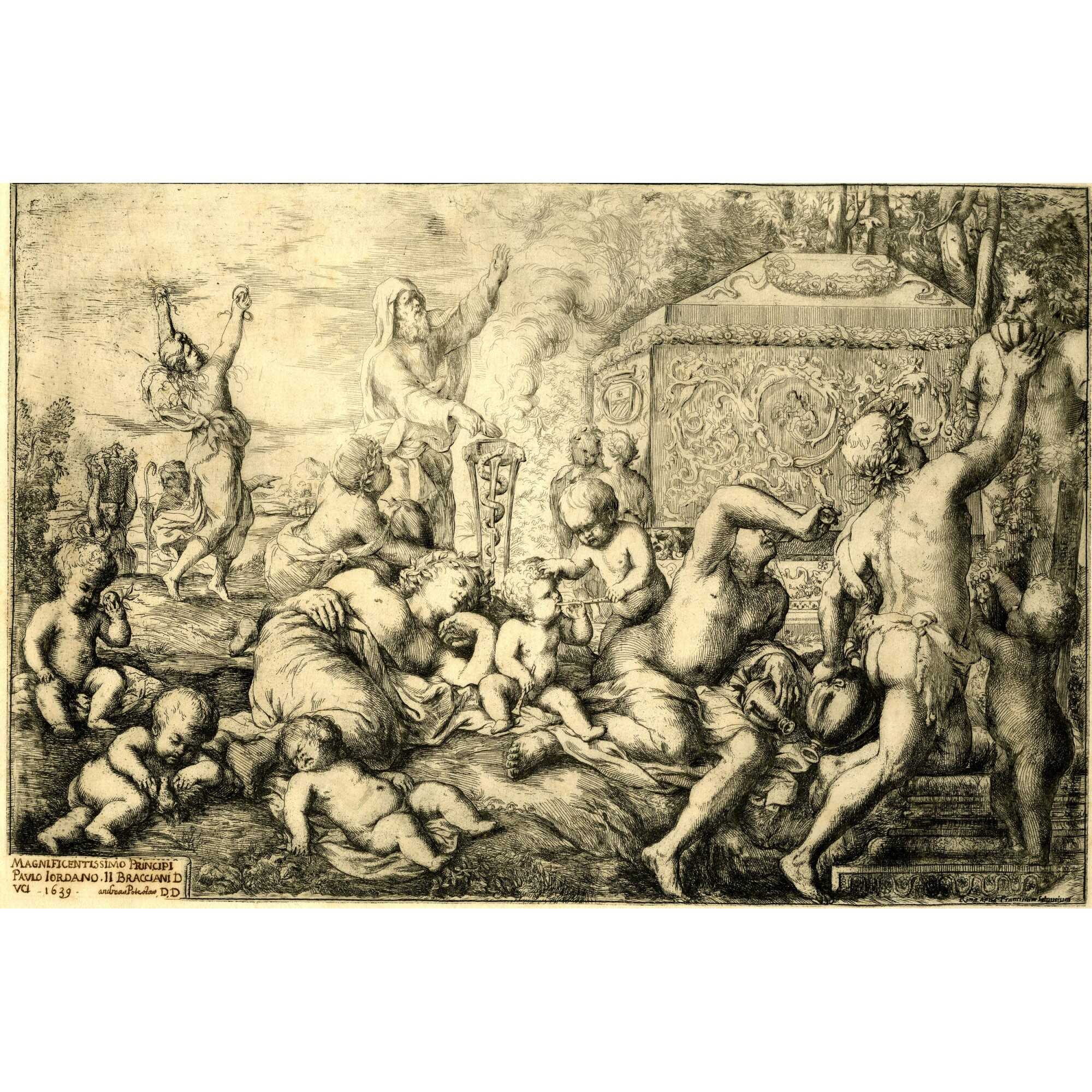
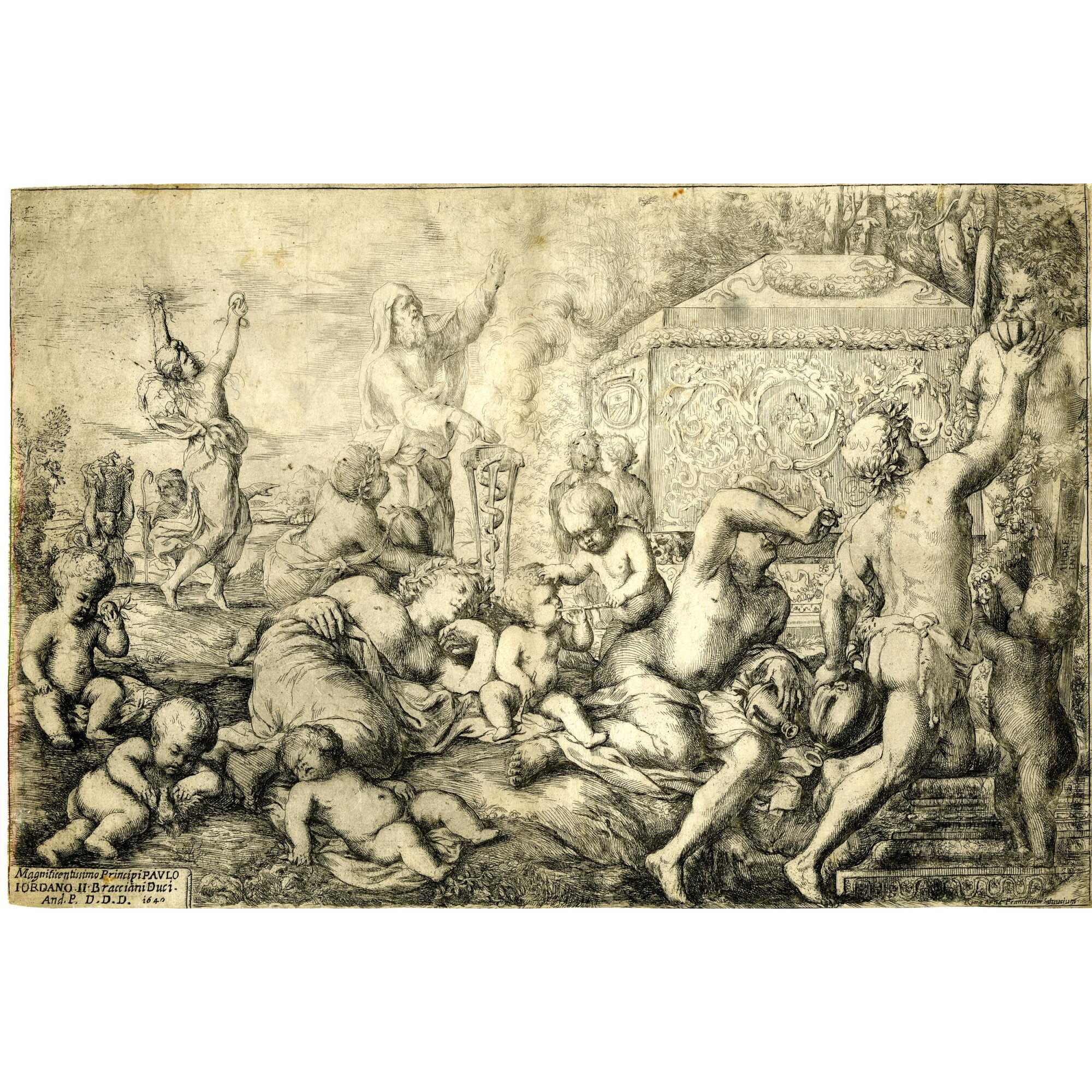
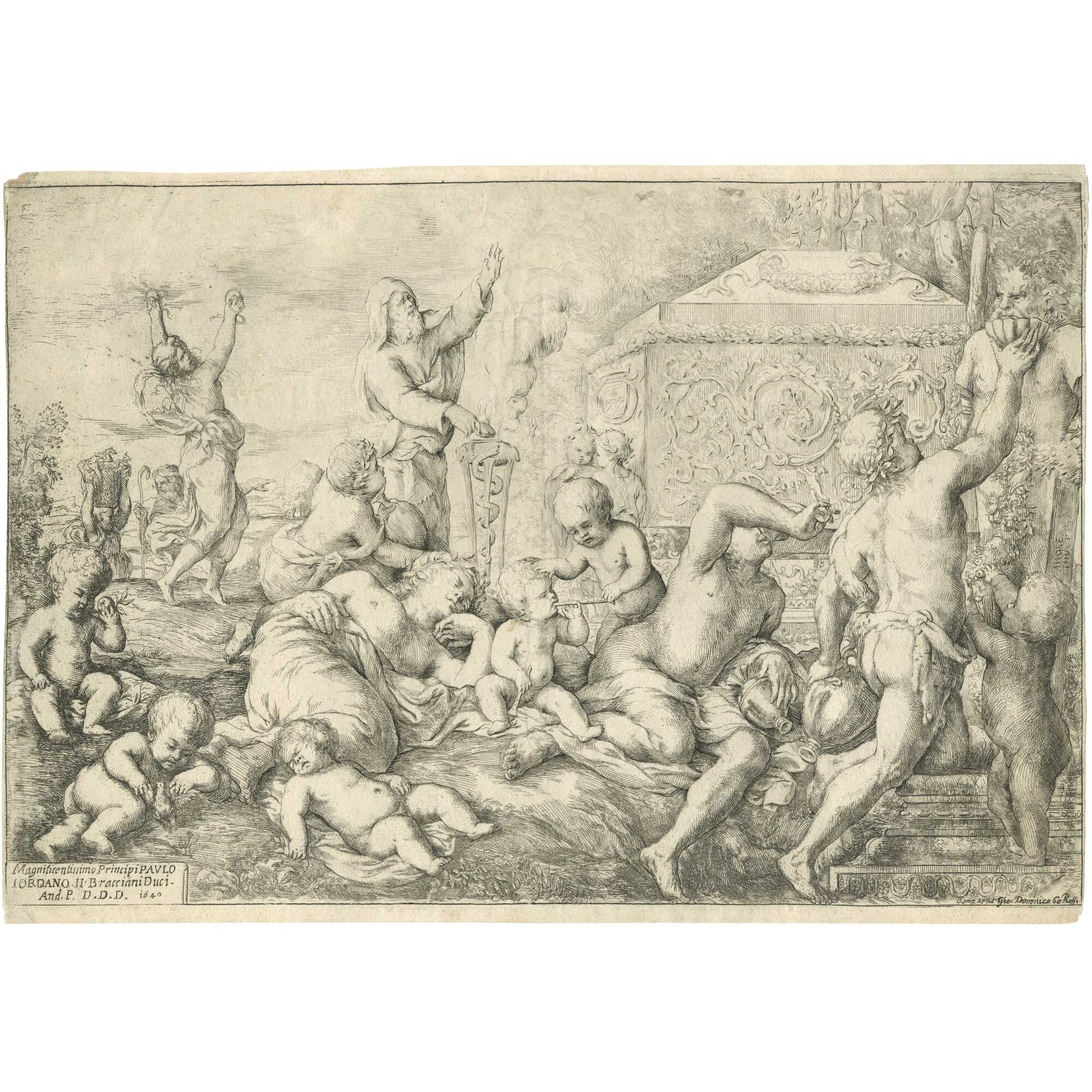
Etching of a Bacchic revel. At the far left, a maenad balances on her head a basket from which rise serpentine necks, emblematic of Dionysiac frenzy. She is accompanied by an aged papposilenus, leaning on a staff and gesturing toward the central rite. Before them, a dancing maenad clashes cymbals, while below two putti play—one with an apple, the other with a bird. At the centre, Silenus acts as officiant, veiled and pouring a libation upon a tripod altar entwined by a serpent, from which heavy smoke ascends. At his feet, a laurel-crowned putto tends an amphora, while nearby, a bare-breasted maenad sleeps with a putto at her side. Other putti, crowned with laurel, cluster round the altar, and two in the foreground play pipes. To the right rises a tomb richly adorned with arabesques and garlands. On its steps reclines a bacchant, drinking from a goblet and clutching a flask, while beside him a faun in a panther-skin loincloth offers a large shell filled with wine. At the far right stands a satyr herm, crowned with festoons by playful putti—one ambiguously touching the herm’s phallus concealed among the garlands.
Inscriptions (within image):
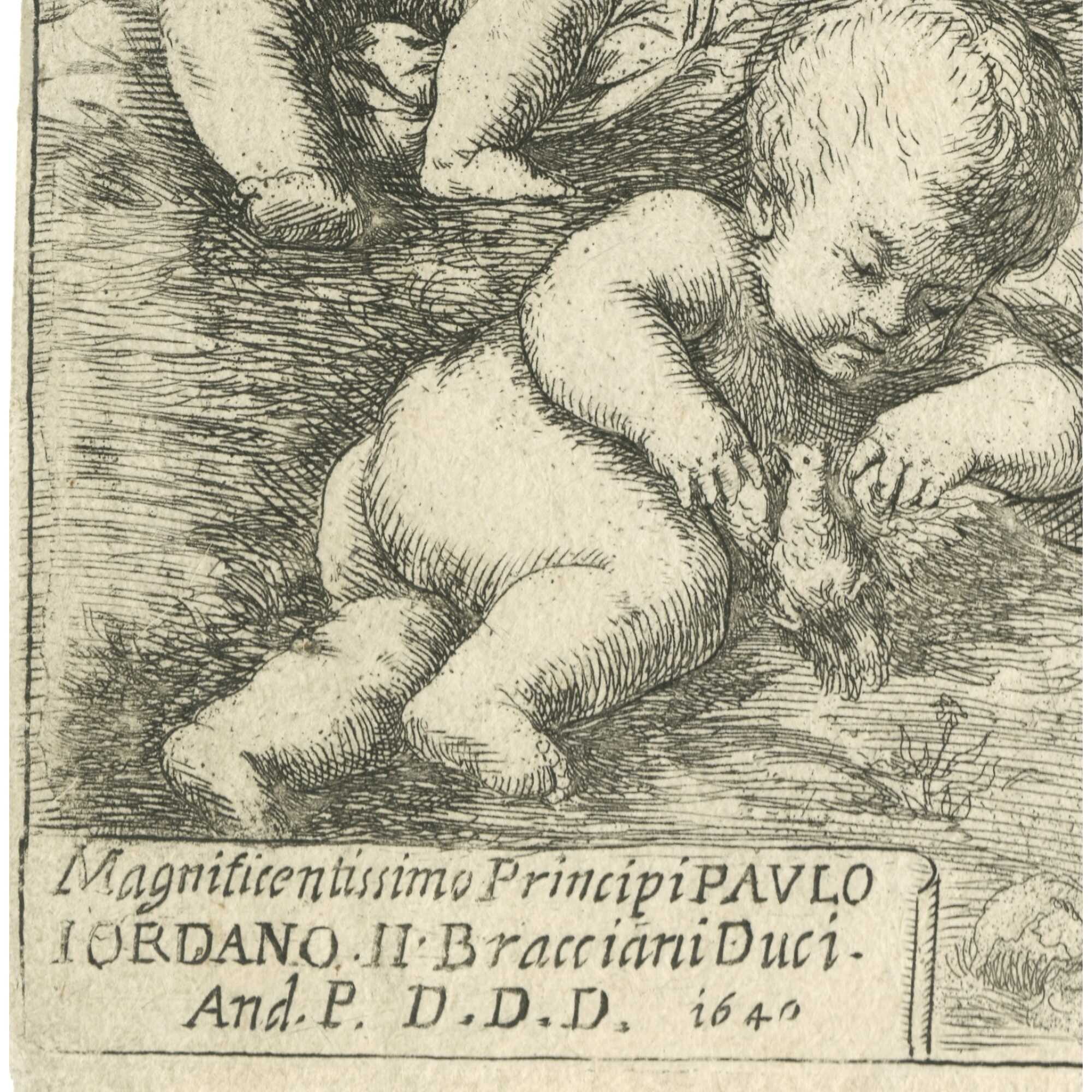
- Lower left: Magnificentissimo Principi PAVLO | IORDANO II. Bracciani Duci. | And. P. D.D.D. 1640 [Andrea Podestà Dat, Dicat, Dedicat]
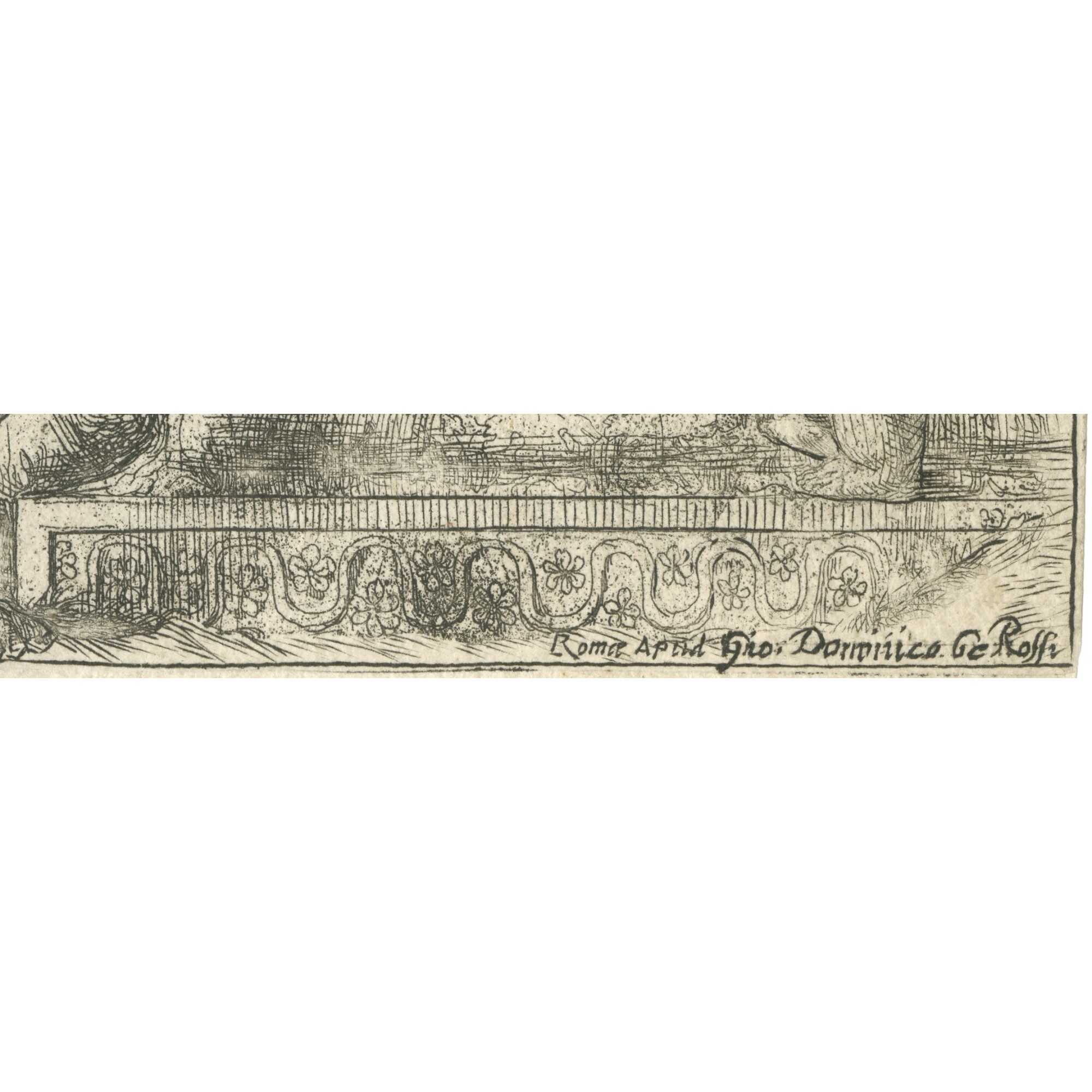
- Lower right: Roma apud Gio. Dominico de’ Rossi
- On herm plinth (right side): ANDREA PO | INV. E. F. [et Fecit]
Translation of Latin dedication:
“To the most magnificent Prince Paolo Giordano II Orsini, Duke of Bracciano. Andrea Podestà dedicates, gives, and devotes [this work]. 1640.”
Note: The present impression of 1649, published in Rome by Giovanni Domenico de’ Rossi. A similar impression is preserved in the National Museum, Oslo (Inv. No. NG.K&H.A.12525). Our image is a later reprint (3rd state) of the editions issued by Francesco Saluccio (Italian, fl. c. 1640), cited by Bartsch (vol. XX, p. 170, 3) and represented in the National Gallery of Art, Washington, D.C. (Accession No. 2013.90.2) and in the British Museum (X,1.87 and 1932,0709.19). These earlier editions are signed within the image at lower right: Romae apud Franciscum Saluucium.
 |
 |
 |
Additional Information
| Collection | European prints and drawings |
|---|---|
| Type / Purpose | |
| Period | 17 AD , Mid-17th century |
| Country | Italy |
| Language | Latin |
| Material | Laid paper , Paper |
| Media/Technique | Burin , Copperplate engraving , Engraving , Etching |
| Genre | Mythological Image |
| Subject | 17th century , Bacchanals , Bacchus (God) , Classical antiquity , Engraving , Etching , Europe , Fauns , Italian art , Italy , Maenads , Mythical creatures , Mythology , Putti , Roman mythology , Satyrs , Silenus |
| Creation / Publishing year | 1649 |
| Impression/State | Third state |
| Acquisition year | 2025 |


