
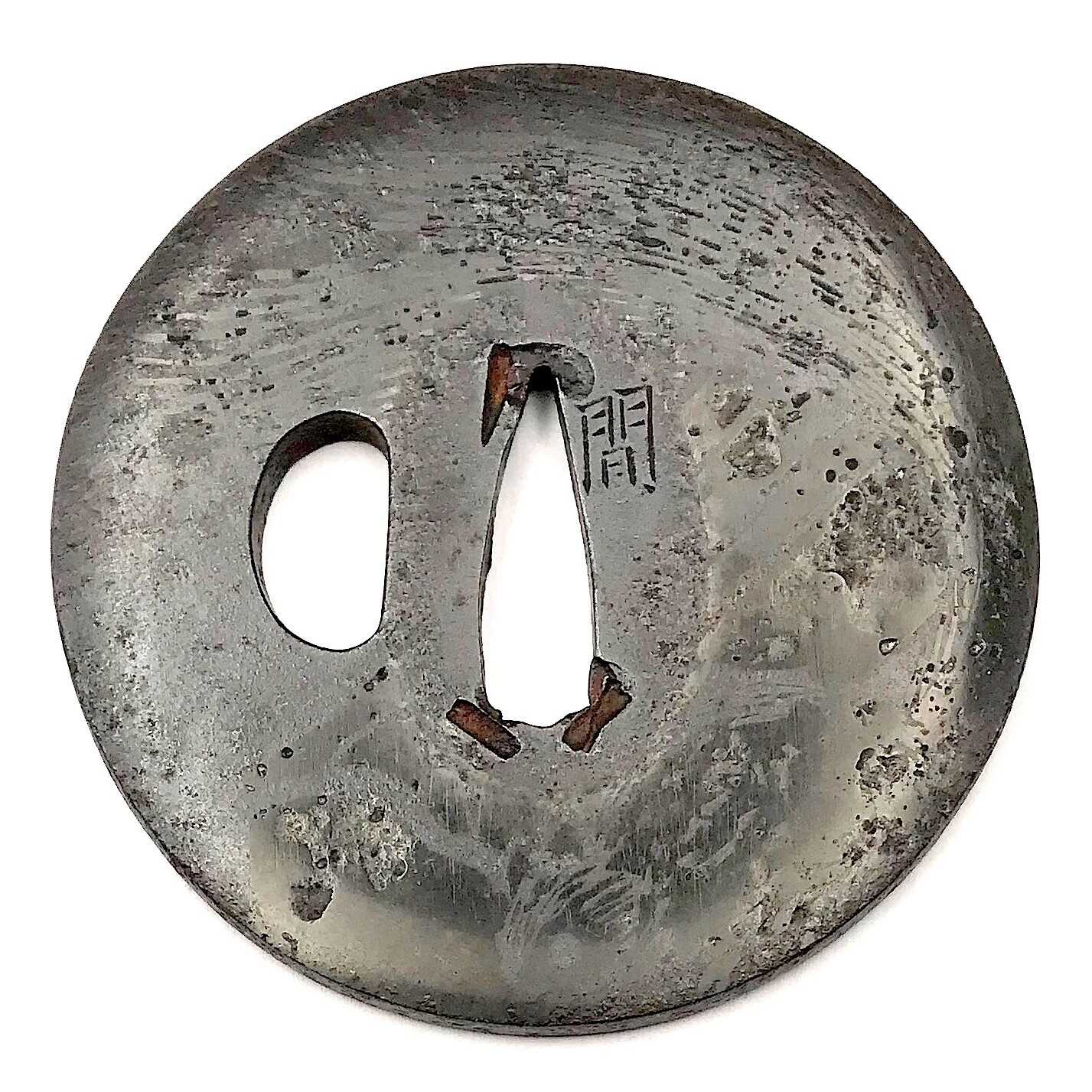
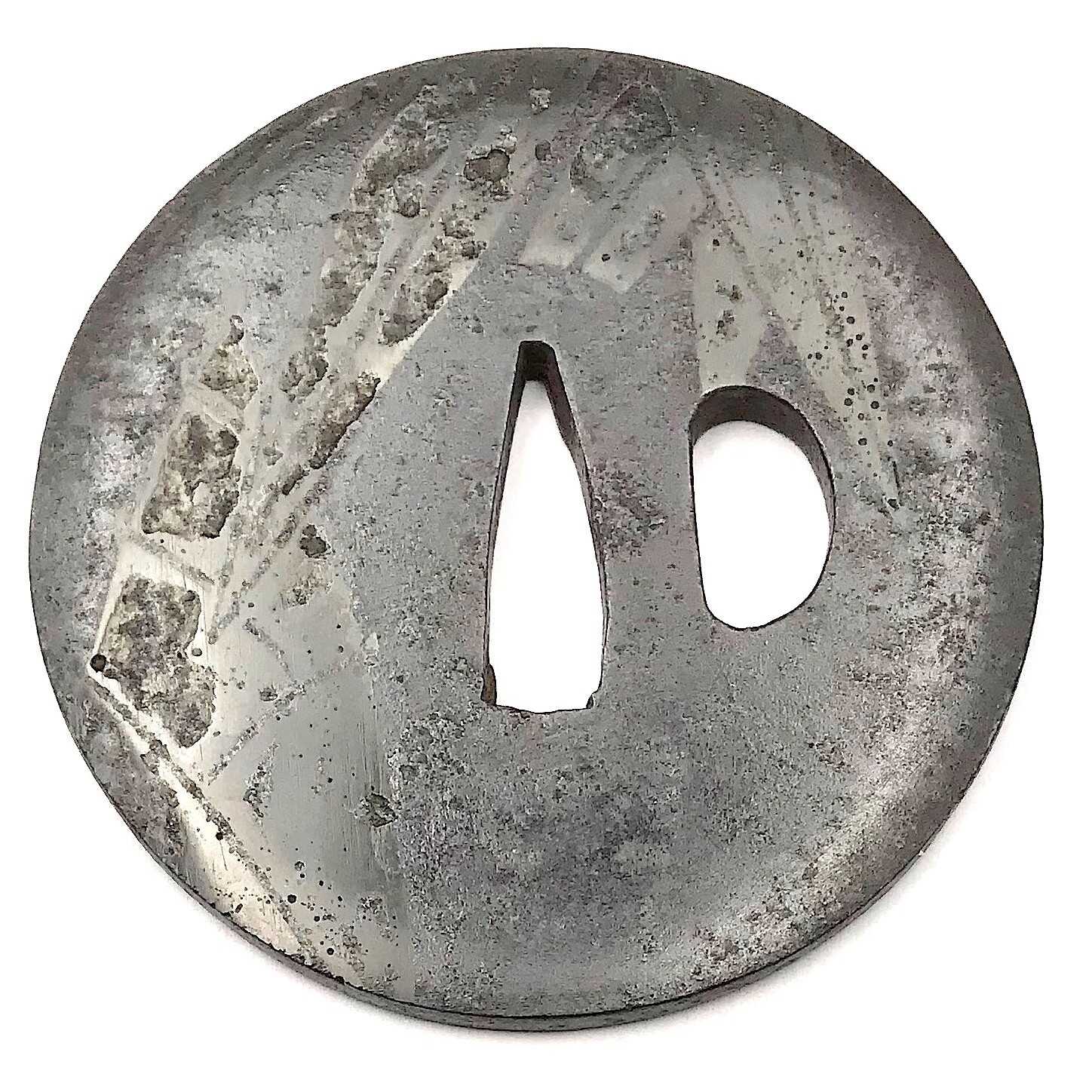
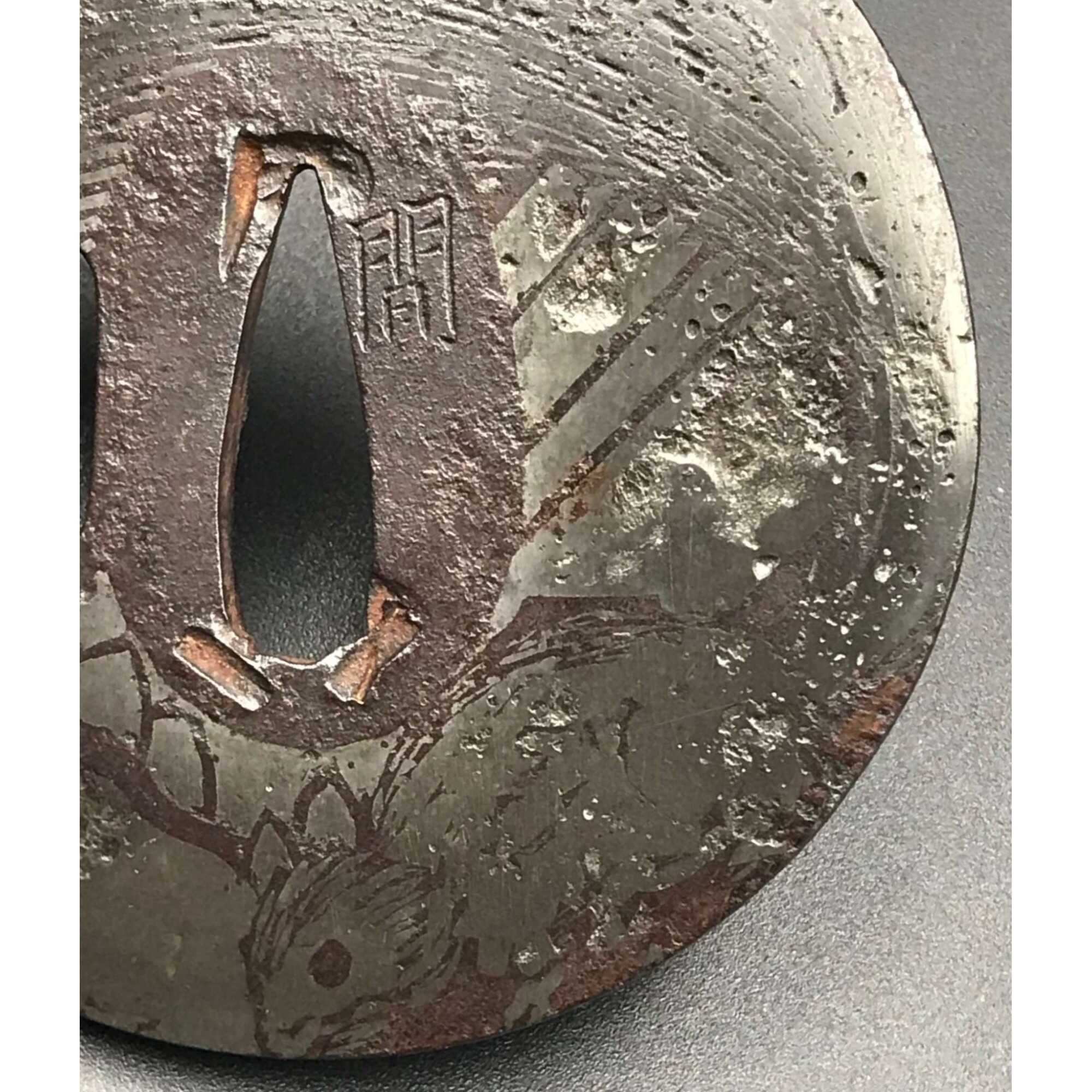
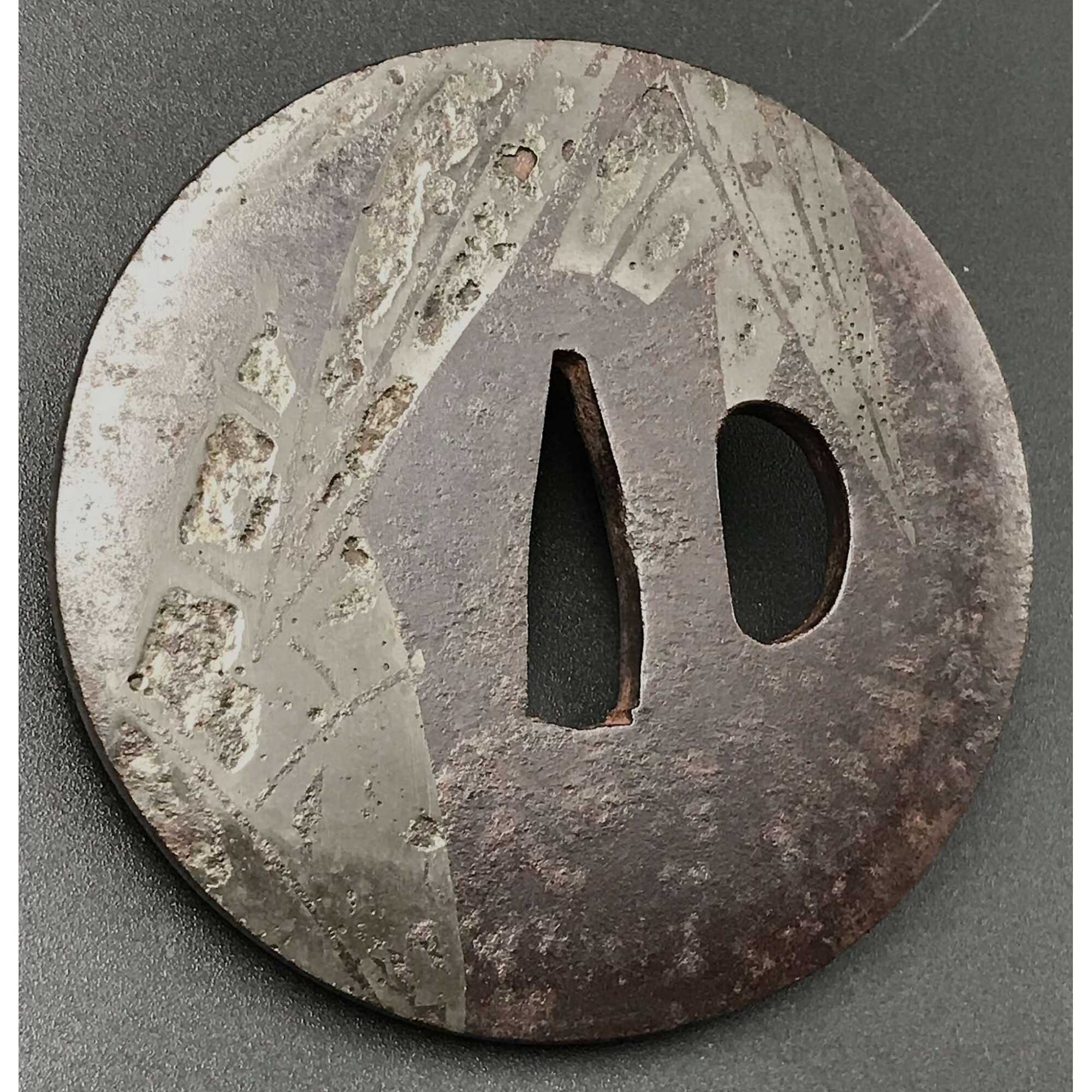
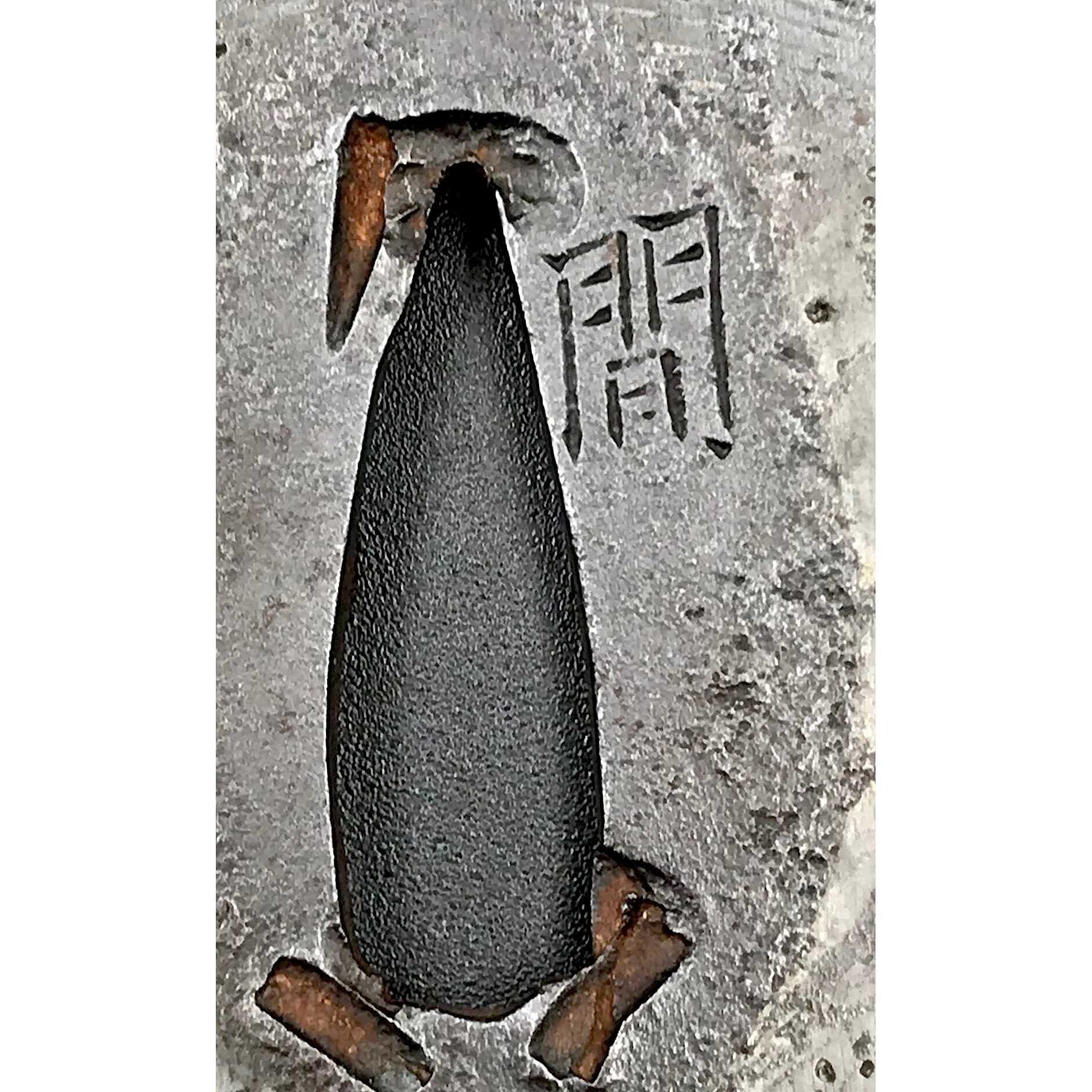
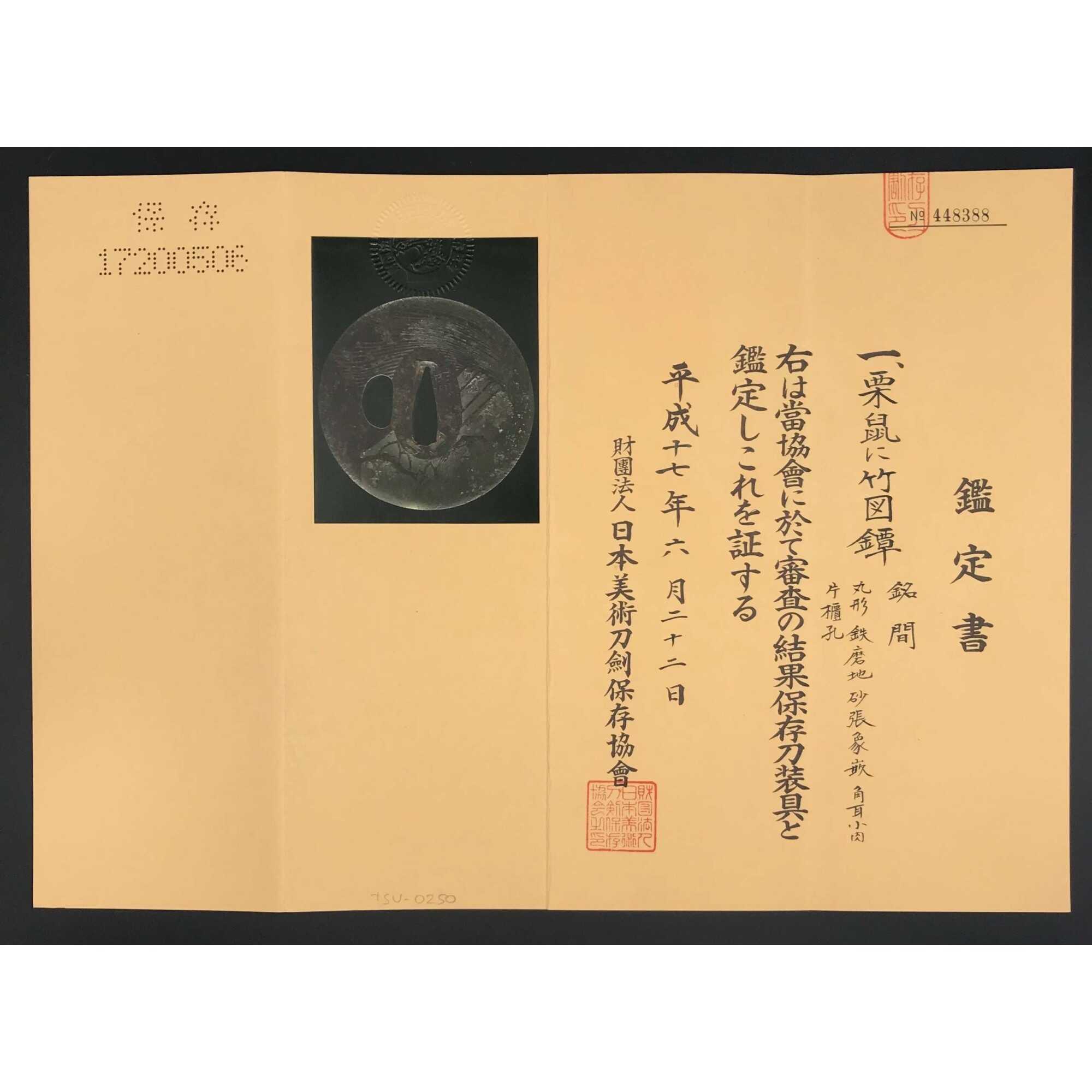
Iron tsuba of round form (width > height) decorated with a squirrel (on the face) and bamboo (on the reverse) motif in sahari flat inlay (hira-zōgan).
Signed: Hazama (間)
Size: 75.1mm x 75.9mm, thickness of seppa-dai 5.4mm.
Early 18th century, mid Edo.
Haynes/Torigoye: "There is another name for Hazama tsuba: the Kameyama school. In the period from Hōei to Kyōhō (1704-36) at Kameyama, in the province of Ise, the Kunitomo family made this style of tsuba" [...] The two artists who are best known for the sahari style of inlaid tsuba are Sadahide and Masahide" [...] The signature Hazama should be considered as that of Masahide".
Sahari inlay is the distinctive characteristics of Hazama school. Sahari is an alloy of copper, tin, lead, zinc and silver. Hazama tsuba was carved patterns at first, then poured heated into the carvings on iron ground. Because it is an alloy, sahari shows different colors in each tsuba.
According to Merrily Baird [Symbols, p. 163], "squirrels (risu) ... have no symbolic importance".
NBTHK certificate №448388.
Additional Information
| Collection | Japanese swords & fittings |
|---|---|
| Type / Purpose | Tsuba |
| Country | Japan |
| Period | 18 AD , Edo period [江戸時代] (1603–1868) |
| School | Hazama School |
| Material | Iron , Sahari |
| Media/Technique | Hira-Zōgan |
| Subject | Bamboo (take) , Squirrel |
| Acquisition year | 2014 |
Related Items


