
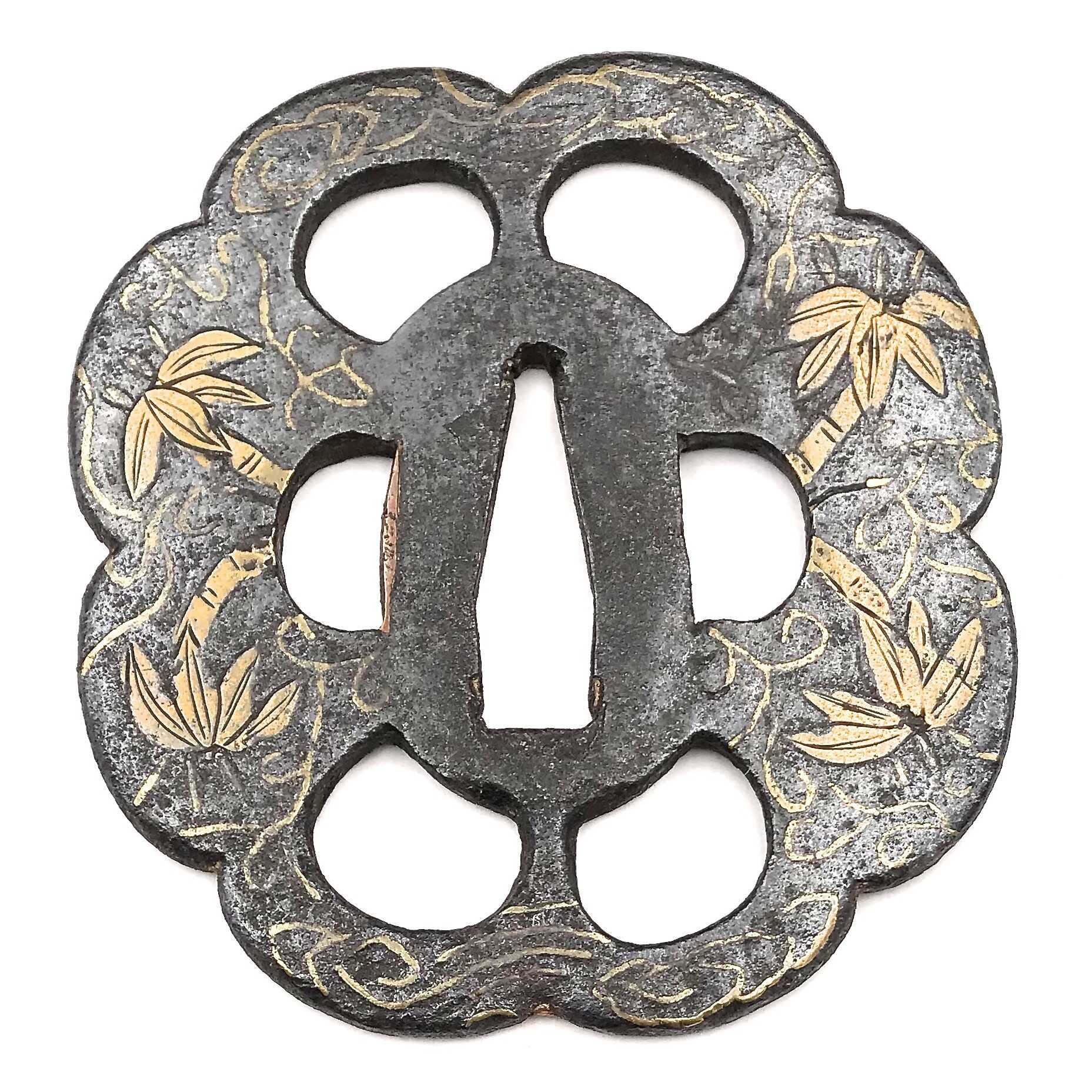
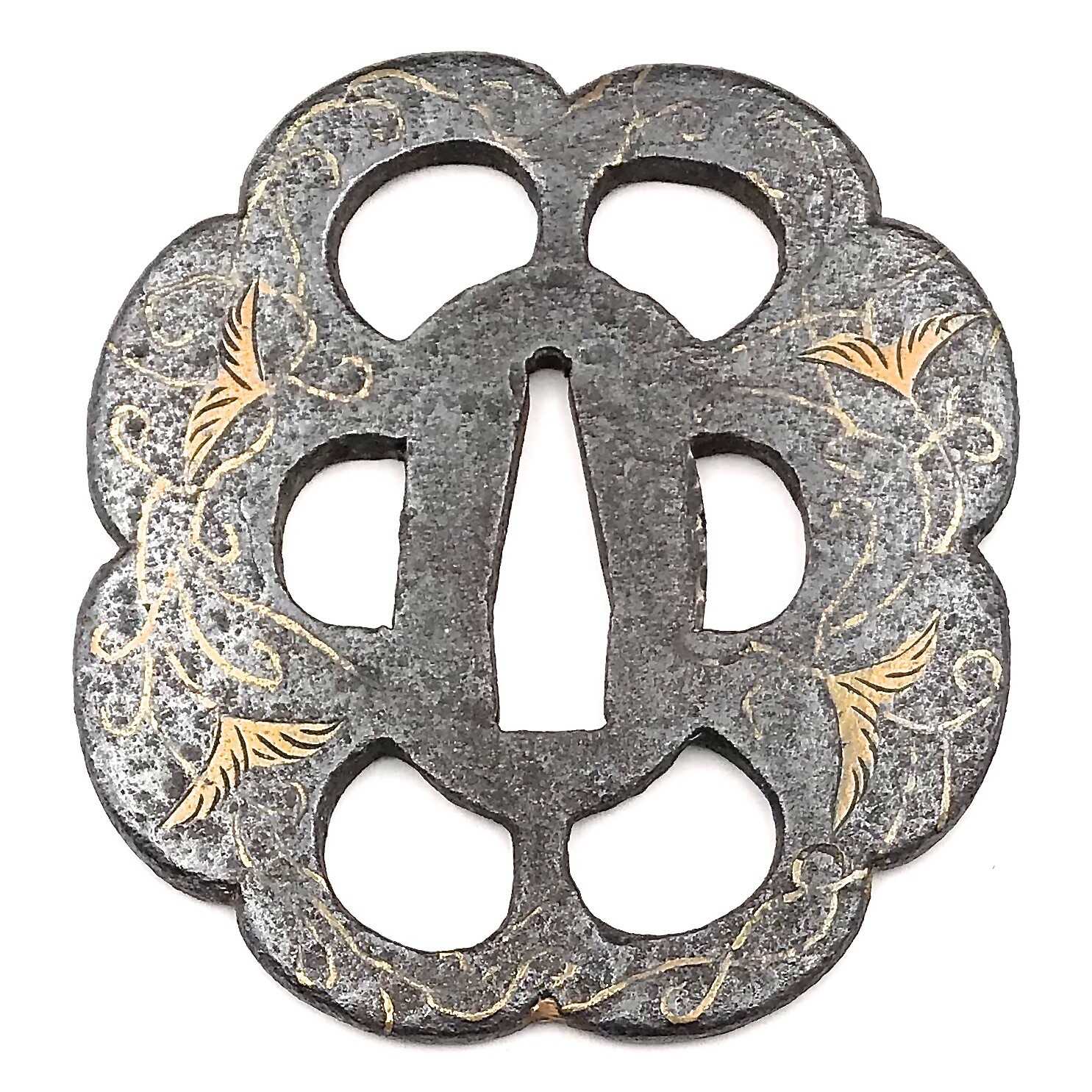
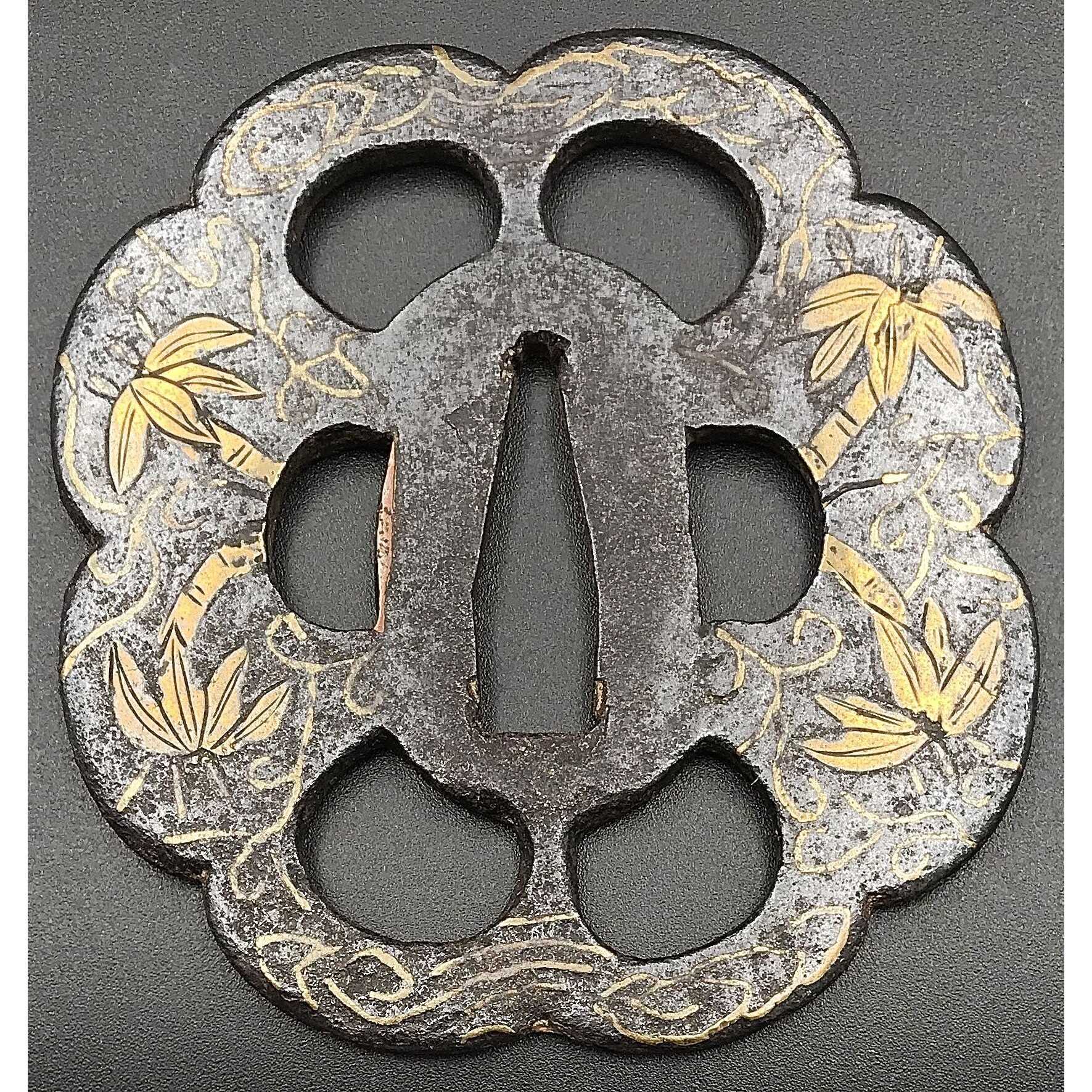
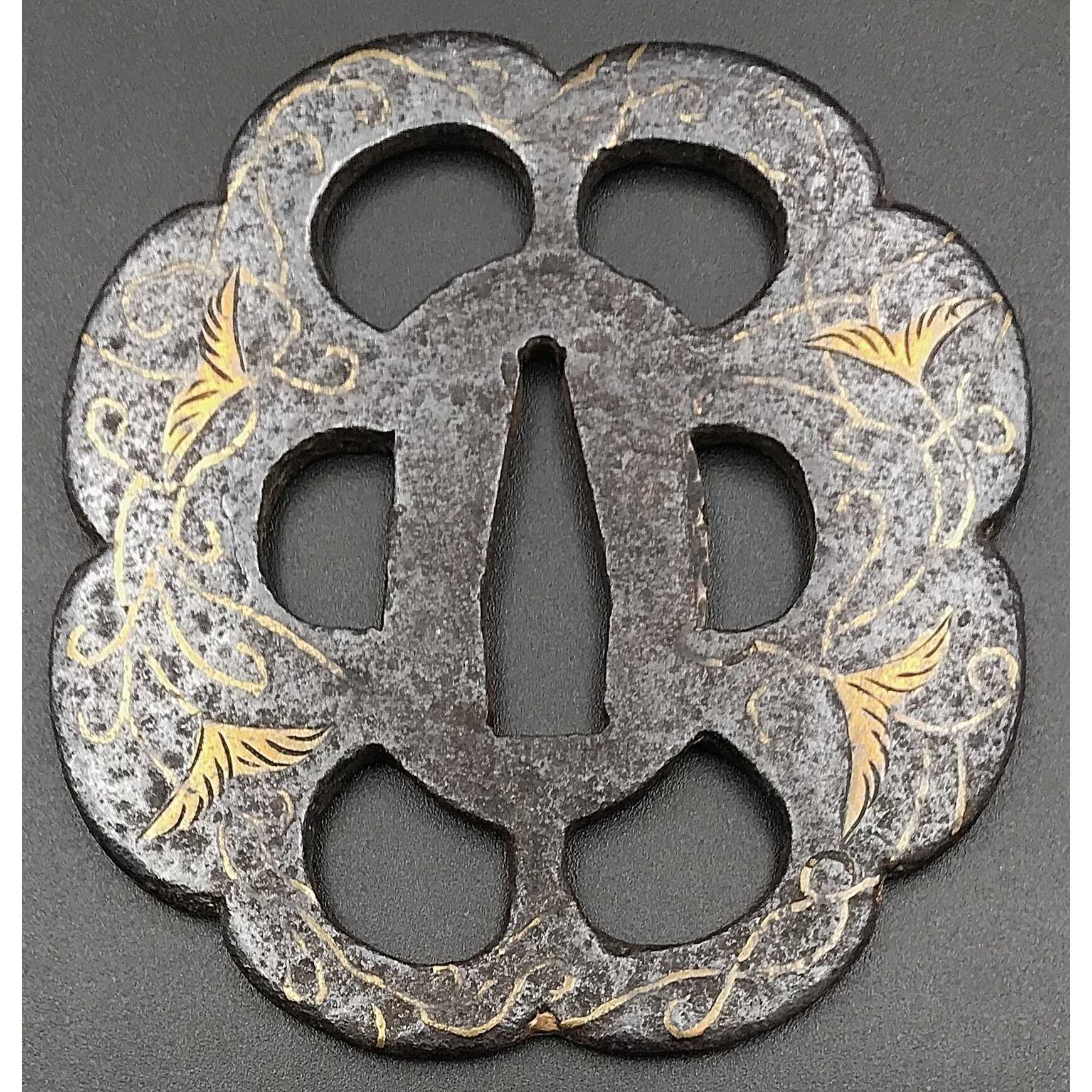
Iron tsuba of 8-lobed form pierced with six openings (sukashi) and decorated with design of bamboo and arabesque in flat brass inlay (hira-zōgan). Two of the openings serve as hitsu-ana. The design on the face represents bamboo trunks and leaves, clouds, waves, and vines; on the back - vines and leaves, that forms an arabesque (karakusa) motif. Rounded square rim. 'Silver' patina. Hitsu-ana with copper sekigane.
Heianjō (most probable) or Kaga-Yoshirō school.
Late Muromachi or Momoyama period; 16th century.
Size: Height: 74.6 mm; Width: 69.5 mm; Thickness at seppa-dai: 4.2 mm. Weight: 113.9 g.
Provenance: Gary D. Murtha.
This tsuba is illustrated at: Japanese sword guards. Onin - Heianjo - Yoshiro by Gary D. Murtha [GDM Publications, 2016, p. 48]: "Iron, 80x75x3 mm tsuba with brass karakusa vines and leaves on one side with bamboo, leaves, and clouds on the reverse. This tsuba is one of those pieces that might be classified as Onin or Heianjo work, but the flush inlay tips it to the Heianjo side. Late Muromachi period."
I would like to add that it easily may also be classified as Kaga-Yoshirō. Robert Haynes in Study Collection.., page 32, illustrates a look-a-like example, and writes: "This style of inlay, where the designs on the face and the back are very different, was common to the work of artists in Kyoto in the Momoyama period."
Additional Information
| Collection | Japanese swords & fittings |
|---|---|
| Type / Purpose | Tsuba |
| Country | Japan |
| Period | 16 AD , Azuchi–Momoyama period [安土桃山時代] (1568–1603) , Muromachi period [室町時代] (1336–1573) |
| School | Heianjō School , Kaga School |
| Material | Brass , Iron |
| Media/Technique | Hira-Zōgan , Shinchū-zōgan , Sukashi , Zōgan |
| Subject | Arabesque (karakusa) , Bamboo (take) , Leaves , Vines |
| Acquisition year | 2017 |
Related Items


