
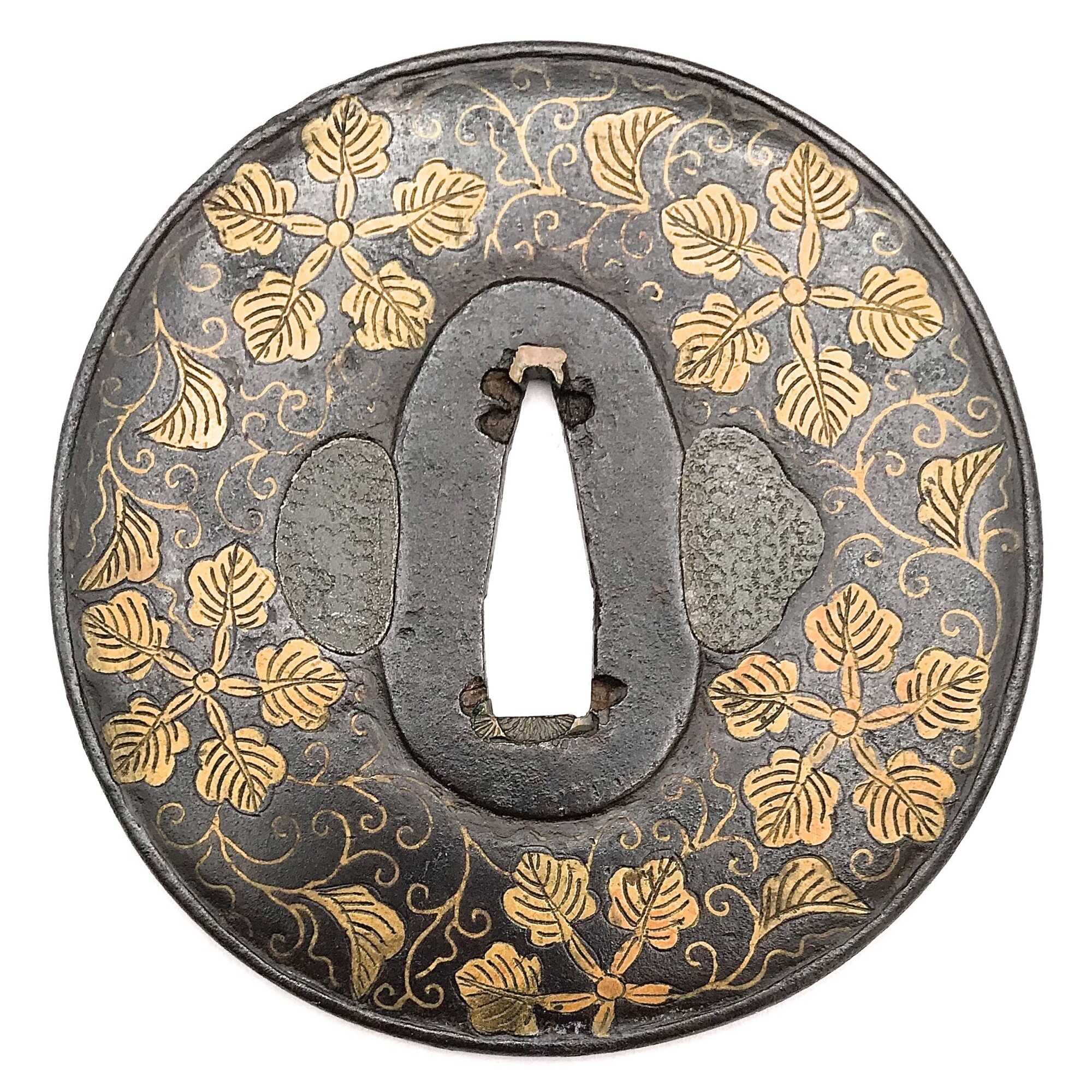
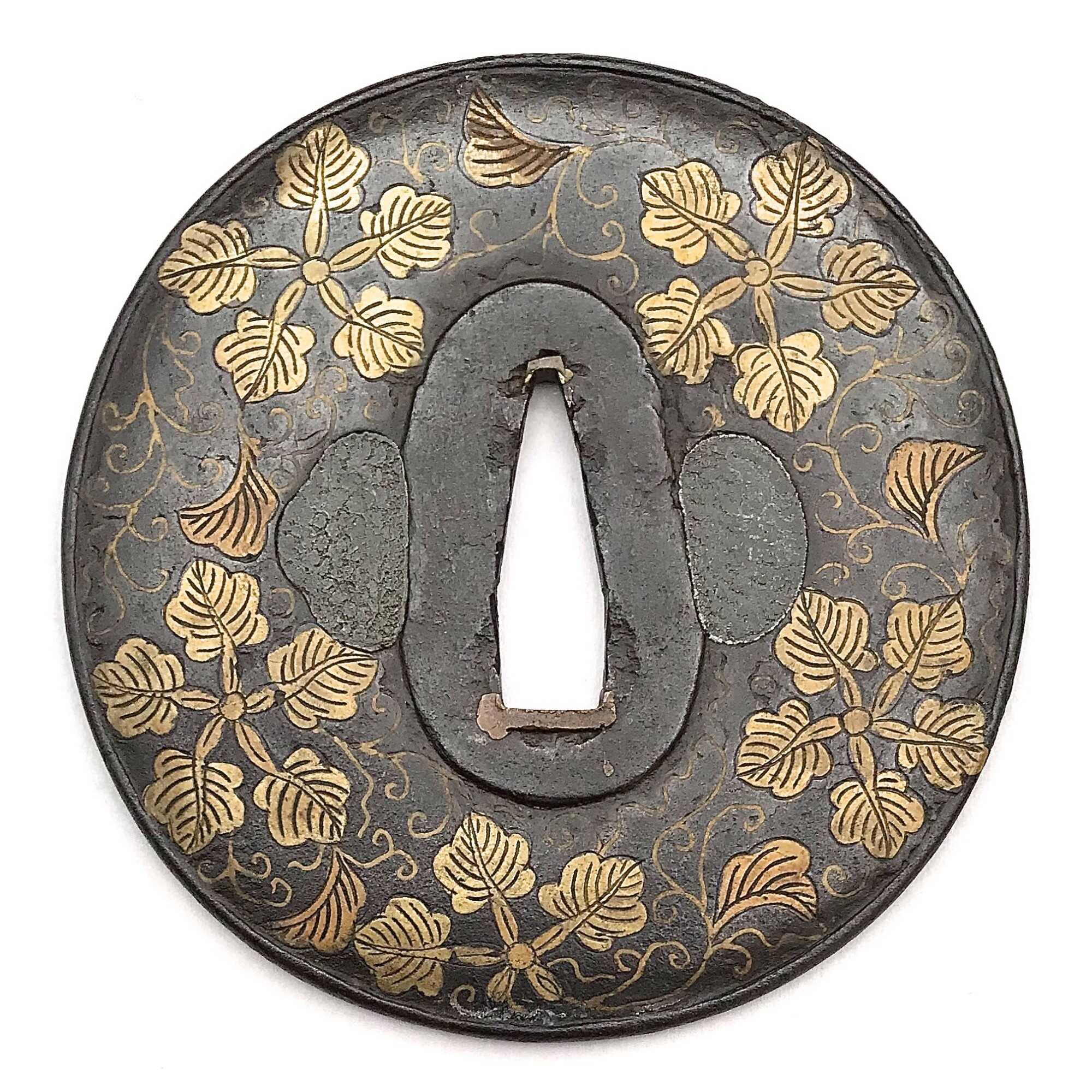
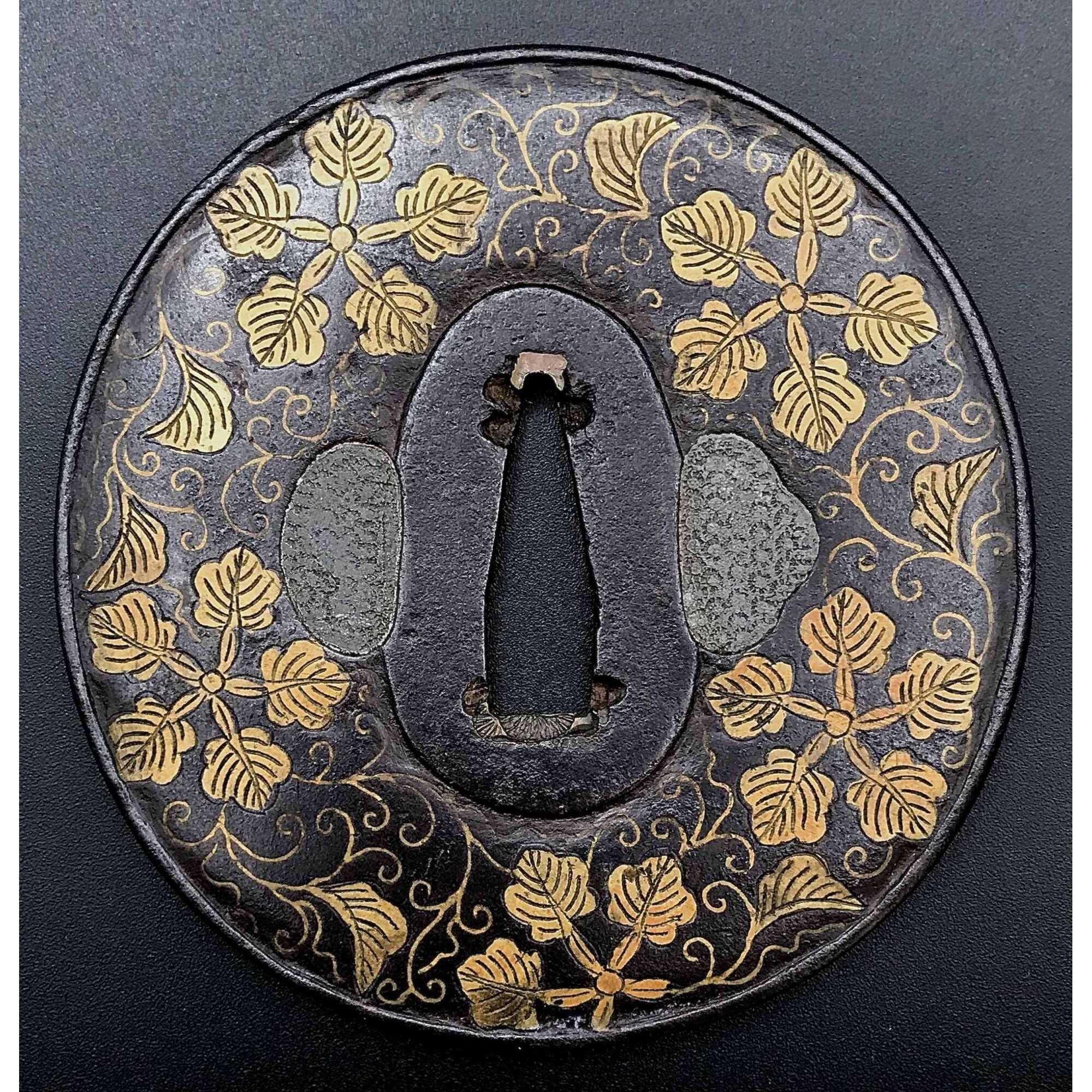
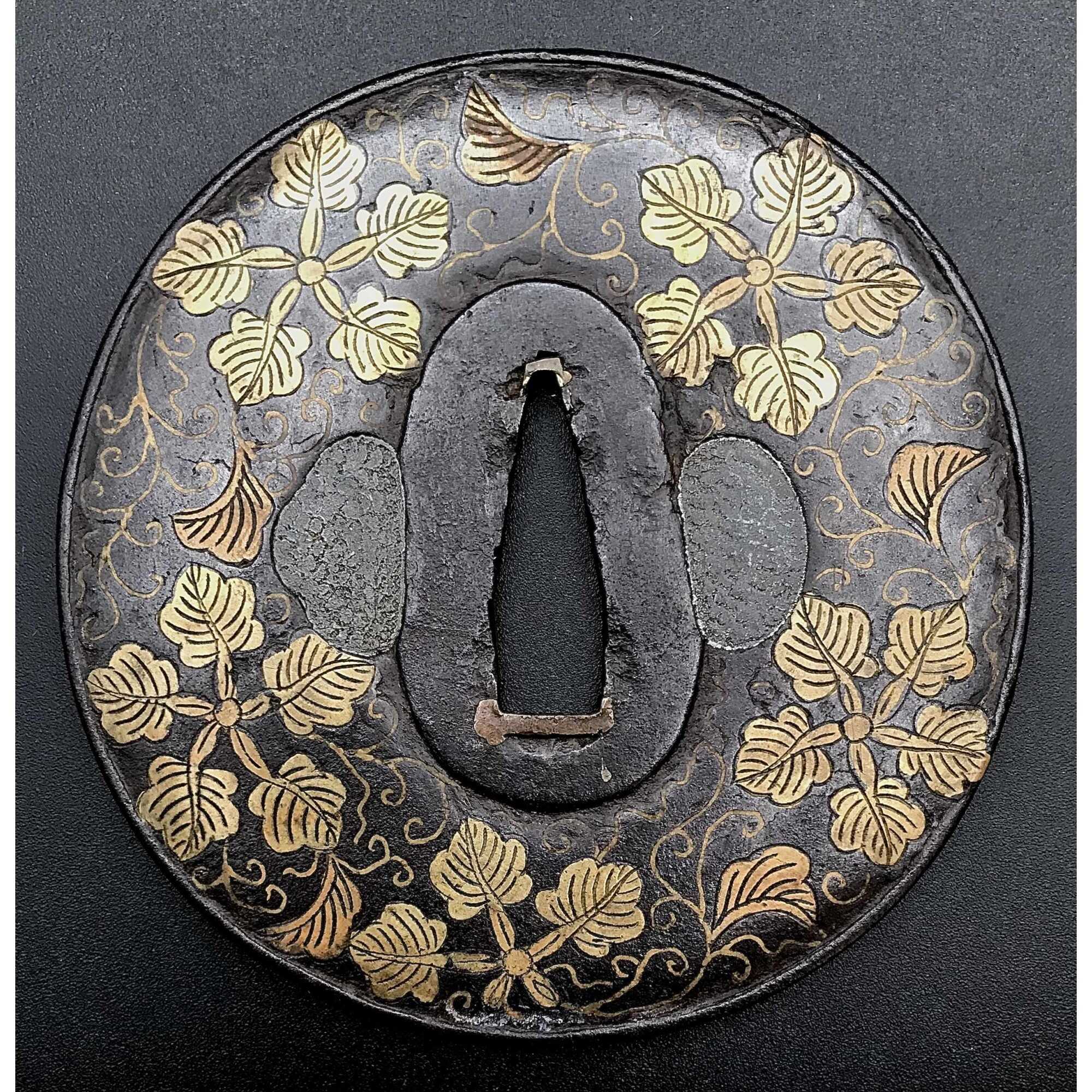
Iron tsuba of slightly elongated round form decorated with design of melon flowers, vines, and leaves in brass flat inlay (hira-zōgan) on both sides. Slightly raised rim (mimi) carved in a way to simulate ring-shaped covering (fukurin). Kozuka hitsu-ana and kogai hitsu-ana both plugged with soft metal (tim or lead). Copper sekigane.
Heianjō or Kaga School.
Muromachi or Momoyama period, 16th century.
Iron, hira-zōgan brass inlay. Round (maru gata) form, diameter 79 mm.
Size: 80.3 x 78.4 mm; thickness at seppa-dai: 3.4 mm; at the middle: 3.8 mm; before the rim: 2.4 mm, rim: 2.8 mm.
Note on design: though this design resembles family crests with oak and mulberry leaves, I believe it's a melon flower [see Jeanne Allen. Designer's guide to Samurai Patterns. Chronicle Books, San Francisco, 1990, page 114, №130 "Melon Flowers":
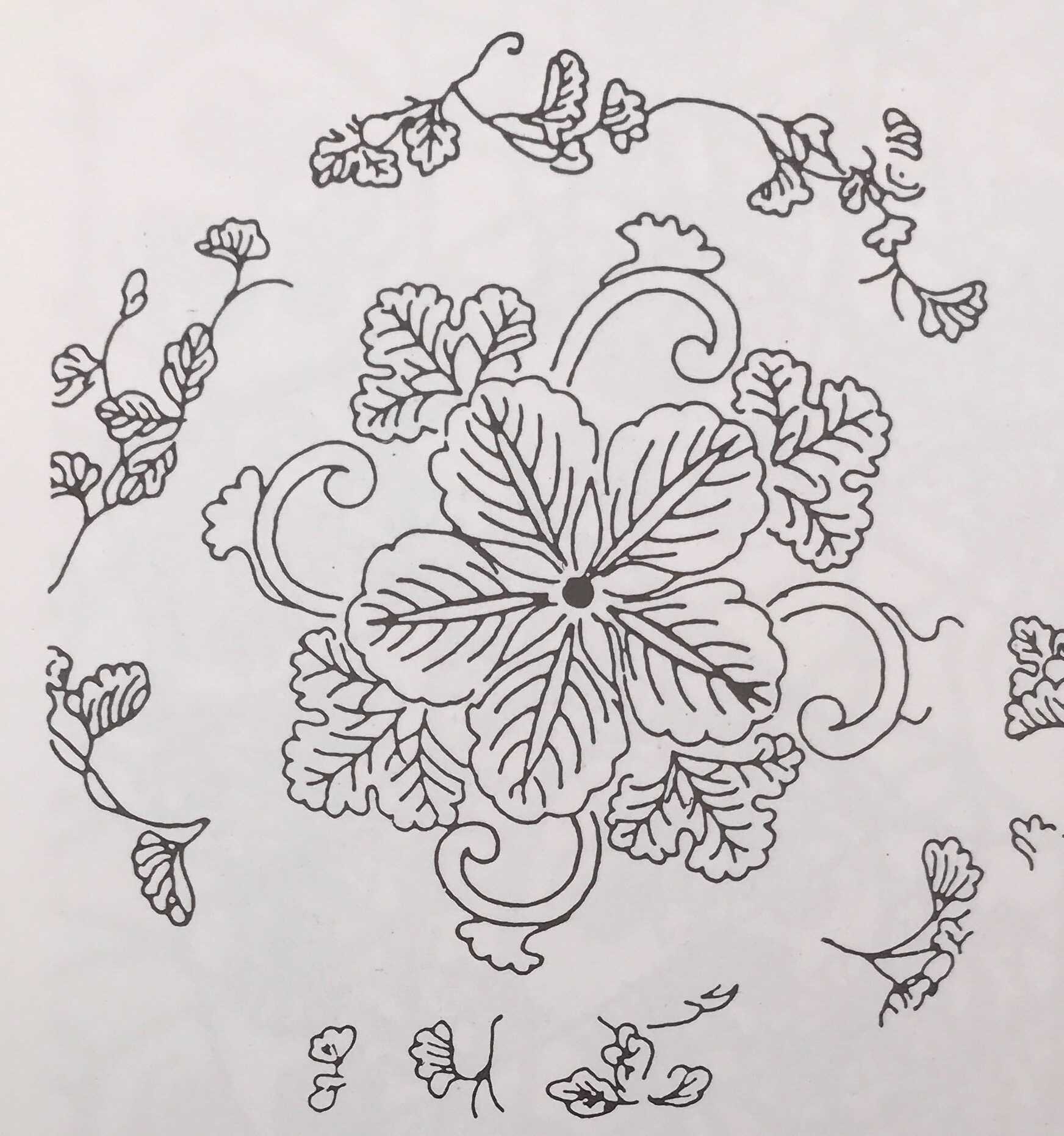
Note about the distribution of thickness (niku-oki): "this tsuba has toroid features, niku raises from the rim towards the centre but thins once more out when approaching the seppa-dai" [M. Sesko, "Handbook...", p. 48].
Additional Information
| Collection | Japanese swords & fittings |
|---|---|
| Type / Purpose | Tsuba |
| Country | Japan |
| Period | 16 AD , Azuchi–Momoyama period [安土桃山時代] (1568–1603) , Muromachi period [室町時代] (1336–1573) |
| Subject | Leaves , Plants , Vines |
| School | Heianjō School , Kaga School |
| Media/Technique | Hira-Zōgan , Kebori |
| Material | Brass , Iron |
| Acquisition year | 2016 |
Related Items


