
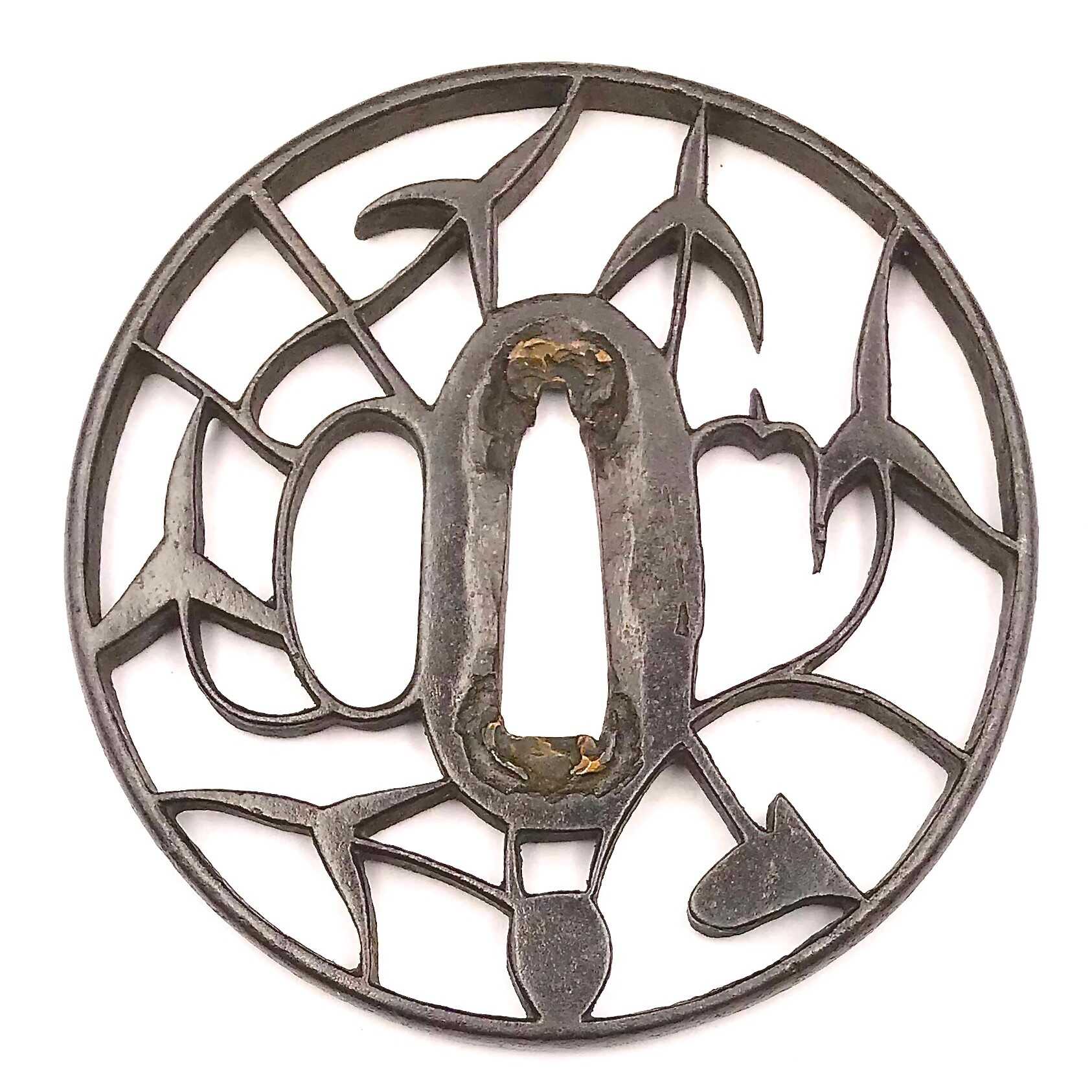
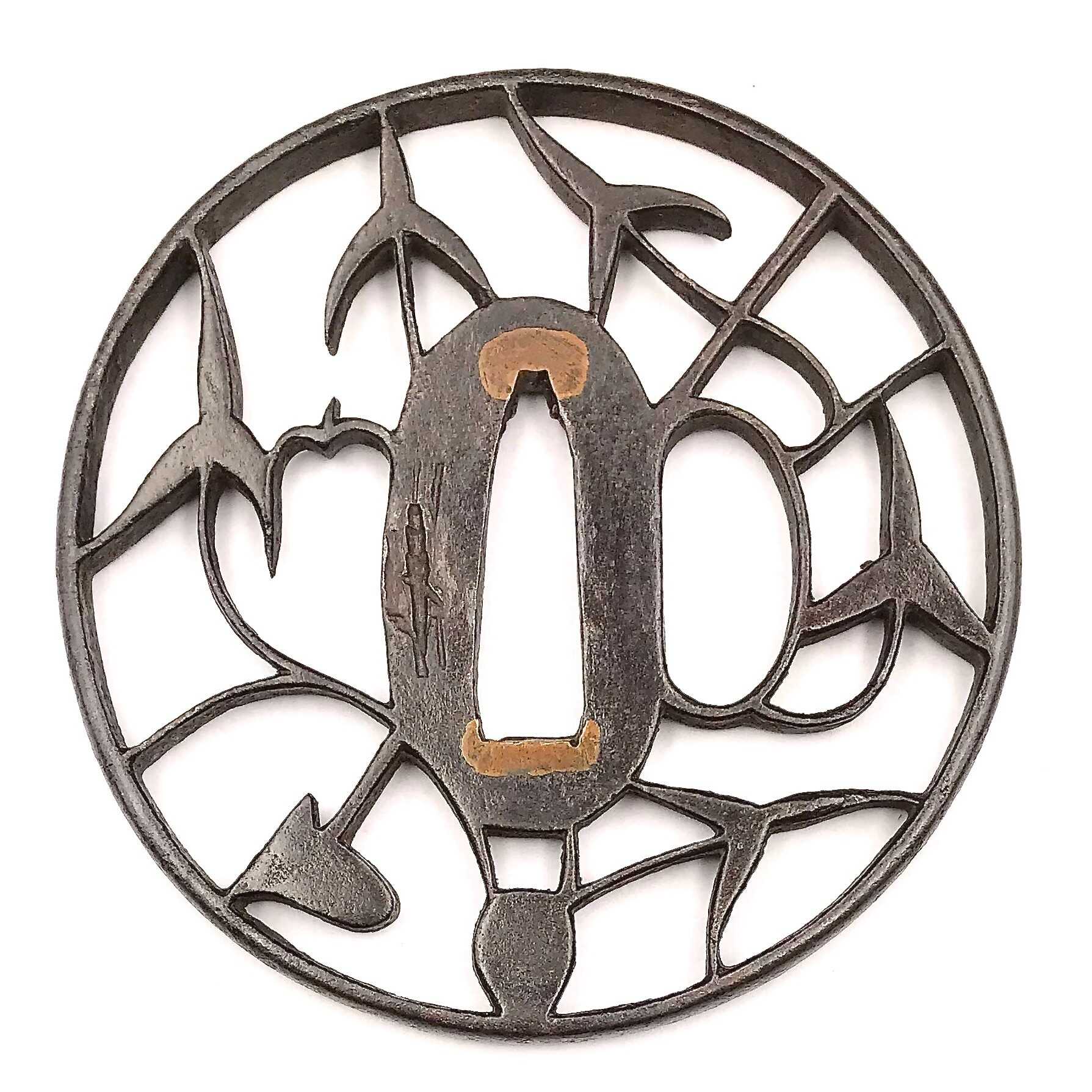
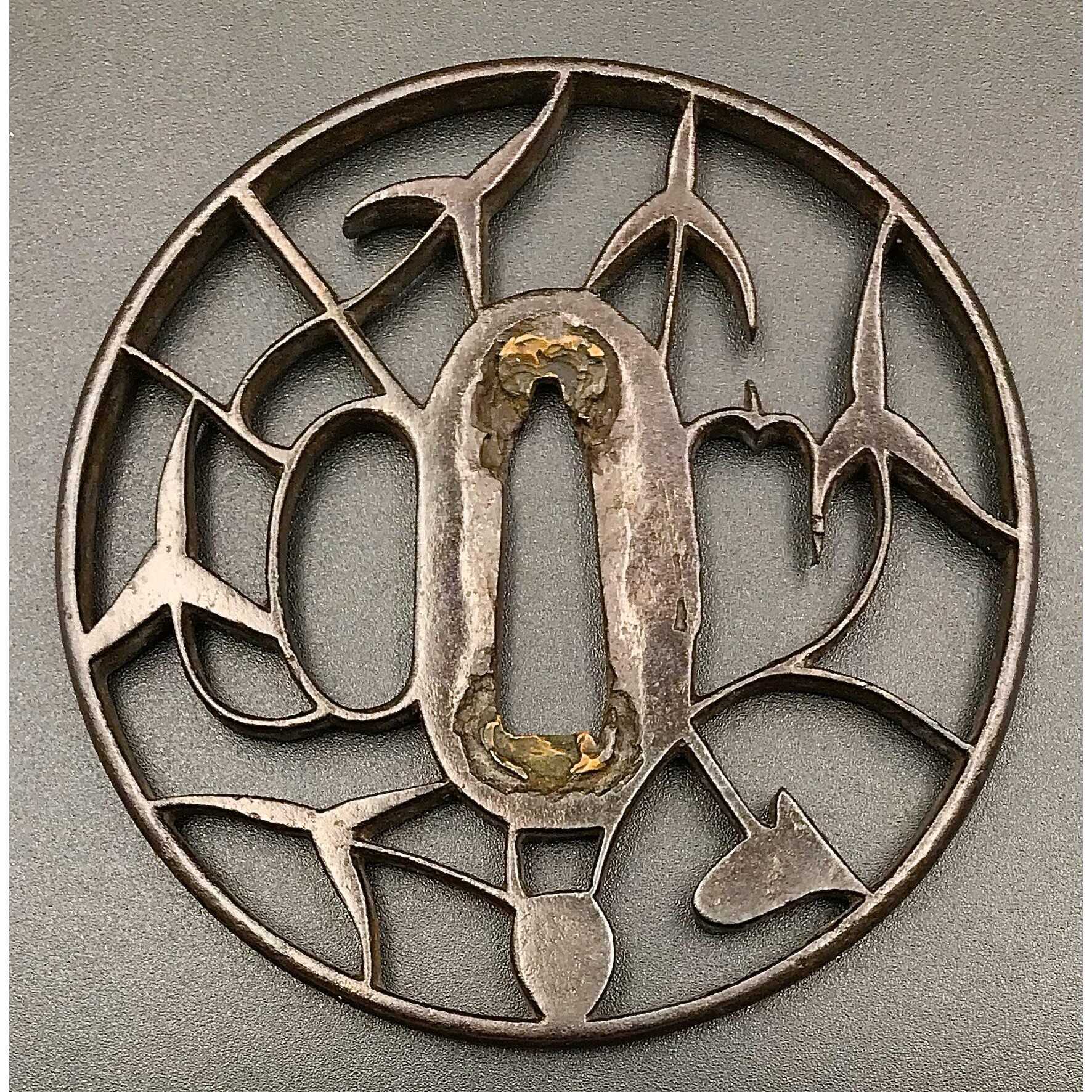
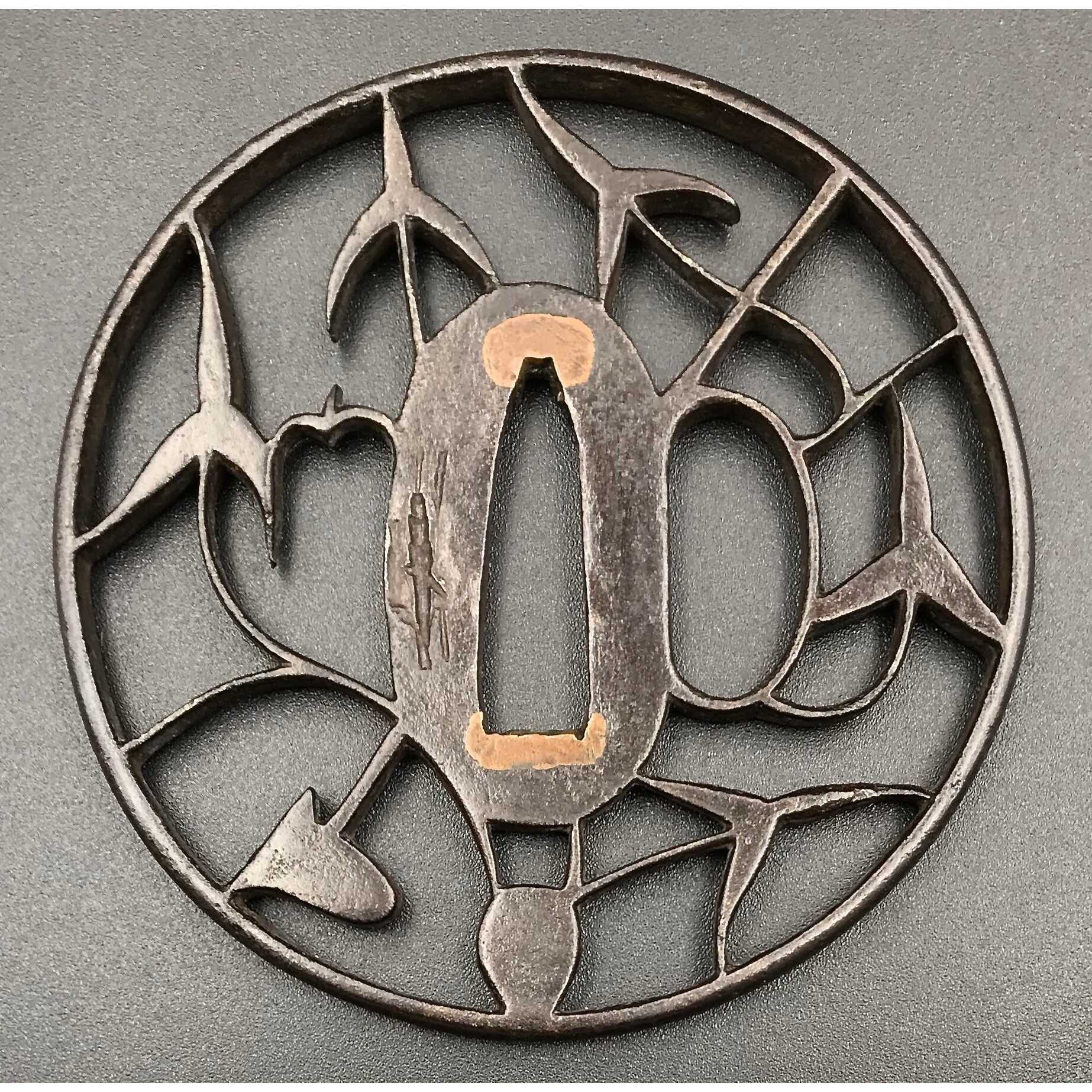
Iron tsuba of round form with design of water plantain (omodaka) and wild goose in openwork (sukashi). Slightly rounded, square rim. Copper sekigane.
Kyo school. Late Muromachi period: Early 16th century (Tenbun era) [Sasano's attribution].
Height: 76.2 mm. Width: 75.8 mm. Rim thickness: 5.3 mm. Center thickness: 4.5 mm.
Provenance: Sasano Masayuki Collection, № 68: "The water plantain (omodaka) first appeared as a design for sword fittings in the Heian period. From such early beginnings, this decorative plant has shared a long history with the samurai. Also known as shogun's grass (shogununso), it was held in high esteem as a symbol of victory".
The same tsuba was found at Japanese Swords and Tsuba from the Professor A. Z. Freeman and the Phyllis Sharpe Memorial collections. Sotheby's, London, Thursday 10 April 1997, page 22, item 60, saying that this is a "Kyo-sukashi tsuba, early to middle Edo period (late 17th/18th century) [Sotheby's attribution], and that it represents "a small bird among omodaka and aoi plants".
Additional Information
| Collection | Japanese swords & fittings |
|---|---|
| Type / Purpose | Tsuba |
| Country | Japan |
| Period | 16 AD , Muromachi period [室町時代] (1336–1573) |
| School | Kyo |
| Material | Iron |
| Media/Technique | Sukashi |
| Subject | Aoi (hollyhock) , Water plantain (omodaka) , Wild geese |
| Acquisition year | 2014 |
Related Items


