
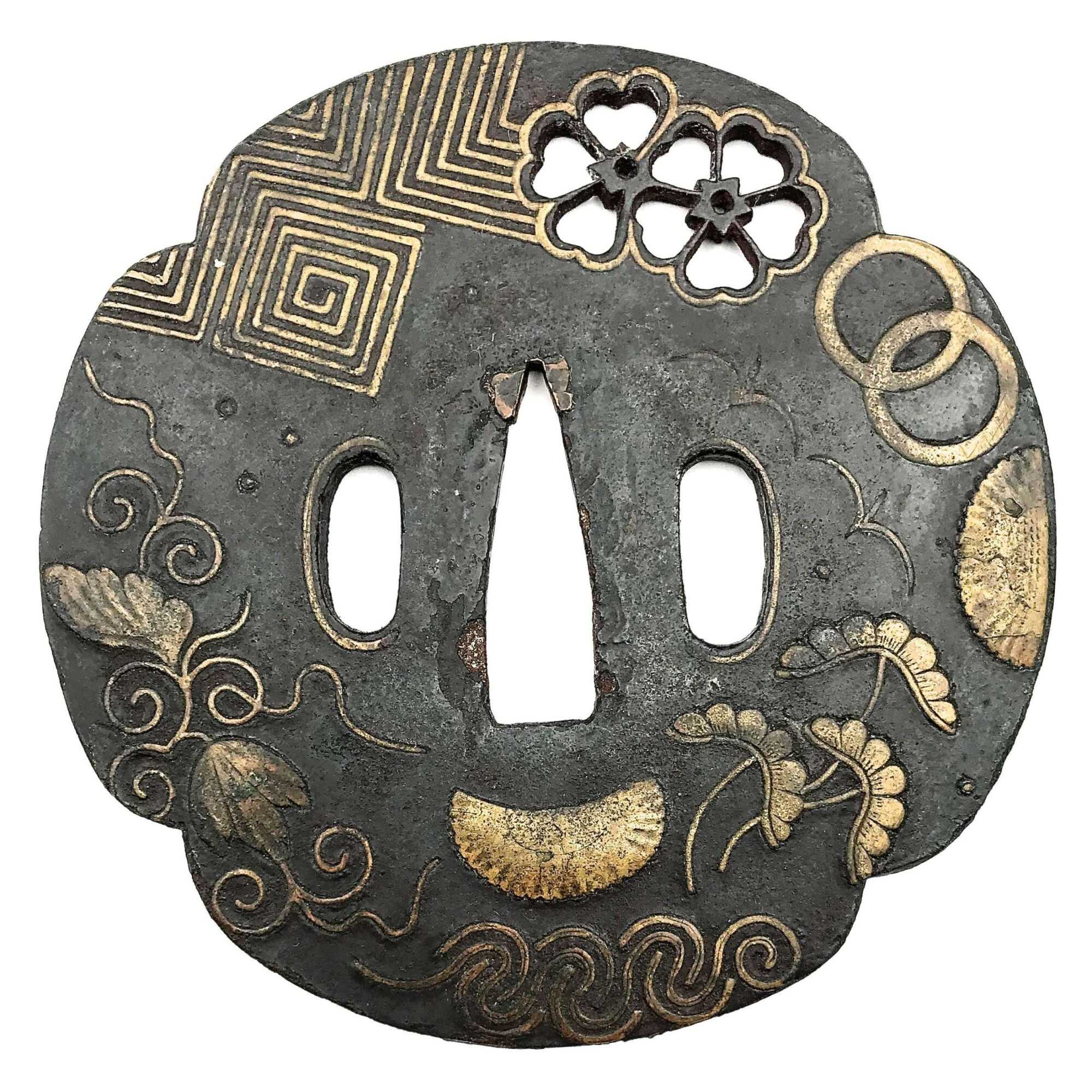
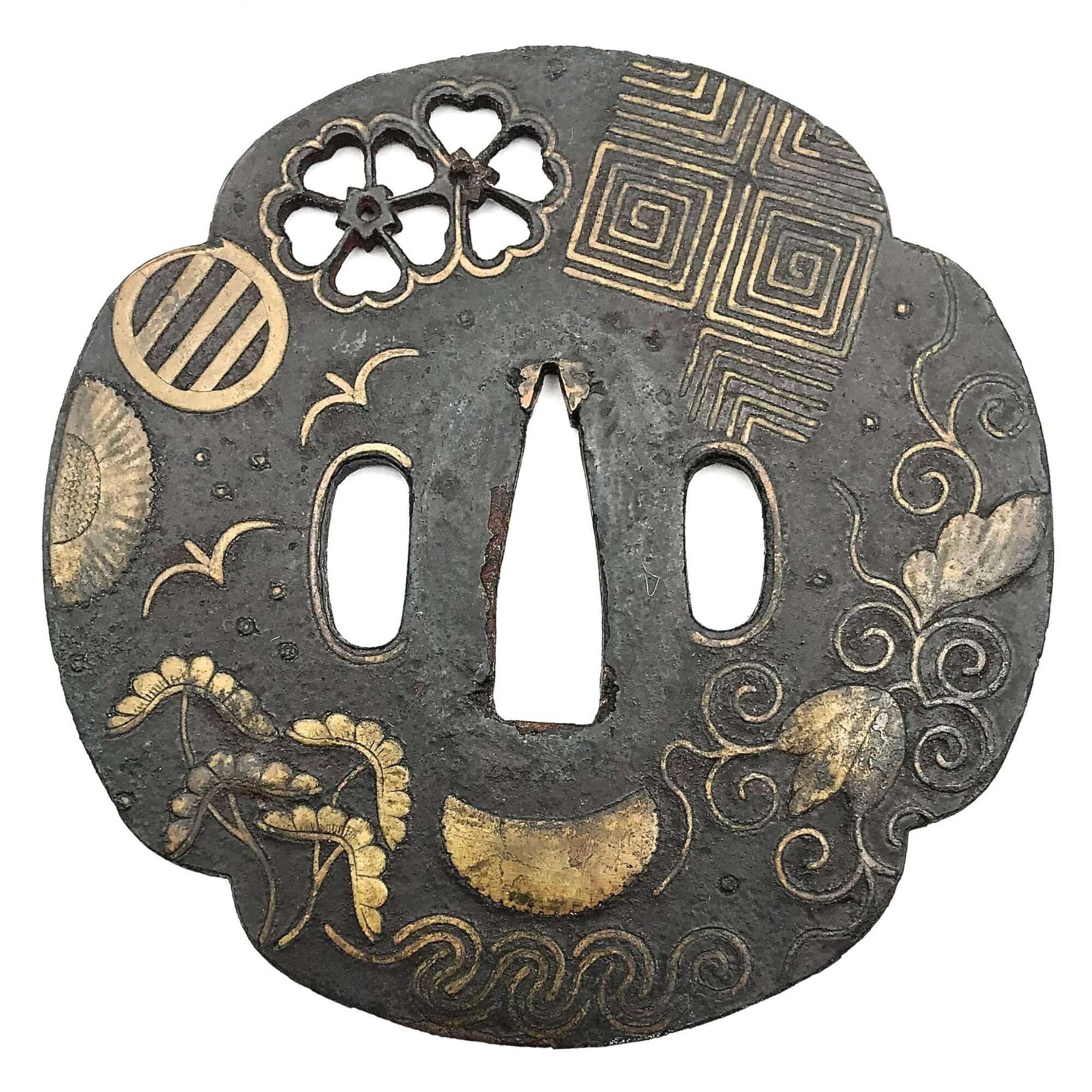
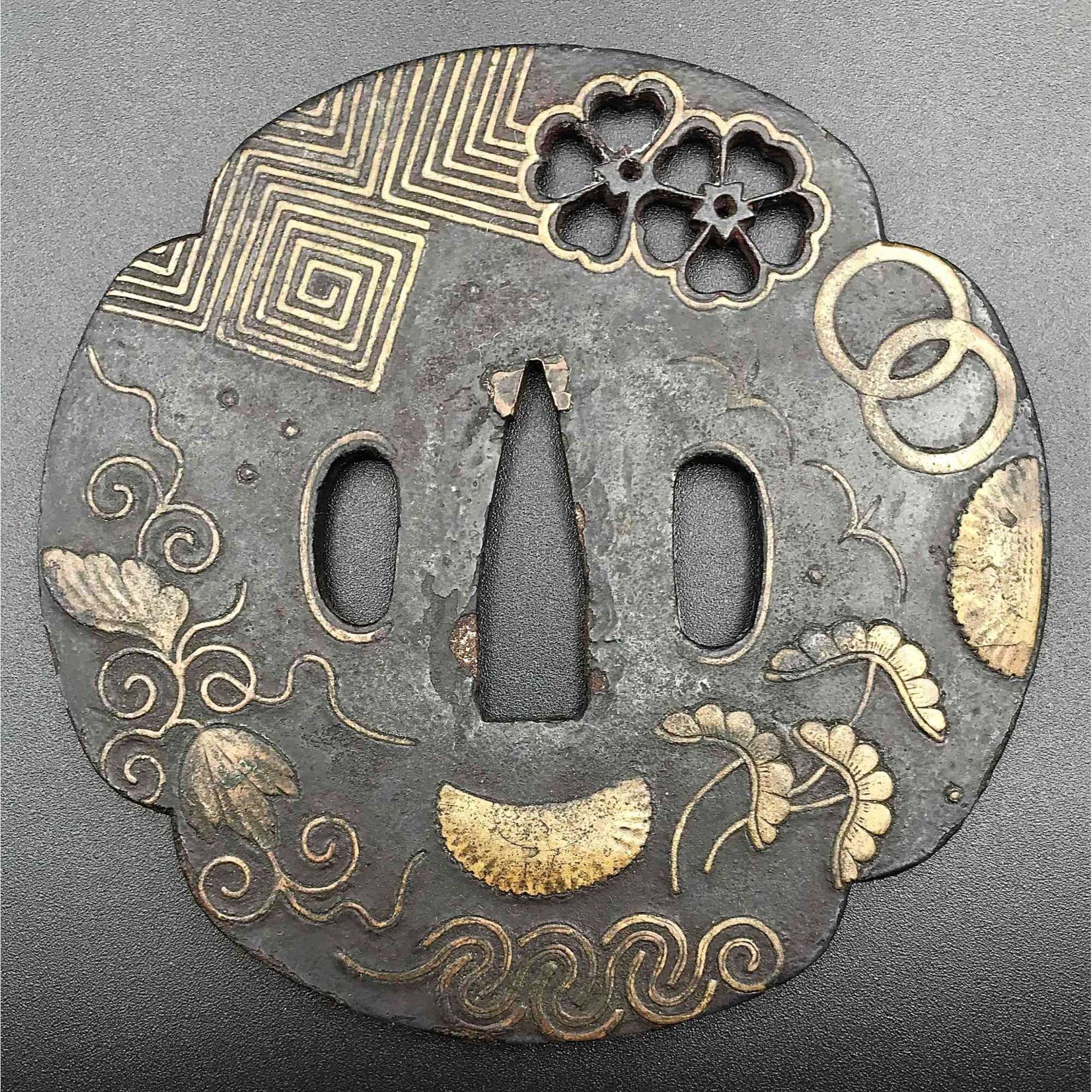
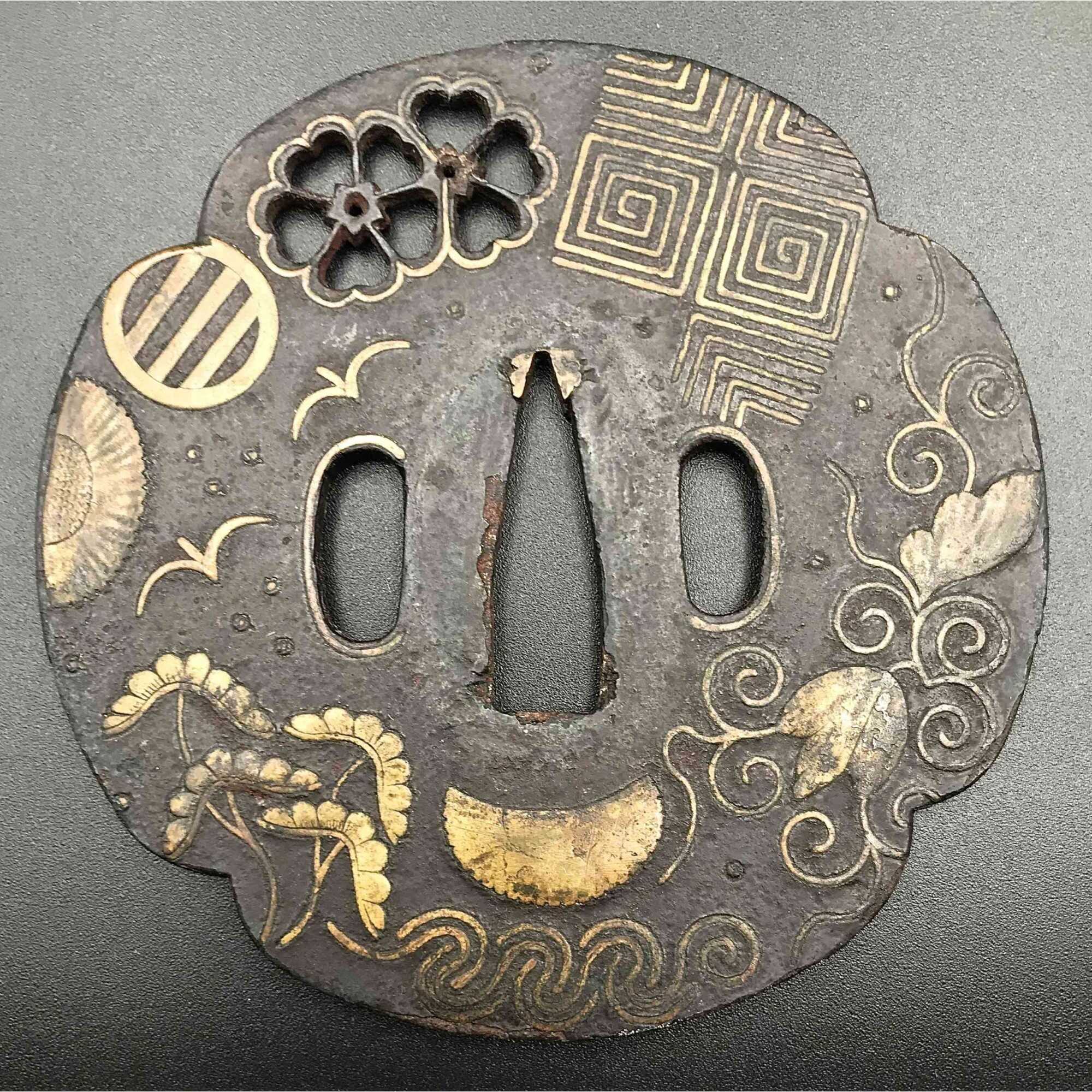
Iron tsuba of mokko form (quatrefoil) decorated with a pair of cherry blossoms (sakura) in small openwork (ko-sukashi) and inlaid in brass (suemon-zōgan) with designs of waves, distant pines, chrysanthemum flowers in halves, tendrils and leaves, lightning or thunder symbol (inazuma), flying geese and family chrests (mon): two interlocked rings (wachigai) on the face, and three encircled stripes (maru-no-uchi-ni-mitsuhikiryo) - kamon of the Kikkawa clan - on the reverse. Hitsu-ana outlined with inlay of brass wire. Surface treated with lacquer. Copper sekigane.
Though some consider this type of tsuba to resemble Heianjo school, “...the brass trim around the hitsu-ana is a characteristics of Ōnin work” [Japanese sword guards. Onin – Heianjo – Yoshiro. Gary D. Murtha. GDM Publications, 2016; p. 27.]. The Ōnin origin is reinforced by scattered ten-zōgan elements here and there through the plate. It is possible that the tsuba was initially of round form and later trimmed to mokko shape.
Mid Muromachi period; 15th century.
Dimensions: Height: 87.2 mm; Width: 87.9 mm; Thickness at seppa-dai: 3.6 mm.
Additional Information
| Collection | Japanese swords & fittings |
|---|---|
| Type / Purpose | Tsuba |
| Country | Japan |
| Period | 15 AD , Muromachi period [室町時代] (1336–1573) |
| School | Ōnin School |
| Material | Brass , Iron |
| Media/Technique | Ko-sukashi (small cut-outs) , Suemon-zōgan , Sukashi , Ten-zōgan , Zōgan |
| Subject | Cherry Blossom (sakura) , Chrysanthemum (kiku) , Family crest (mon) , Flowers , Lightning (inazuma) , Pines , Waves |
| Acquisition year | 2016 |
Related Items


