
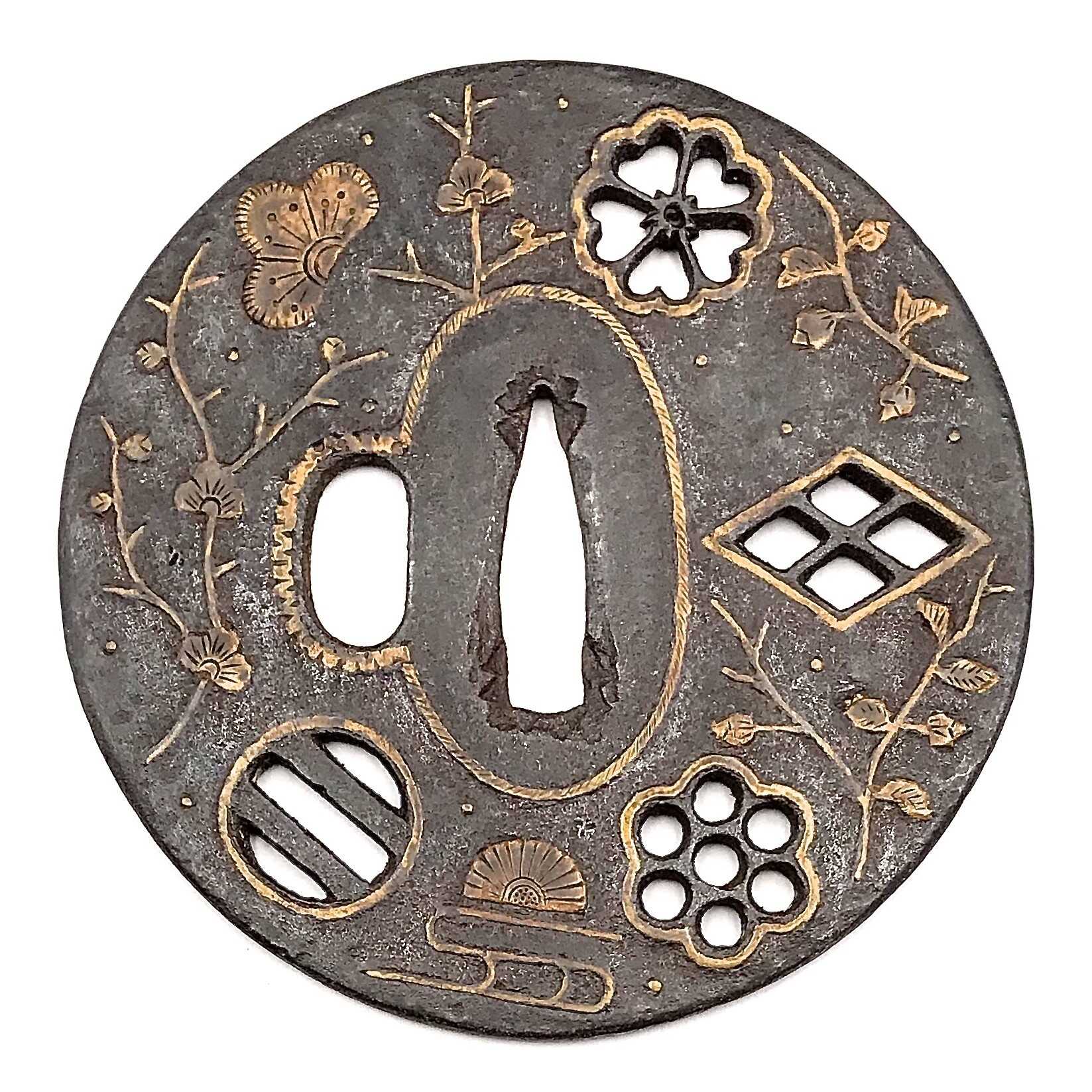
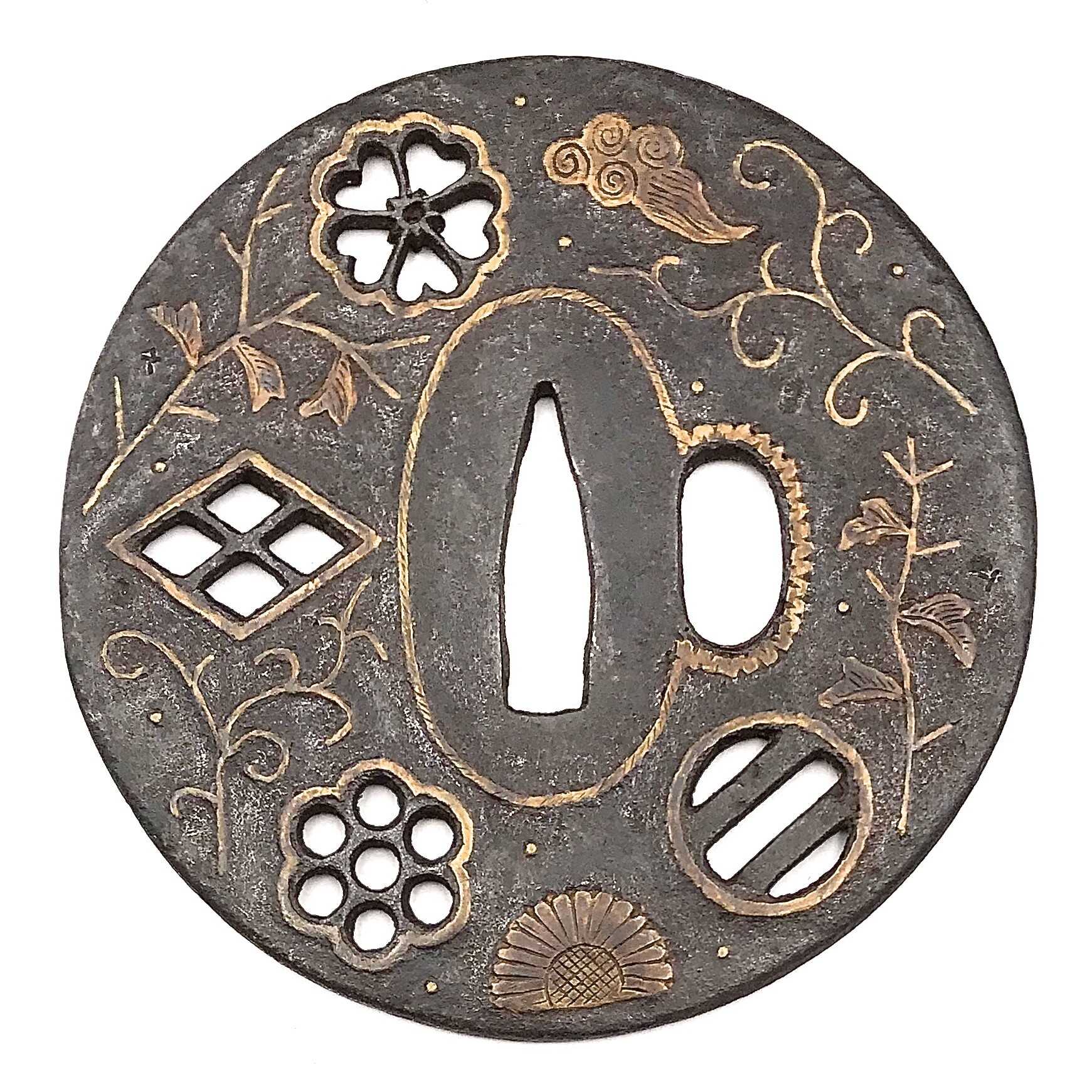
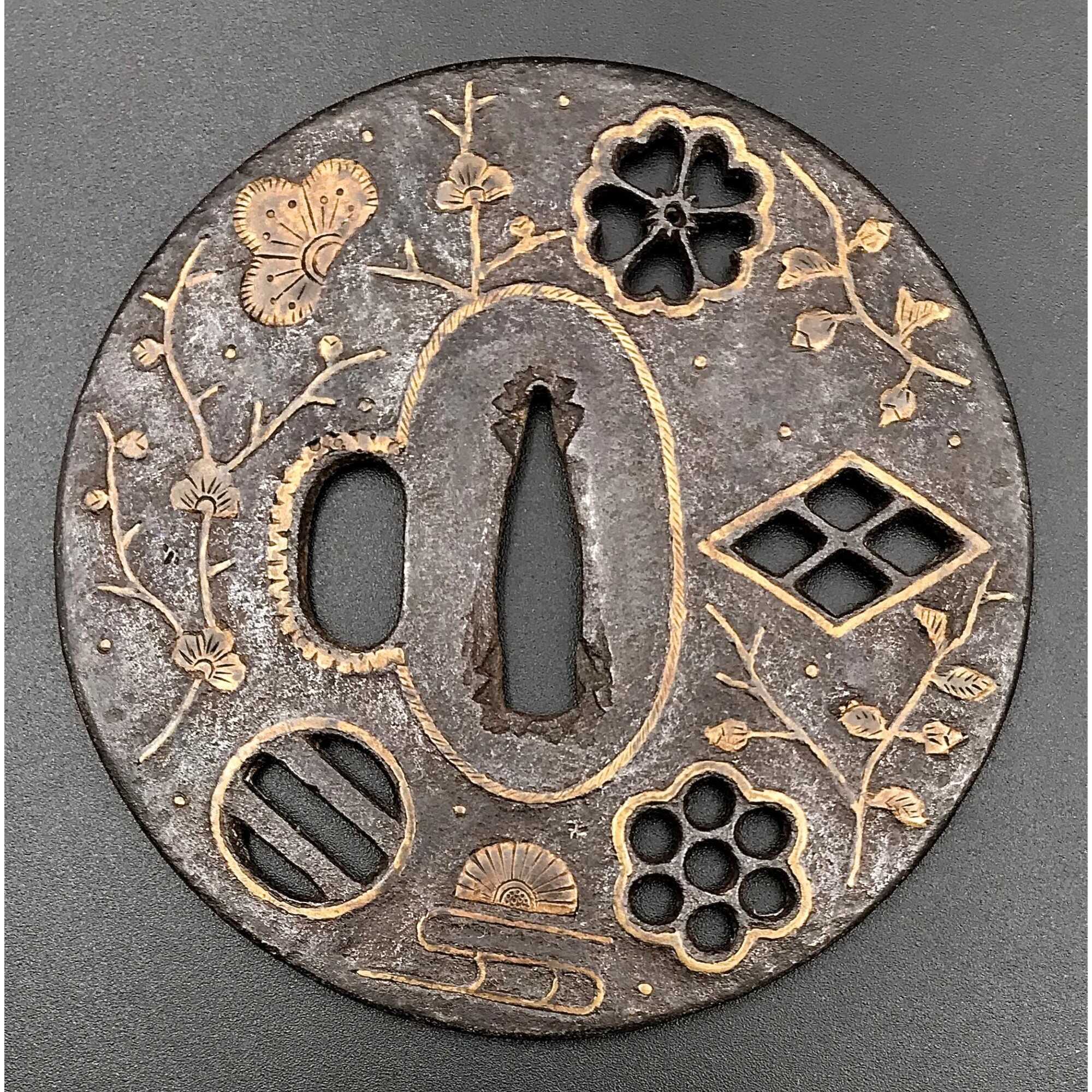
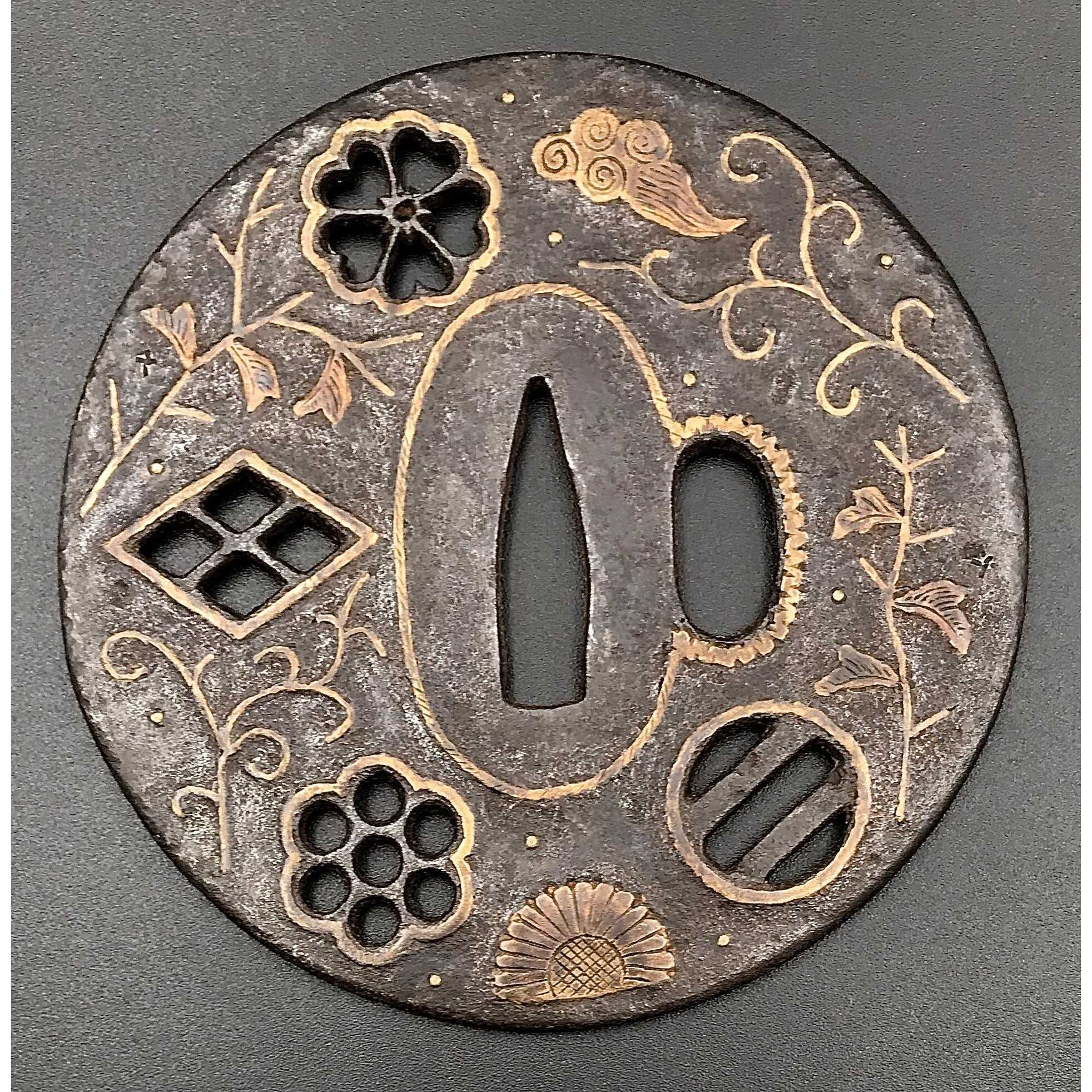
Iron tsuba of round form decorated with floral motif in brass or copper inlay (suemon-zōgan) and family crests (mon) in small openwork (ko-sukashi). Occasional brass dots or nail heads in brass ten-zōgan. Sukashi elements outlined with inlaid brass wire. Seppa-dai outlined with rope-shaped brass wire (nawame-zōgan); kozuka-hitsu-ana outlined with scalloped brass wire.
Ōnin school.
Mid to late Muromachi period, 15th or 16th century.
Height: 88.9 mm; Width: 88.5 mm; Thickness at seppa-dai: 2.9 mm.
Family crests (mon) in openwork: cherry blossom (sakura) - kamon of Sakurai and Yoshino clans, four-section lozenge (waribishi) - kamon of Takeda clan, the seven stars of the big dipper (maru ni nanatsuboshi) - kamon of Chiba clan, two encircled stripes (futatsubiki) - kamon of Ashikaga clan. Brass inlays represent flowers, branches and leaves, as well as halved plum blossom, halved chrysanthemum blossom, cloud, and chrysanthemum-on-water symbol - the mon of Kusunoki Masashige. Abundance of family crests of so many powerful warrior clans symbolizes heritage.
"The brass trim around the kozuka hitsu-ana andd the seppa-dai are characteristics of Onin work" [Japanese sword guards. Onin - Heianjo - Yoshiro. Gary D. Murtha. GDM Publications, 2016; p. 27.]
Additional Information
| Collection | Japanese swords & fittings |
|---|---|
| Type / Purpose | Tsuba |
| Country | Japan |
| Period | Muromachi period [室町時代] (1336–1573) |
| School | Ōnin School |
| Material | Brass , Iron |
| Media/Technique | Ko-sukashi (small cut-outs) , Suemon-zōgan , Sukashi , Ten-zōgan , Zōgan |
| Subject | Chrysanthemum (kiku) , Clouds (kumo) , Family crest (mon) , Flowers , Leaves , Plants , Plum blossom (ume) , Stream |
| Acquisition year | 2016 |
Related Items


