
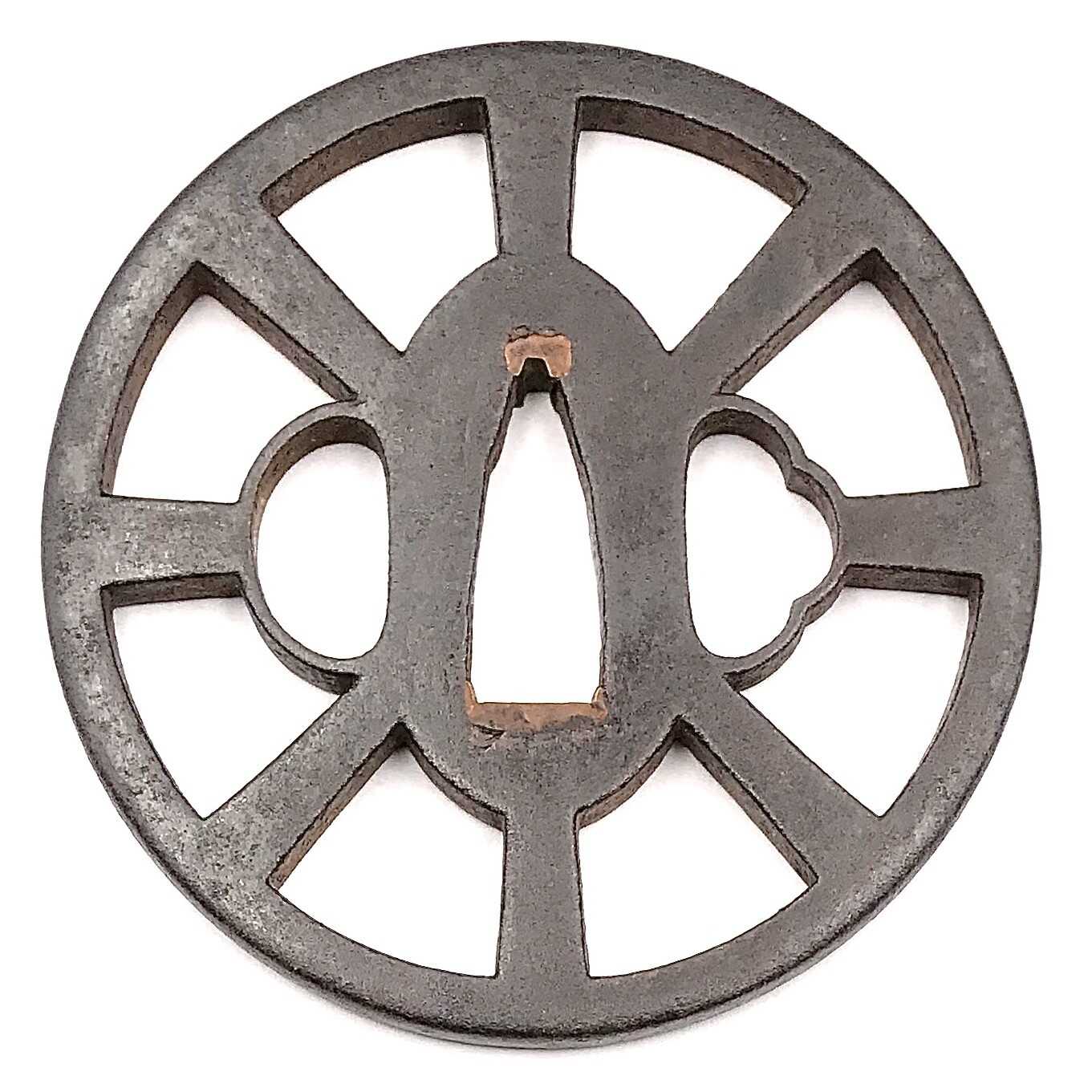
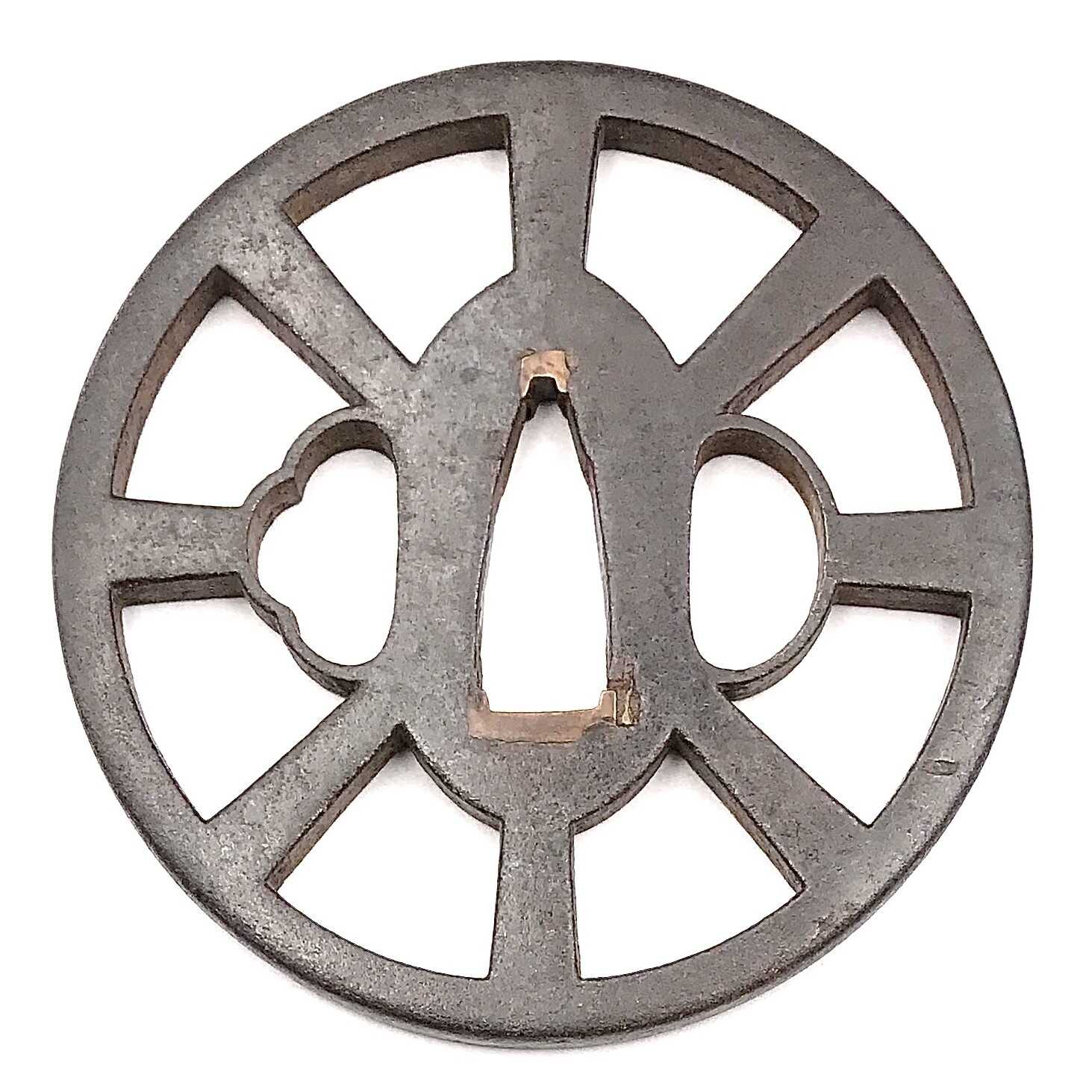
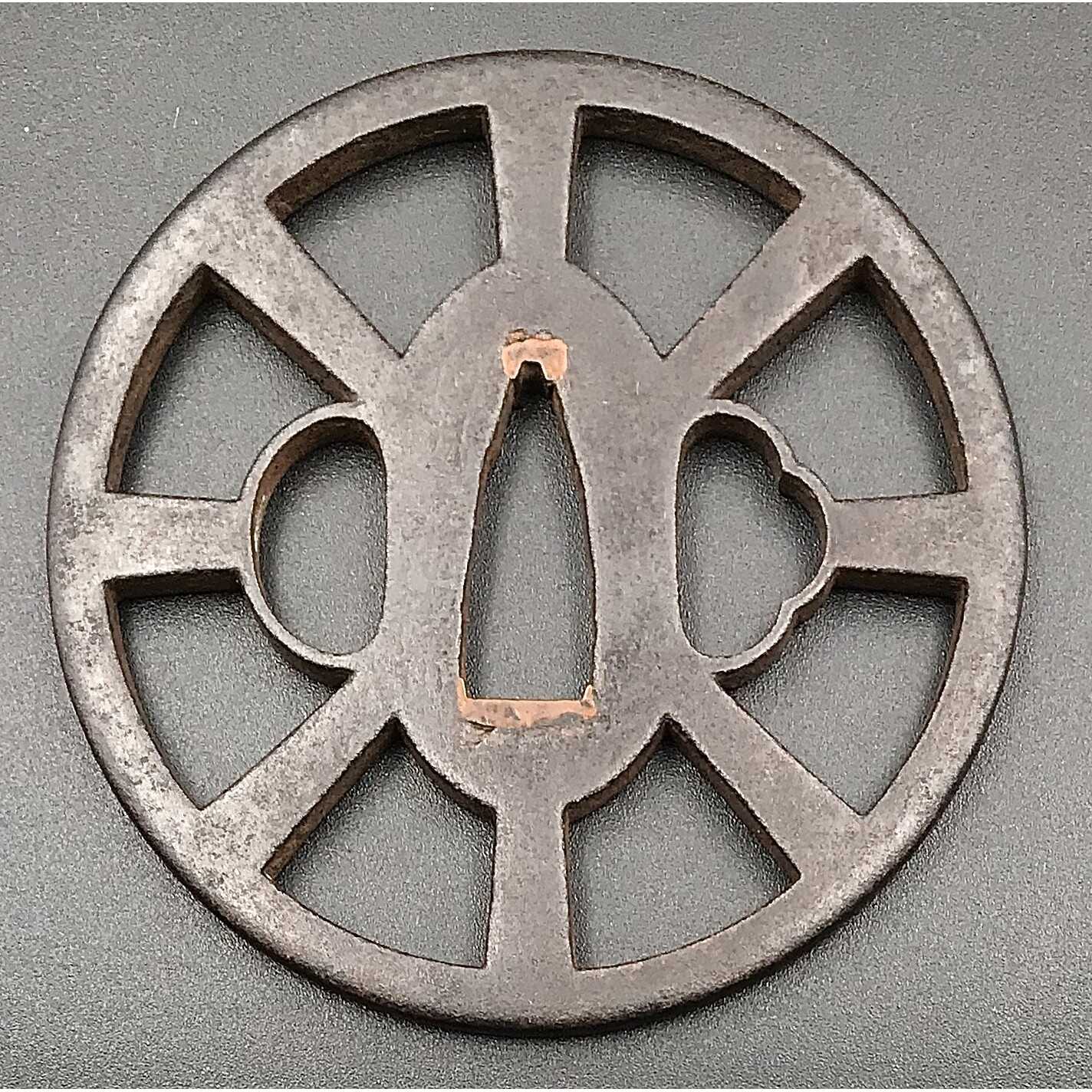
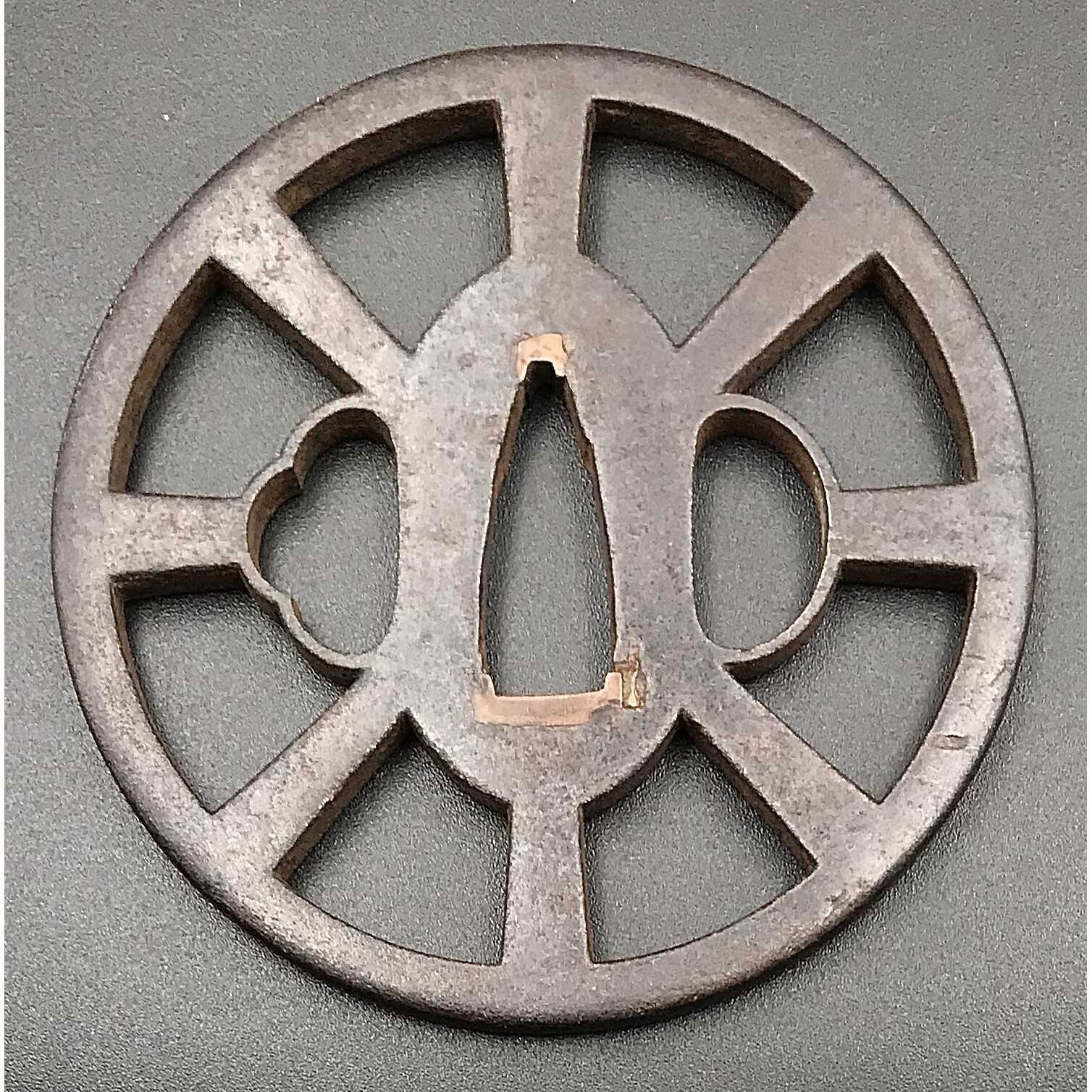
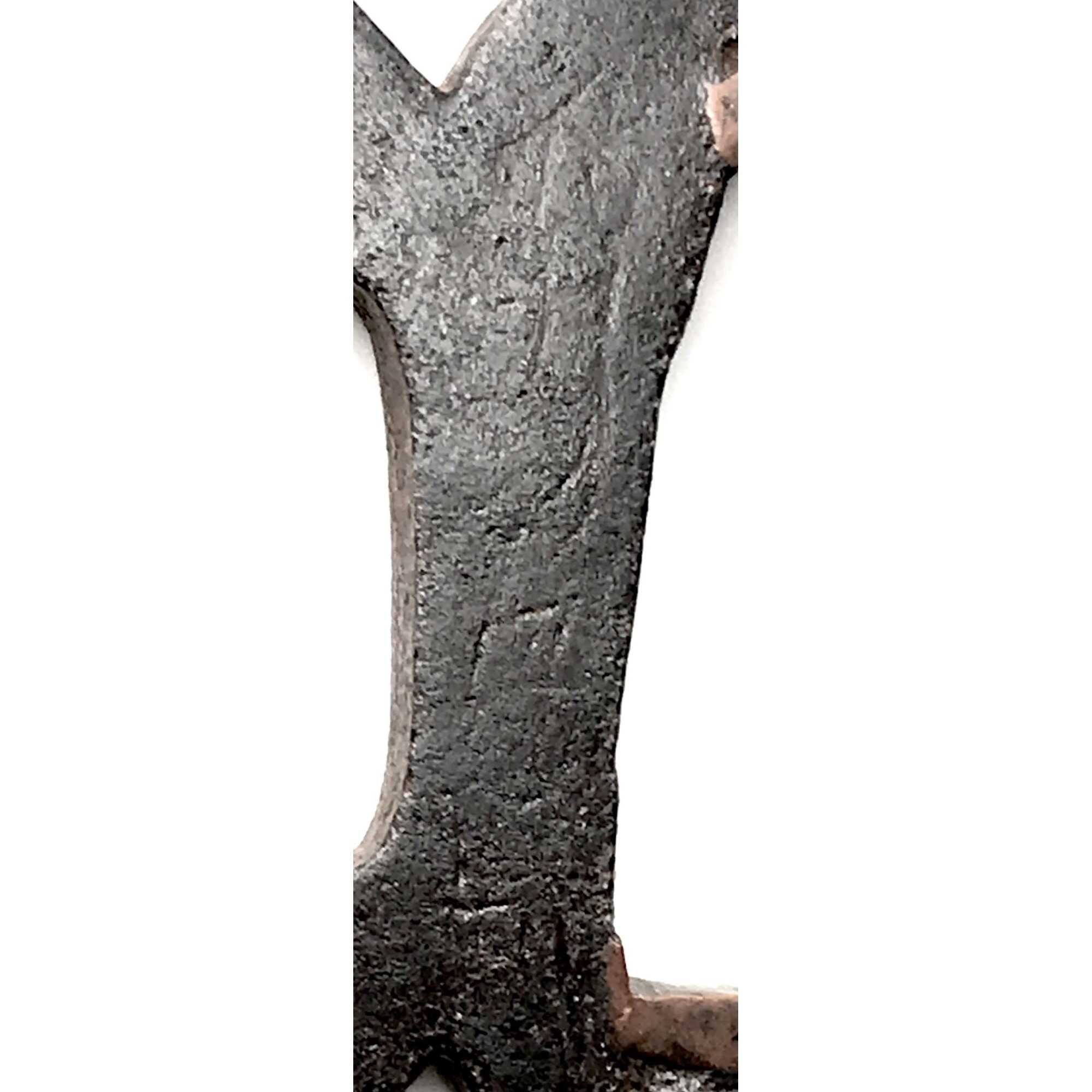
Iron tsuba of round form with design of wheel (kuruma) in openwork (sukashi). Squared rim. Copper sekigane.
Yagyu school.
Signed of the face: Fukui Tsuguzaemon.
Early Edo period: Late 17th century (Kanbun/Enppo era).
Height: 76.7 mm. Width: 76.8 mm. Rim thickness: 5.2 mm. Center thickness: 5.6 mm.
Provenance: Sasano Masayuki Collection, № 203: "This design of spoke wheel relates to the 'circular principle' found in the Yagyu philosophy. Although it is very faint, Fukui Tsuguzaemon's signature is visible. Without a signature and based on appearance alone, it would undoubtable attributed to a later period".
Merrily Baird in her book "Symbols of Japan" [Merrily Baird. Symbols of Japan. Thematic motifs in art and design. Rizzoli international publications, Inc., 2001] provides the following explanation of the Wheel-of-the-Law symbol: "The Wheel-of-the-Law or Golden Wheel (rimbo, kinrin) has its origins in India, where it is known as chakra. [...] In Buddhist practice, it has been represented with eight spokes, reflecting the eight-fold path to overcoming worldly desire, and it signifies that all illusions will be crushed by the faith's enlightenment. [...] The Wheel-of-the-Law is an attribute of such deities as Senju Kannon, the Thousand-Armed Kannon, and Dainichi Nyorai, the all-illuminating solar figure who is the principal deity for Shingon Buddhism. From the Edo period on, the wheel also has been used in a secular manner", e.g. on family crests.
Additional Information
| Collection | Japanese swords & fittings |
|---|---|
| Type / Purpose | Tsuba |
| Country | Japan |
| Period | 17 AD , Edo period [江戸時代] (1603–1868) |
| School | Yagyu School |
| Material | Iron |
| Media/Technique | Sukashi |
| Subject | Wheel (kuruma) |
| Acquisition year | 2014 |

