
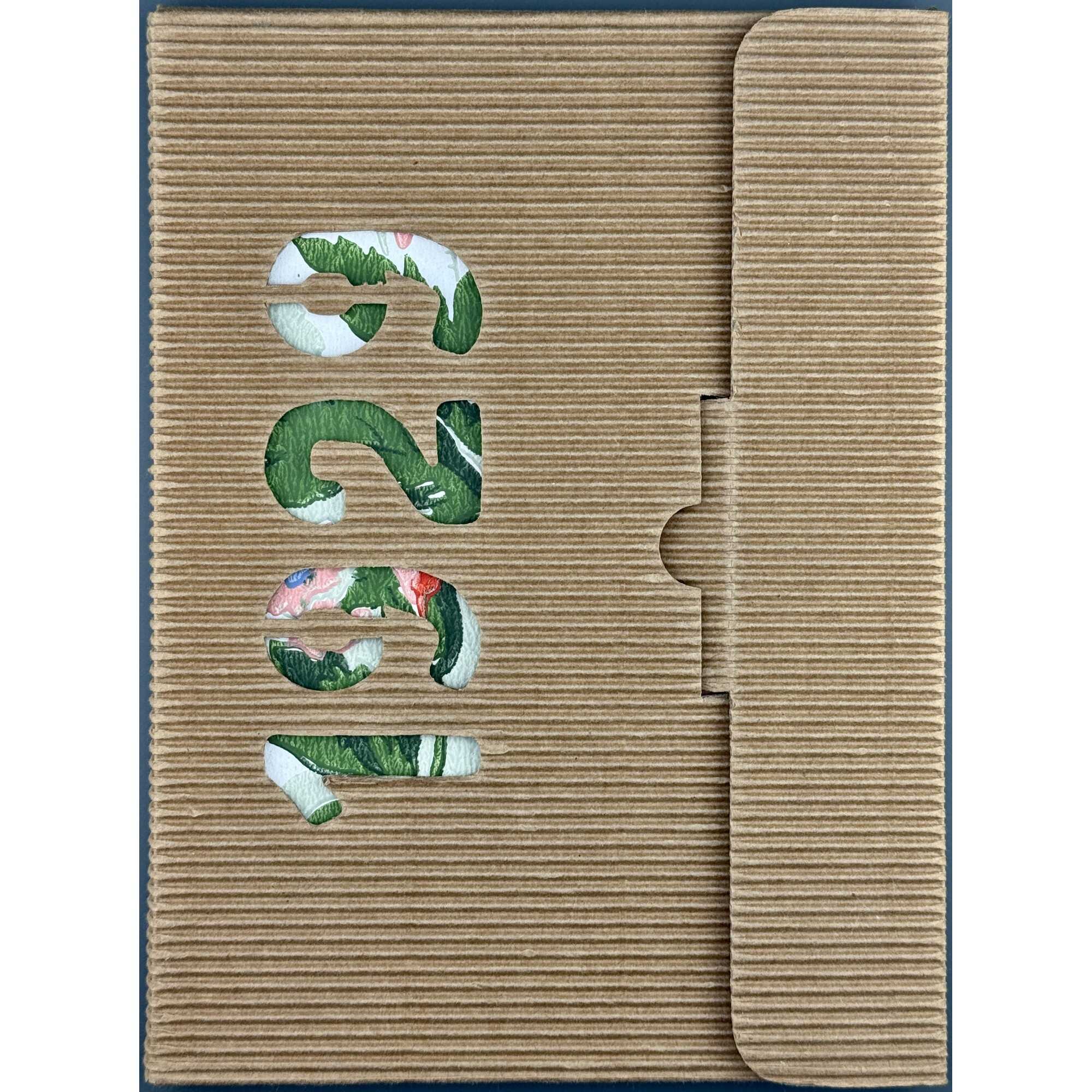
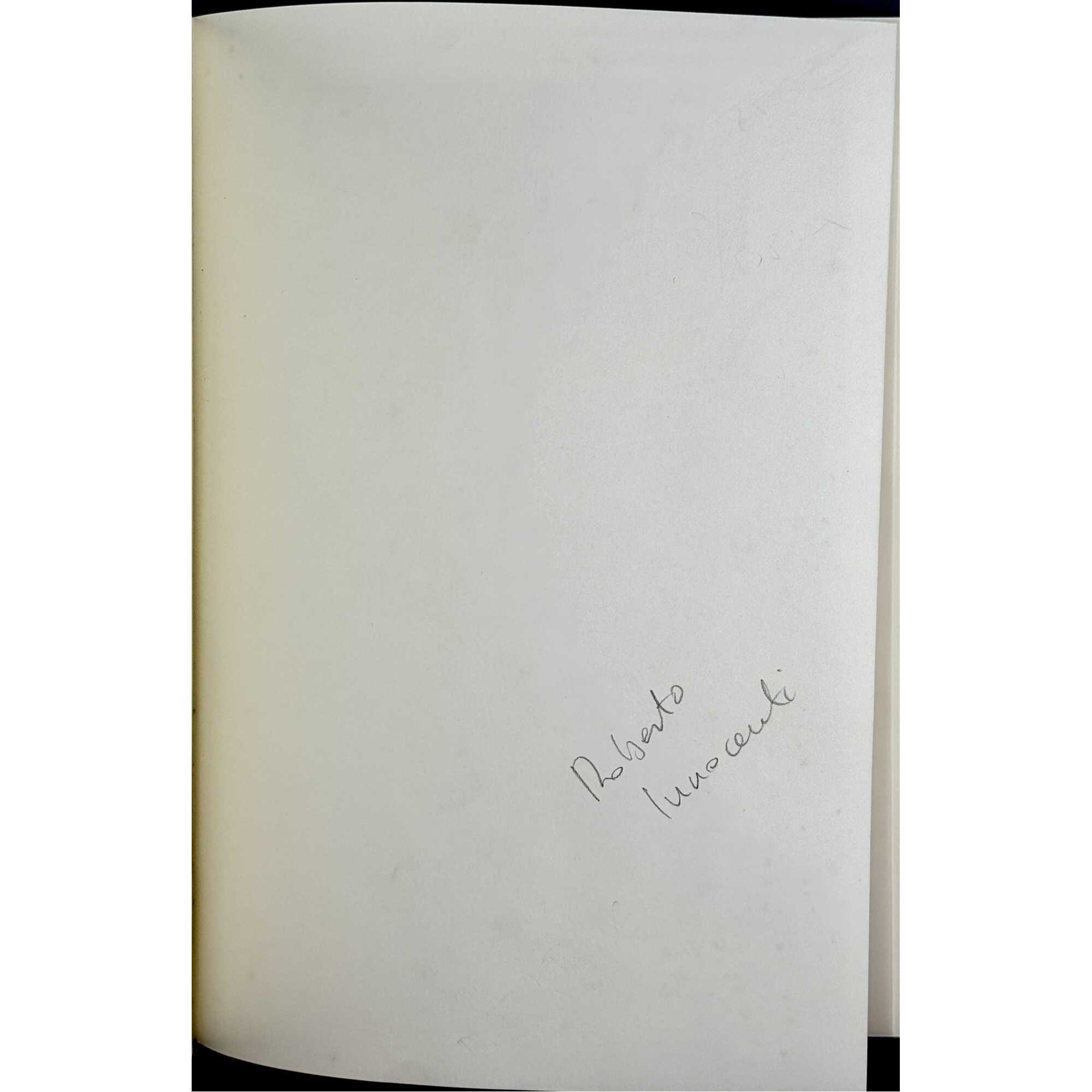
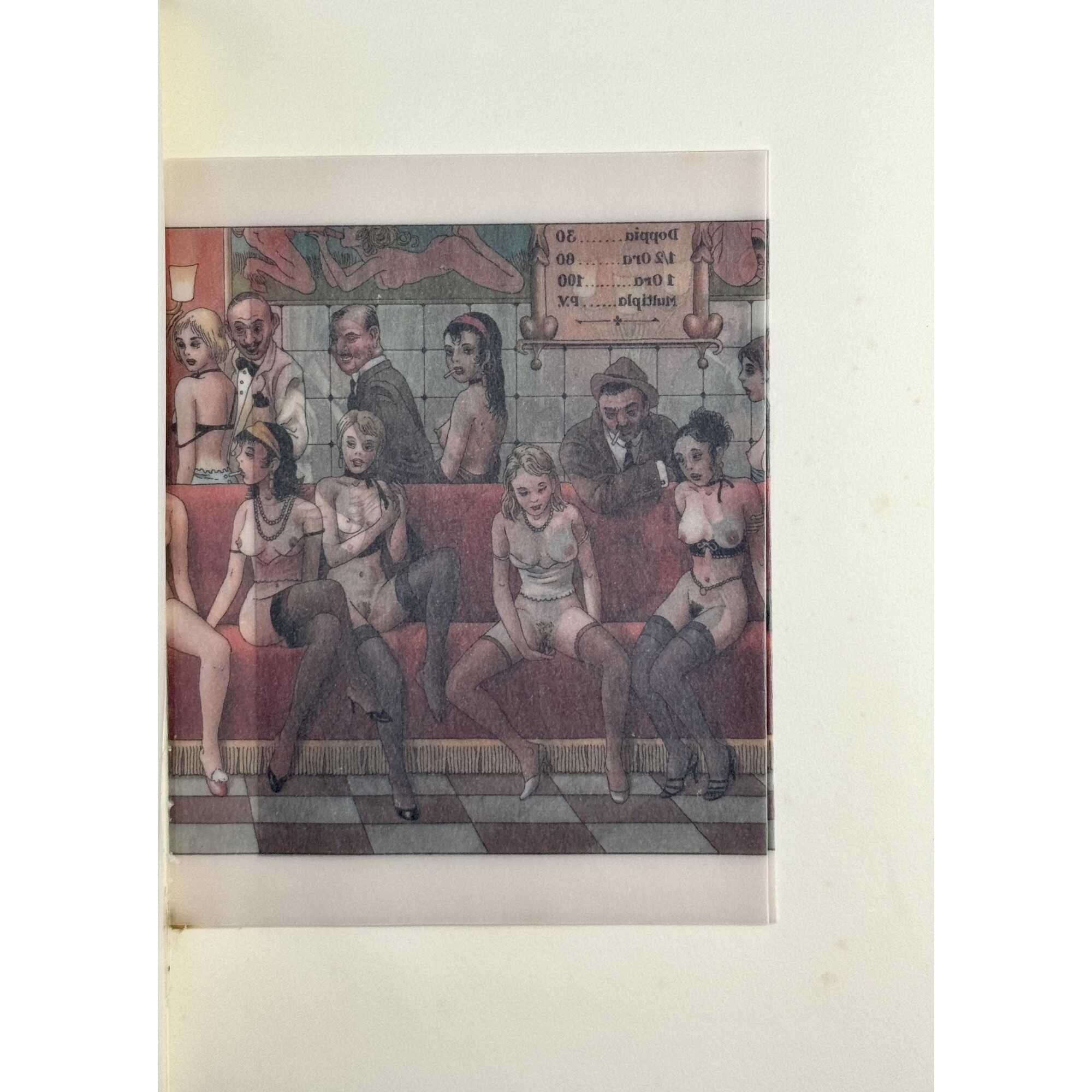
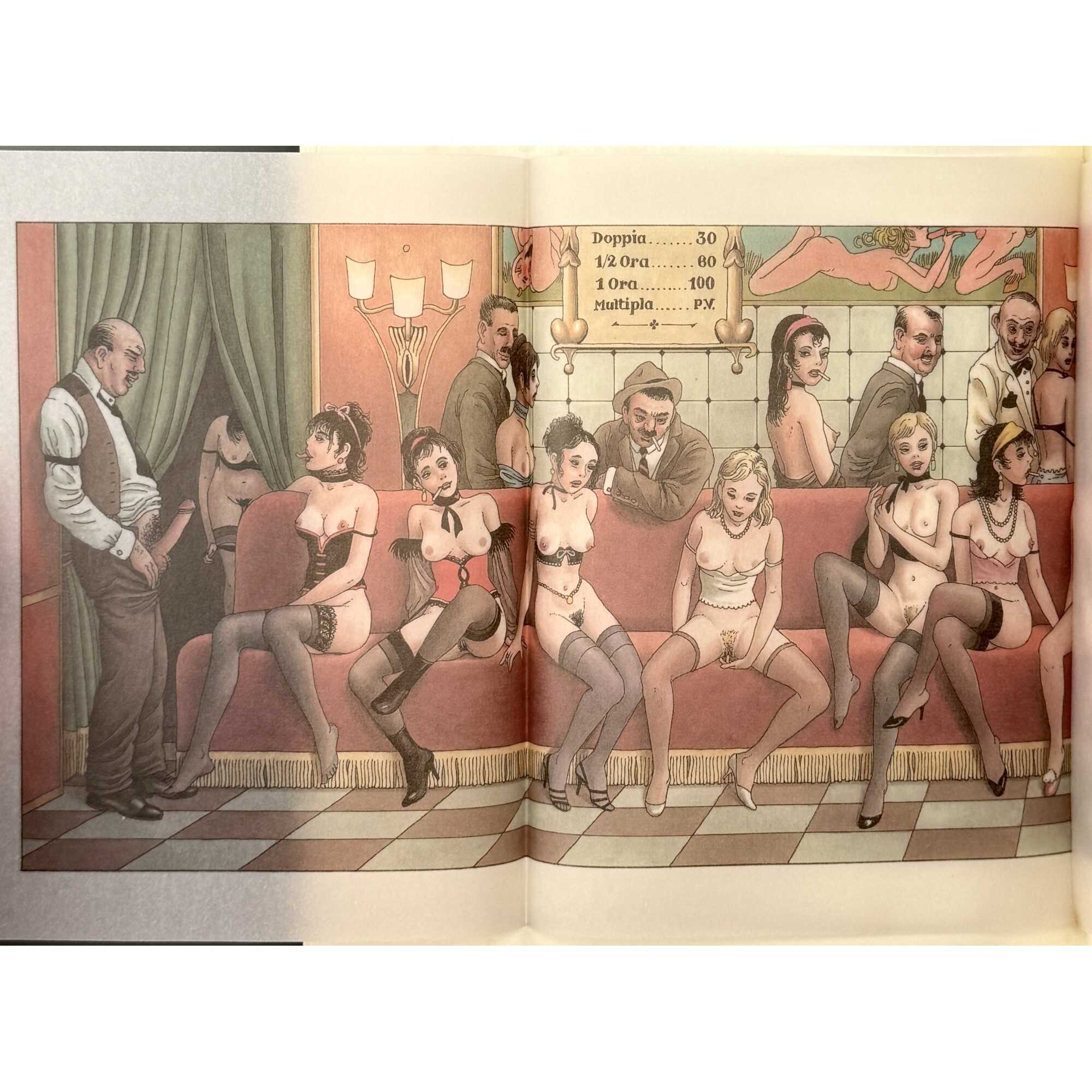
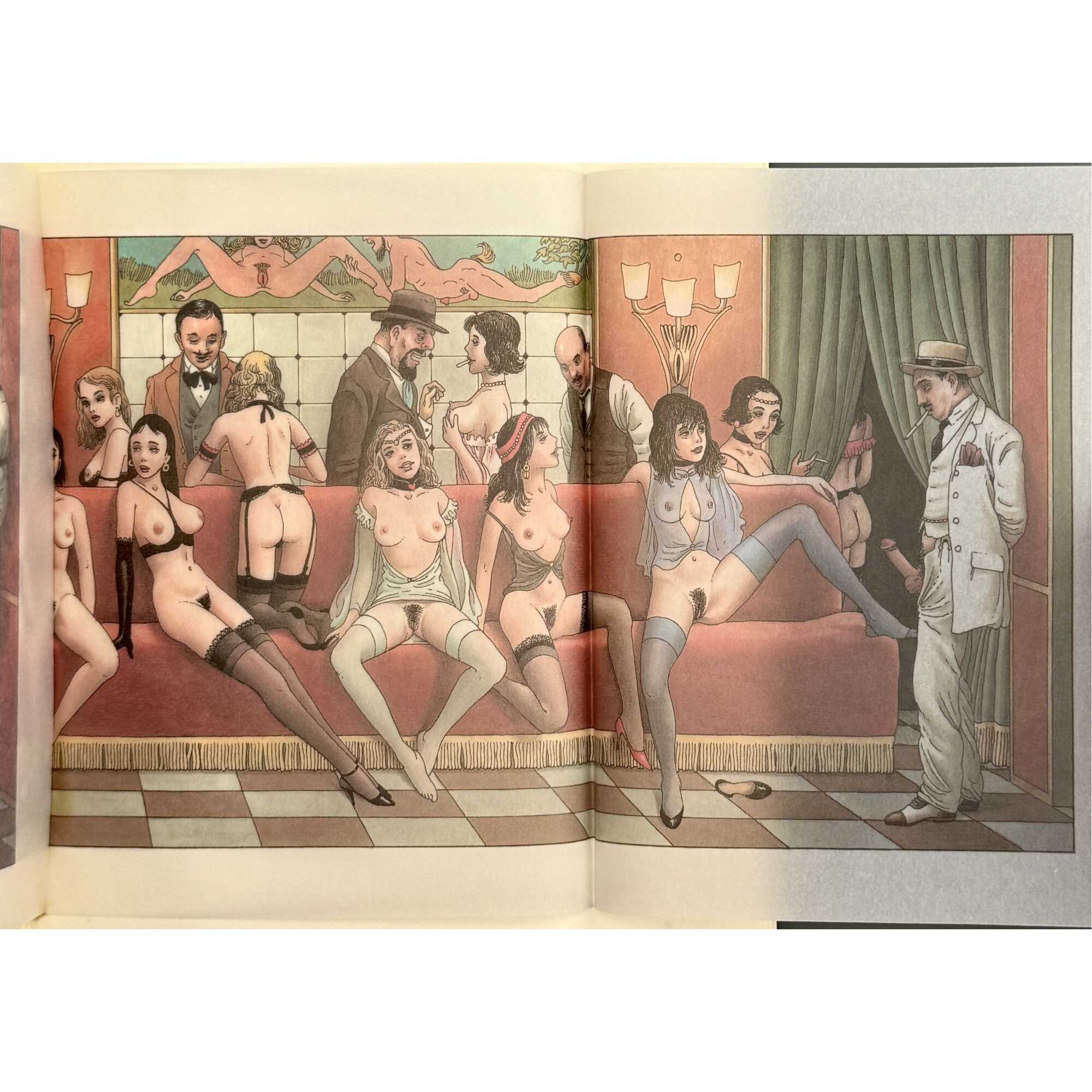
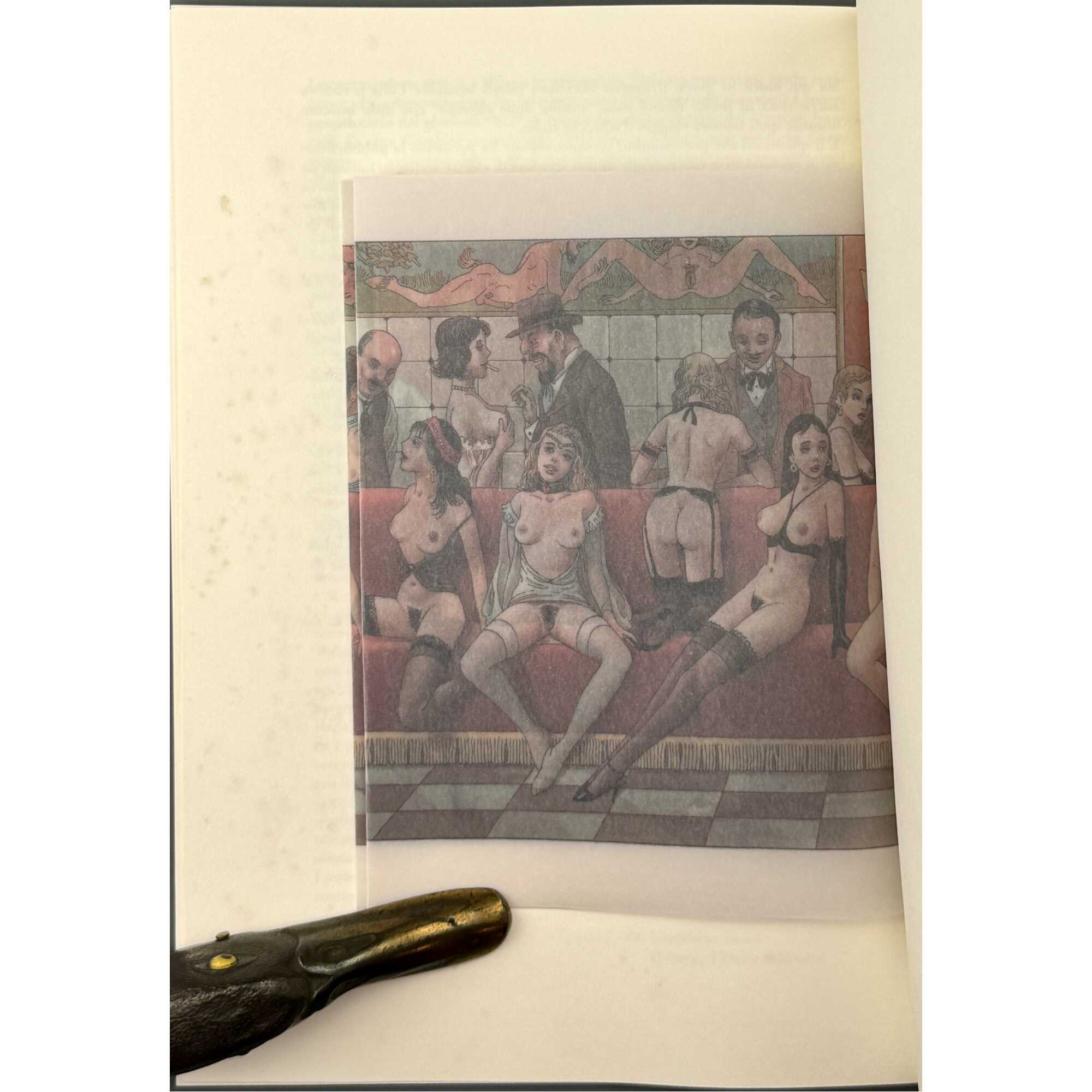
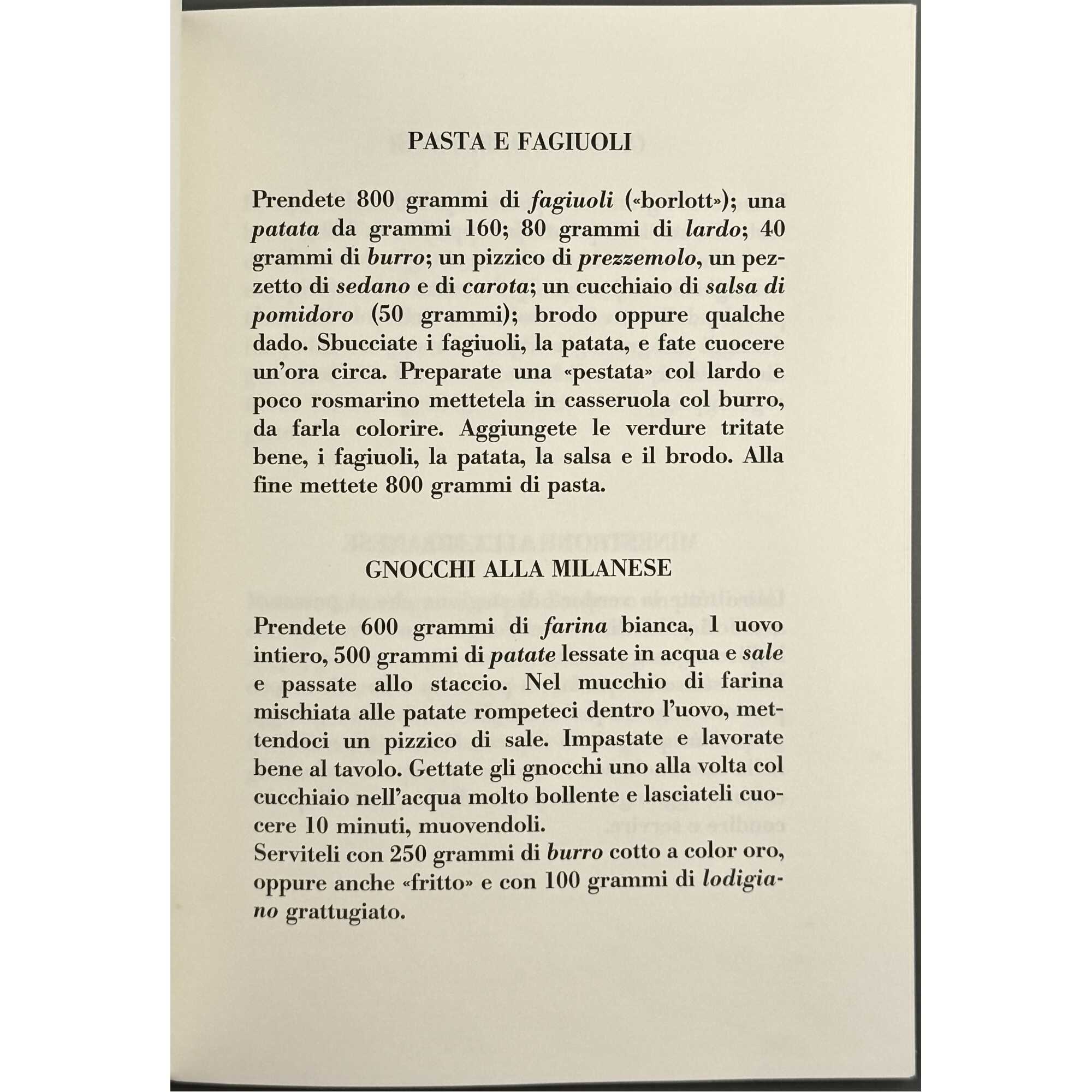
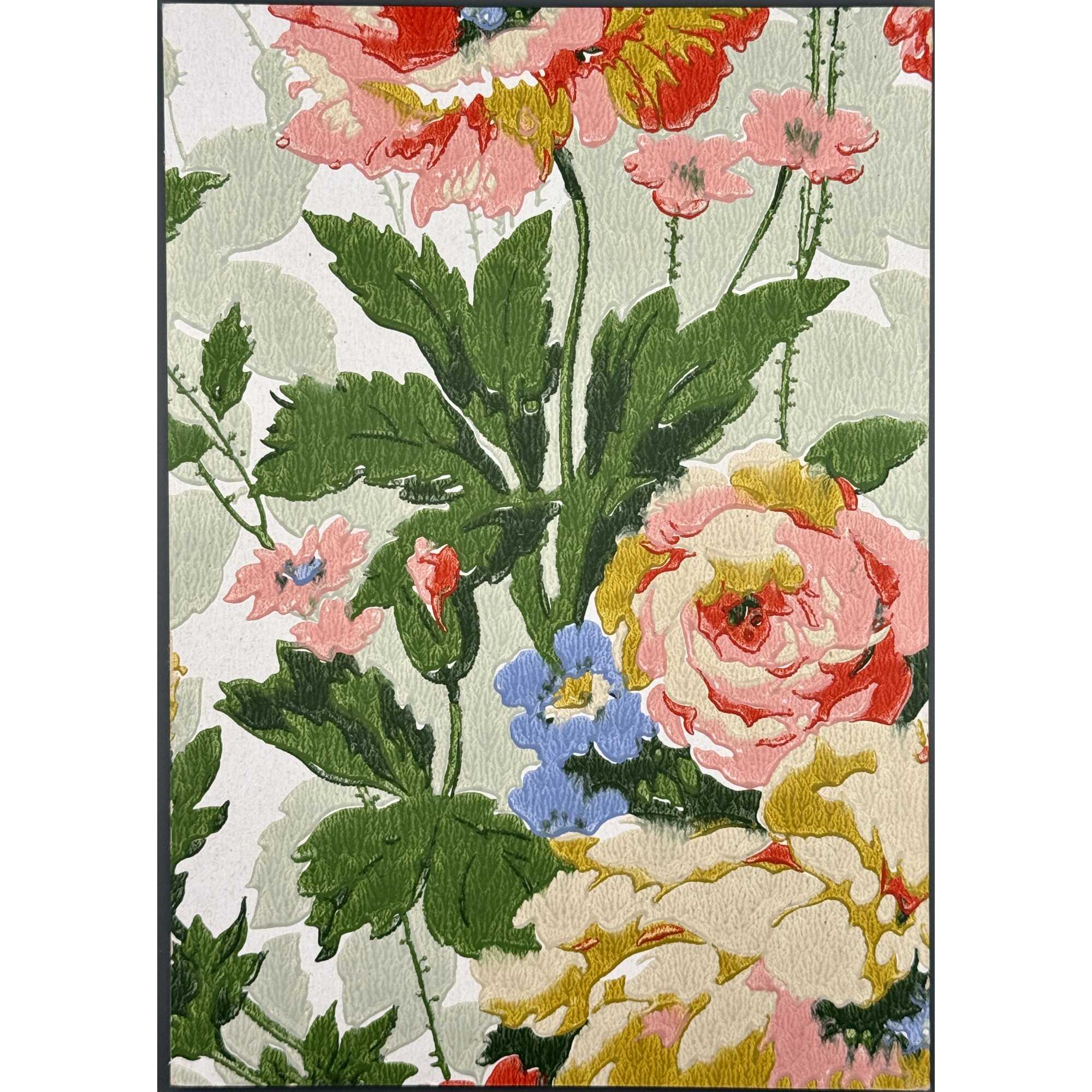
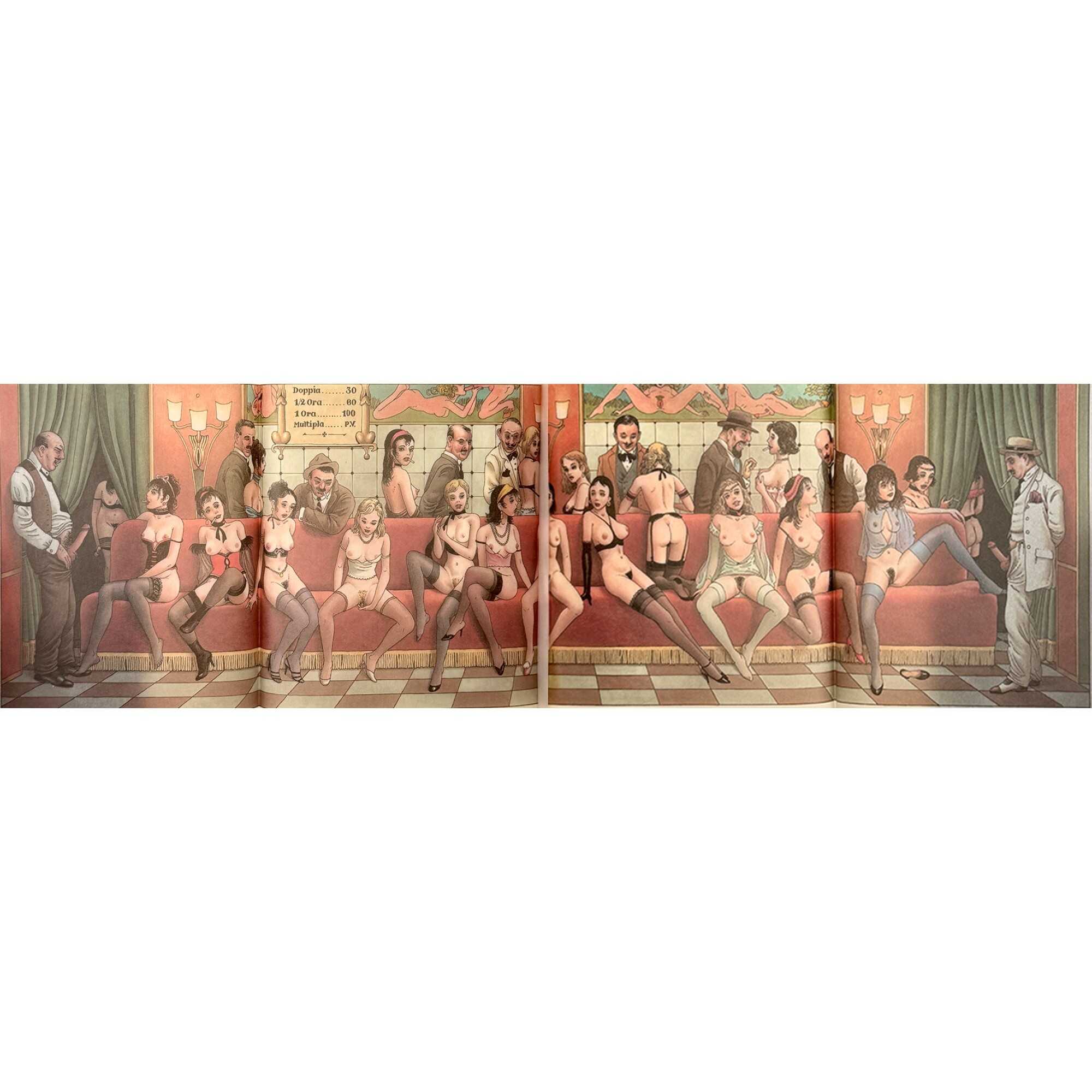
Description: Cardstock pictorial cover, 240 × 170 mm, cased in a corrugated craft-paper chemise with cut-out numerals “1929”. Total 20 leaves, all unpaginated: paper leaf blank with handwritten pencil inscription “Roberto Innocenti”; glassine blank leaf; glassine title-page with green lettering and vignette; paper leaf blank recto, with a green card (see below) bearing black letterpress text pasted to verso; 2 leaves carrying 3 pages of text in Italian (see English résumé below), fourth page blank; 2 folded glassine illustration leaves tipped in; one leaf with blank recto and vignette on verso; 9 leaves of text (recipes in Italian), the final leaf bearing the colophon and limitation statement; followed by two blank leaves at the back.
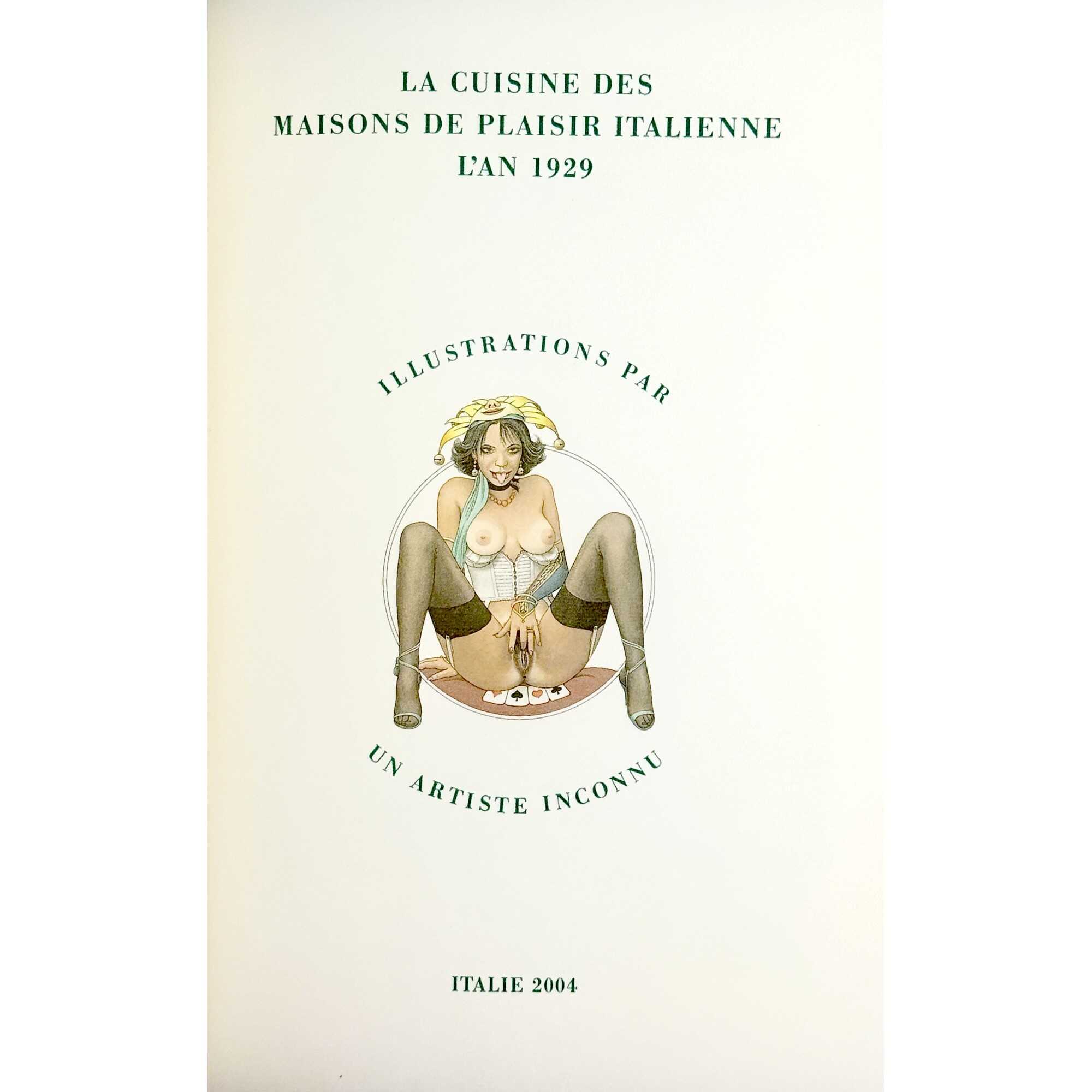
Title-page: LA CUISINE DES | MAISONS DE PLAISIR ITALIENNE | L’AN 1929 | ILLUSTRATIONS PAR | {vignette} | UN ARTISTE INCONNU | ITALIE 2004 ||
(The cuisine of Italian houses of pleasure in the year 1929, illustrated by an unknown artist, Italy 2004)
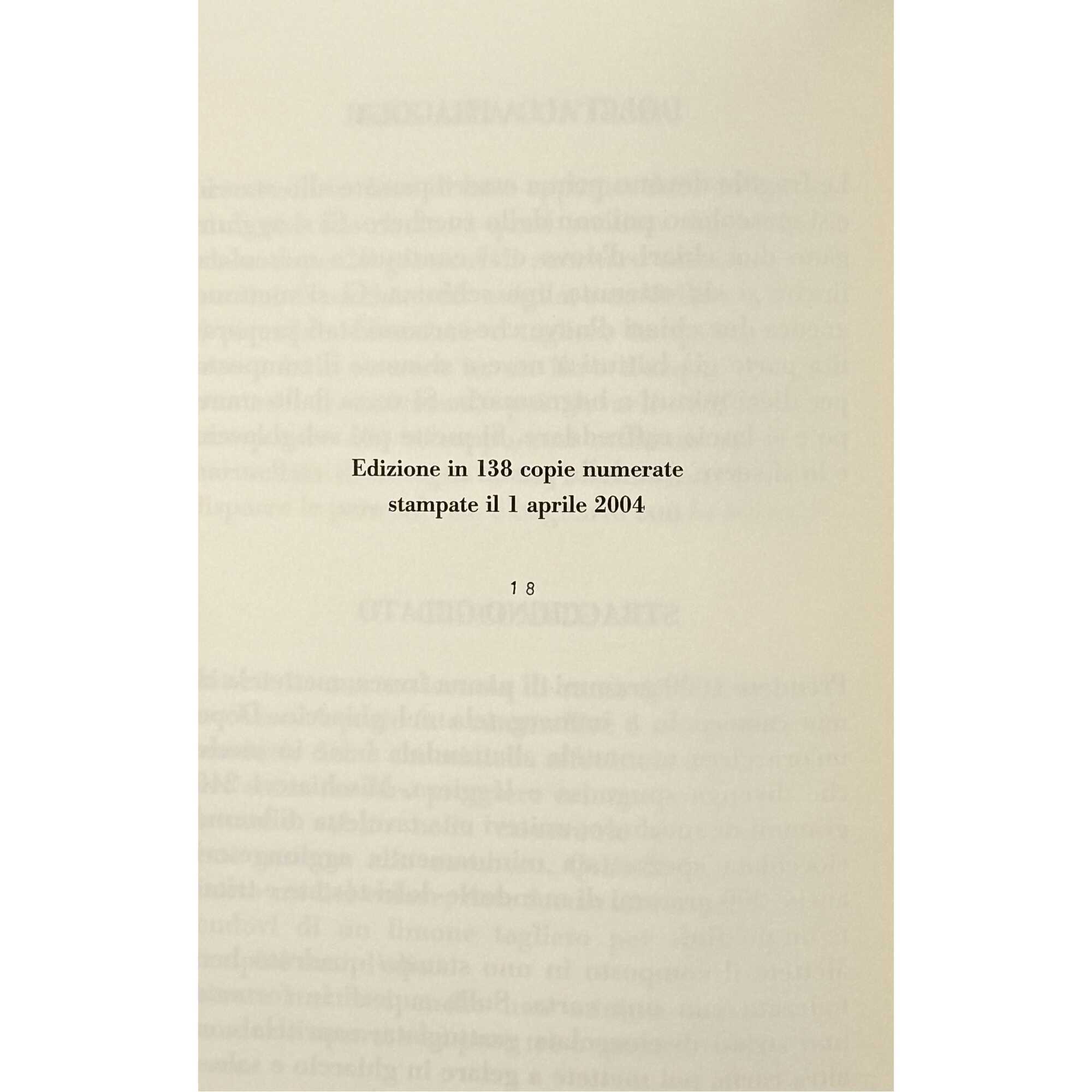
Colophon/limitation:
Edizione in 138 copie numerate | stampate il 1 aprile 2004 | 18 ||
(edition limited to 138 numbered copies; printed 1 April 2004, this is copy № 18).
Illustrations are attributed to Roberto Innocenti (Italian, b. 1940) — an Italian illustrator, best known for his meticulously detailed, historically grounded picture books. His major illustrated works include The Nutcracker by E. T. A. Hoffmann (1996), A Christmas Carol by Charles Dickens (1990), Cinderella by Charles Perrault (2001), and Le avventure di Pinocchio by Carlo Collodi (1991).
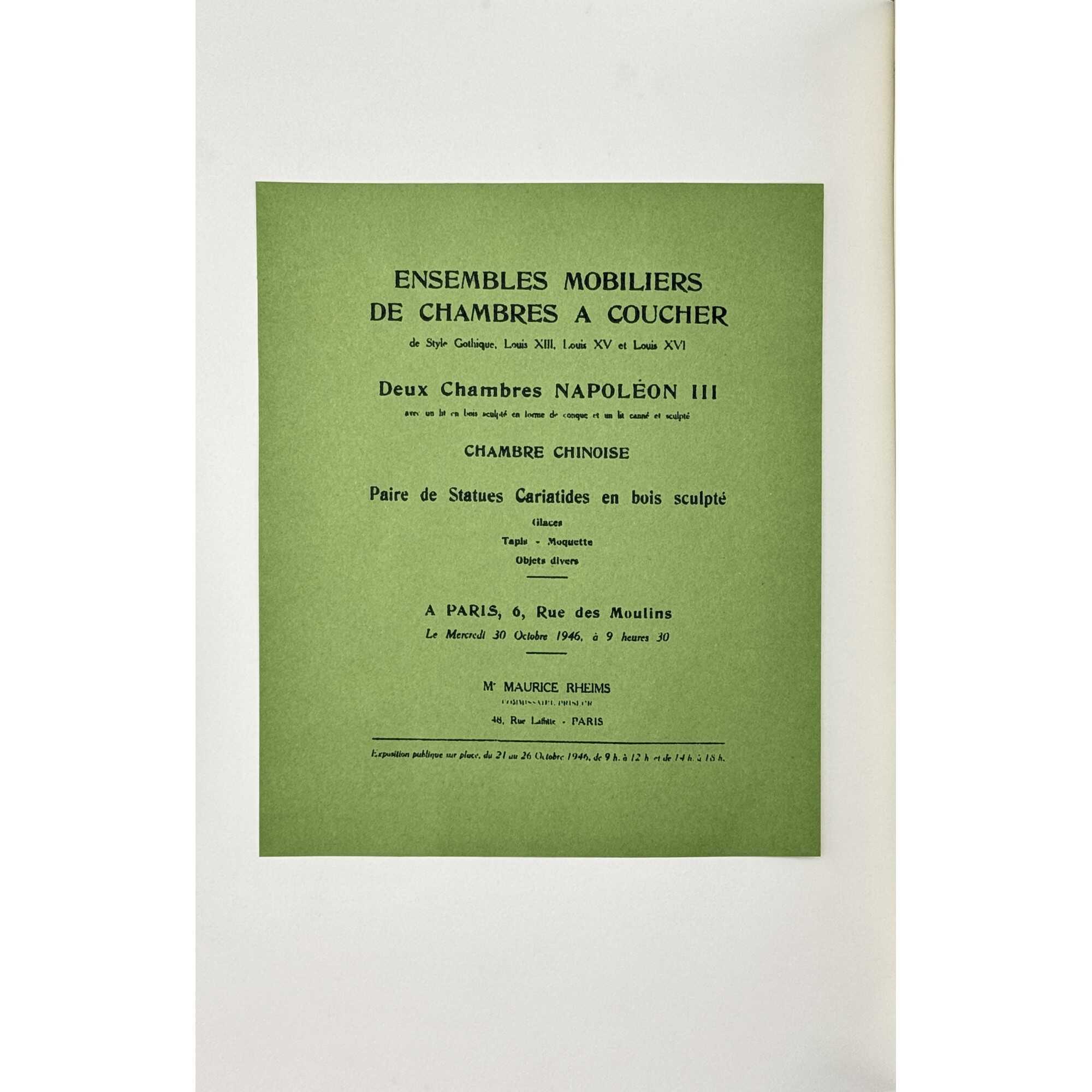
Green card: ENSEMBLES MOBILIERS | DE CHAMBRES A COUCHER | de Style Gothique, Louis XIII, Louis XV et Louis XVI | Deux Chambres NAPOLÉON III | avec un lit en bois sculpté en forme de coque et un lit carré et sculpté | CHAMBRE CHINOISE | Paire de Statues Cariatides en bois sculpté | Glaces | Tapis – Moquette | Objets divers | A PARIS, 6, Rue des Moulins | Le Mercredi 30 Octobre 1946, à 9 heures 30 | — | Mᵉ MAURICE RHEIMS | COMMISSAIRE-PRISEUR | 48, Rue Lafitte – PARIS | — | Exposition publique sur place, du 21 au 26 Octobre 1946, de 9 h. à 12 h. et de 14 h. à 18 h. ||
(Bedroom furniture ensembles in Gothic, Louis XIII, Louis XV and Louis XVI styles. Two Napoleon III bedrooms with a carved wooden bed in the form of a shell and a square carved bed. Chinese bedroom. Pair of carved wooden caryatid statues. Mirrors. Carpets and wall-to-wall carpeting. Miscellaneous objects. In Paris, 6 rue des Moulins. Wednesday, 30 October 1946, at 9:30 a.m. Maître Maurice Rheims, auctioneer, 48 rue Lafitte, Paris. Public exhibition on site from 21 to 26 October 1946, from 9 a.m. to 12 noon and from 2 p.m. to 6 p.m.)
Historical context and relevance:
The address Rue des Moulins refers to one of the most famous centres of regulated prostitution in Paris from the late 19th century until the closure of the maisons closes in 1946. Located in the 1st arrondissement, the street was synonymous with elite brothels—most notably No. 6, operated by Madame Cora—frequented by politicians, financiers, and artists. Its visual culture is well known through works by Toulouse-Lautrec, who repeatedly depicted interiors, furniture, and the inhabitants of the maisons on the Rue des Moulins.
The green card reproduces a catalogue notice for a public auction held on 30 October 1946, conducted by Maurice Rheims (French, 1910–2003), immediately after the legal suppression of prostitution in France (law of April 1946, “loi Marthe Richard”). This sale dispersed the furnishings of the Rue des Moulins maison: bedroom ensembles in historicist styles, carved beds, mirrors, carpets, and decorative sculpture. Such auctions were common in the months following closure, as brothel interiors—often lavish and stylistically eclectic—were liquidated and entered the art and antiques market.
Within La cuisine des maisons de plaisir italienne l’an 1929, the Rue des Moulins sale serves as a documentary anchor. The text frames the recipes and anecdotes as originating from a transnational network of maisons closes in the interwar period, culminating symbolically in the post-war dismantling of that world. By inserting an authentic auction notice tied to Rue des Moulins and to Rheims—who later became a major historian of taste and collecting—the book situates its fictionalized or reconstructed culinary notebook within a precise historical arc: the high point of regulated prostitution (1920s–1930s) and its definitive end in 1946. The green card thus operates both as material evidence and as a memento mori, marking the passage of the maisons de plaisir from lived social space into collectable history.
Résumé: The text reconstructs a semi-fictional but historically grounded episode from the late 1920s involving an ambitious attempt to create a transnational consortium of elite brothels linking Paris, Milan, and Rome. Initiated by an Italian entrepreneur, Cesare Albino Bianchi, the project envisioned a centralized “trust” that would coordinate operations, share costs, and divide profits among the most powerful proprietors of maisons de tolérance in France and Italy. In 1928–1929, a small but highly influential French delegation—composed of prominent brothel owners, including Madame Cora of the Rue des Moulins—travelled through Italy to inspect leading establishments in Milan, Genoa, La Spezia, Bologna, Florence, Rome, and Naples, evaluating their quality, clientele, and organization.
Although the visit was conducted with ceremony and cordiality, and despite mutual admiration and lavish hospitality, the project ultimately failed. The French delegates concluded that Italian establishments, in terms of furnishings, organization, and overall “material,” did not meet French standards, and they rejected any formal alliance. The Italian initiator’s grand vision collapsed, marking the end of what the text presents as the most ambitious scheme of its kind.
The final section explains the book's origin: during this Italian journey, Madame Cora collected handwritten recipes from brothel kitchens and later compiled them into a notebook. This notebook—dated “Italie 1929” and annotated with “Rue des Moulins”—is presented as the source for the current publication. The text closes by situating Madame Cora’s later life within history: her retirement in 1938, the wartime transformation of her Rue des Moulins house into a German officers’ brothel, its postwar closure for collaboration, and the 1946 auction that dispersed its furnishings, thus framing the book as a material relic of a vanished social world.
Additional Information
| Collection | Erotica , Illustrated books , Library |
|---|---|
| Type / Purpose | Book |
| Period | 21 AD , Early 21st century |
| Country | France , Italy |
| Language | French , Italian |
| Media/Technique | Glassine , Paper , Photomechanical , Wove paper |
| Genre | Erotica |
| Subject | 20th century , Auctions , Brothel , Culinary , Erotic illustration , Erotica , France , French history , History , Illustrated books , Italian art , Italian cuisine , Italy , Limited editions , Livre d’artiste , Material culture , Paris , Postwar cultural memory , Prostitution , Pseudo-documentary fiction , Rue des Moulins (Paris) , Sex work |
| Creation / Publishing year | 2004 |
| Binding | Original , Pictorial wrappers , Slipcase |
| Edition | 1st edition , Clandestine edition , Limited |
| Location | Bookshelf 19.4. |
| Acquisition year | 2026 |


