
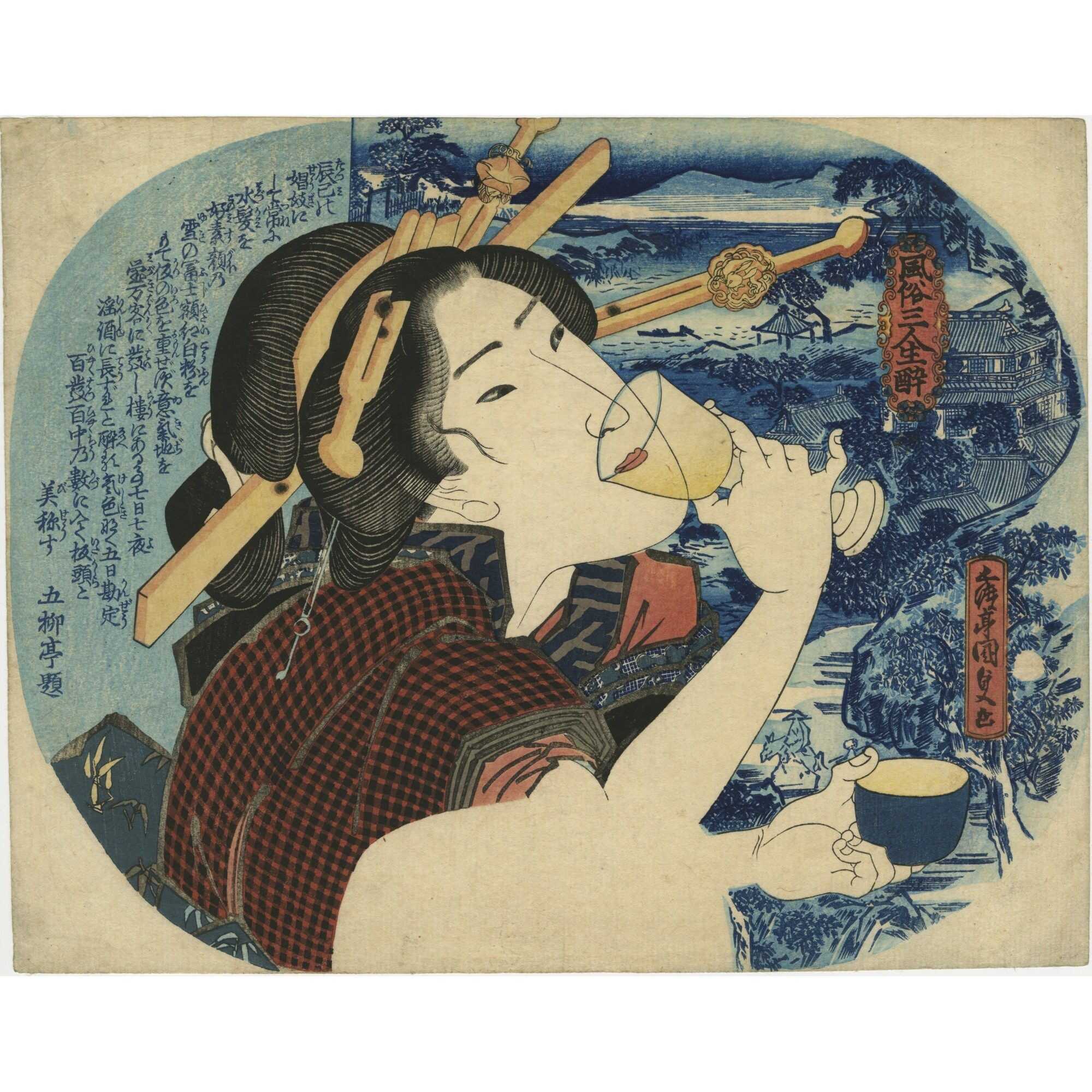
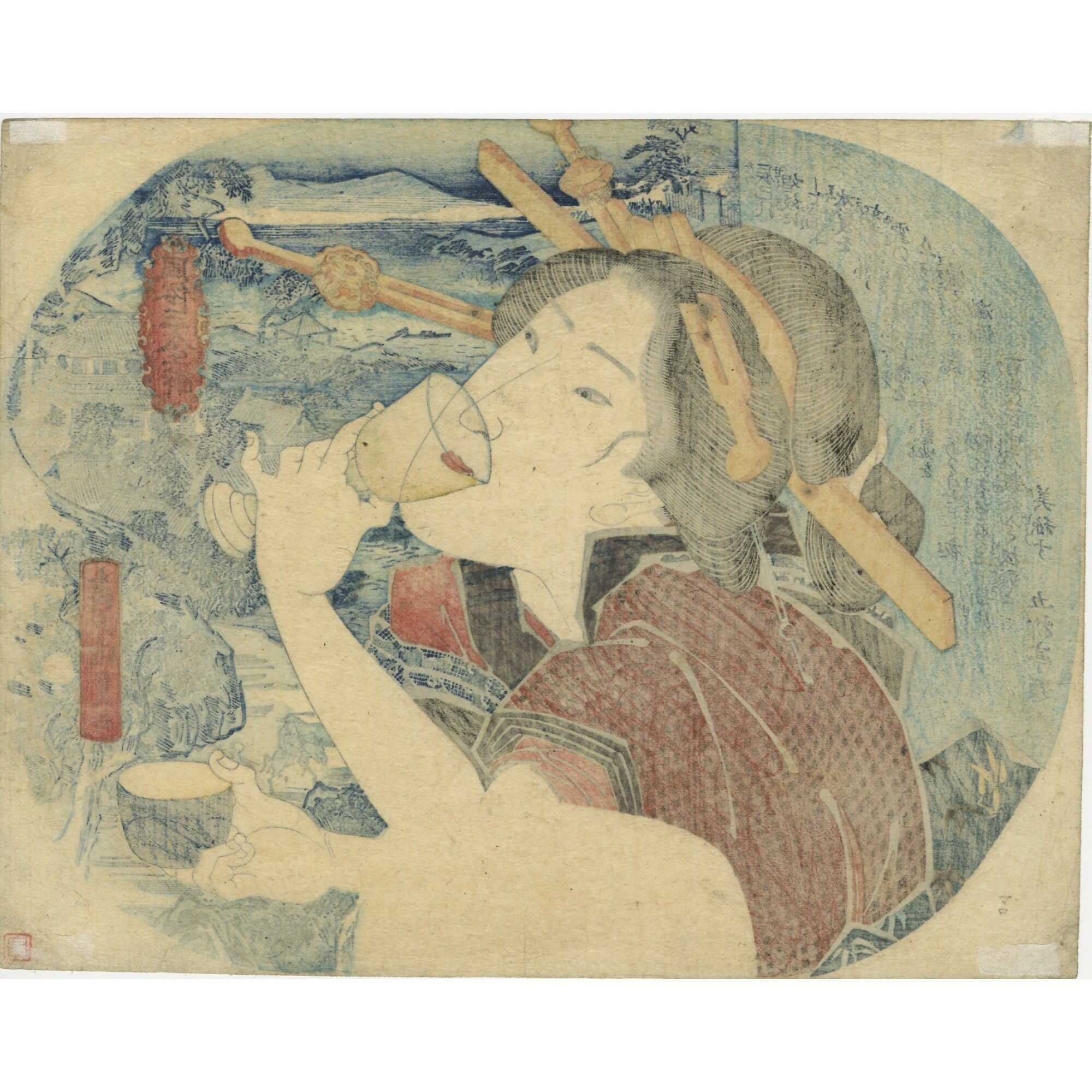
| Signed: | Gototei Kunisada ga (五渡亭国貞画) in a vertical red cartouche |
| Censor seal: | Absent |
| Date seal: | Absent |
| Publisher seal: | Absent |
| Media: | Aiban yoko-e uchiwa-e (団扇絵), colour woodblock print |
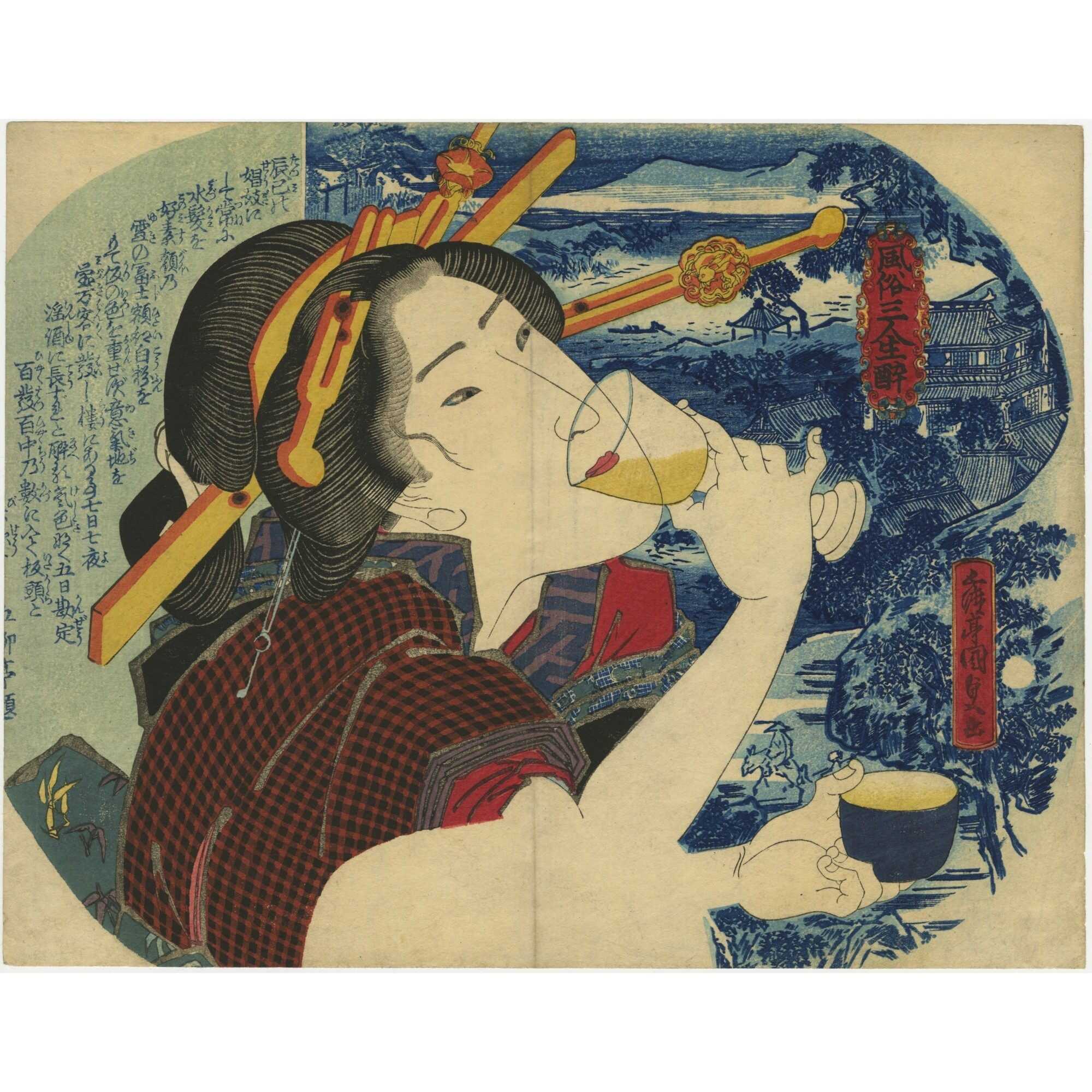
Title: 風俗三人生酔 (Fūzoku san-nin namayoi) translates as Three Fashionably Tipsy Women or Three Fashionable Tipplers. In several online resources, it is erroneously cited as Three Fashionable Tippers.
Two impressions in this collection: SVJP-0538.2026 and SVJP-0538.2026 (2), acquired almost simultaneously from different sources.
(1) 225 × 290 mm, overtrimmed left margin, brighter colours, later impression
(2) 235 × 300 mm, wider margins, traces of mica, more delicate colours, earlier impression
The tortoiseshell hairpins are adorned with a morning glory blossom and a rabbit, suggesting production in 1831 — Kyōwa 1 (辛卯, kanoto-u)
Description from Sebastian Izzard's Catalogue 25 (2026):
Tatsumi, present-day Fukagawa, was in the southeast section of Edo, on the far side of the Sumida River. The neighbourhood fell outside the jurisdiction of the city magistrates and had its own traditions and customs. The women of the quarter were noted for their wit, their simple but stylish taste in clothing, and their straightforward, no-nonsense manners, and were held in great esteem by Edo townsmen. The fact that many actors, poets, and artists lived nearby also helped to popularize the area.
This half-length portrait depicts a hard-drinking Tatsumi geisha imbibing wine from a crystal goblet in one hand — its sparkling surface lovingly detailed in mica by the printer — with a porcelain cup of sake ready in the other. She wears the plain, brown-and-black plaid robes and relatively simple coiffure affected by the women from the area. In the background, Kunisada renders a pastiche of a Chinese-style landscape, which depicts a sage riding his mule up a path toward a palace built by the shores of a lake, printed in the newly fashionable Berlin blue. The landscape references the classical theme of the Three Vinegar Tasters (Sake-sui sankyō) — Buddha, Lao Tzu, and Confucius — who often appear in Chinese and Japanese ink painting, as does just this type of landscape.
The commentary is by Goryūtei Tokushō, a well-known expert and commentator on Kabuki, who was part of the literary circle with whom Kunisada associated. The author observes that the woman's hairline is shaped like Mount Fuji and that she wears no powder on her face, preferring her natural skin color. She can indulge in alcohol for seven days and nights without ill effect, and once drank a total of one hundred shots and one hundred “bull’s eyes” in five days, earning her the title of itagashira, the highest rank of a spoof tabulation of female entertainers in the district.
Between 1822 and 1842, fan prints were supposed to be approved by a censor, who applied a rectangular kiwame (approved) seal, in addition to a round cyclical date seal, allowing an approximate date of publication to be established. In the early years of the Tenpō era, the application of the rules became sporadic, and some fans, such as the present example, do not include them, despite the space left for them by the drawing and the block-cutter. The reason for this is not clear. It may be that in the rush for publication, the rules were disregarded, but this seems unlikely. More plausible is the possibility that, like surimono, some fans were privately commissioned as gifts of the season and were not for public sale, obviating the need for censorship and a publisher's seal.
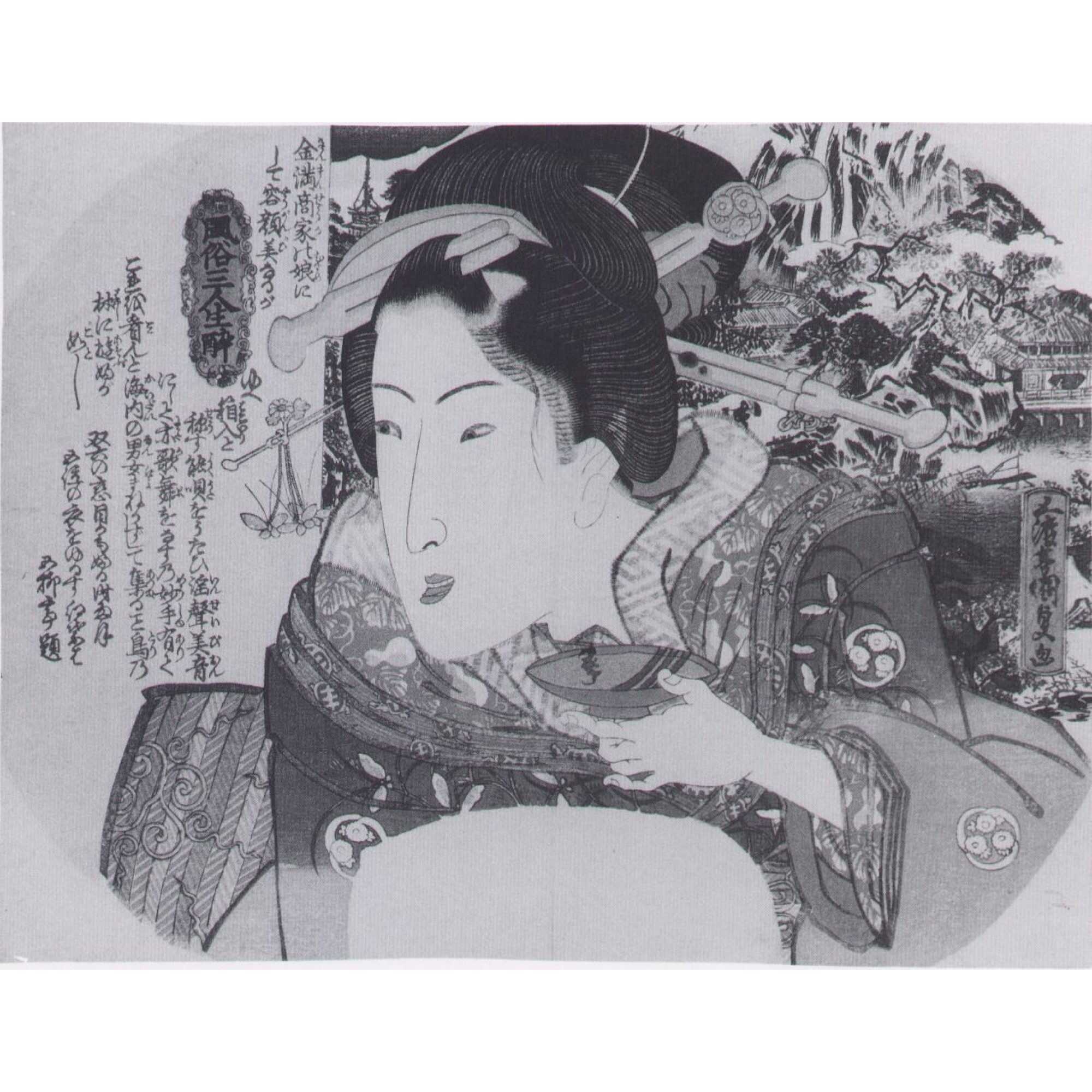
One more print from the series is known (thanks to Horst Graebner of the Kunisada Project): "Picture of a daughter from a wealthy family" — Kinman shōka no musume e; [金満商家の娘え (きんまんしょうかのむすめえ)].
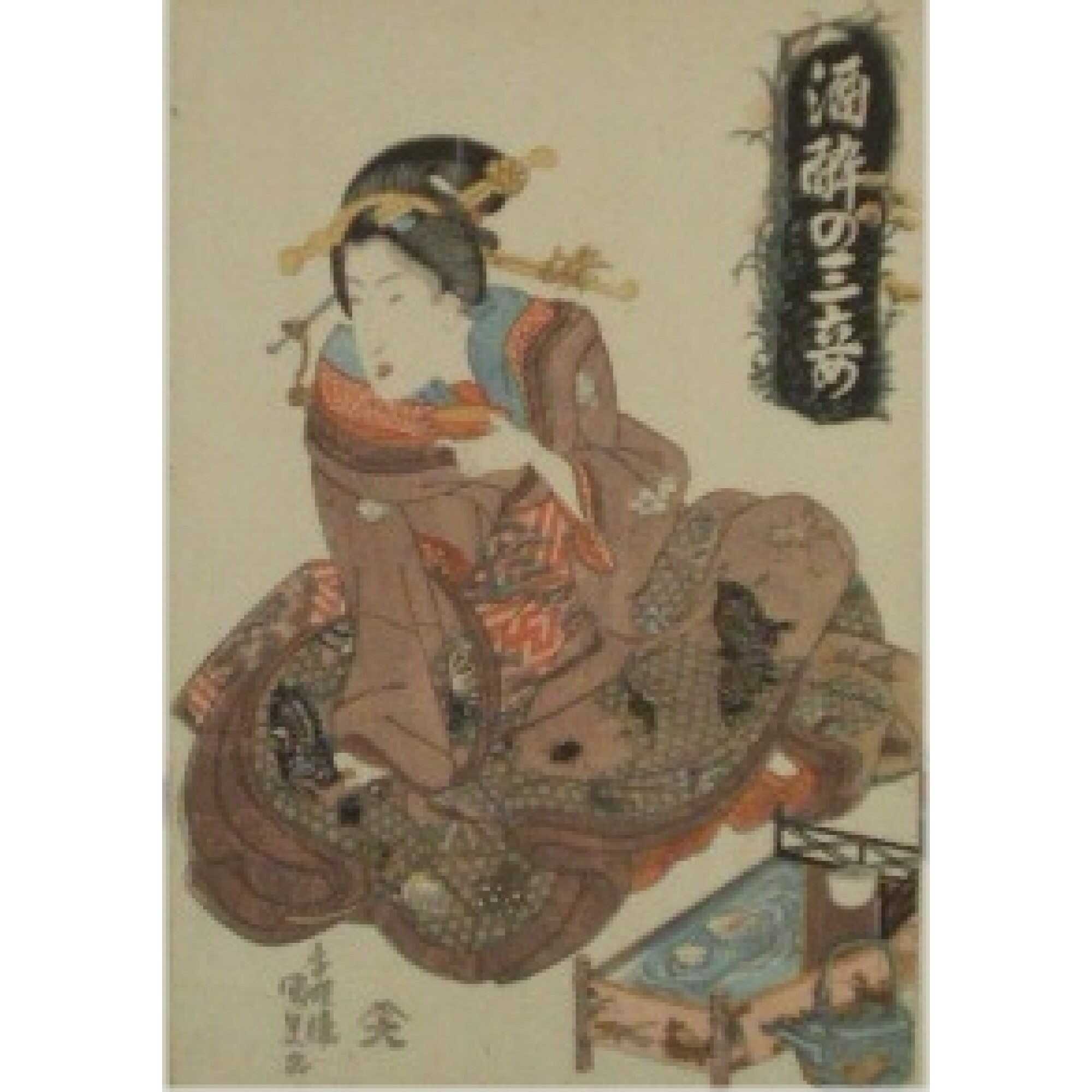
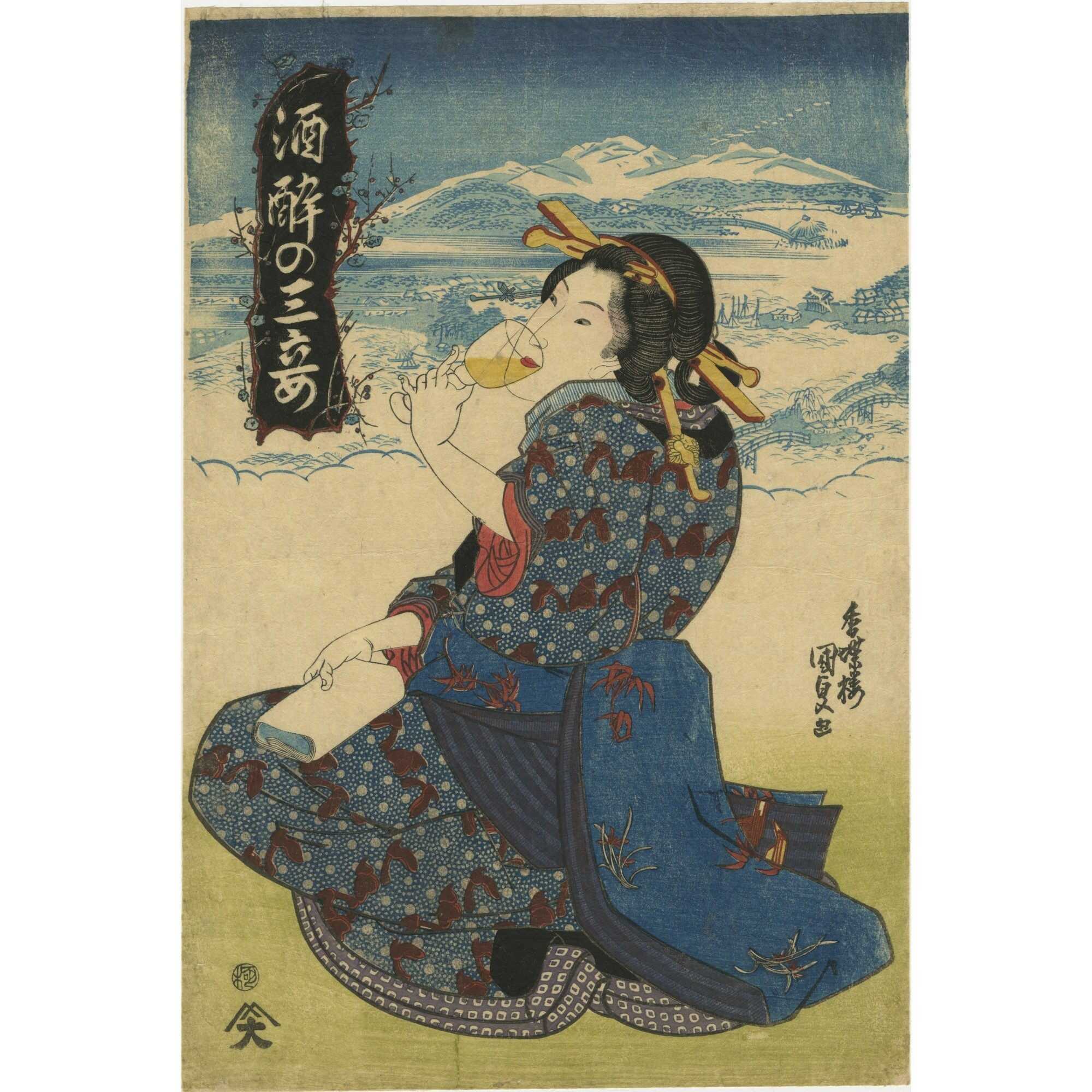
This composition may be compared with an ōban triptych/series titled Three Drunken Concubines (酒酔の三妾, Sakesui no sanshō), which engages the same thematic framework. Both works constitute a parodic adaptation of the classical subject of the Three Vinegar Tasters (三酸図), conventionally associated with Buddha, Laozi, and Confucius. See SVJP-0537.2026.
References:
- [LIB-3546.2026] Japanese Prints & Paintings 1810–1860. — NY: Sebastian Izzard LLC, 2026 (Catalogue 25)
- [LIB-2967.2022] Utagawa Kunisada (1786–1865): His World Revisited. — NY: Sebastian Izzard LLC, 2021 (Catalogue 17)
- [LIB-2970.2022] Izzard, Sebastian. Kunisada’s World. — New York: Japan Society; Ukiyo-e Society of America, ©1993
Additional Information
| Collection | Fan print (Uchiwa-e) [団扇絵] , Japanese prints and drawings |
|---|---|
| Type / Purpose | Fan , Woodblock print |
| Period | 19 AD , Bunsei era [文政] (1818–1830) , Early 19th century , Edo period [江戸時代] (1603–1868) , Tenpō era [天保] (1830–1844) |
| Country | Japan |
| Media/Technique | Ink and color on paper , Woodblock print (nishiki-e) |
| Size | Aiban yoko-e uchiwa-e , Fan print. Uchiwa-e |
| Genre | Beauty Prints (Bijin-ga, 美人画) |
| Subject | Alcohol , Beautiful woman (bijin-ga) , Beauty , Courtesans , Drinking customs , Fan , Fan print , Hairpin , Japan , Japanese woodblock prints , Mitate , Parody , Sake [酒] , Three Teachings (Buddhism, Daoism, Confucianism) , Uchiwa-e , Woman , Young woman |
| School | Utagawa (歌川) |
| Series | Three Fashionable Tipplers (風俗三人生酔, Fūzoku san-nin namayoi) |
| Signature | Gototei Kunisada ga [五渡亭国貞画] |
| Creation / Publishing year | 1831 |
| Acquisition year | 2026 |
Related Items


