
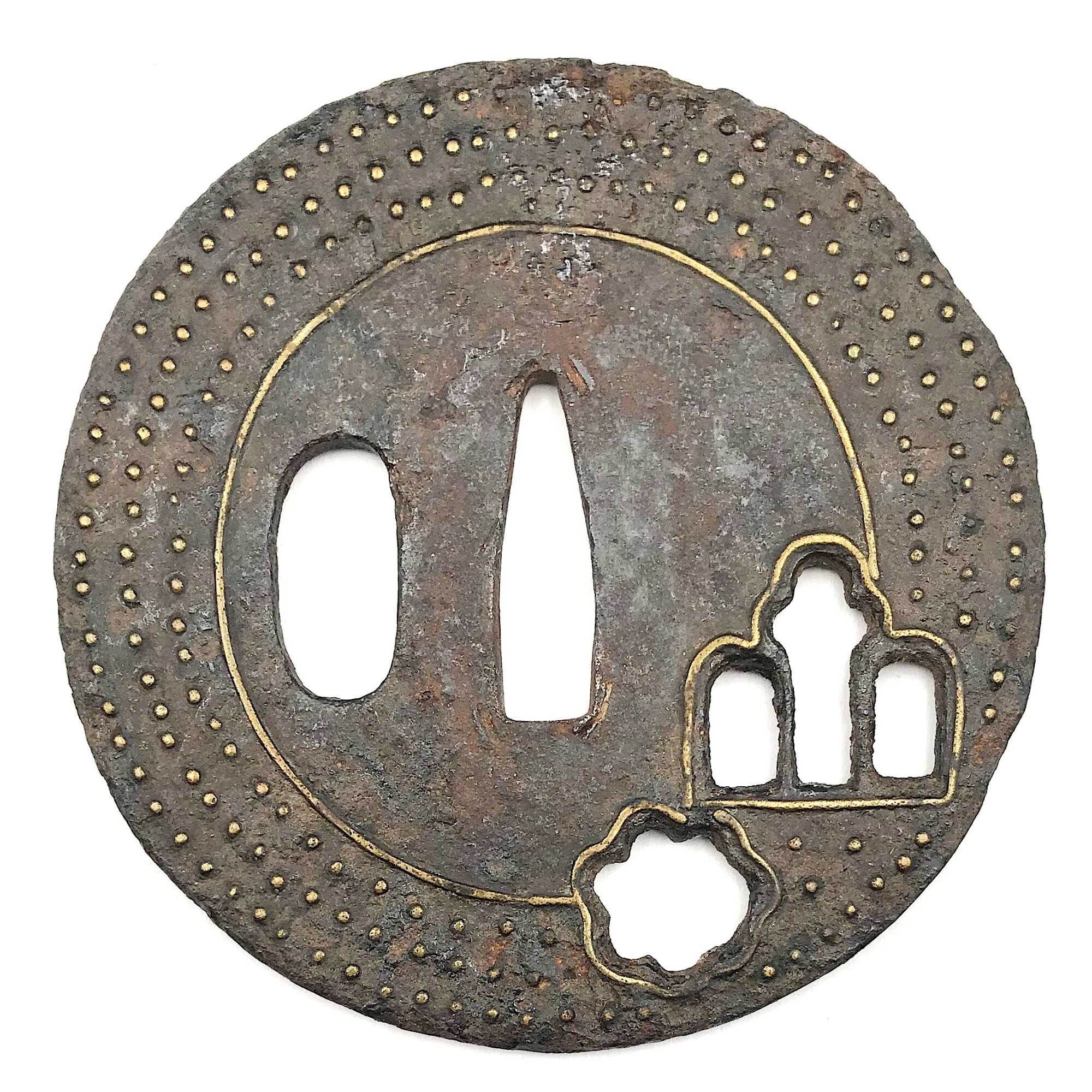
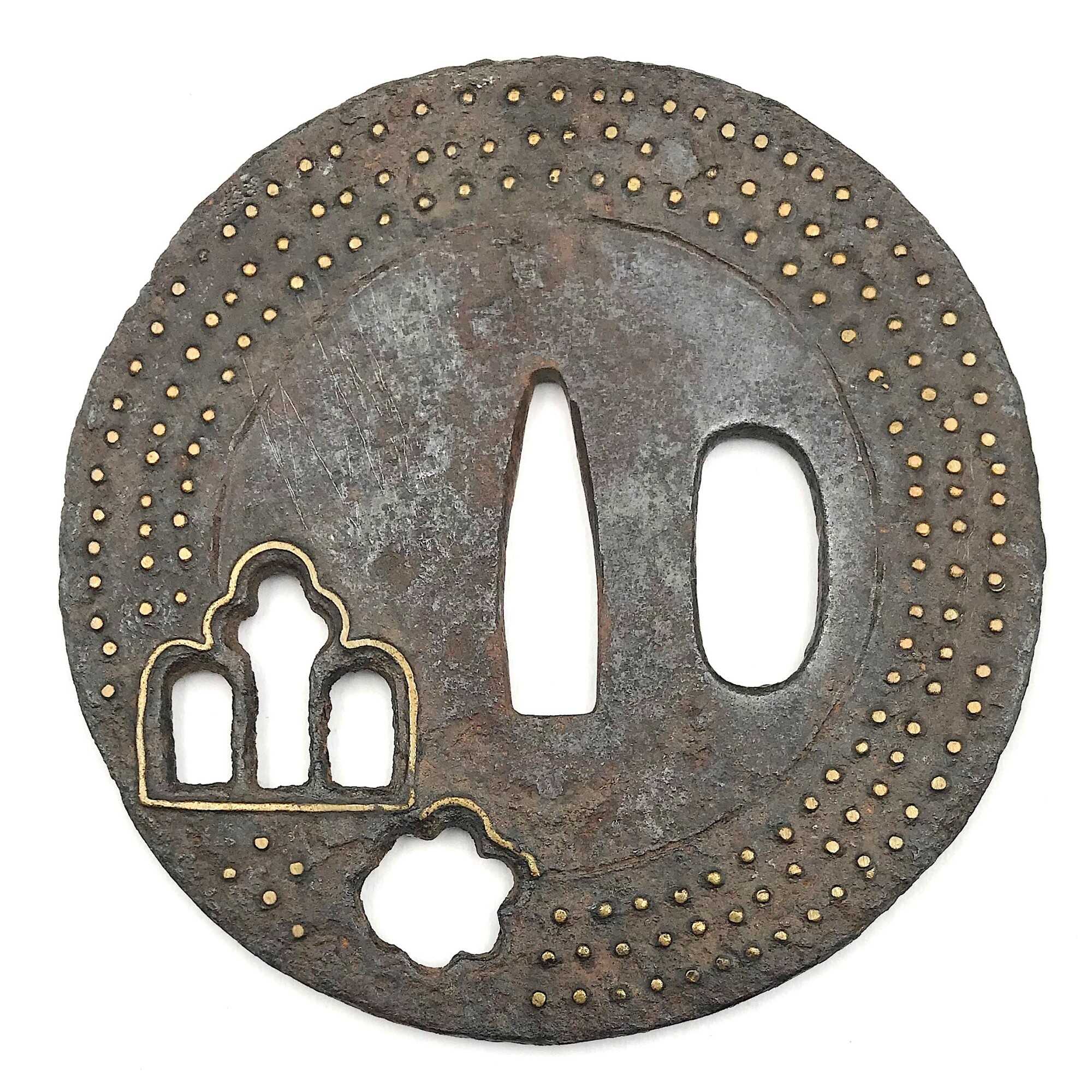
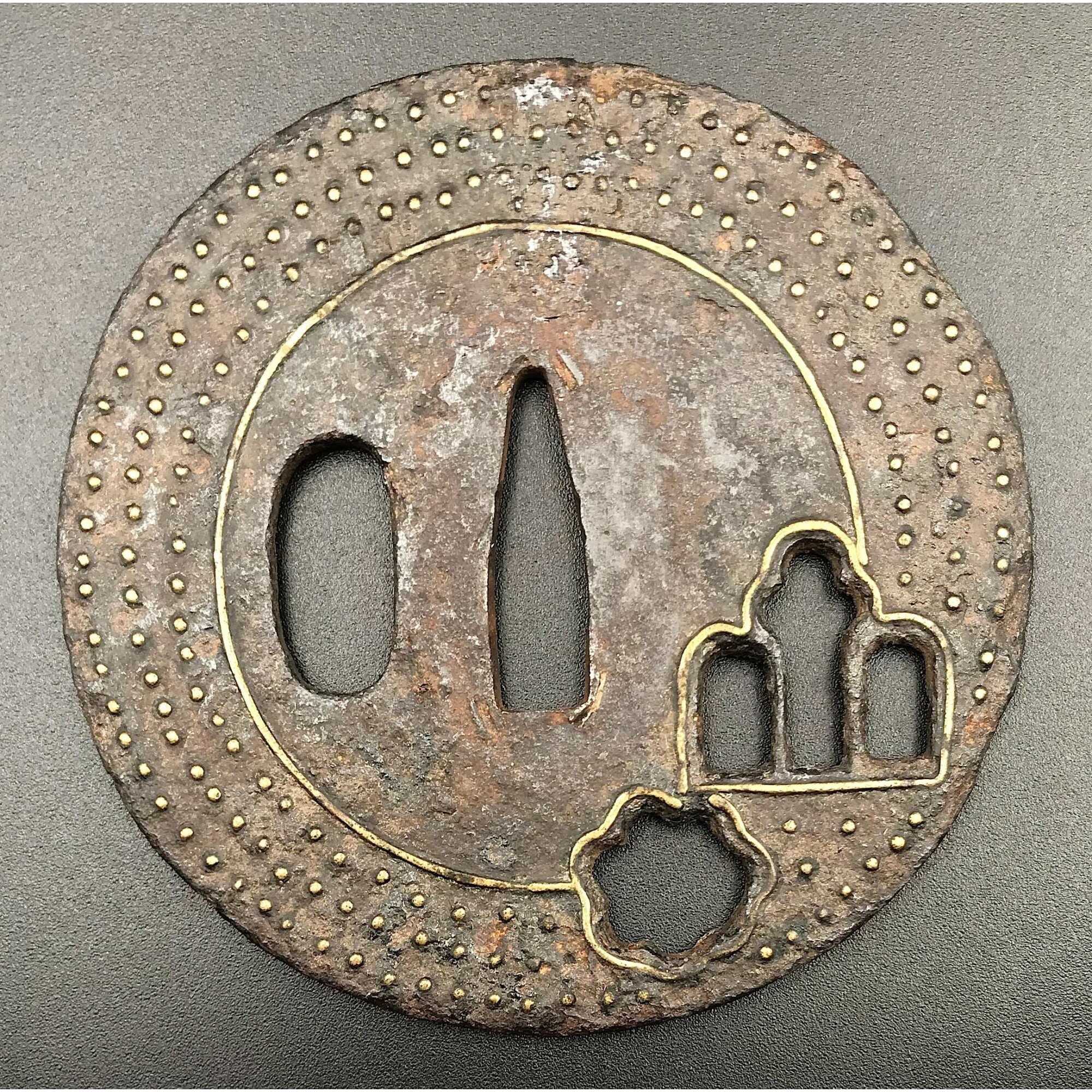
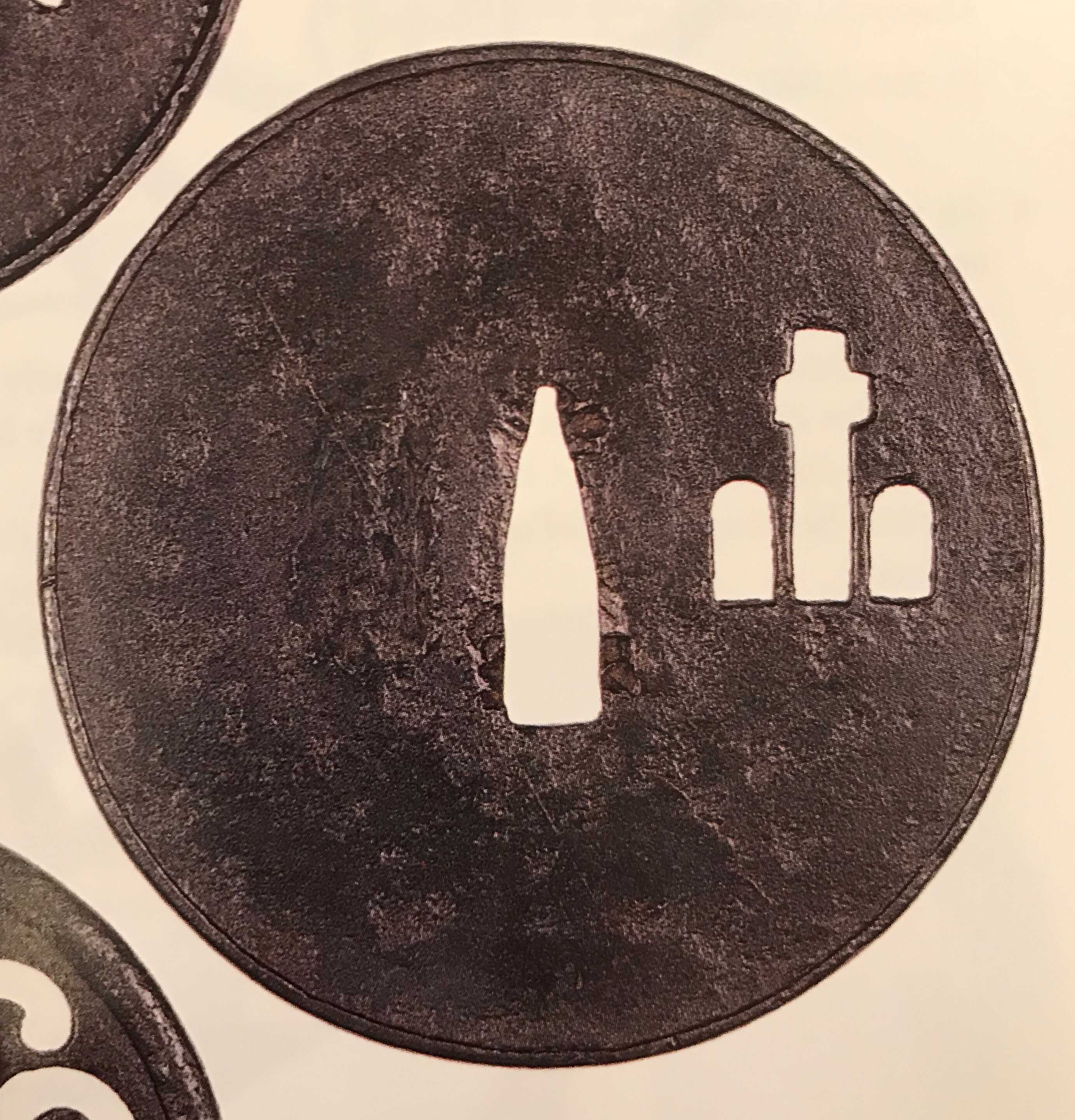
Iron tsuba of round form with design of iris and snowflake in openwork (ko-sukashi or small cut-outs) outlined with brass wire. Three concentric rows of brass dots (ten-zōgan), with a brass circular line inside the innermost row of dots (missing on the back). Hitsu-ana is not outlined with brass wire, which let us suppose that it was cut out at a later date.
Iron and brass. Ko-sukashi and ten-zōgan technique. Mid Muromachi period (1454-1513).
Height: 74.0 mm, Width: 73.6 mm, Thickness: 3.0 mm.
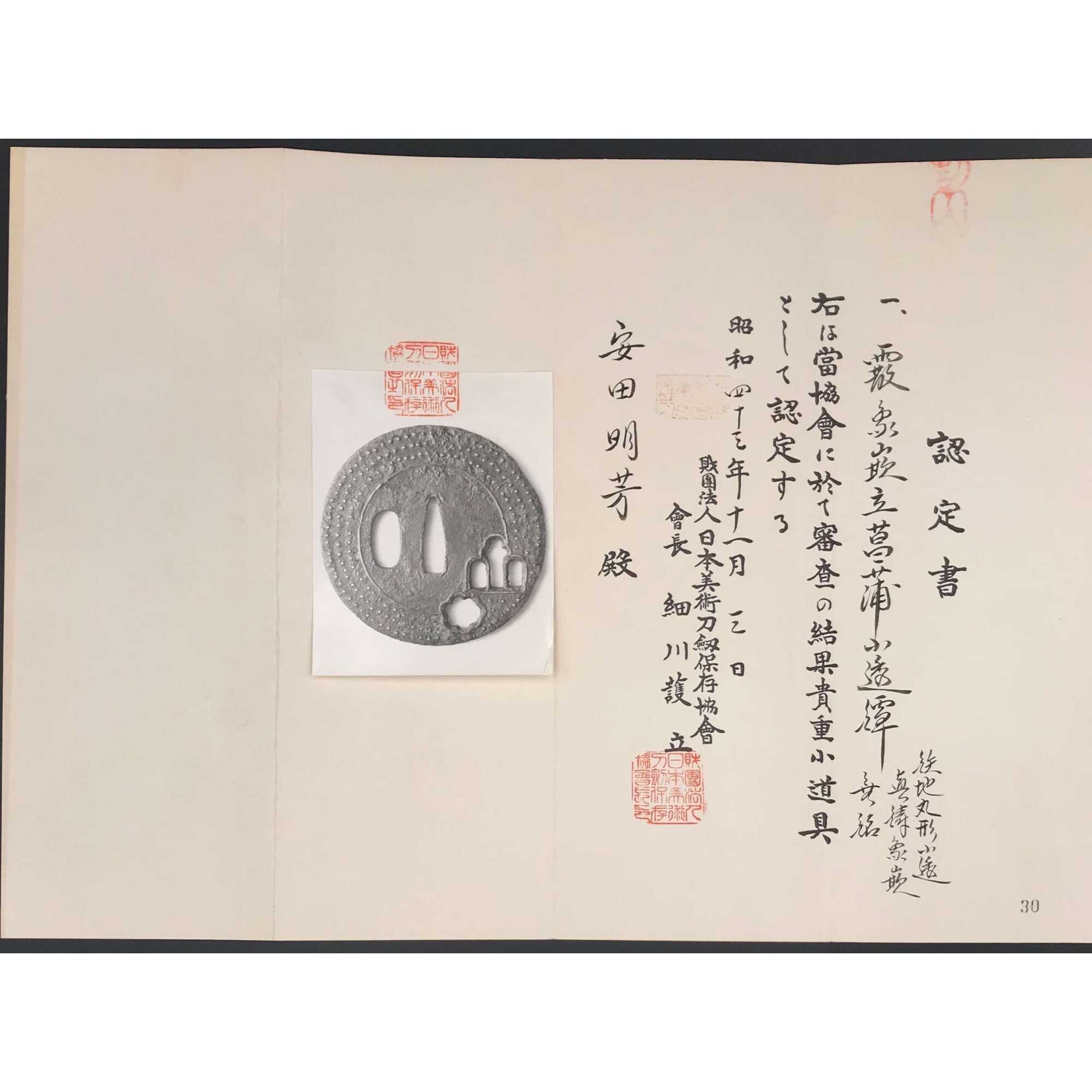
NBTHK certification of 1968: "Kicho". Condition is relatively poor: rust, missing inlay, scratches.
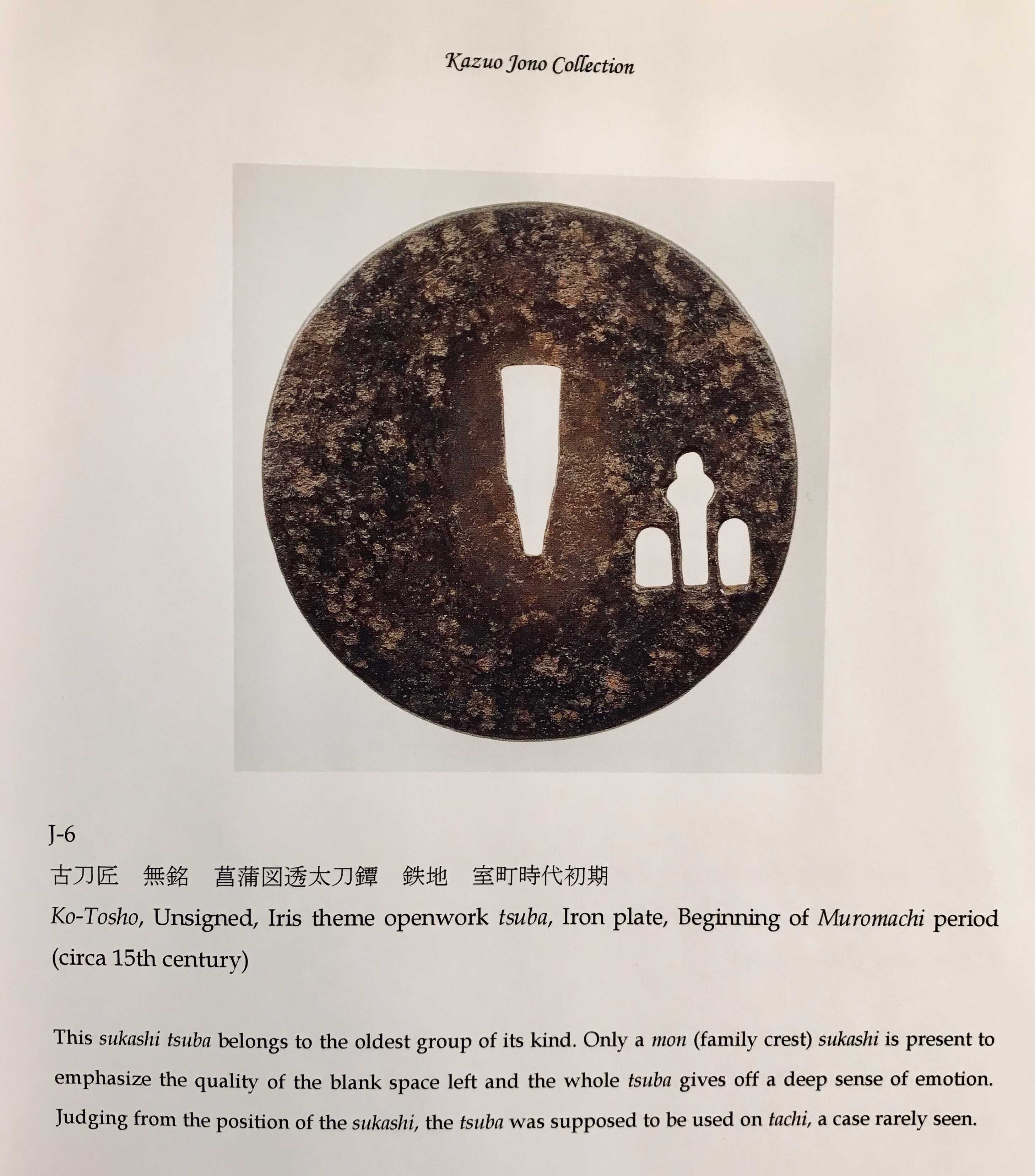
While representation of the snowflake is rather standard, the meaning of the other cut-out design was initially less clear. Similar symbol was found at (1) "Kokusai Tosogu Kai, International Convention & Exhibition, September 24-25, 2005, The Frazier Historical Arms Museum, Louisville, Kentucky, USA"; on page 21 there is a photograph J-6 of a ko-tosho tsuba with "iris theme openwork"; (2) Japanese Swords and Tsuba from the Professor A. Z. Freeman and the Phyllis Sharpe Memorial collections. Sotheby's, London, Thursday 10 April 1997; page 11, lot 6 - a ko-katchushi tsuba of early Muromachi period fith "simple design of stylized iris". In both sources the symbol is explained as 'iris" (kakitsubata).
Additional Information
| Collection | Japanese swords & fittings |
|---|---|
| Type / Purpose | Tsuba |
| Country | Japan |
| Period | 15 AD , Muromachi period [室町時代] (1336–1573) |
| School | Ōnin School |
| Media/Technique | Ko-sukashi (small cut-outs) , Ten-zōgan |
| Material | Brass , Iron |
| Subject | Iris , Snowflakes |
| Acquisition year | 2015 |
Related Items


