
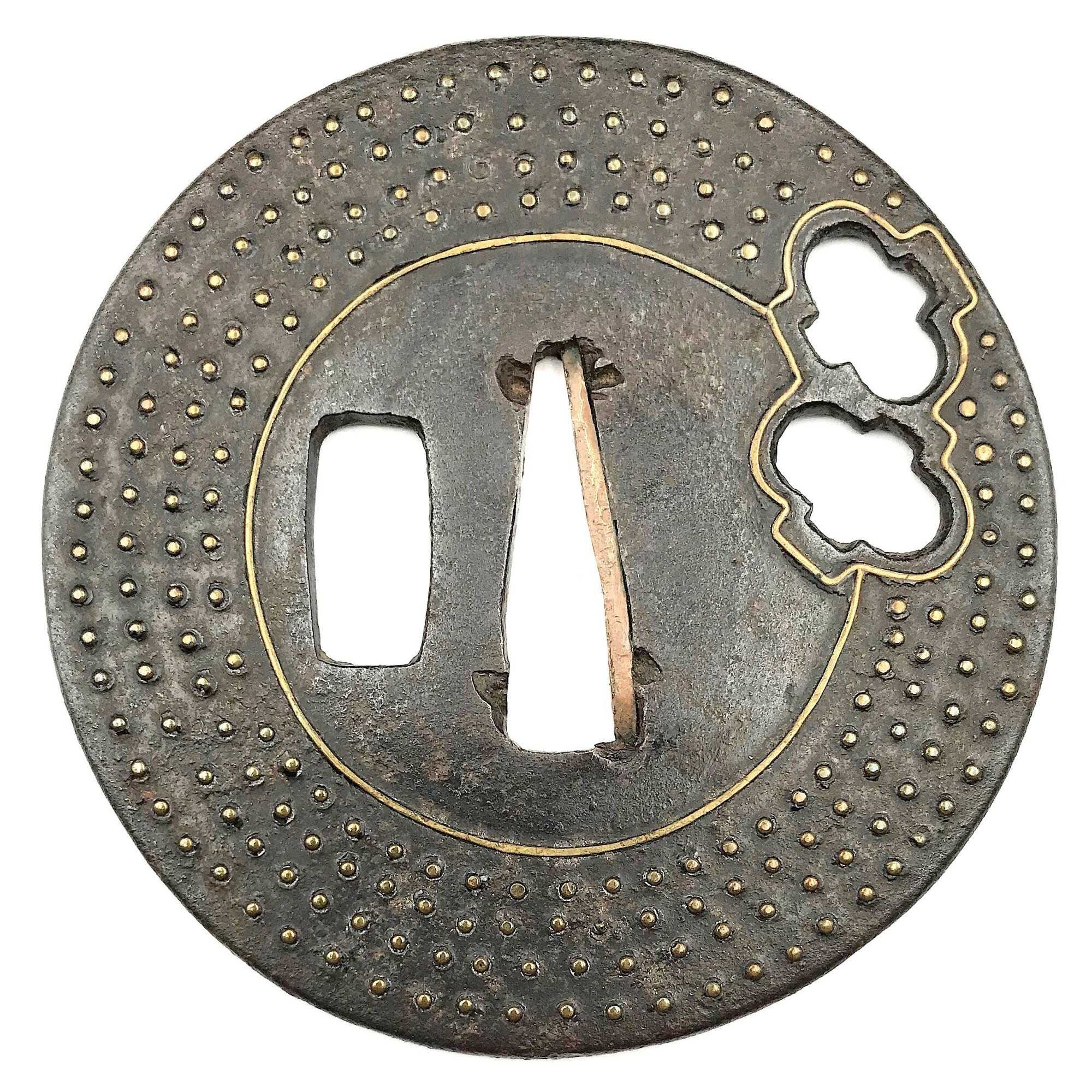
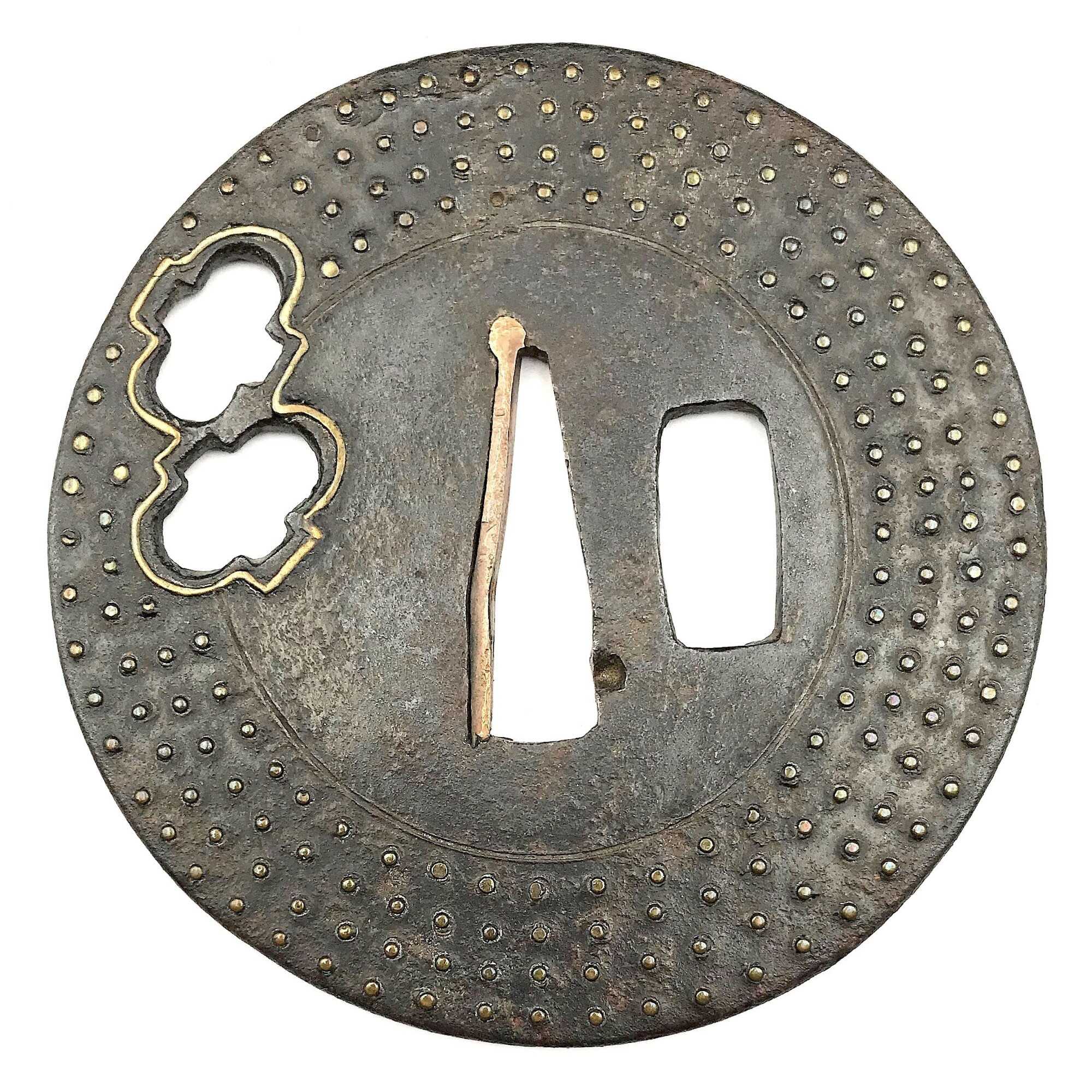
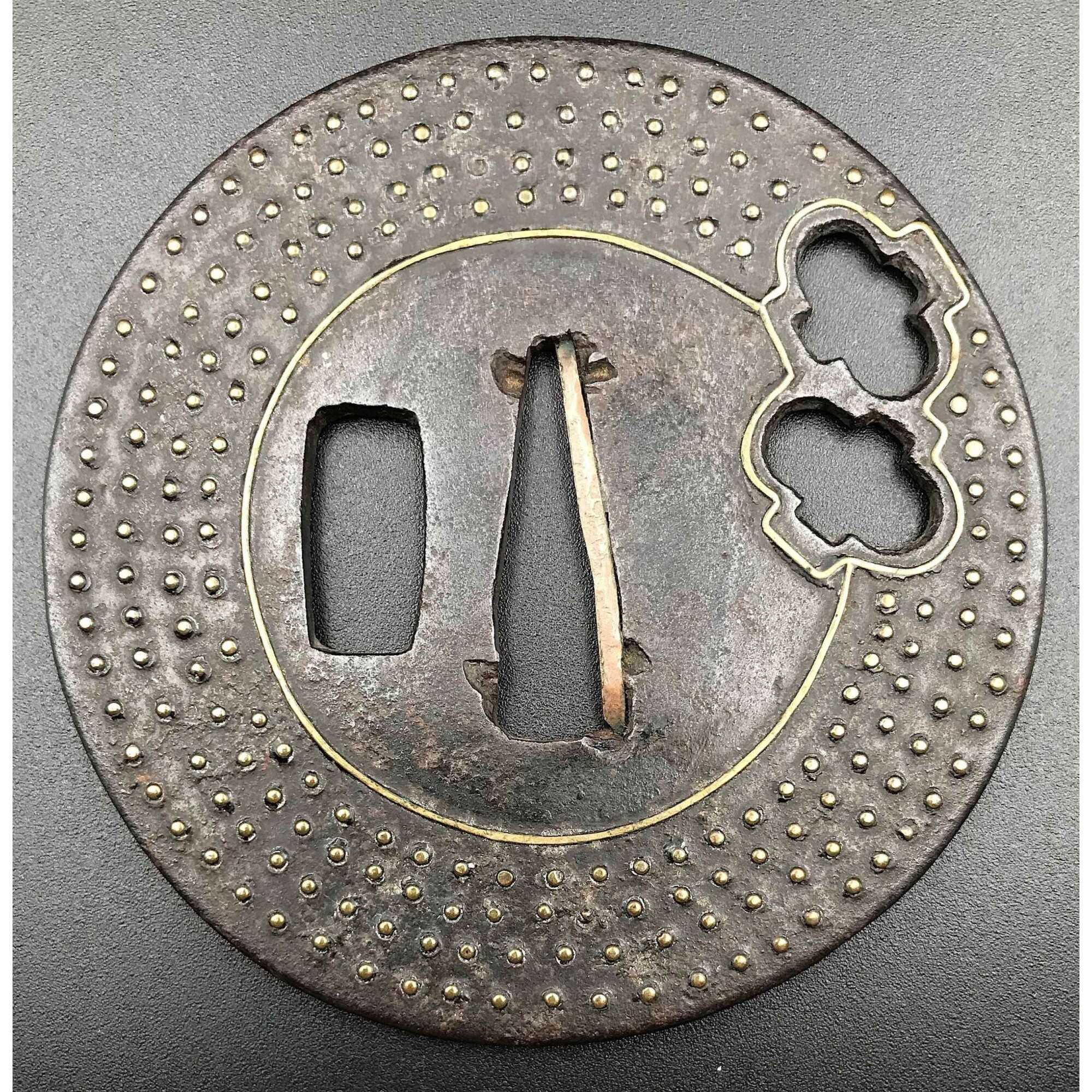
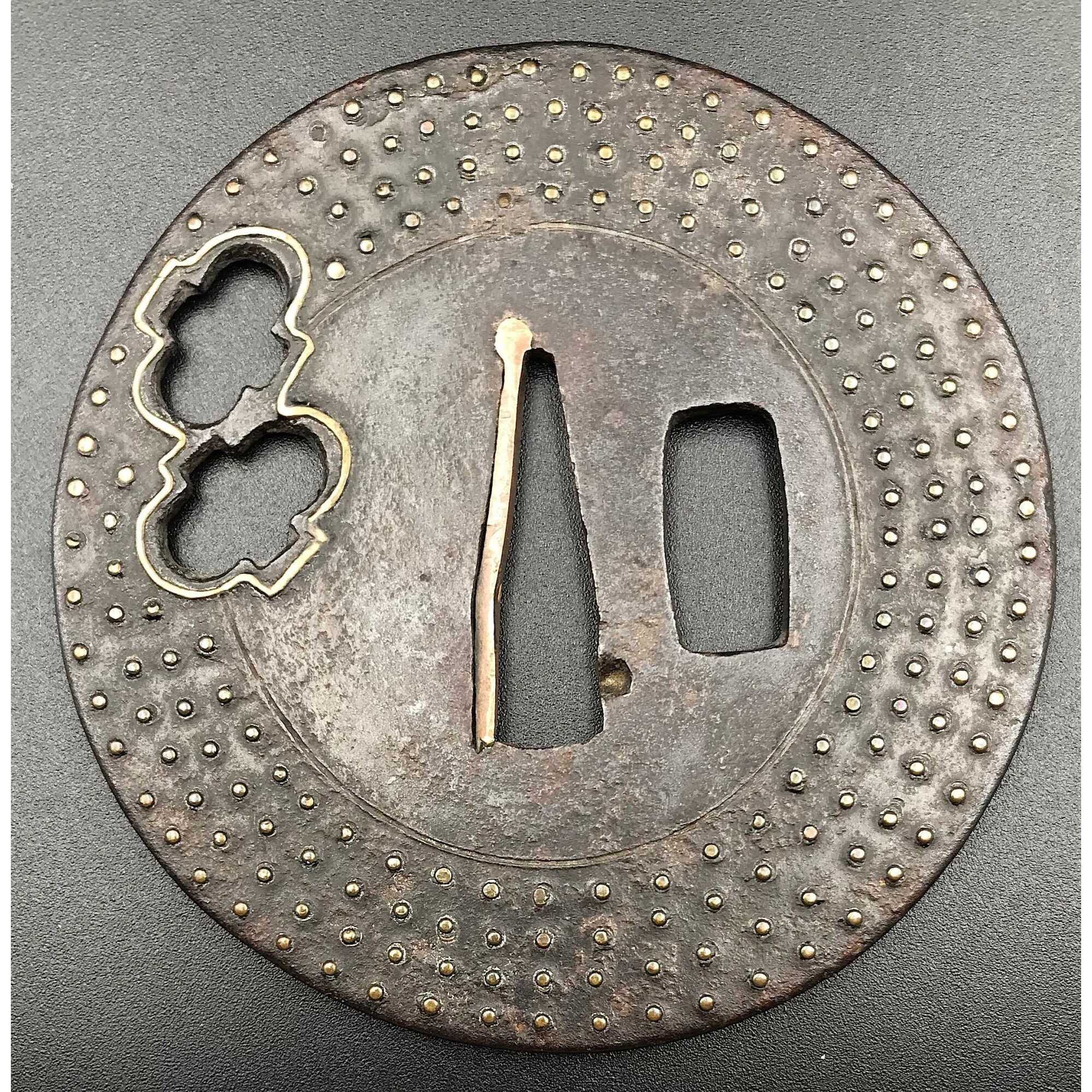
Iron tsuba of round form with design of two paper lanterns in openwork (small cut-outs, ko-sukashi ) outlined with brass wire. The plate is decorated with four concentric rows of brass dot inlay (ten-zōgan), with a brass circular wire inside the innermost row of dots (missing on the back). Hitsu-ana of rectangular form is not outlined with brass wire, which let us suppose that it was cut out at a later date. Copper sekigane.
Mid Muromachi period (1454-1513).
Diameter: 74.0 mm, thickness: 2.6 mm.
Tsuba is illustrated at: 新版 日本刀講座 小道具鑑定編 本間 薫山 佐藤 寒山 : Shinhan Nihonto Koza, Volume VI, Kodogu Part 1. Under supervision of Honma Kunzan and Sato Kanzan.
鍔 無名 応仁 鉄地) 丸形 小透 槌目 真鍮据文 点象嵌 丸耳 : Tsuba with no signature, Ōnin style. Base metal iron (jigane), round shape, small perforations (ko-sukashi), hammering finish (tsuchime). Pre-cast brass inlay (shinchu suemon-zōgan); dot inlay (ten-zōgan); round edge (maru-mimi).
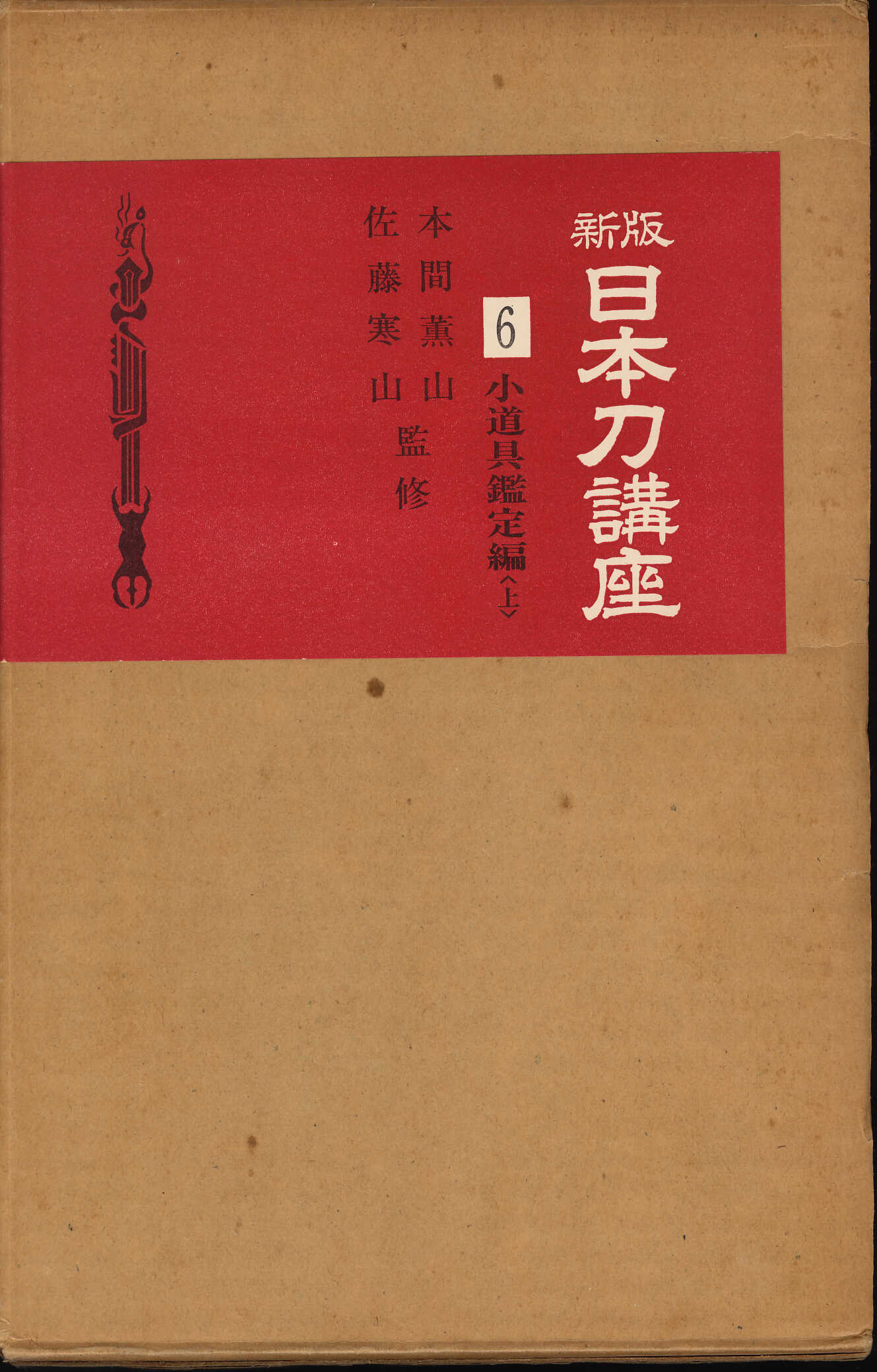
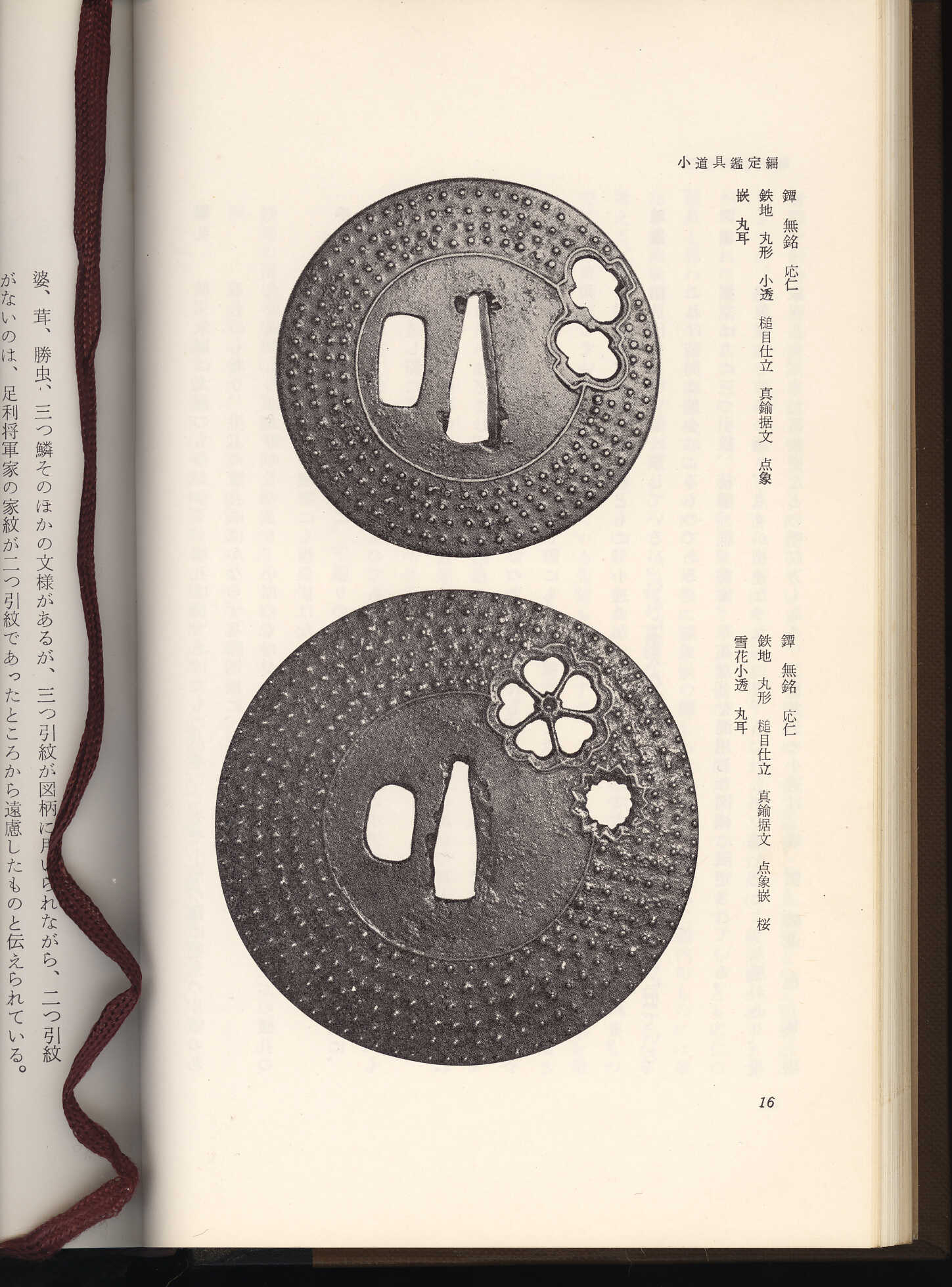
English translation of the book indicated above Nihon Tō Kōza, Volume VI, Part 1 by Harry Afu Watson, AFU Research Enterprises, Inc., 1993. Tsuba in question illustrated on page 14 and described as follows: " Tsuba mumei Ōnin. Tetsu ji maru gata ko-sukashi tsuchime shitate shinchū suemon ten zogan maru mimi. Brass suemon". My question remains: why such a text is called 'translation' while it looks more like transliteration of romanization?
Additional Information
| Collection | Japanese swords & fittings |
|---|---|
| Type / Purpose | Tsuba |
| Country | Japan |
| Period | 15 AD , 16 AD , Muromachi period [室町時代] (1336–1573) |
| School | Ōnin School |
| Media/Technique | Ko-sukashi (small cut-outs) , Sukashi , Ten-zōgan , Zōgan |
| Material | Brass , Iron |
| Subject | Everyday life , Family crest (mon) , Paper lantern |
| Acquisition year | 2015 |
Related Items


