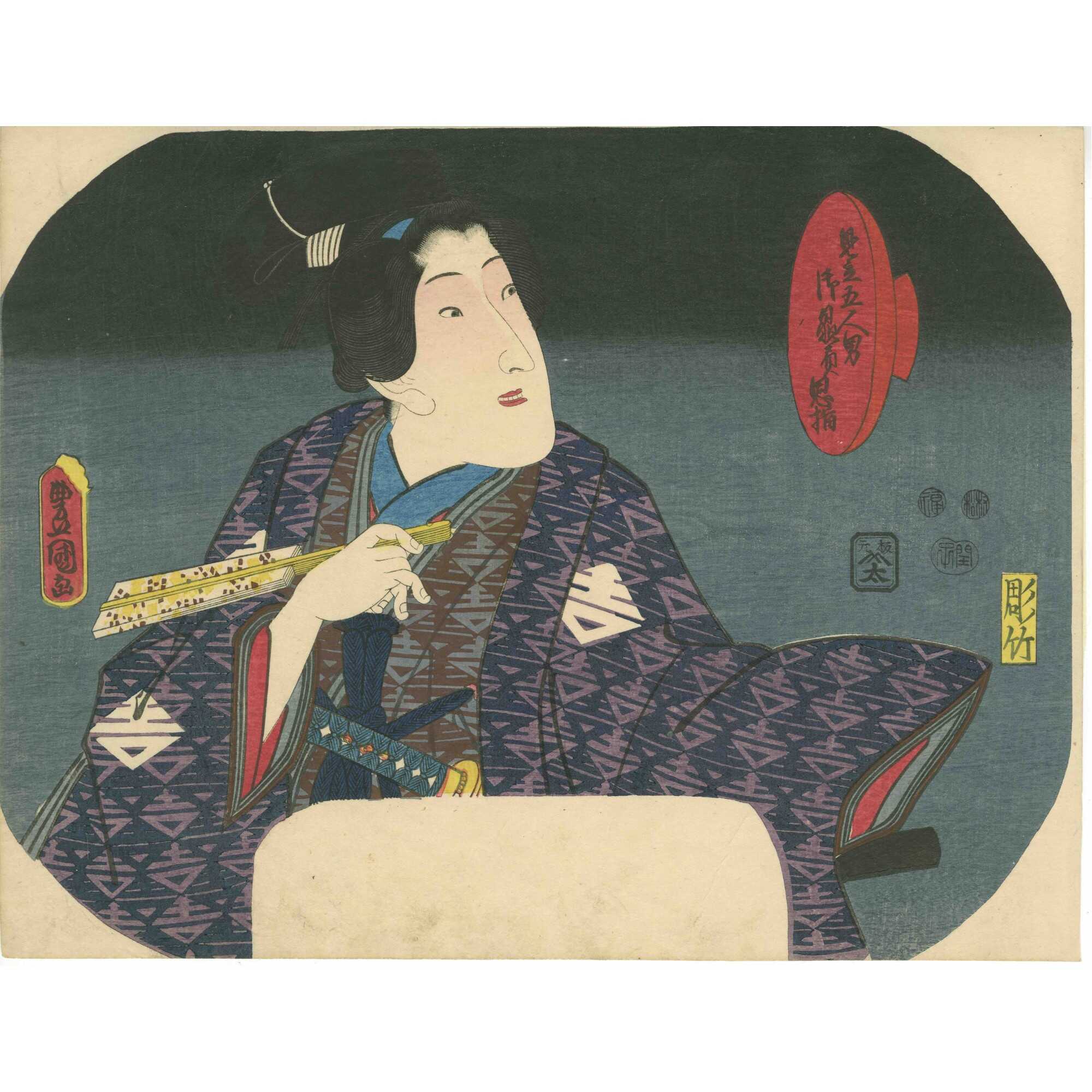
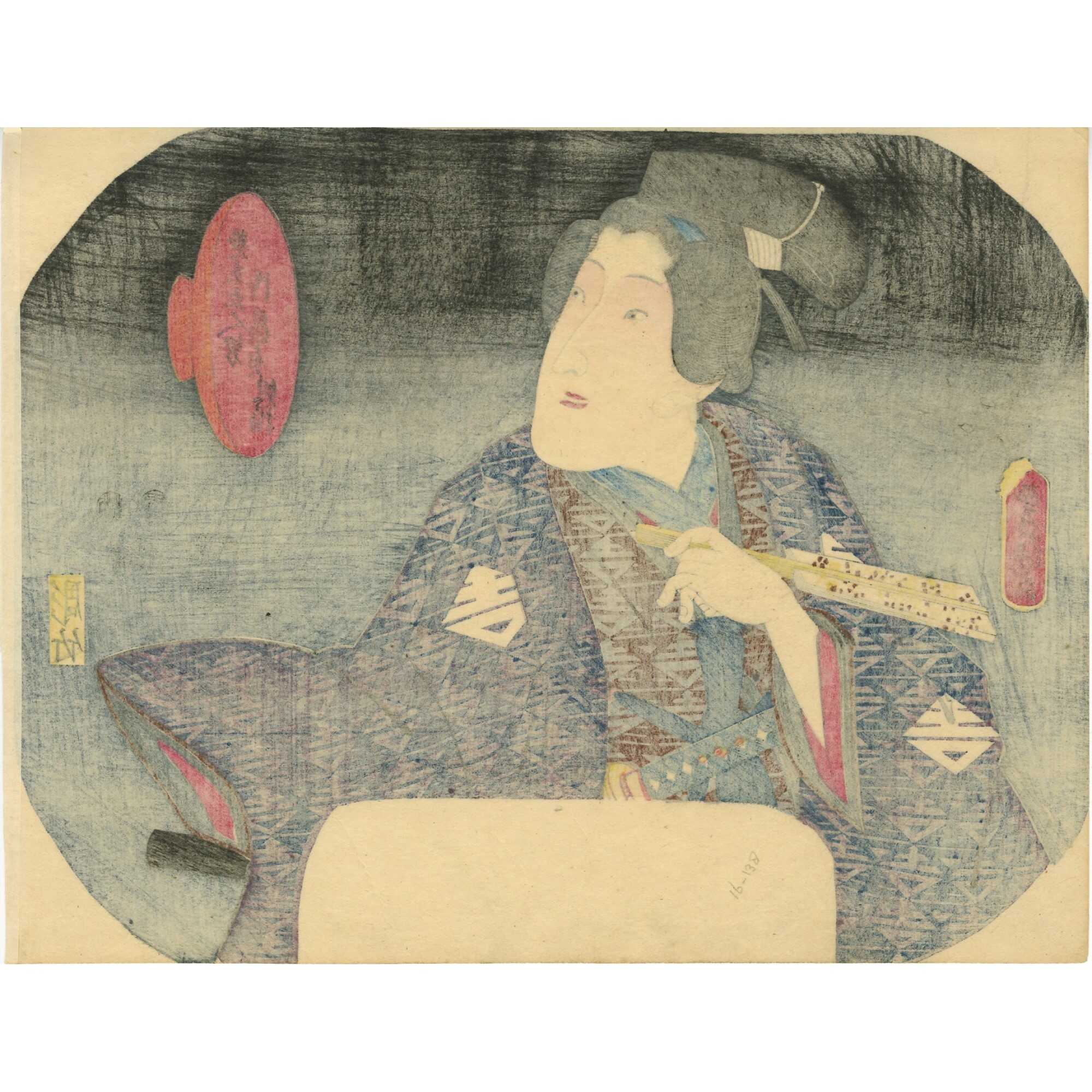
Artist: Utagawa Kunisada [歌川 国貞] (Japanese, 1786–1865), also known as Utagawa Toyokuni III [三代歌川豊国]
Signed: 豊国画 (Toyokuni ga) in a red toshidama cartouche
Publisher: Unidentified; Yama-Ta, seal: 板元, 太 (Hanmoto, Ta); Marks 19-044 | U421b
Block Carver: Yokogawa Takejirō [横川竹二郎] (Japanese, fl. c. 1845-1863), seal: hori (carver) Take (彫竹)
Date and Censor seals: Intercalary 2nd month, 1852 (Kaei 5, 子閏); Fuku (福) & Muramatsu (村松)
Media: Woodblock print (nishiki-e); ink and colour on paper; uncut fan print (uchiwa-e), 230 x 298 mm
Description:
The actor Iwai Kumesaburō III is shown half-length, three-quarter view, facing right, holding a folded ōgi (fan) while looking off to the side. He wears layered robes — a blue kimono over a brown under-robe — each patterned in diaper arrangement with a modified form of the kanji 吉 (kichi, “good fortune”). Draped over these is an outer robe boldly emblazoned with large white 吉 crests. The motif’s repetition across all garments serves as a direct visual reference to the character Kichiza, whose name begins with the same ideograph.
Series: Mitate gonin otoko: go-hiiki omoizashi [見立五人男 御贔屓 思指] — an imagined group of five chivalrous men portrayed by leading kabuki actors. One interpretive translation of the title is A Parody of the Five Chivalrous Commoners: A Cup of Sake from Their Fans.
Note: The reading omoizashi (思指) is attested in specialist sources, including R. Kruml and Paul Griffith, though it is not a standard compound. Griffith interprets the term as referring to the act of pouring sake for one’s chosen partner, here evoking an atmosphere of intimacy and affection between celebrated actors and their patrons. The meaning remains poetically suggestive but lexically uncertain.
Actor: Iwai Kumesaburō III [岩井粂三郎] (Japanese, 1829 – 1882); other names Iwai Hanshirō VIII, Iwai Shijaku II, Iwai Hisajirō II.
- Role: Obō Kichiza [於坊吉三] — Obō Kichiza is a fictional thief and romantic antihero from the kizewamono repertoire of mid-19th-century kabuki. He often appears in stylised street scenes and underworld narratives, sharing characteristics with figures such as Shirai Gonpachi or Banzuiin Chōbei. The use of the kanji 吉 (kichi) as a crest appears in multiple related prints.
Provenance: Drouot, Audap & Associés, Paris; June 12, 2025; Lot 48; René Scholten (Dutch, 1943 – 2001)
Another print from this series: SVJP-0301.2019 Actor Bandō Shūka I as Shirai Gonpachi
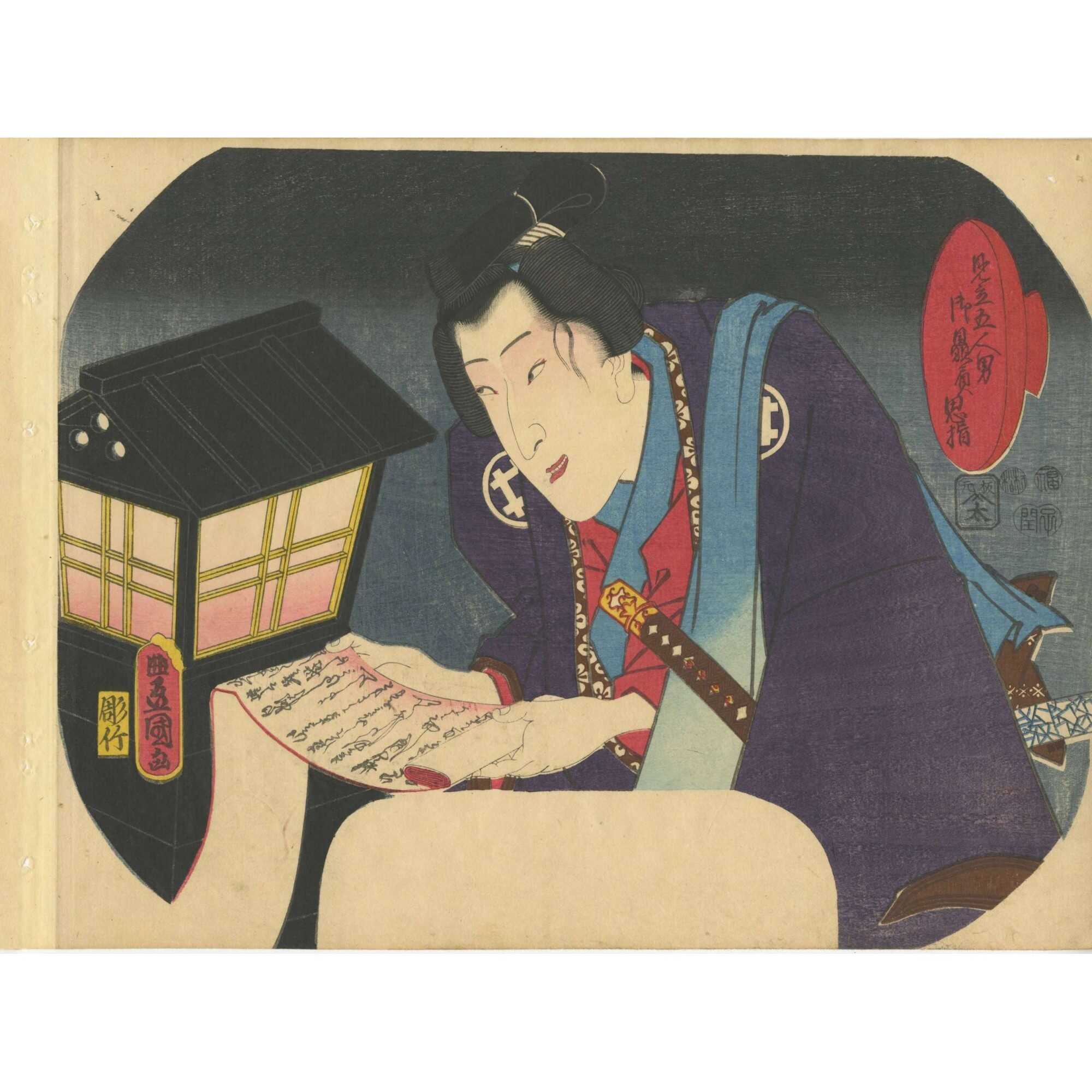
Thanks to Horst Graebner of the Kunisada Project.