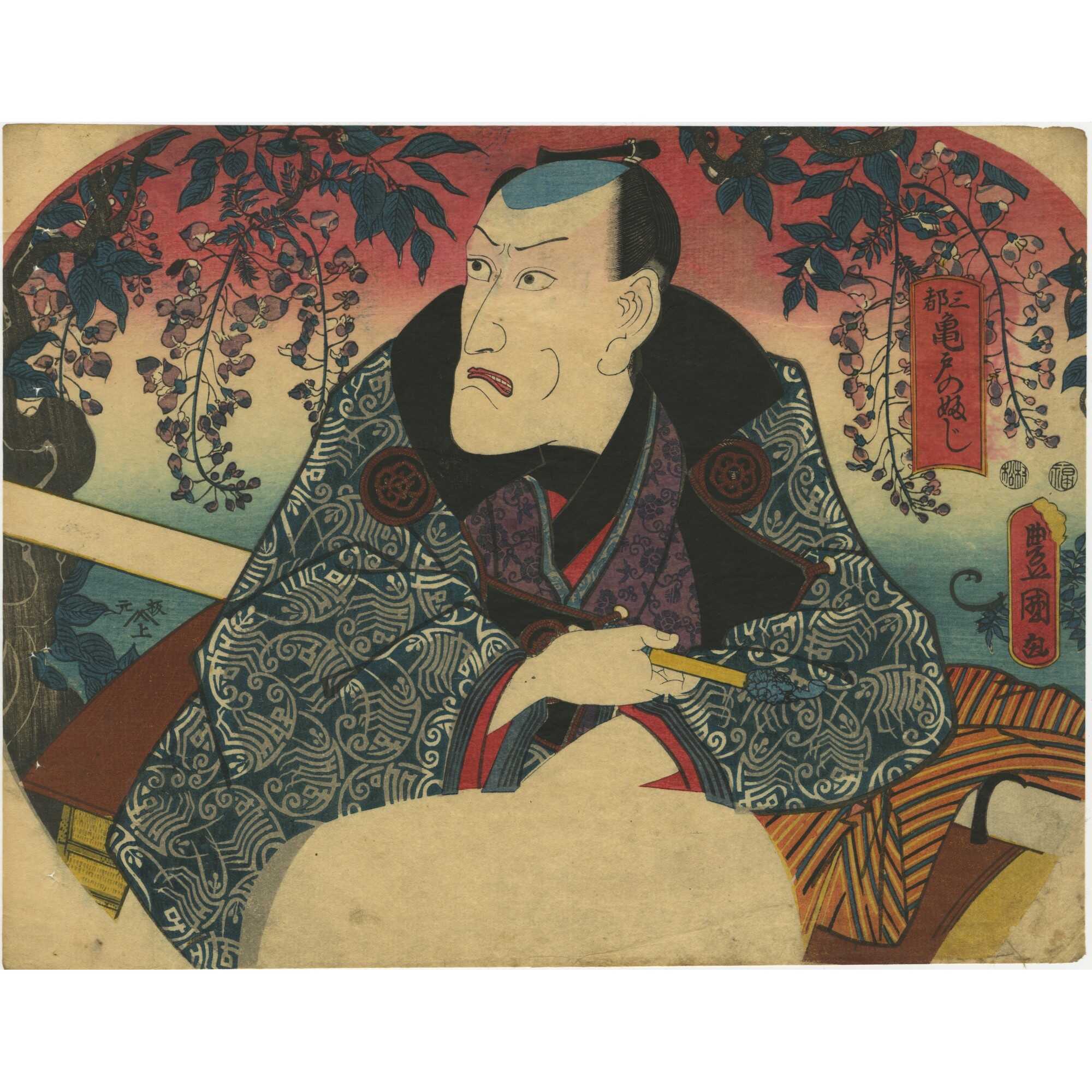
Utagawa Kunisada (Toyokuni III). The Three Cities: Wisteria Blossoming at Kameido / Fan print, 1849-51.
Censor
Fukushima Giemon [福島儀右衛門; seal: Fuku, 福] (Japanese, censor, fl. 1849–1853) Muramatsu Genroku [村松元禄] (Japanese, censor, fl. 1843–1853)

Fukushima Giemon [福島儀右衛門; seal: Fuku, 福] (Japanese, censor, fl. 1849–1853) Muramatsu Genroku [村松元禄] (Japanese, censor, fl. 1843–1853)
| Artist: | Utagawa Kunisada [歌川 国貞], a.k.a. Utagawa Toyokuni III [三代 歌川 豊国] (Japanese, 1786–1865) |
| Signed: | Toyokuni ga [豊國画], in a red toshidama cartouche |
| Censor seal: | Fuku [福]; Muramatsu [村松], i.e. Fukushima Giemon [福島儀右衛門] and Muramatsu Genroku [村松元禄] |
| Date: | 1849–1851; Kaei 2–4 |
| Publisher: | Iseya Sōemon [伊勢屋惣右衛門] (Japanese, c. 1776–1862); seal hanmoto [板元] ue [上] under double roof |
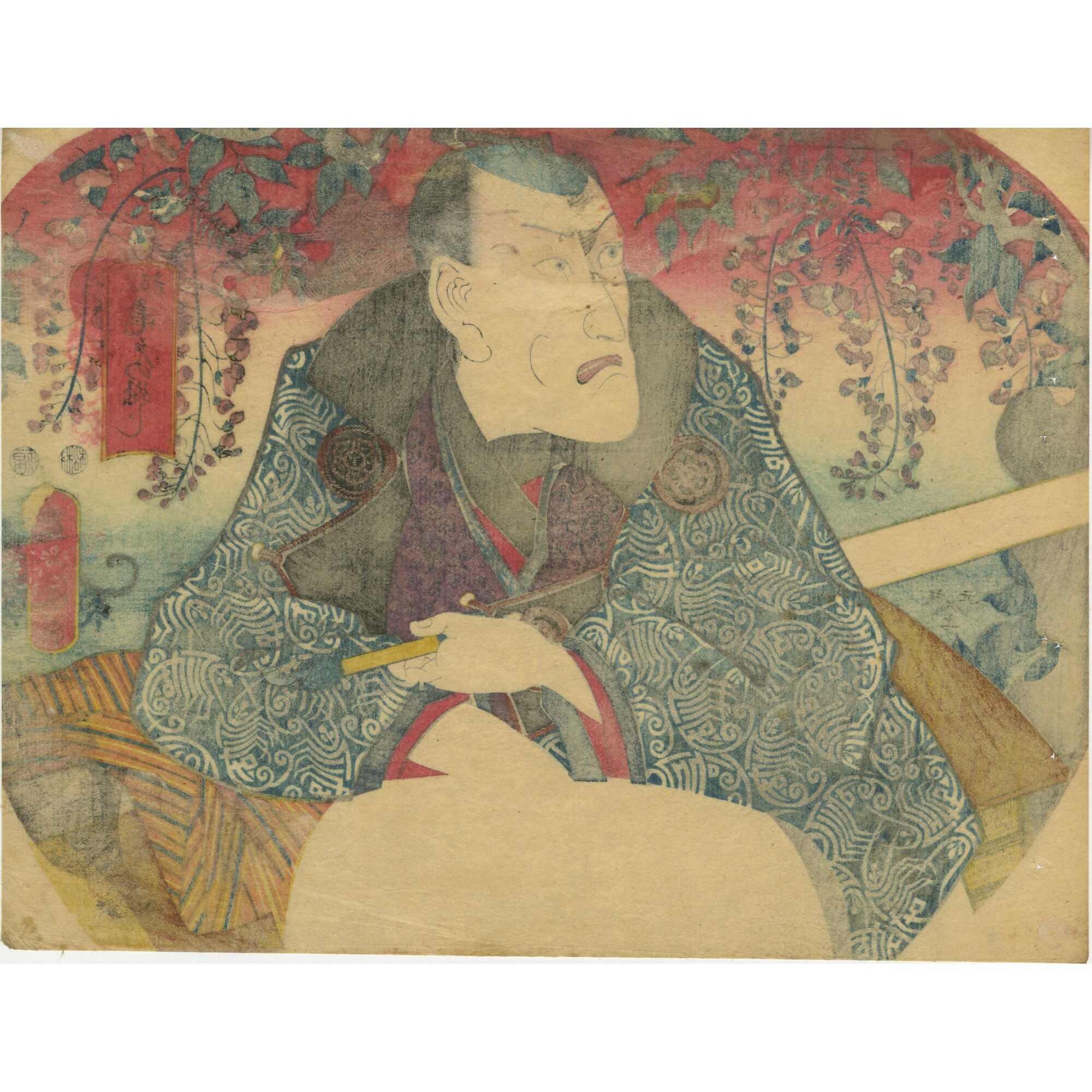
| Media: | Aiban yoko-e uchiwa-e (団扇絵), colour woodblock print, 227 × 291 mm |
Title: The Three Cities: Wisteria Blossoming at Kameido [三都 亀戸のふじ] Santo Kameido no fuji
Description: Bust-length portrait of a male actor, facing three-quarter left, identified by facial likeness as Ichikawa Ebizō V [市川海老蔵 五代目] (1791–1859), seated beneath cascading wisteria blossoms (fuji, 藤) at Kameido [亀戸]. He wears an outer kimono patterned with stylized shrimp (ebi, 海老)—an emblematic motif of the Ebizō line of actors—and round bellflower (kikyō, 桔梗) crests, with a black collar and layered red, black, and purple undergarments visible at the neckline. In his right hand, he holds a pipe (kiseru, 煙管), while his left elbow rests on the carrying pole of a palanquin (norimon, 乗物).
The background shows hanging sprays of wisteria against a graded sky. At upper right is the title cartouche; below appears the signature Toyokuni ga [豊國画] in a red toshidama cartouche, with the censor seals Fuku [福] and Muramatsu [村松] placed above it. The publisher’s seal hanmoto ue [板元上] appears at the right edge of the image.
The title Santo (“Three Cities,” usually referring to Edo, Kyoto, and Osaka) suggests the existence of two further designs in the series. The absence of a date seal, together with the joint activity of the Fuku and Muramatsu censors, places the print between 1849 and 1851 (Kaei 2–4), prior to the introduction of mandatory date seals in the 2nd month of 1852.
Actor: Ichikawa Ebizō V assumed the name Ichikawa Danjūrō VII in 1807; by the time this print was published, he was performing under that name. Ichikawa Shinnosuke I (1794–1797), Ichikawa Ebizō V (1797–1807), Ichikawa Hakuen II, Ichikawa Danjūrō VII (1807–1859); Other names: Ichikawa Jukai I (poetry name), Matsumoto Kōshirō, Hatagaya Jūzō, Naritaya Shichizaemon II, Ichikawa Sanshō IV (poetry name); Guild: Naritaya.
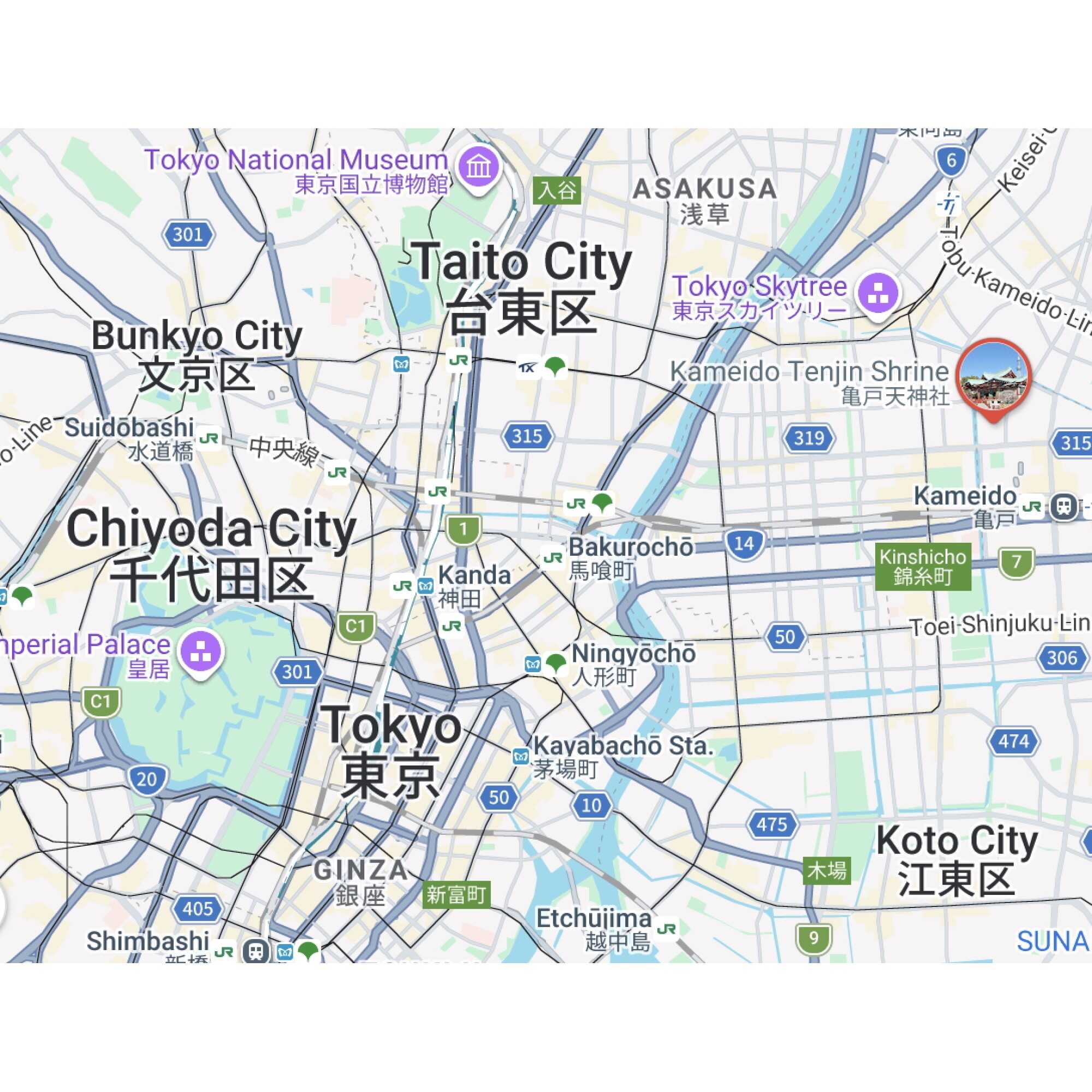
Location: Kameido was closely associated with wisteria through the Kameido Tenjin Shrine, famous for its wisteria blossoms and the annual wisteria-viewing festival, from late April to early May, making the flower a locational identifier rather than a purely decorative motif.
| Collection | Fan print (Uchiwa-e) [団扇絵] , Japanese prints and drawings |
|---|---|
| Type / Purpose | Fan , Woodblock print |
| Period | 19 AD , Edo period [江戸時代] (1603–1868) , Kaei era [嘉永] (1848–1854) , Mid-19th century |
| Country | Japan |
| Media/Technique | Ink and color on paper , Woodblock print (nishiki-e) |
| Size | Aiban yoko-e uchiwa-e , Fan print. Uchiwa-e |
| Genre | Actor Prints (Yakusha-e, 役者絵) |
| Subject | Actor print , Actors , Fan , Fan print , Japan , Japanese woodblock prints , Kabuki , Kabuki actor , Kabuki actors , Palanquin , Pipe (kiseru, 煙管) , Uchiwa-e , Wisteria (fuji) |
| School | Utagawa (歌川) |
| Signature | Toyokuni ga [豊国画] |
| Creation / Publishing year | 1849 , 1850 , 1851 , Kaei 2 , Kaei 3 , Kaei 4 |
| Acquisition year | 2026 |


