
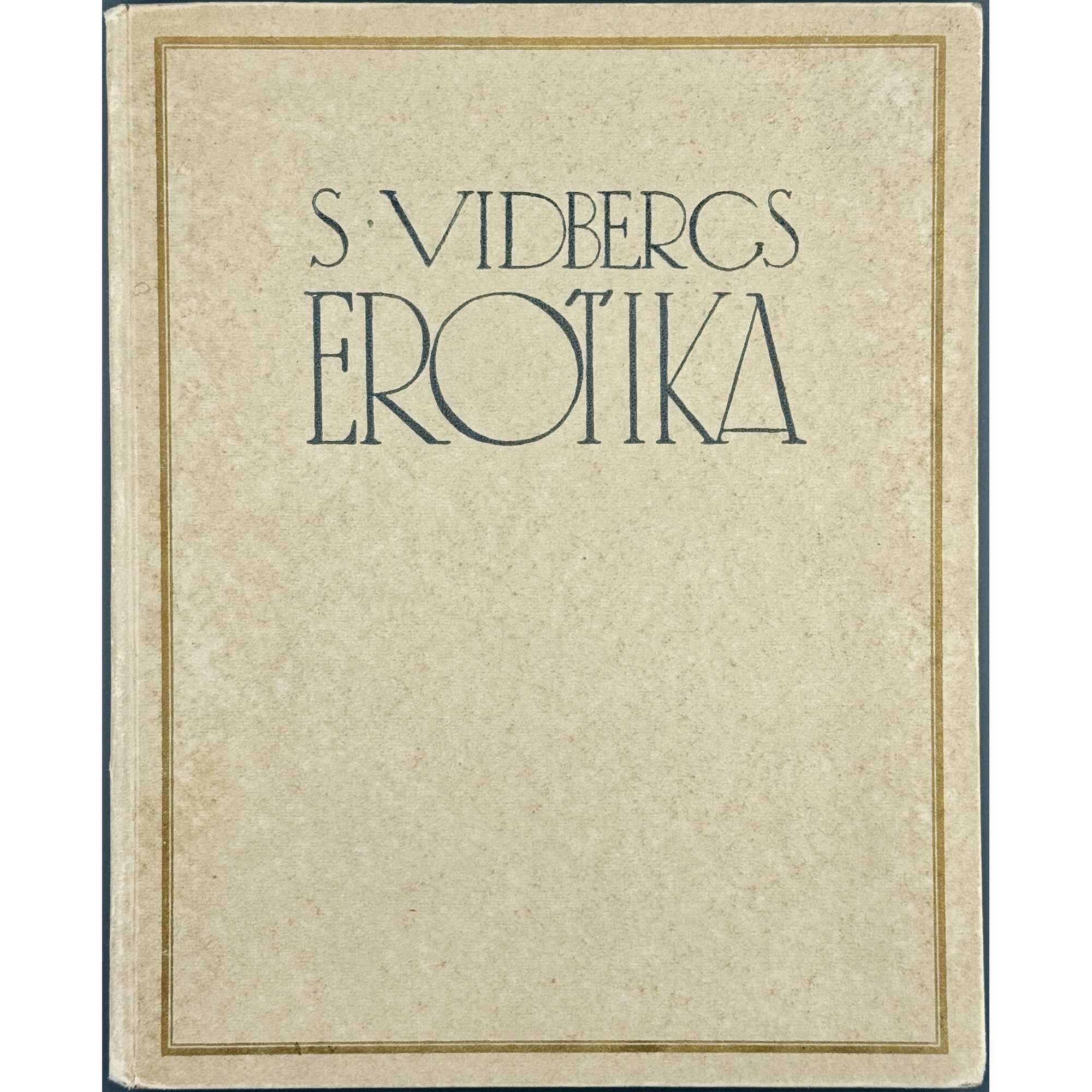
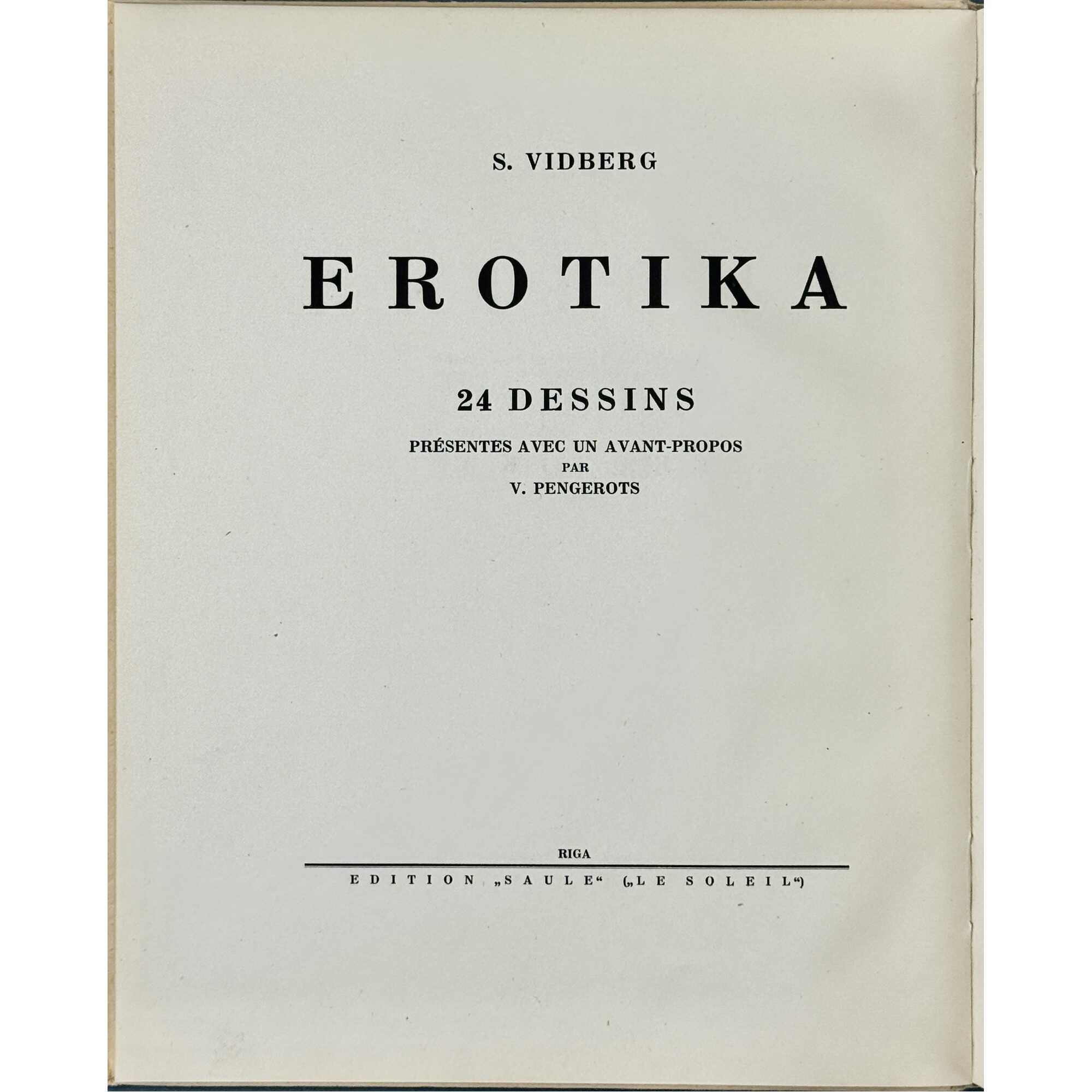
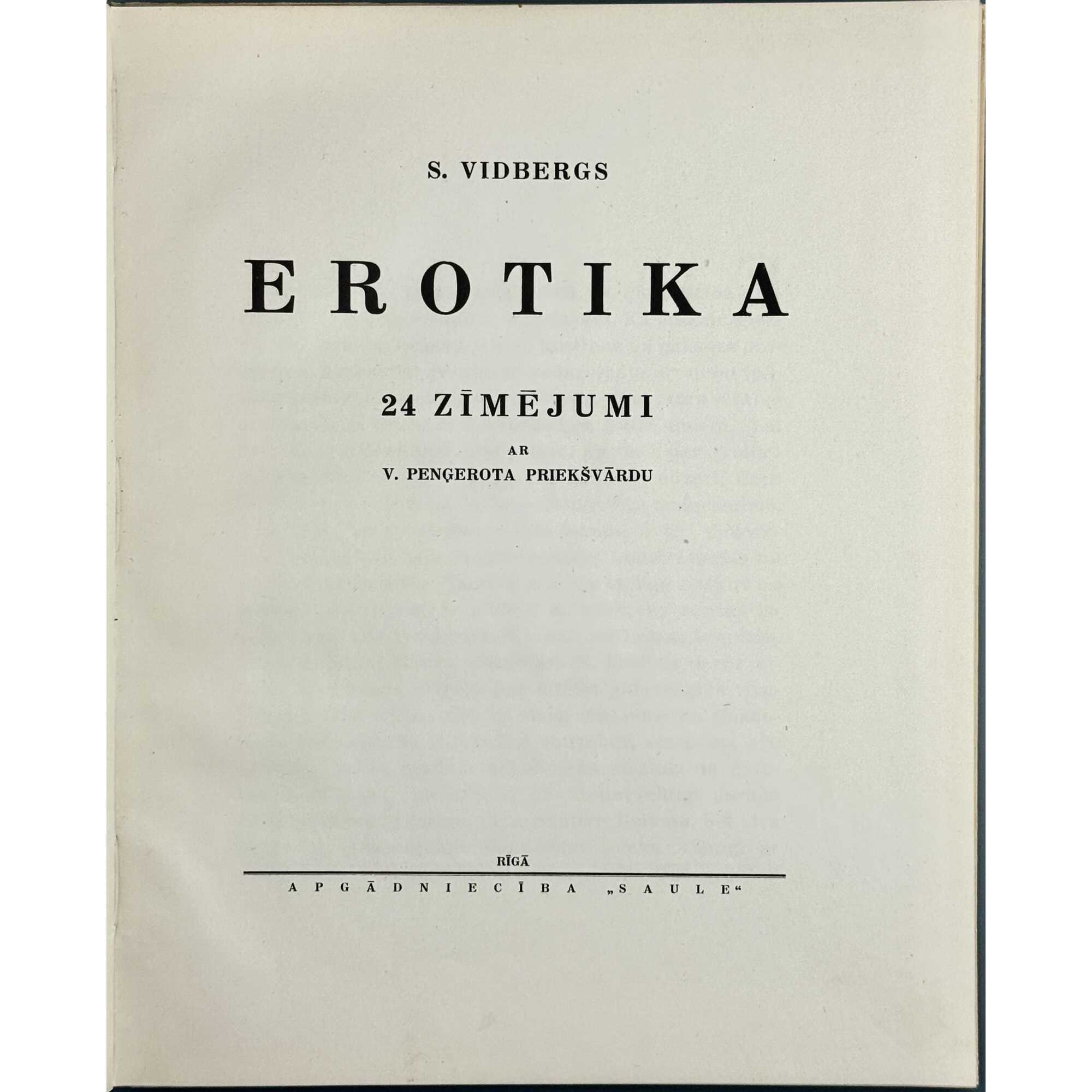
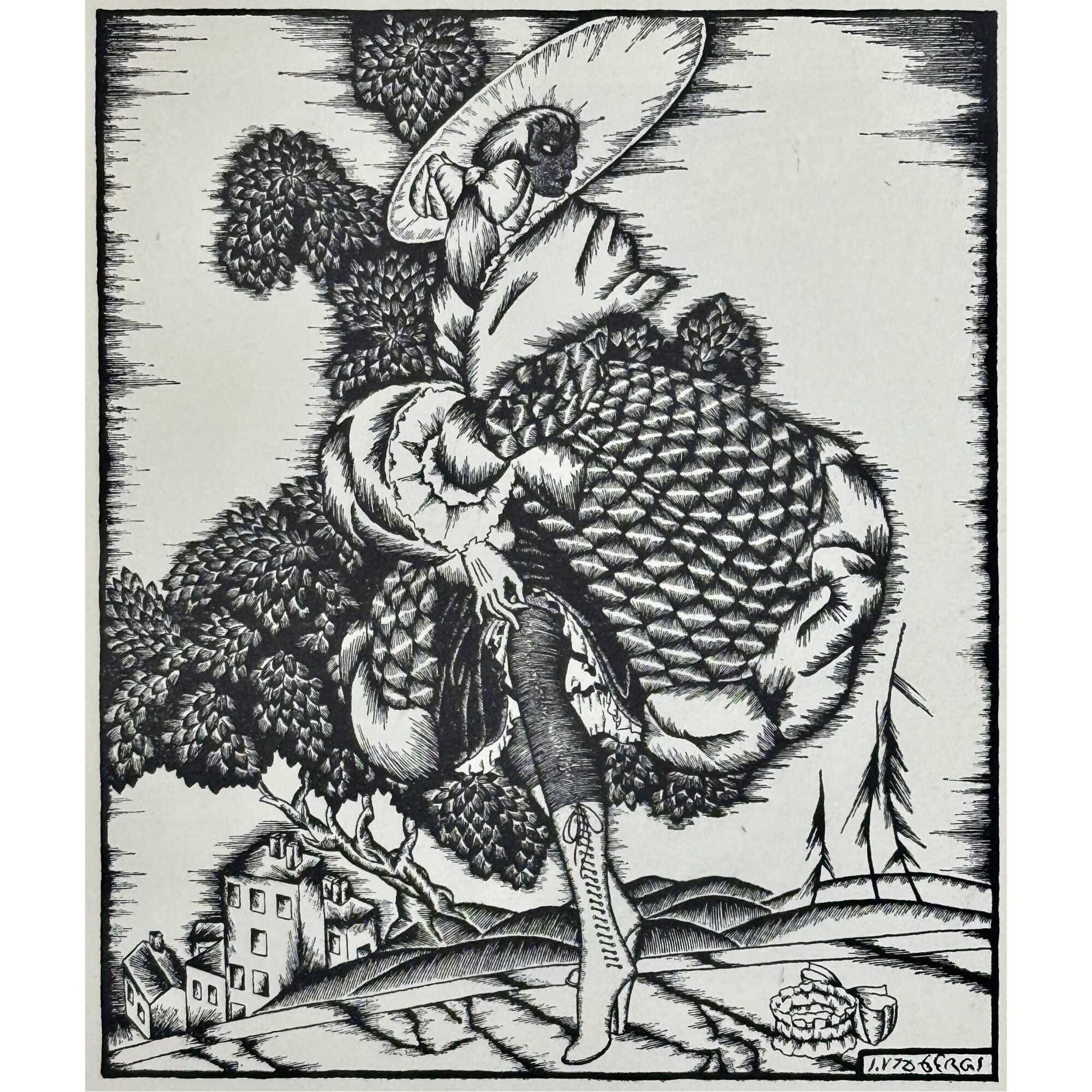
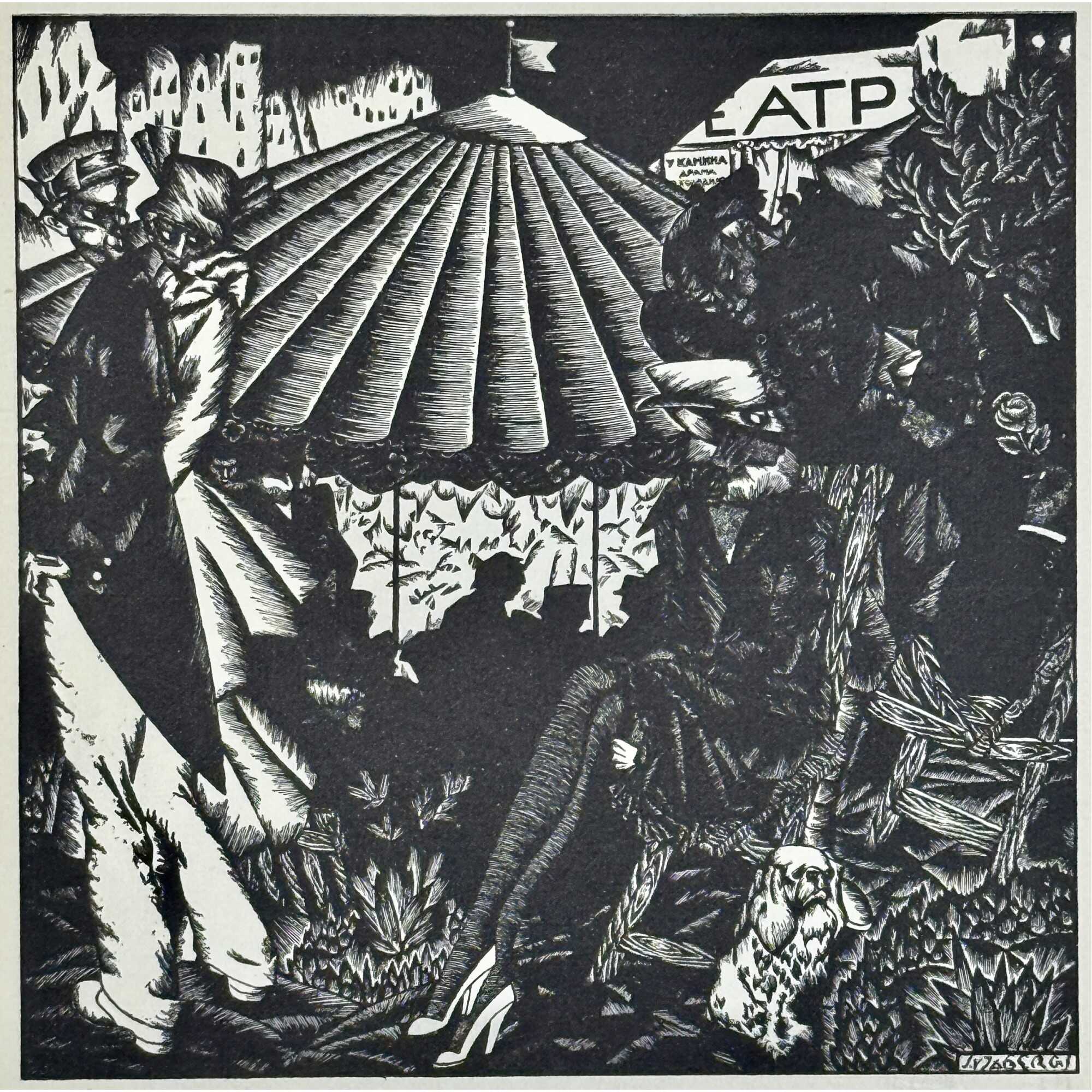
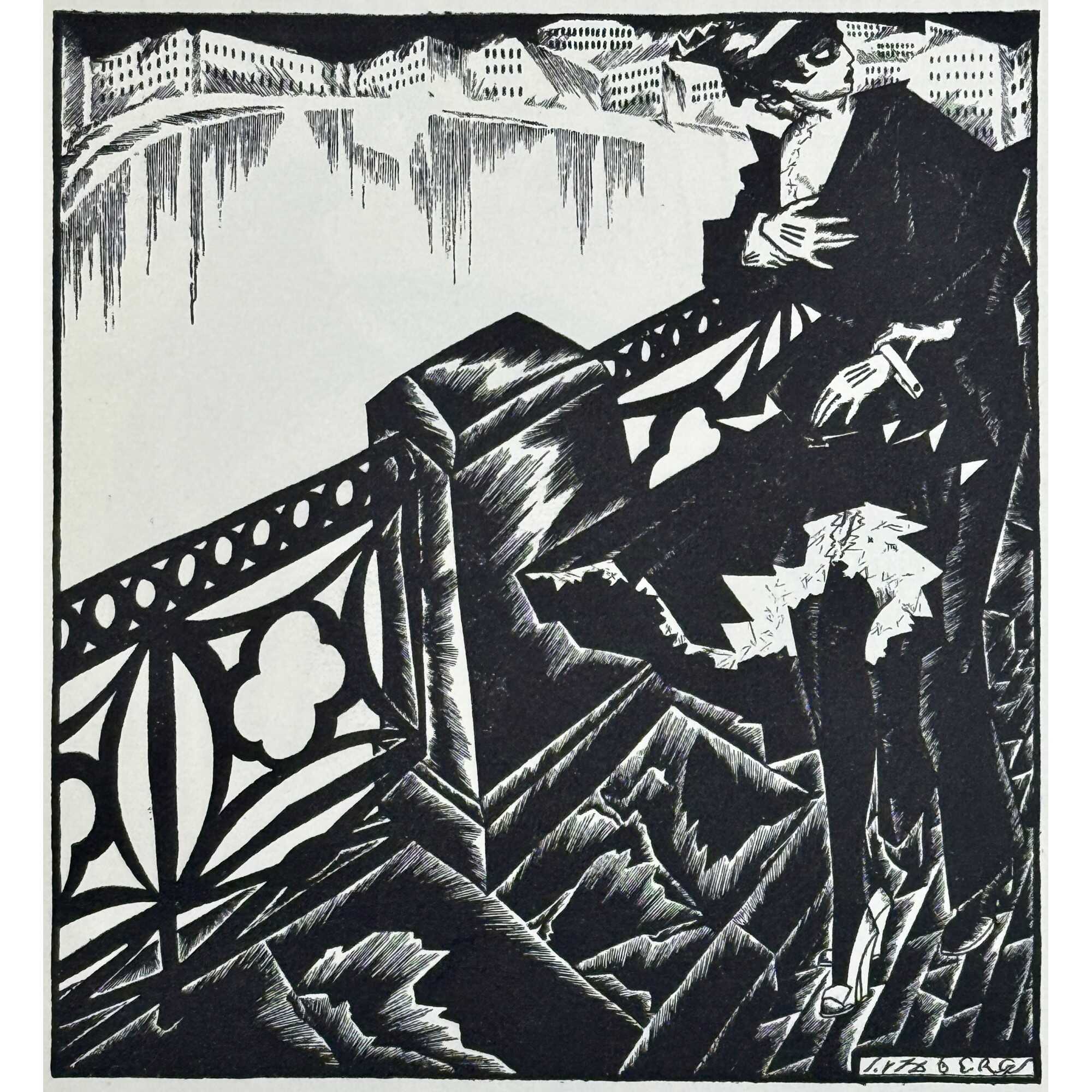
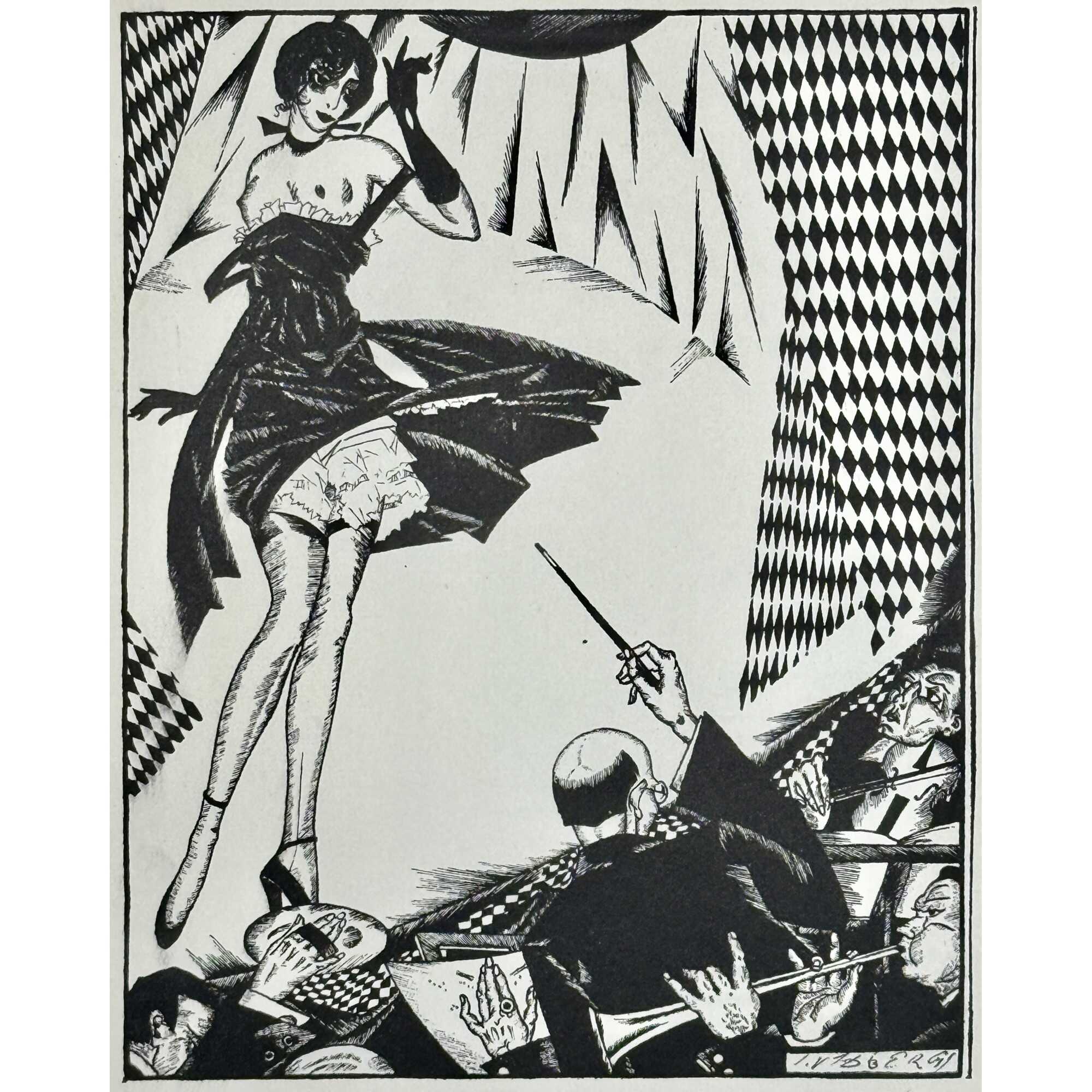
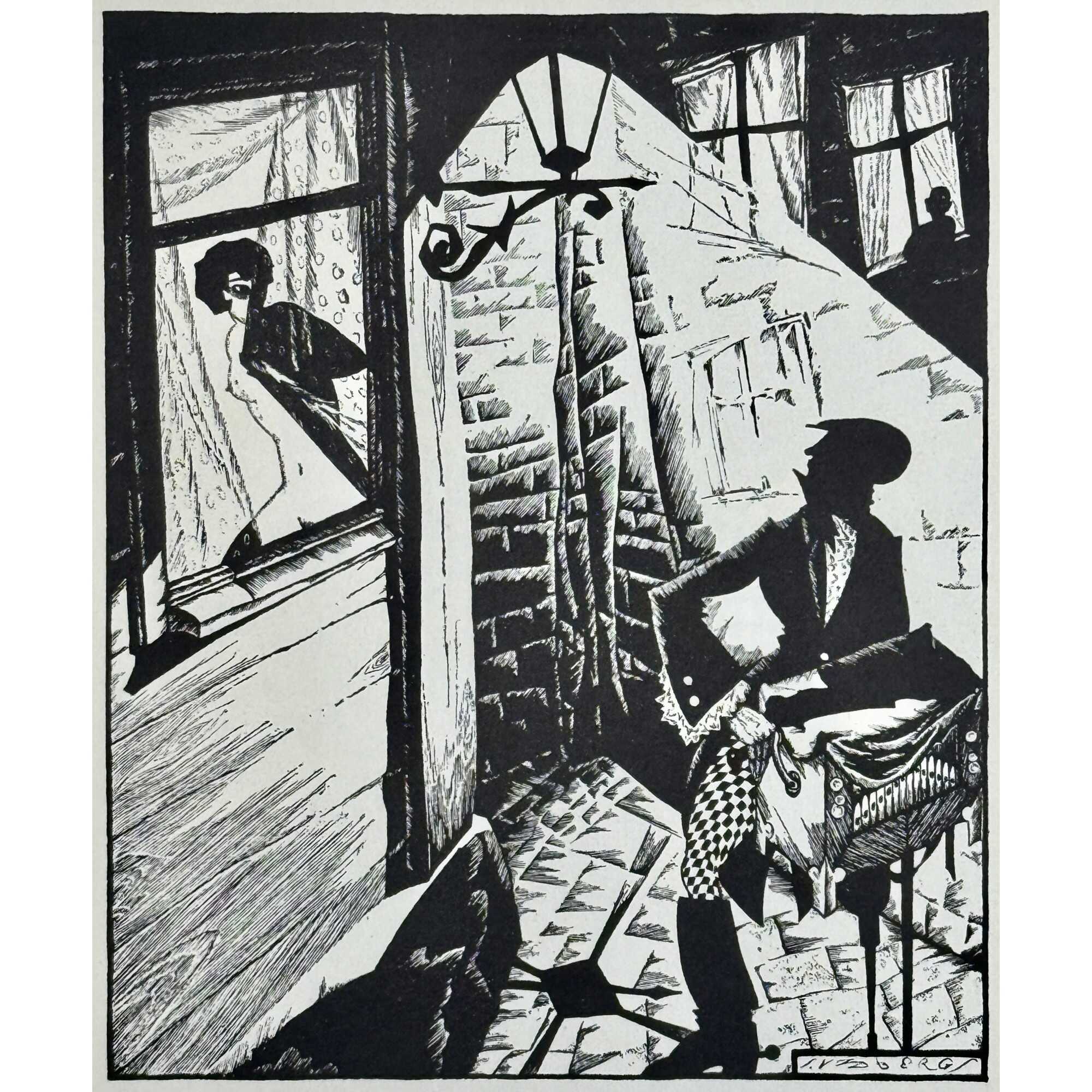
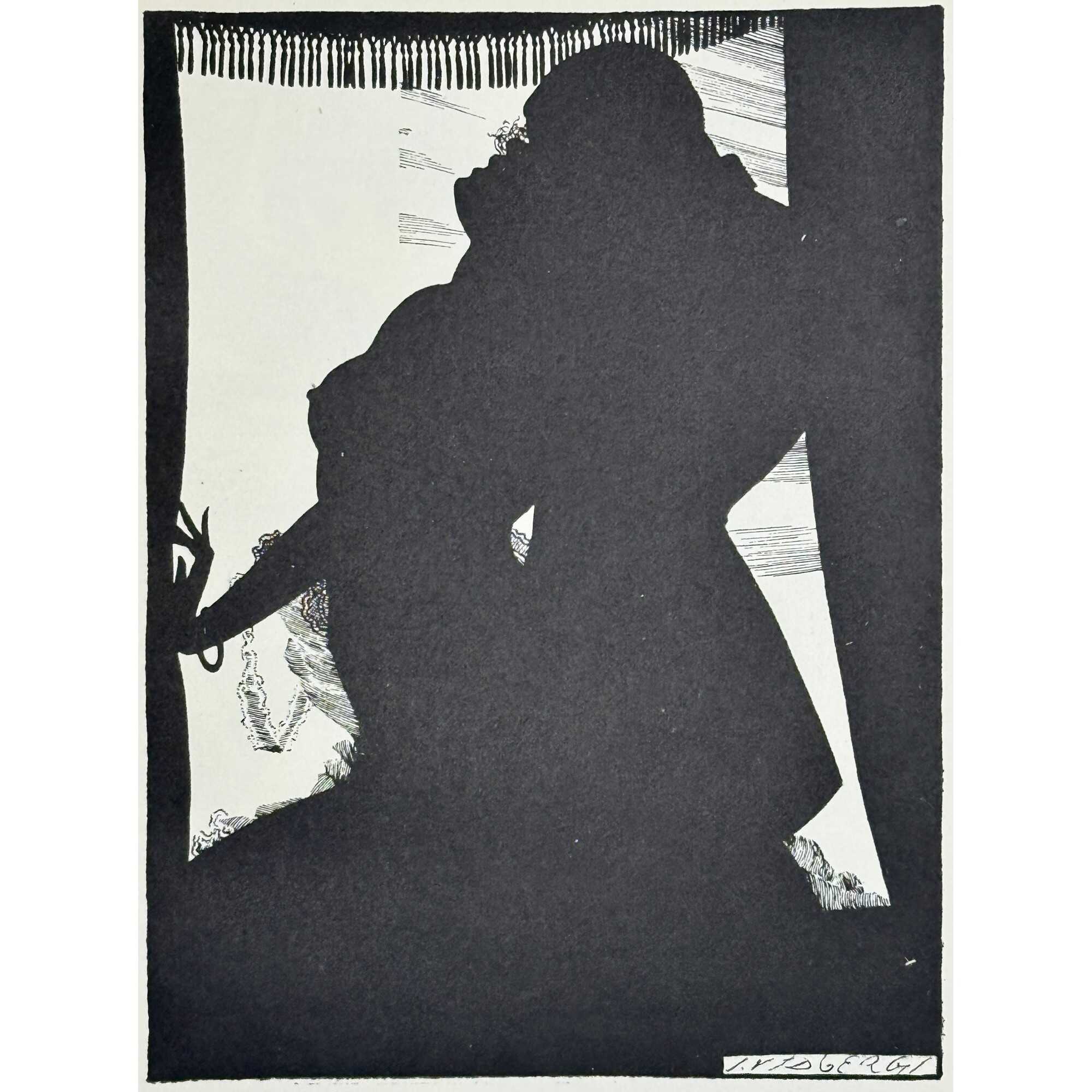
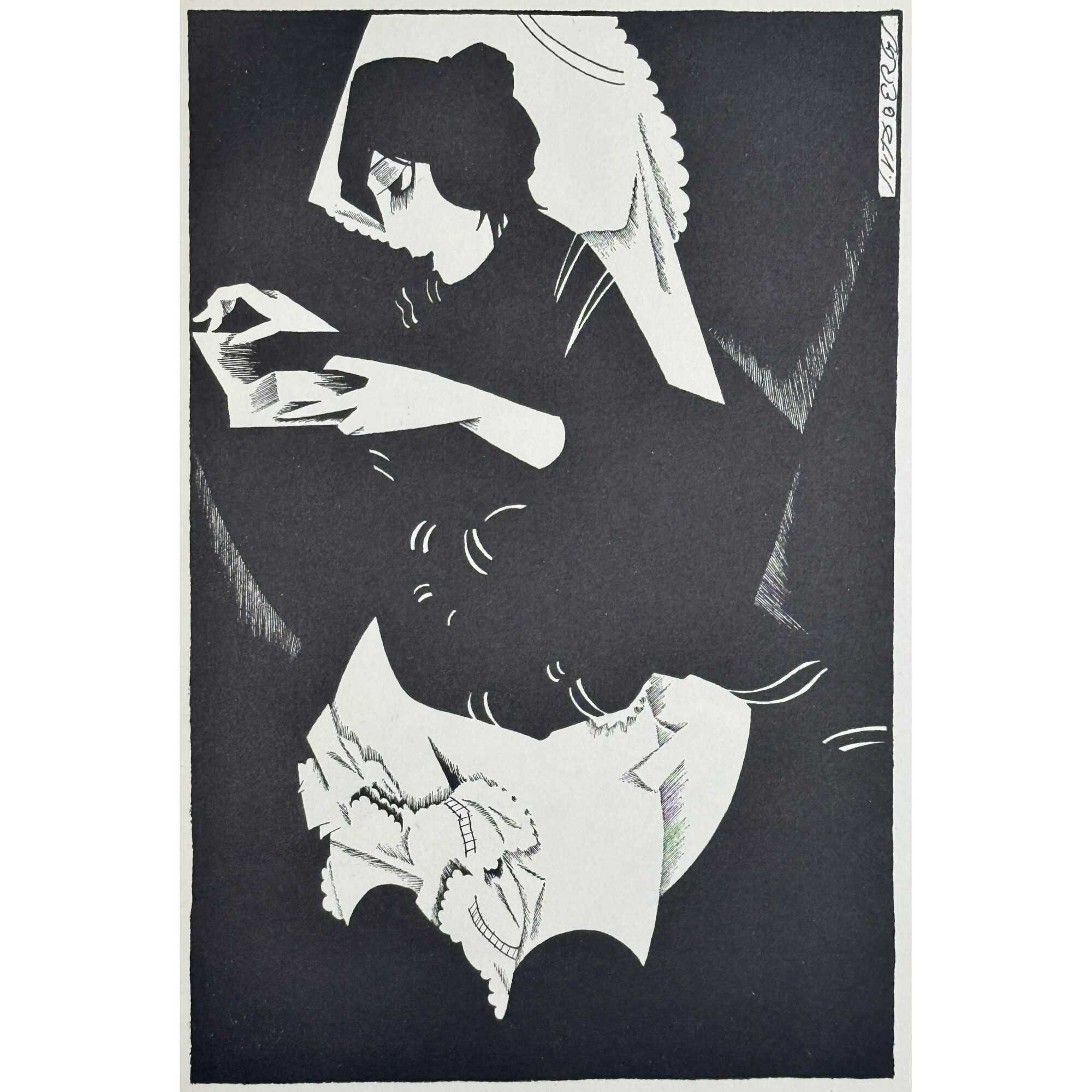
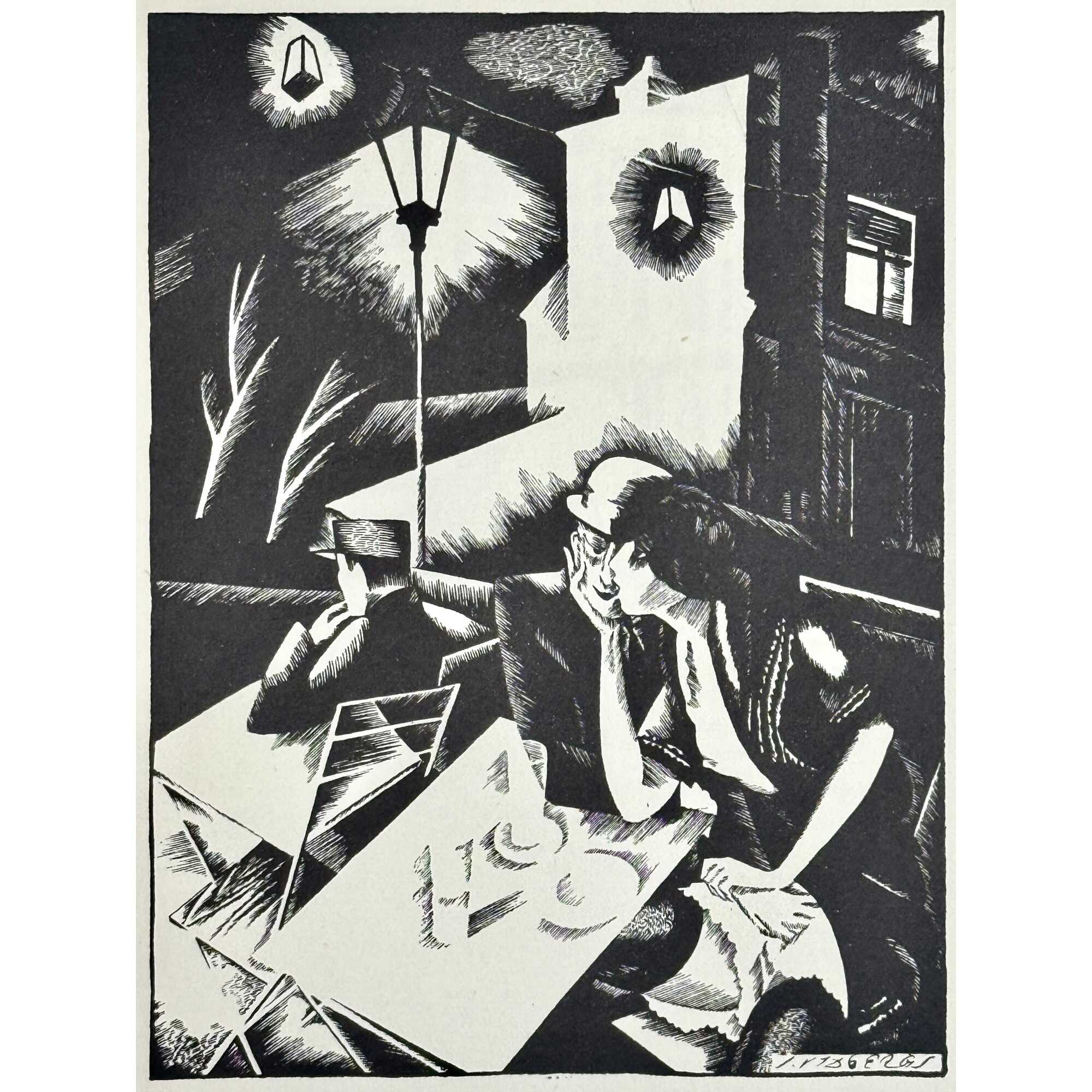
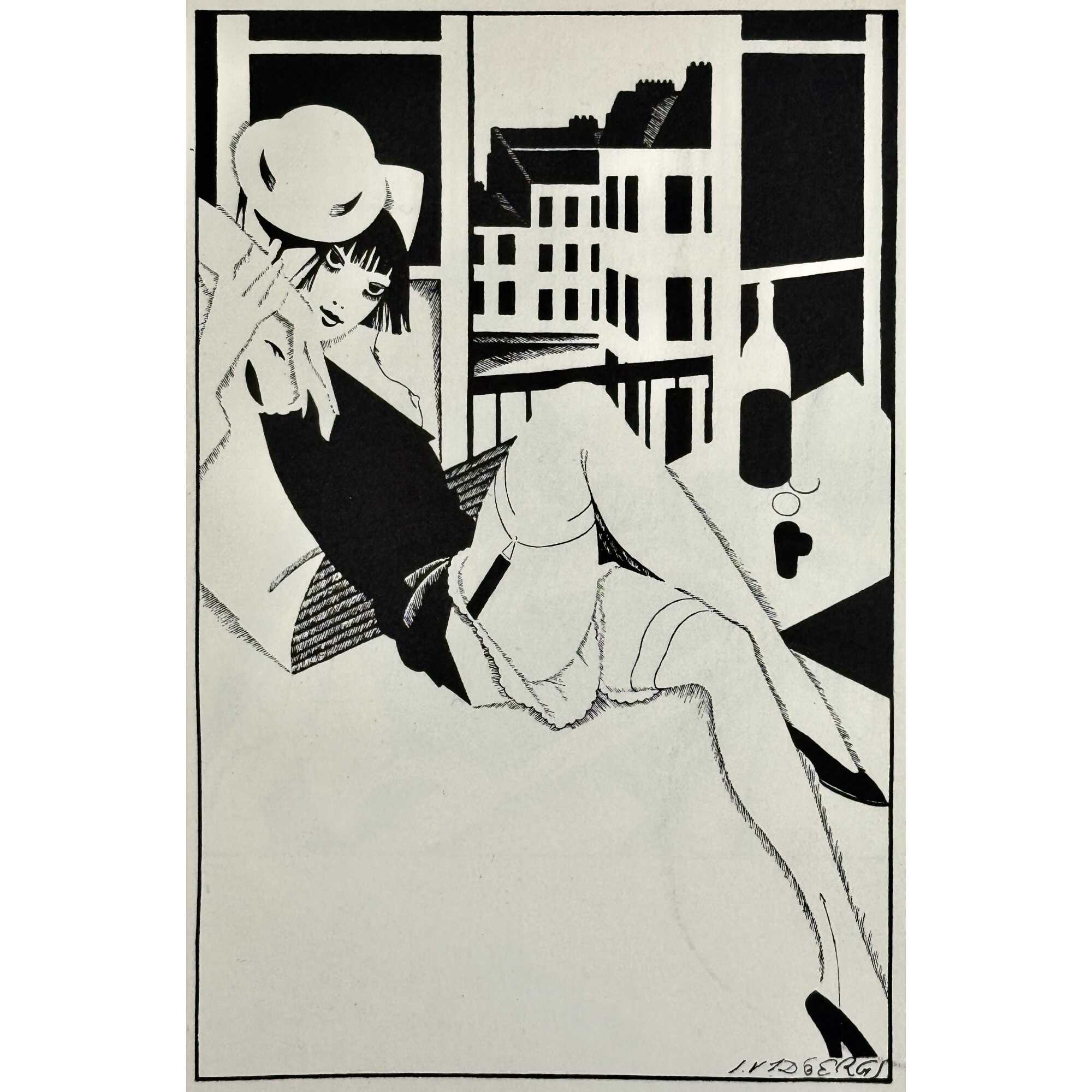
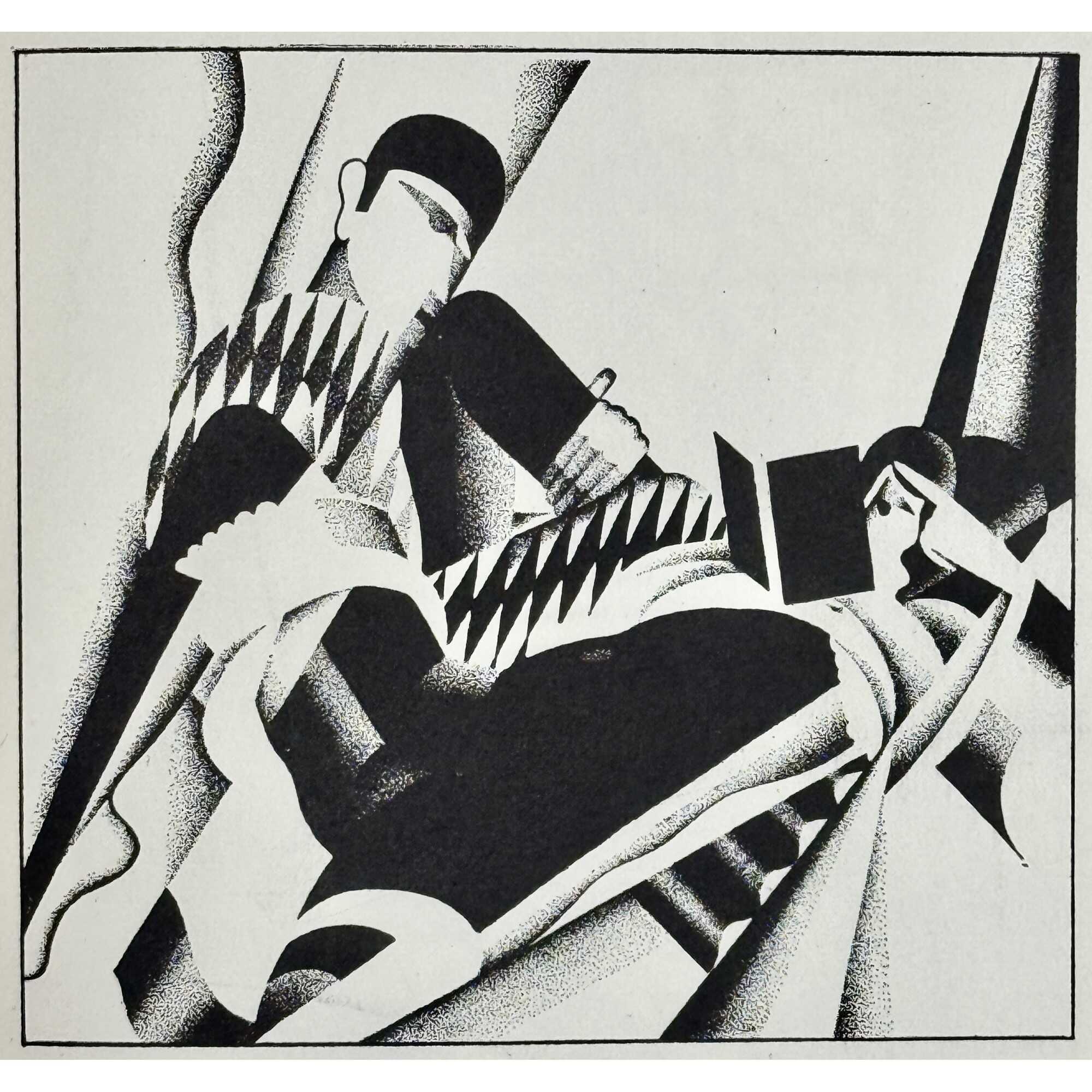
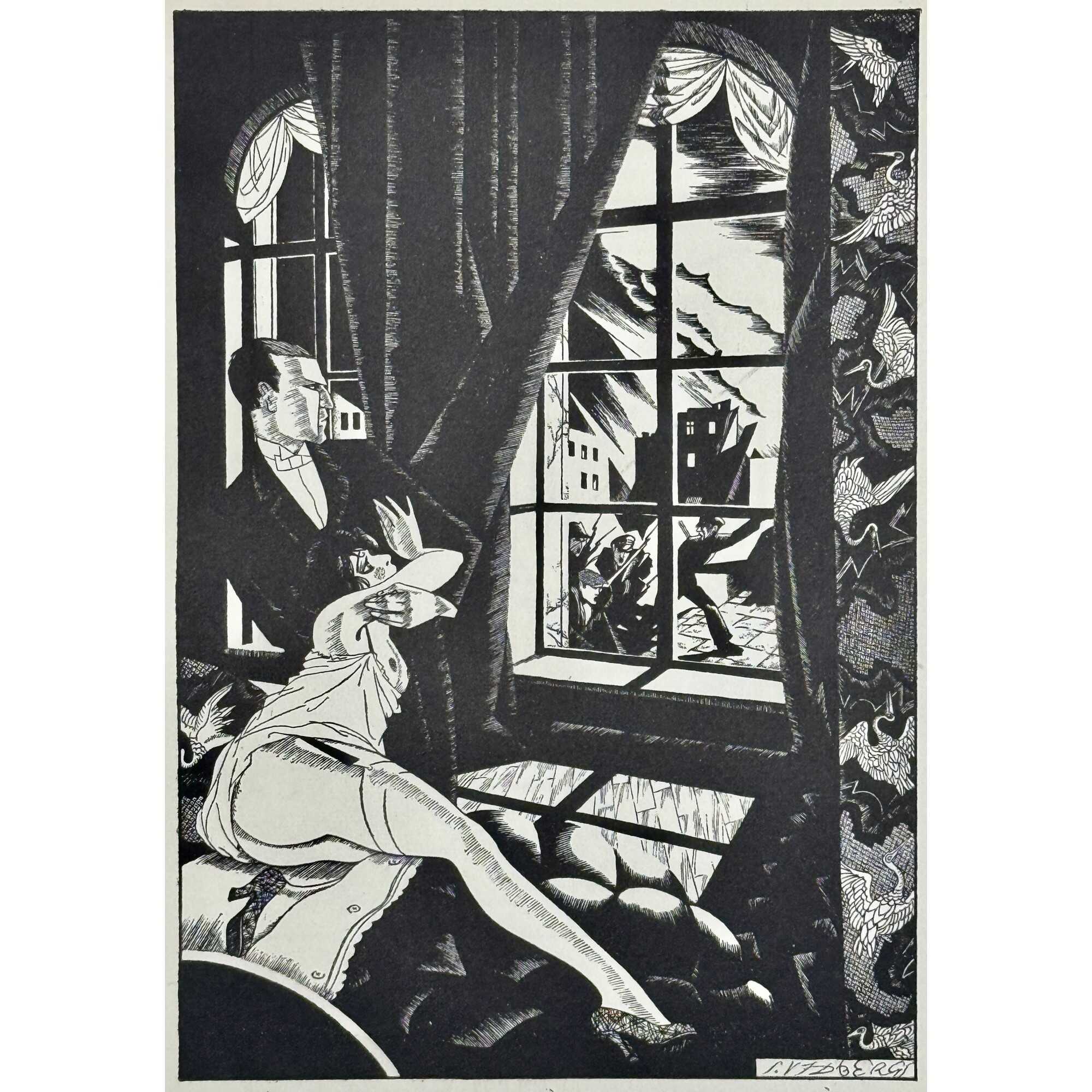
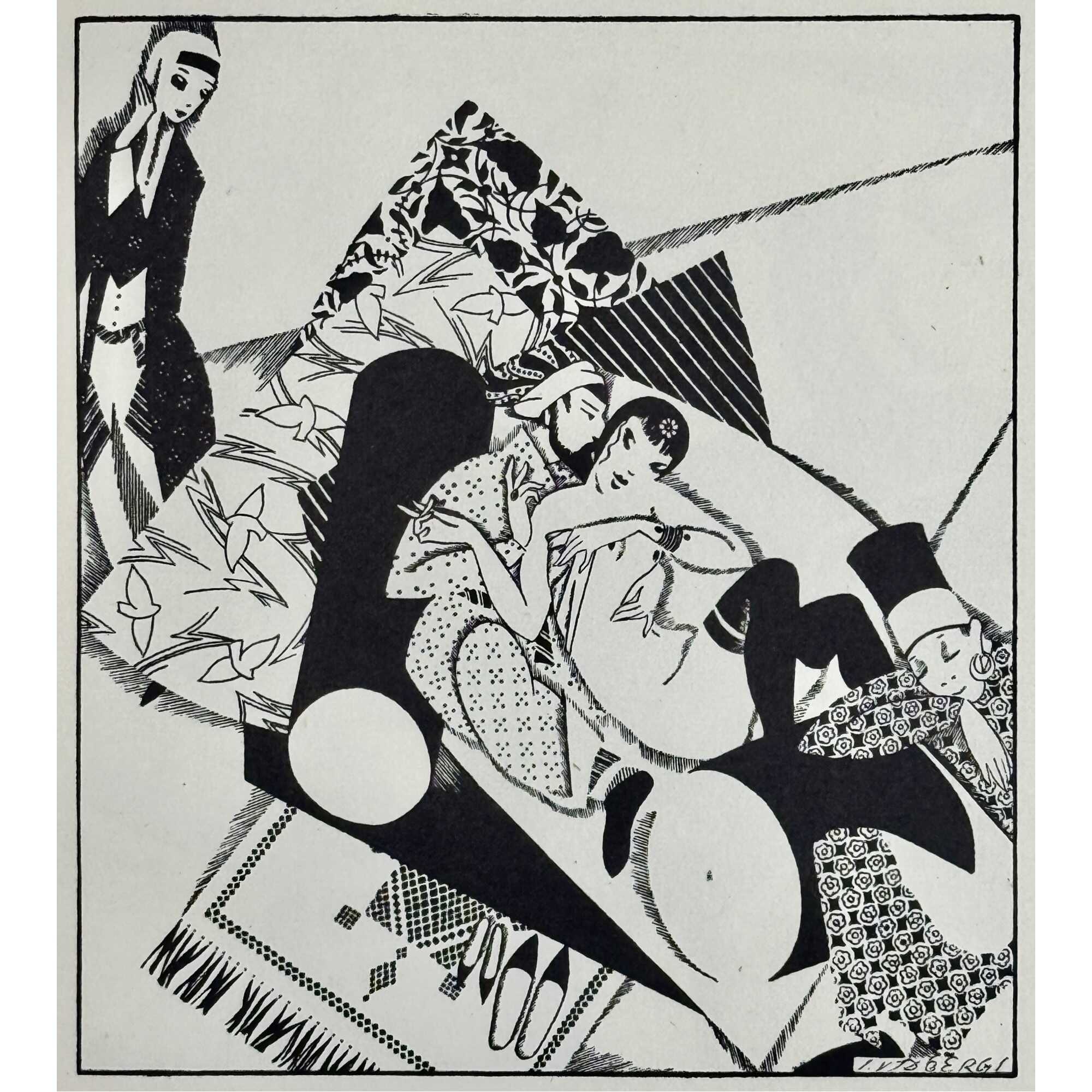
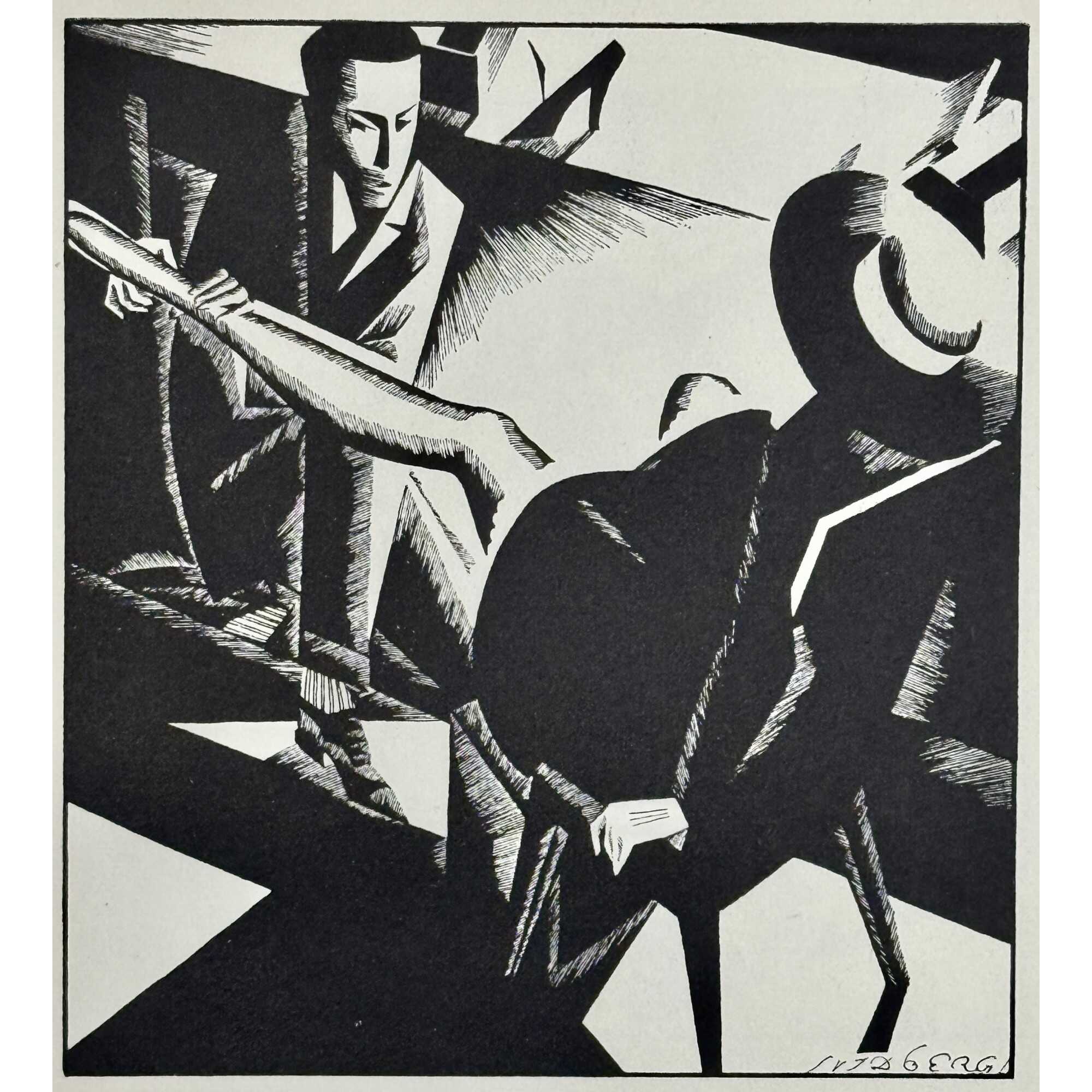
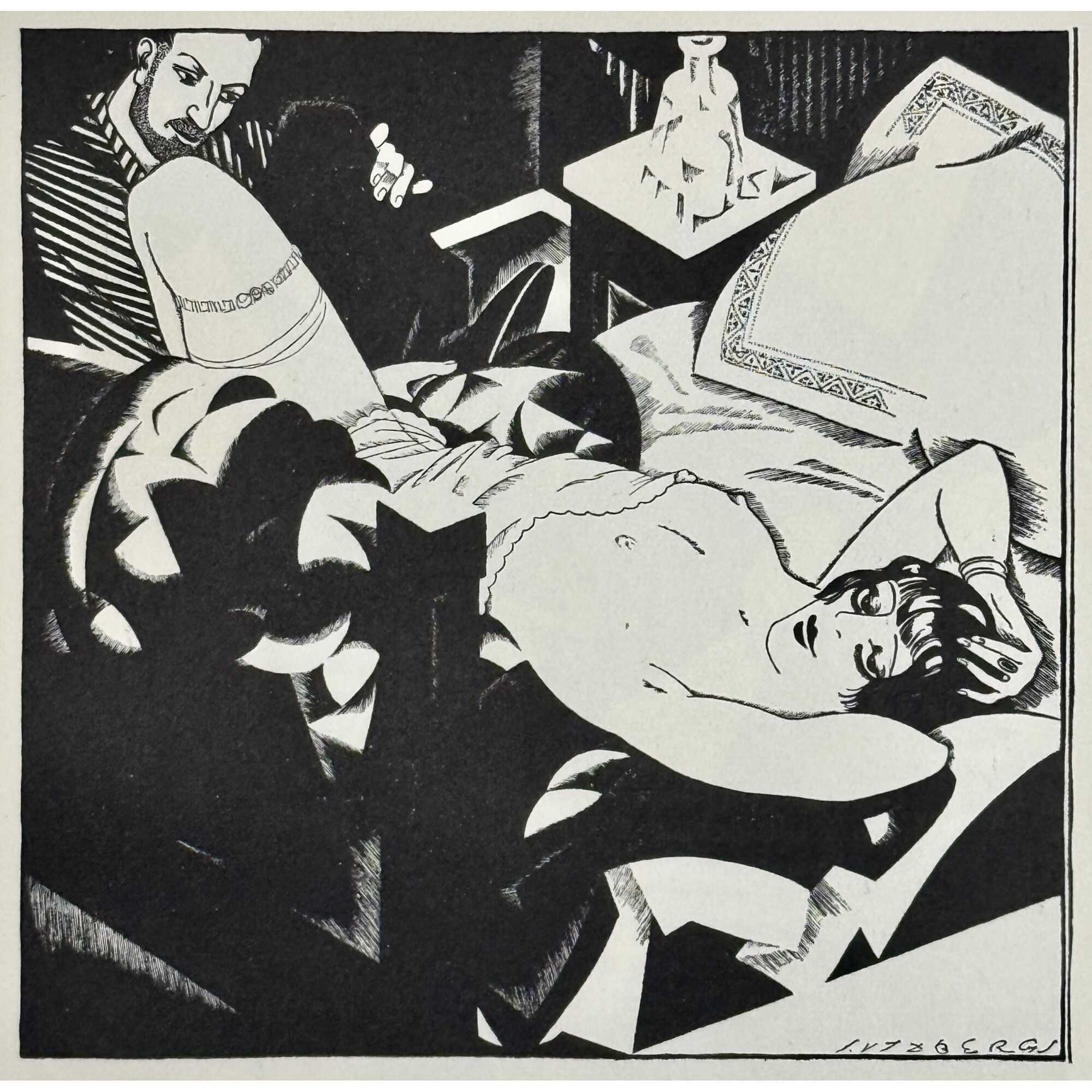
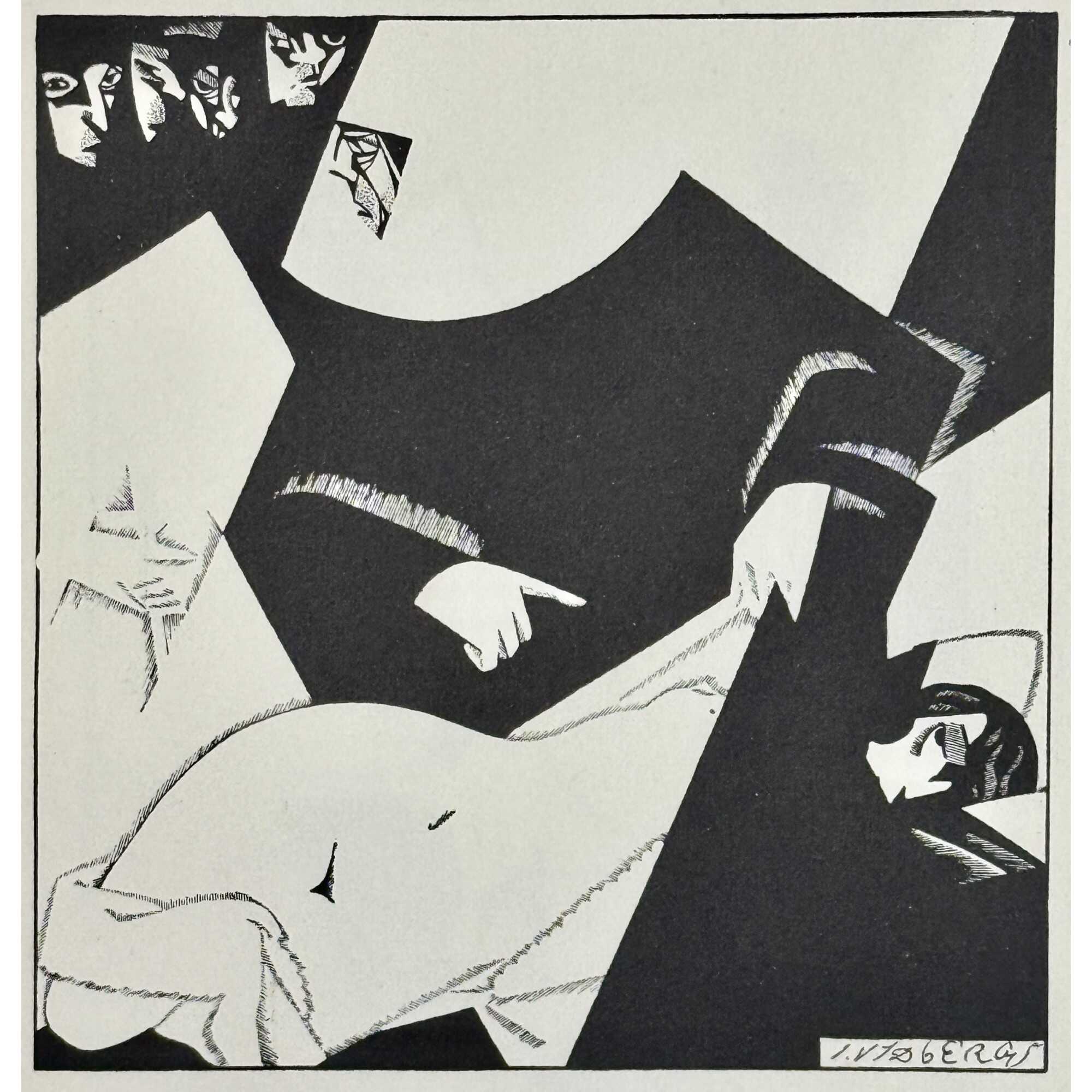
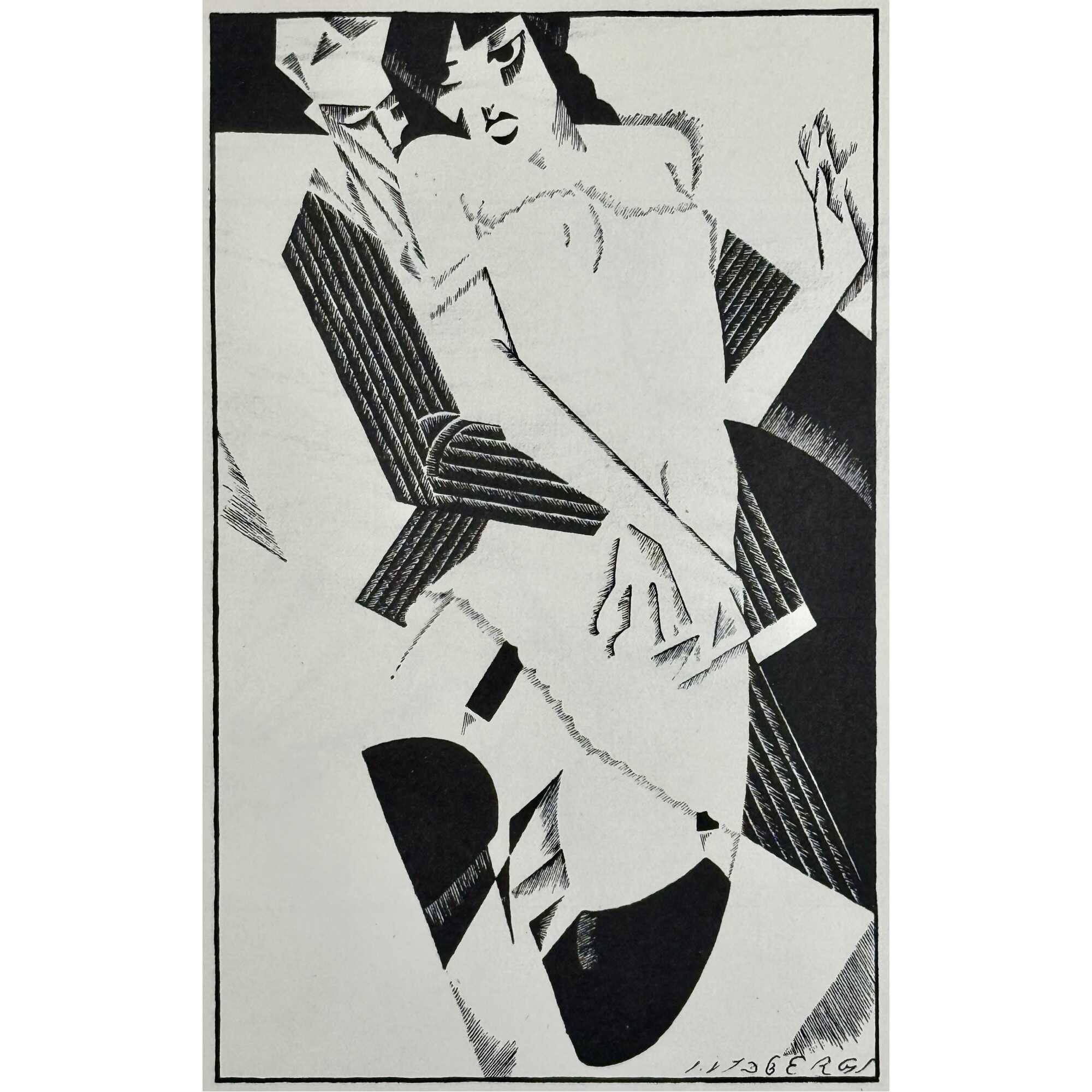
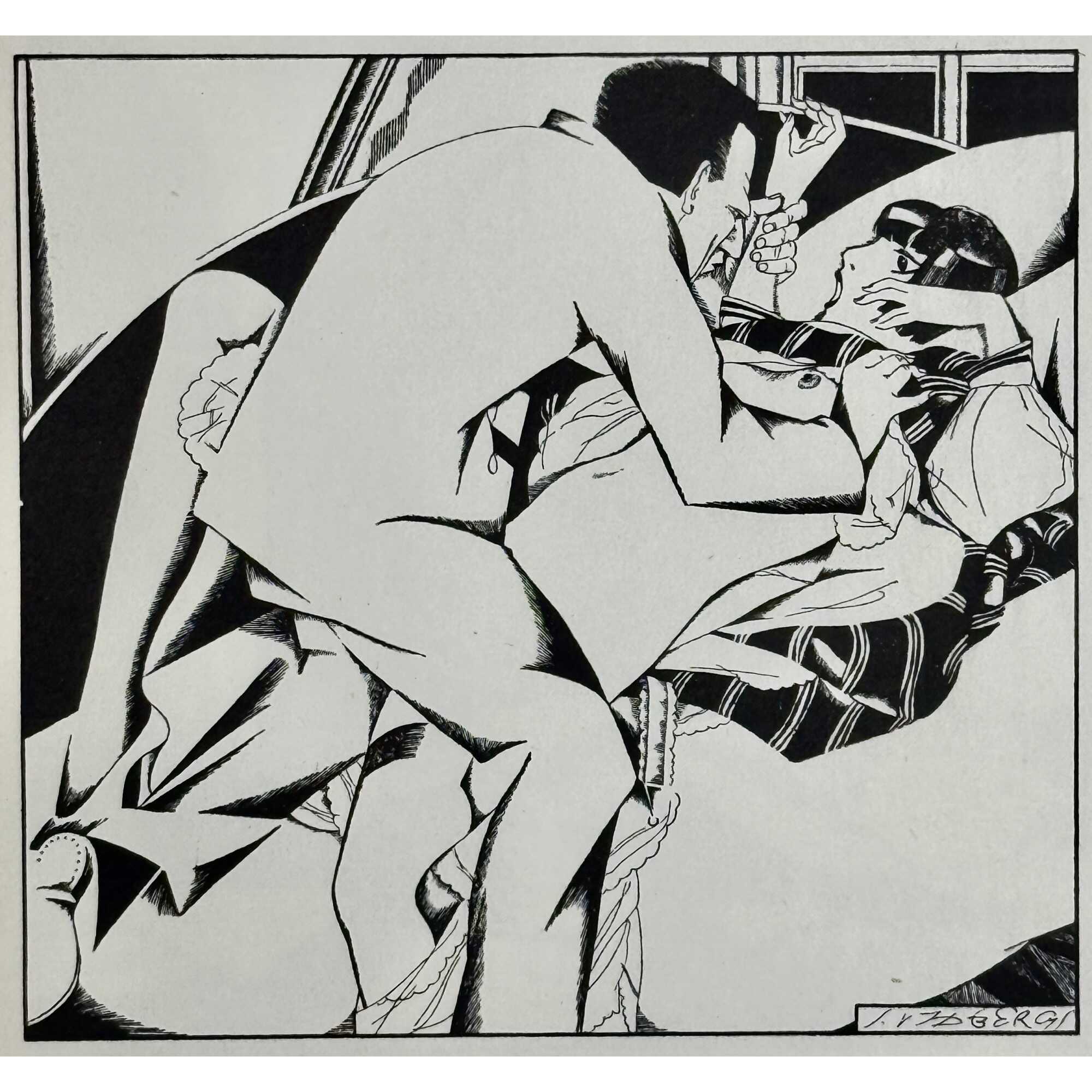
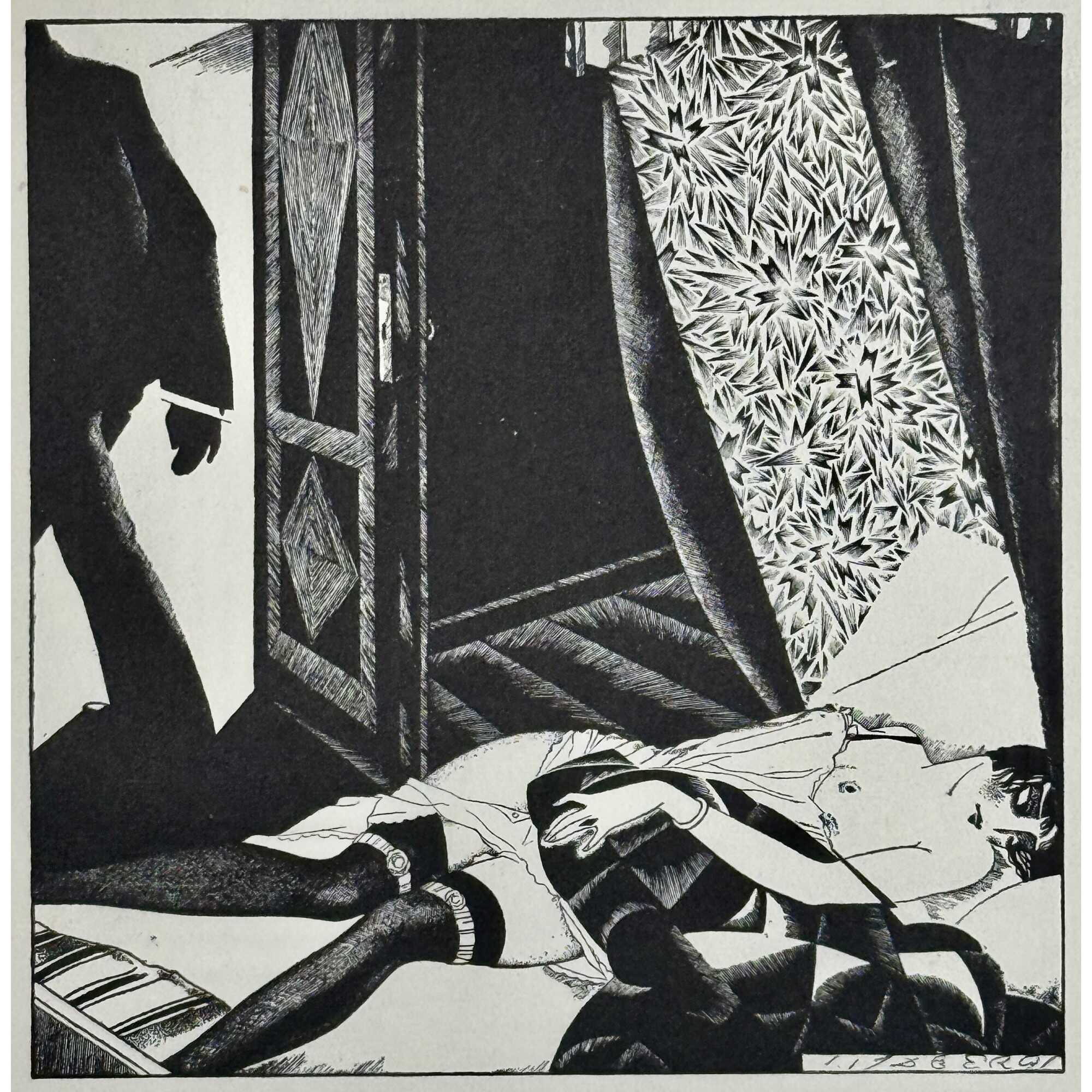
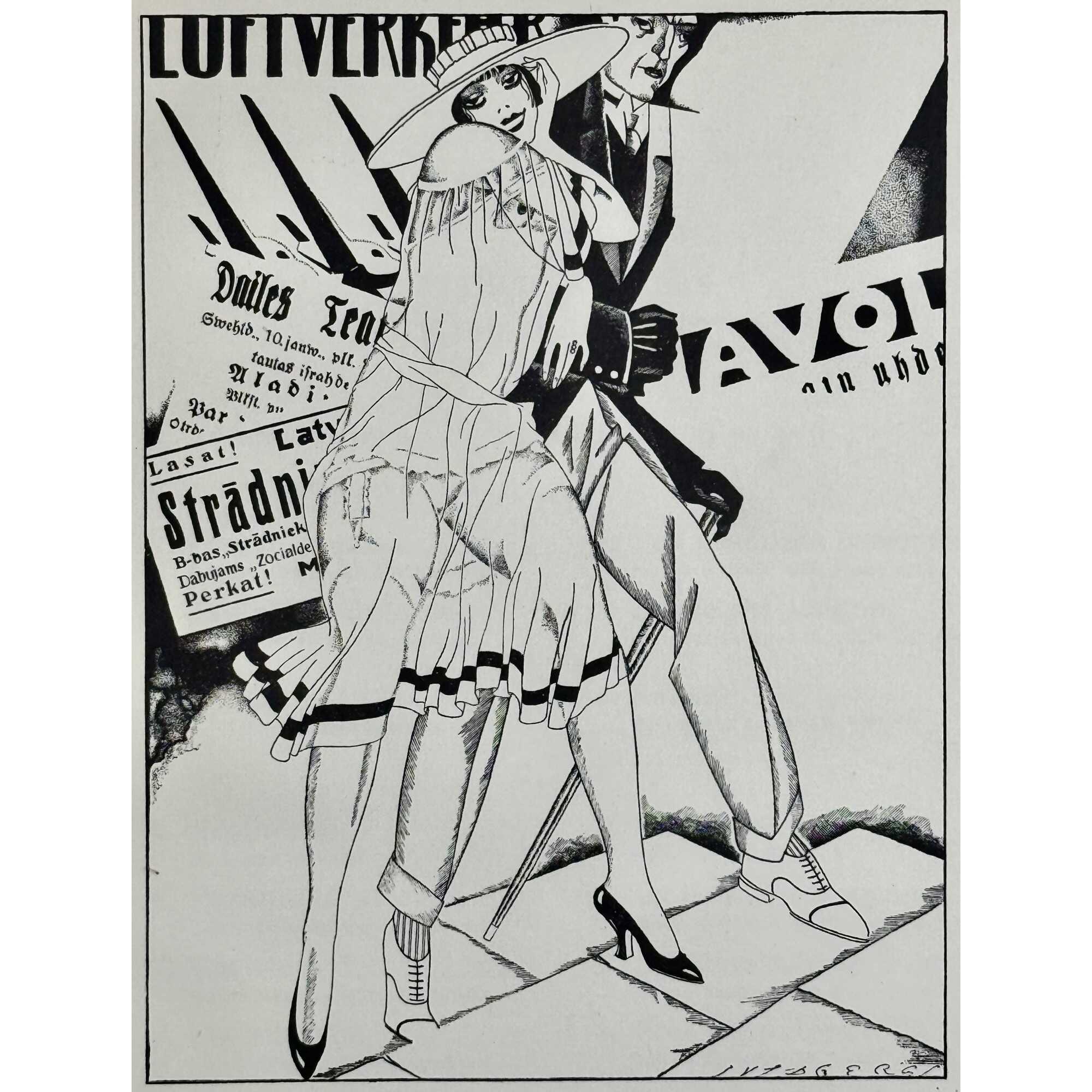
Latvian title-page: S. VIDBERGS | EROTIKA | 24 ZĪMĒJUMI | AR | V. PENĢEROTA PRIEKŠVĀRDU | RĪGĀ | — | APGĀDNIECĪBA „SAULE“ ||
French title-page: S. VIDBERG | EROTIKA | 24 DESSINS | PRÉSENTÉS AVEC UN AVANT-PROPOS | PAR | V. PENGEROTS | RIGA | — | EDITION „SAULE“ („LE SOLEIL“) ||
Author/Preface: Visvaldis Peņģerots (Latvian, 1897–1938)
Artist: Sigismunds Vidbergs (Latvian, 1890–1970)
Publisher: Edition „Saule“ = Le Soleil
Place: Riga.
Date: 1926.
Language: Bilingual Latvian/French: dual title-pages and bilingual contents.
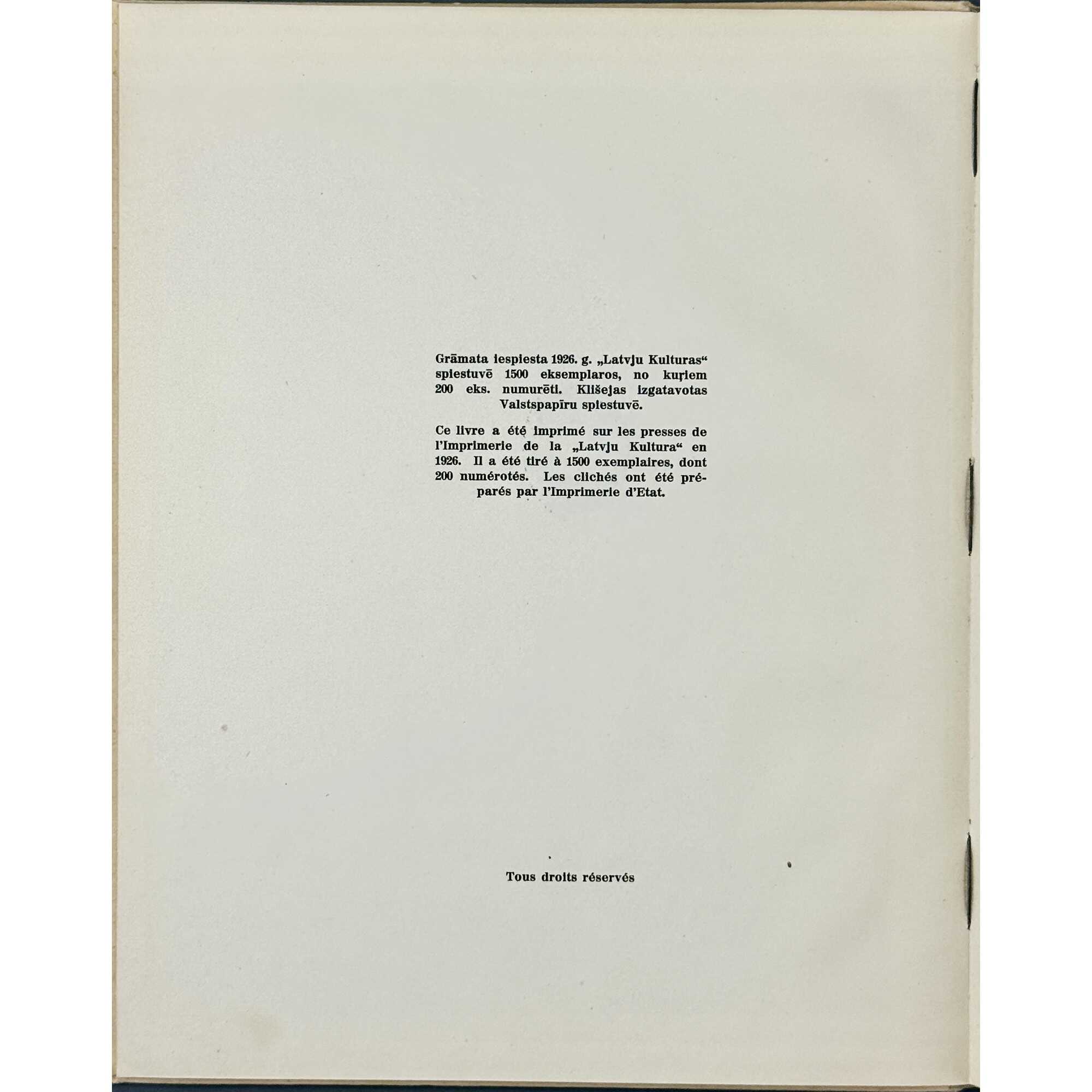
Imprint/Limitation: Grāmata iespiesta 1926. g. „Latvju Kulturas“ spiestuvē 1500 eksemplāros, no kuriem 200 eks. numurēti. Klišejas izgatavotas Valstspapīru spiestuvē. | Ce livre a été imprimé sur les presses de l’Imprimerie de la „Latvju Kultura“ en 1926. Il a été tiré à 1500 exemplaires, dont 200 numérotés. Les clichés ont été préparés par l’Imprimerie d’État. (Printed limitation: 1,500 copies; 200 numbered; clichés prepared by the State Printing House).
Description: Hardcover, 217 × 175 mm, publisher’s paper over boards within double gilt rule; text-block stapled with steel staples. Cream/beige paper, printed in black. Plates are photomechanical reproductions (“clichés”).
Pagination: [8] 9–22 [2] (section title), 24 leaves plates printed recto only (versos blank), [4] (Table of plates), [2] (blanks), total 39 leaves.
Table des reproductions / Attēlu saraksts
(List of plates, unpag.)
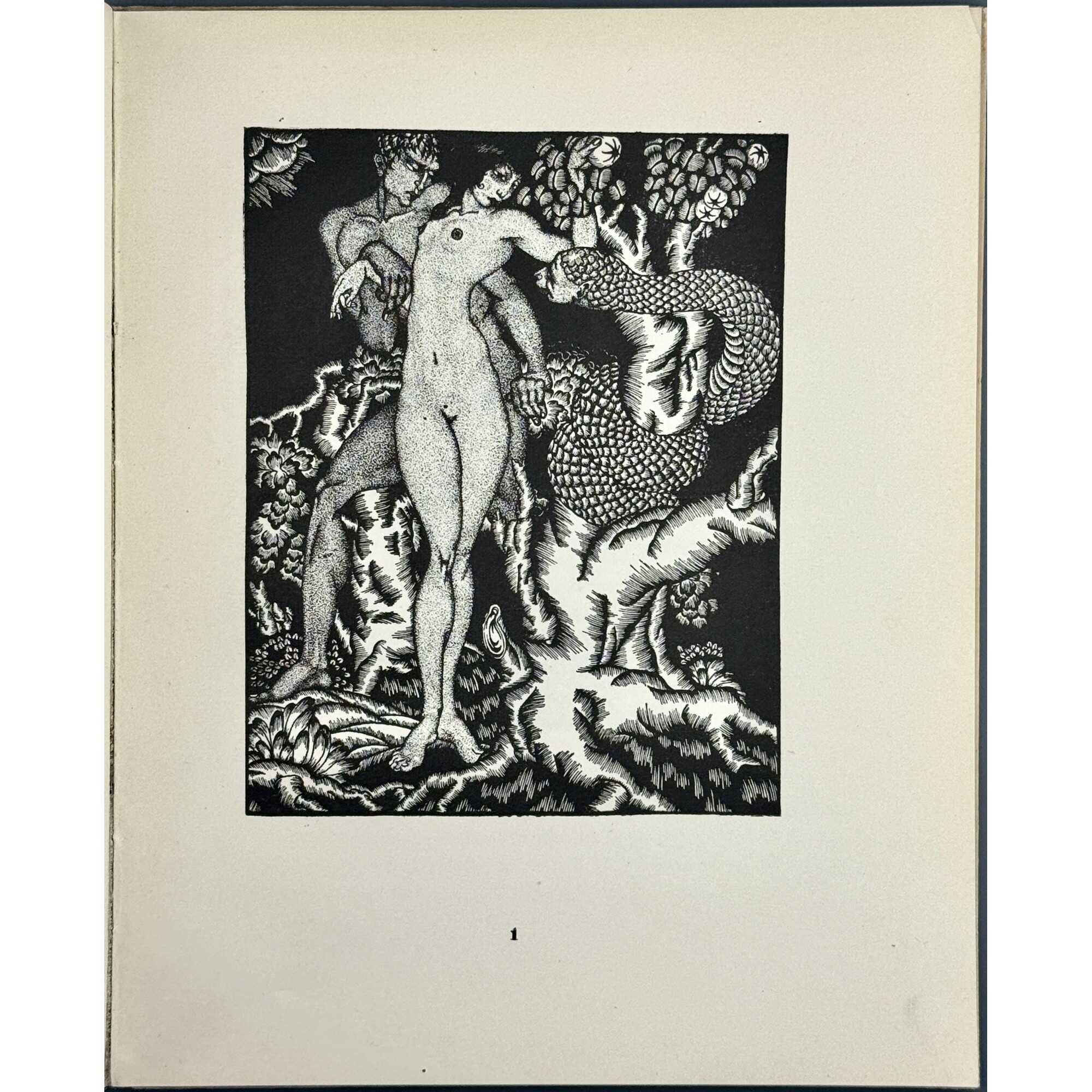
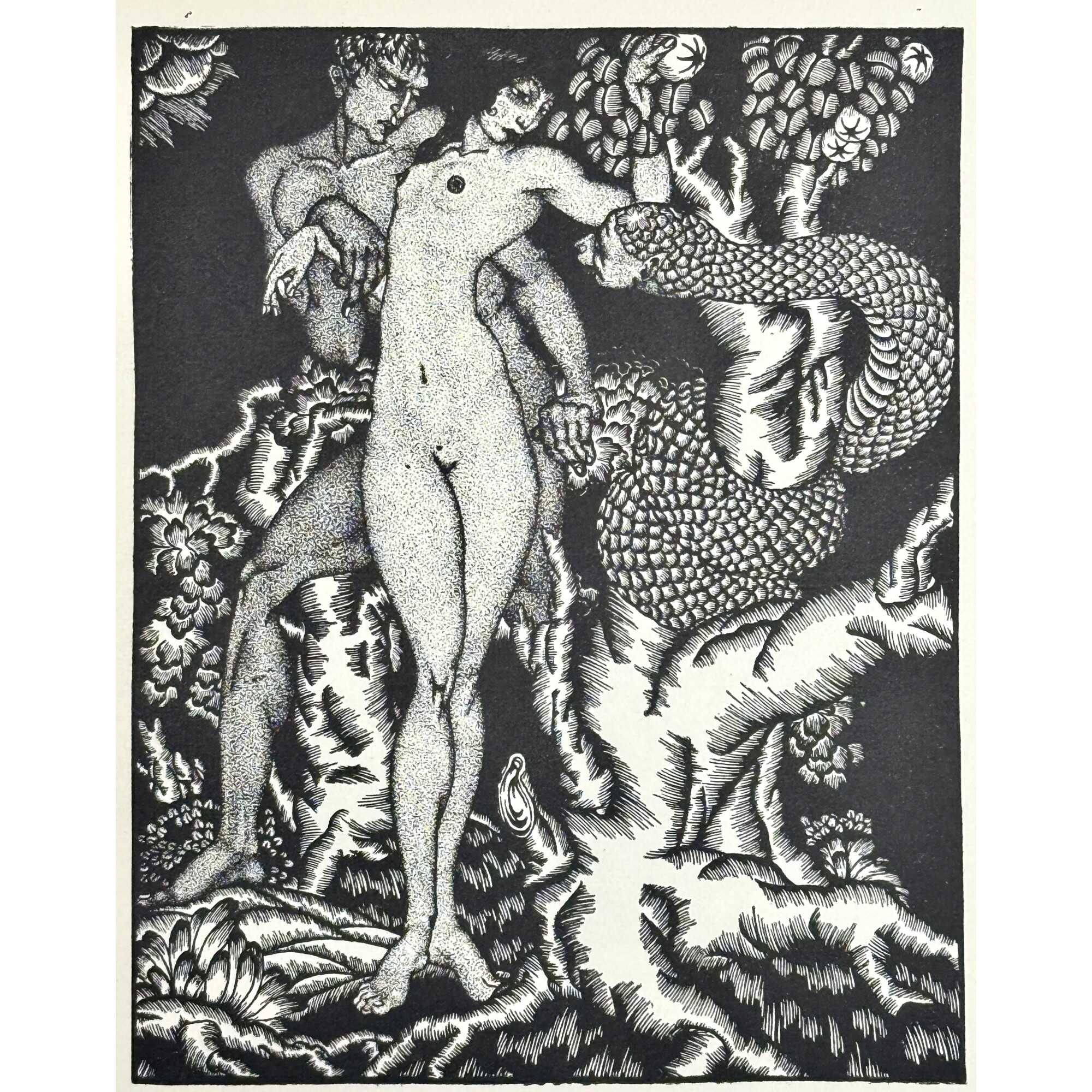
1917 — 1. Ādams un Ieva / Adam et Eve.
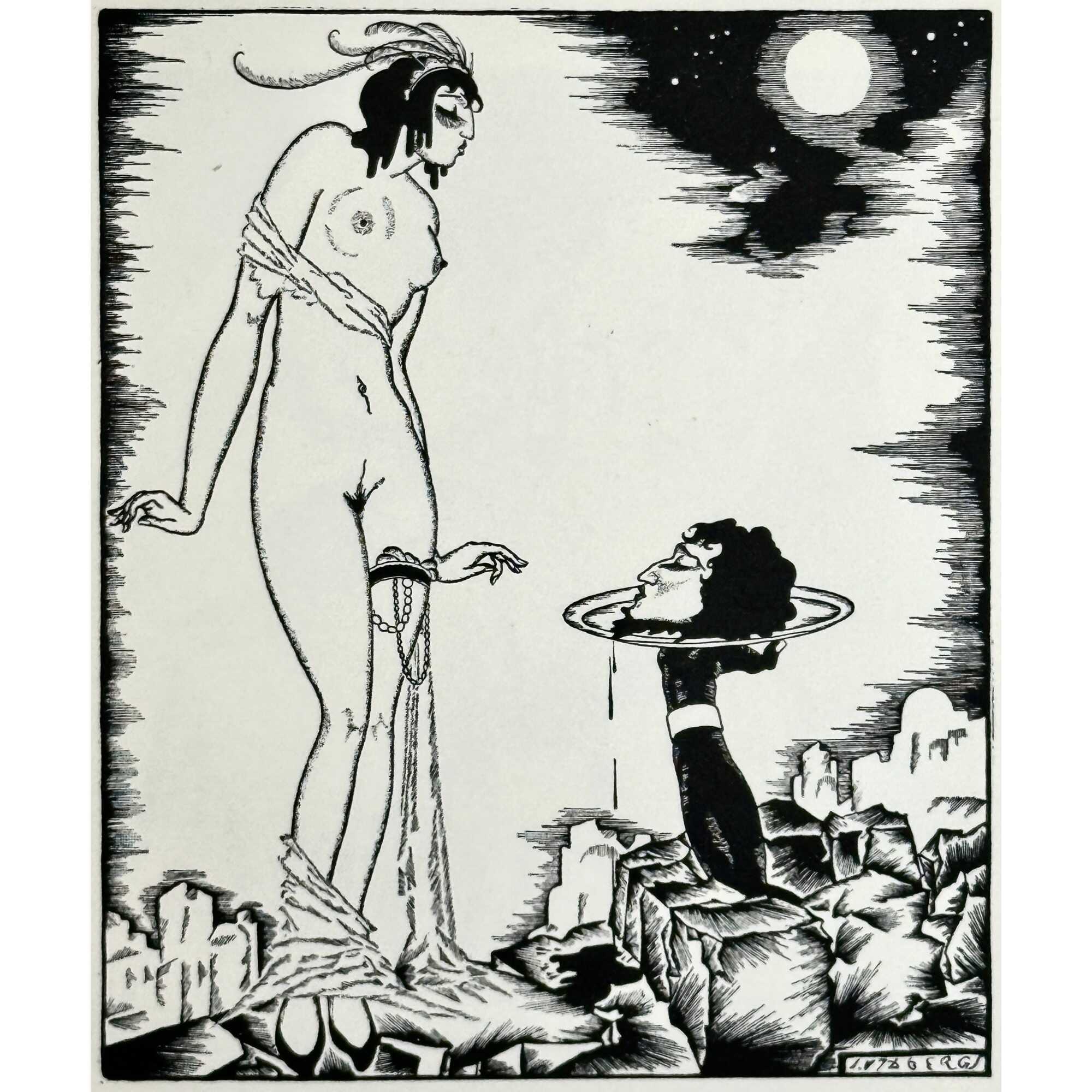
1918 — 2. Les premiers hommes; 3. L’âme du pêcheur (Oscar Wilde); 4. Salomé.
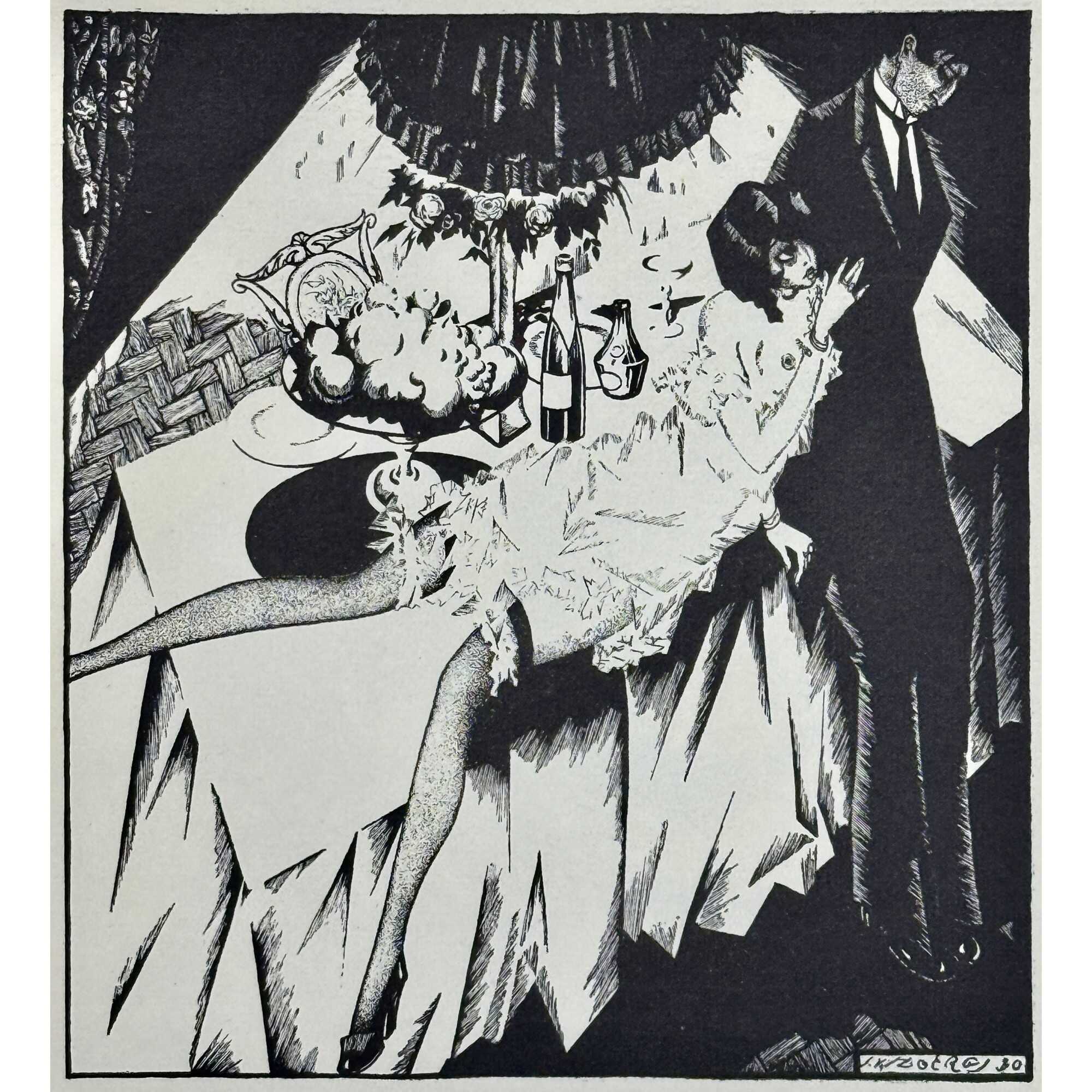
1919 — 5. Au restaurant; 6. La jarretière perdue; 7. Les chevaux de bois; 8. Près du parapet.
1920 — 9. La danseuse.
1921 — 10. Le vagabond.
1922 — 11. Silhouettes.
1923 — 12. La liseuse; 13. À Montmartre I; 14. À Montmartre II.
1924 — 15. Les Comédiens.
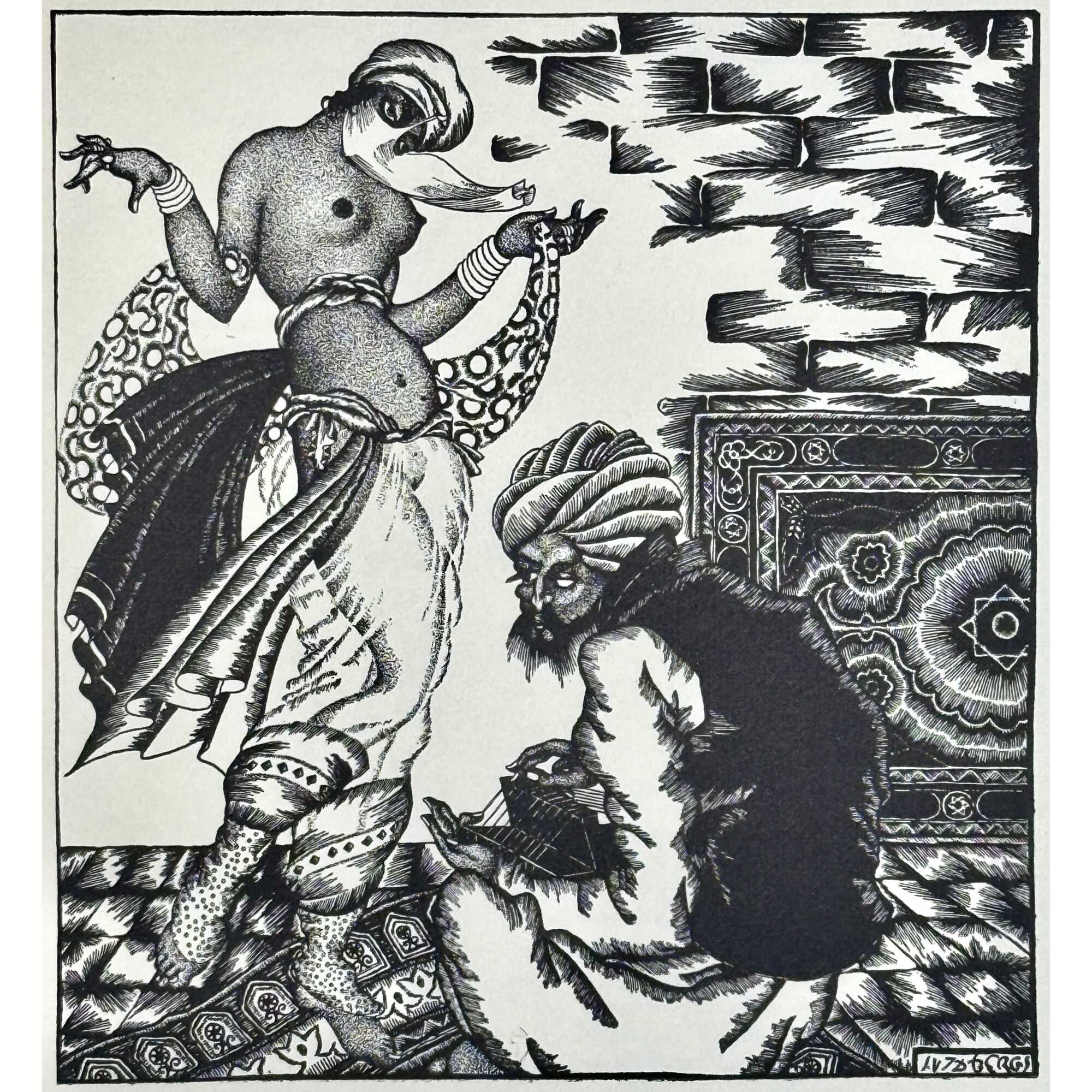
1925 — 16. La révolution (première variante 1919); 17. Dans le Harem (P. Bessalko, Les diamants de l’Orient, première variante 1919); 18. Chez le chausseur (première variante 1920); 19. Le coucher (première variante 1923); 20. La sorcière; 21. Je ne veux pas; 22. La lutte.
1926 — 23. Au matin (première variante 1920); 24. Sur le seuil du café (première variante 1921).
Numurētiem eksemplāriem pievienotais zīmējums „Draudzenes“, 1918 / Aux exemplaires numérotés sera joint le dessin „Les amies“ exécuté en 1918 (Numbered copies will be accompanied by the drawing 'The Friends' executed in 1918) [Not present].
Sigismunds Vidbergs is presented as one of the most compelling Latvian graphic artists of his generation, distinguished by an urban, modern outlook rather than the rural idioms dominant in Latvian painting. Born in Mitau (Jelgava) in 1890, he trained at the Baron Stieglitz School of Drawing in St Petersburg (1908–15), where Russian book art flourished and the Mir iskusstva milieu shaped a recognisable “Russian style.” Aubrey Beardsley provided an early model, but the first preserved works (1917) already mark a turning-point: Beardsley’s sinuous line and stippling become auxiliary devices, while Vidbergs develops a relief-centred, autonomous hand.
He also breaks with fin-de-siècle artificiality. Instead of mythic femme fatales, his protagonists are the shop-girl and the dance-hall performer—figures of the real city, shorn of “demonic voluptuousness” and aligned with a century of speed, democracy, and labour. Among St Petersburg influences, Sergei Chekhonin mattered most for ornament and calligraphic assurance, especially in porcelain; Vidbergs himself excelled in that field, receiving a gold medal at the 1925 Paris Exposition des Arts Décoratifs. More decisive for his mature graphics was contact with modern French constructivists, which prompted him to purge decorative excess (as in the early Les chevaux de bois) and adopt measured simplicity and severity evident in works such as À Montmartre II and Je ne veux pas.
After completing Stieglitz in 1915, he served in the Red Army, returned to Latvia in 1921, and won immediate acclaim with a Riga exhibition; he thereafter showed regularly with the avant-garde Riga Artists’ Group. He pursued extensive illustration and design (Wilde, Bessalko, Kercheniev; later Schwabe’s Gong-Gong, Prévost’s Manon Lescaut), created covers, ex-libris and stamp projects, and edited the satirical Ho-Ho. The present album gathers diverse drawings, some reworked from earlier compositions, and aims to secure Vidbergs’s rightful standing in Latvian and international graphic art.
Additional Information
| Collection | Erotica , Illustrated books , Library |
|---|---|
| Type / Purpose | Book |
| Period | 20 AD , Mid-20th Century |
| Country | Latvia |
| Language | French , Latvian |
| Media/Technique | Paper , Photomechanical , Wove paper |
| Genre | Erotica |
| Subject | 20th century , Art Deco , Bilingual editions , Erotica , Illustrated books , Latvia , Pictorial album , Translations from French , Translations into Latvian |
| Creation / Publishing year | 1926 |
| Edition | 1st edition |
| Binding | Cardboard , Hardcover , Original , Paper |
| Location | BOX 36. |
| Acquisition year | 2025 |


